Kirjojen hintavertailu. Mukana 12 329 912 kirjaa ja 12 kauppaa.

Kirjailija

Stefano Corbo

Kirjat ja teokset yhdessä paikassa: 5 kirjaa, julkaisuja vuosilta 2014-2024, suosituimpien joukossa From Formalism to Weak Form: The Architecture and Philosophy of Peter Eisenman. Vertaile teosten hintoja ja tarkista saatavuus suomalaisista kirjakaupoista.

5 kirjaa

Kirjojen julkaisuhaarukka 2014-2024.

Exteriorless Architecture

Exteriorless Architecture

Stefano Corbo

TAYLOR FRANCIS LTD
2024
nidottu
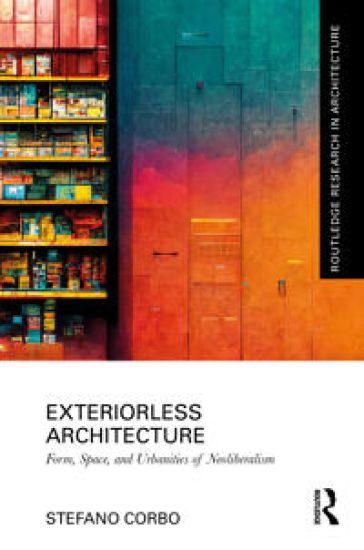
The current phase of capitalist development manifests itself through a very diverse range of spatial byproducts: data centers, warehouses, container terminals, logistics parks, and many others. Generally considered as mediocre and banal examples that sit outside of pre-established disciplinary canons, these architectural episodes are extremely relevant. They are relevant not for their aesthetic or historic qualities but for what they represent – for the system of values these spaces embed. They express specific power relations, exacerbate issues of labor, and generate dramatic processes of subjectivity. Most importantly, these architectures, despite their formal and typological heterogeneity, belong to a common paradigm: the EXTERIORLESS.How can an architecture of the EXTERIORLESS be defined? How does it differentiate from examples and manifestations of the past? How do notions of legibility, form versus function, typological articulation come into play? In situating the spatialities of contemporary capitalism within the larger debate on Anthropocene, Post-Anthropocene, and Capitalocene, the book attempts to answer those questions by delineating three main characteristics for an architecture of the EXTERIORLESS: its physical and symbolic role as interface; its ambiguous condition of being at the same time local and global, isolated and connected, compressed and expanded; and, lastly, its contribution to new forms of urbanity in absence of the traditional city. These three defining aspects constitute the main sections of the book. Each section includes two chapters covering a wide spectrum of themes and examples. In its tripartite organization, the book describes the influence that the experimental architecture of the 1960s has exerted on late-capitalist spatial byproducts; it analyzes the impact of logistics on the redesign of the territory; and it introduces the radical processes of urban transformation generated by the EXTERIORLESS.
Exteriorless Architecture

Exteriorless Architecture

Stefano Corbo

TAYLOR FRANCIS LTD
2023
sidottu
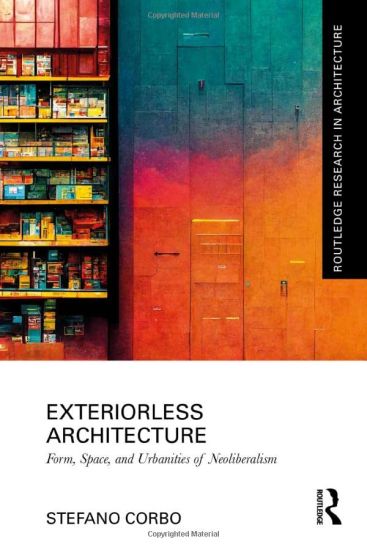
The current phase of capitalist development manifests itself through a very diverse range of spatial byproducts: data centers, warehouses, container terminals, logistics parks, and many others. Generally considered as mediocre and banal examples that sit outside of pre-established disciplinary canons, these architectural episodes are extremely relevant. They are relevant not for their aesthetic or historic qualities but for what they represent – for the system of values these spaces embed. They express specific power relations, exacerbate issues of labor, and generate dramatic processes of subjectivity. Most importantly, these architectures, despite their formal and typological heterogeneity, belong to a common paradigm: the EXTERIORLESS.How can an architecture of the EXTERIORLESS be defined? How does it differentiate from examples and manifestations of the past? How do notions of legibility, form versus function, typological articulation come into play? In situating the spatialities of contemporary capitalism within the larger debate on Anthropocene, Post-Anthropocene, and Capitalocene, the book attempts to answer those questions by delineating three main characteristics for an architecture of the EXTERIORLESS: its physical and symbolic role as interface; its ambiguous condition of being at the same time local and global, isolated and connected, compressed and expanded; and, lastly, its contribution to new forms of urbanity in absence of the traditional city. These three defining aspects constitute the main sections of the book. Each section includes two chapters covering a wide spectrum of themes and examples. In its tripartite organization, the book describes the influence that the experimental architecture of the 1960s has exerted on late-capitalist spatial byproducts; it analyzes the impact of logistics on the redesign of the territory; and it introduces the radical processes of urban transformation generated by the EXTERIORLESS.
From Formalism to Weak Form: The Architecture and Philosophy of Peter Eisenman
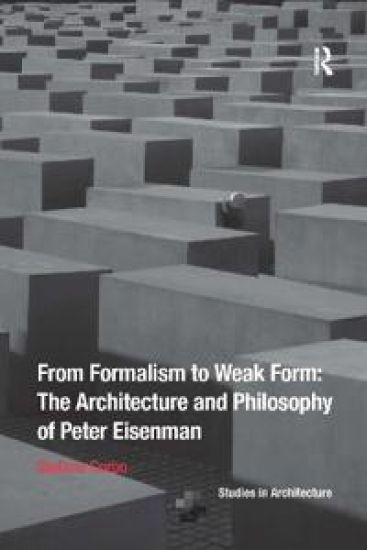
Peter Eisenman is one of the most controversial protagonists of the architectural scene, who is known as much for his theoretical essays as he is for his architecture. While much has been written about his built works and his philosophies, most books focus on one or the other aspect. By structuring this volume around the concept of form, Stefano Corbo links together Eisenman’s architecture with his theory. From Formalism to Weak Form: The Architecture and Philosophy of Peter Eisenman argues that form is the sphere of mediation between our body, our inner world and the exterior world and, as such, it enables connections to be made between philosophy and architecture. From the start of his career on, Eisenman has been deeply interested in the problem of form in architecture and has constantly challenged the classical concept of it. For him, form is not simply a cognitive tool that determines a physical structure, which discriminates all that is active from what is passive, what is inside from what is outside. He has always tried to connect his own work with the cultural manifestations of the time: firstly under the influence of Colin Rowe and his formalist studies; secondly, by re-interpreting Chomsky’s linguistic theories; in the 80’s, by collaborating with Derrida and his de-constructivist approach; more recently,by discovering Henri Bergson's idea of Time. These different moments underline different phases, different projects, different programmatic manifestos; and above all, an evolving notion of form. Taking a multi-disciplinary approach based on the intersections between architecture and philosophy, this book investigates all these definitions and, in doing so, provides new insights into and a deeper understanding of the complexity of Eisenman’s work.
Notes from the Underworld

Notes from the Underworld

Stefano Corbo

Schiffer Publishing Ltd
2019
sidottu
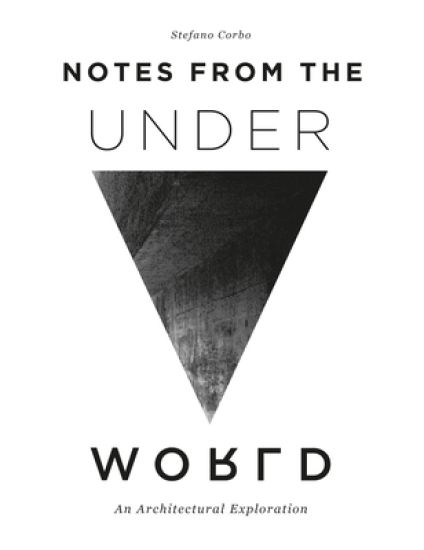
Since early times, humans have explored the space below their feet for different purposes: to flee persecution and war, to find protection from severe climates, to improve urban life—and more recently, to solve environmental problems. A rare look at old and new subterranean structures from an architect's perspective, this seminal book examines the underworld through the lenses of wartime, life and death, religious and secular rituals, and adaptive reuse. The atlas of 80+ international projects ranges widely in time period and type, from a house in a defunct nuclear silo to an Arctic seed bank, a Beirut nightclub, art venues, an Italian winery, and a monastery carved into a mountain. All are surprising examples of how invisible man-made spaces follow the same cultural and economic cues as their visible counterparts and are places where we store, hide, repress, and live.
From Formalism to Weak Form: The Architecture and Philosophy of Peter Eisenman
Peter Eisenman is one of the most controversial protagonists of the architectural scene, who is known as much for his theoretical essays as he is for his architecture. While much has been written about his built works and his philosophies, most books focus on one or the other aspect. By structuring this volume around the concept of form, Stefano Corbo links together Eisenman’s architecture with his theory. From Formalism to Weak Form: The Architecture and Philosophy of Peter Eisenman argues that form is the sphere of mediation between our body, our inner world and the exterior world and, as such, it enables connections to be made between philosophy and architecture. From the start of his career on, Eisenman has been deeply interested in the problem of form in architecture and has constantly challenged the classical concept of it. For him, form is not simply a cognitive tool that determines a physical structure, which discriminates all that is active from what is passive, what is inside from what is outside. He has always tried to connect his own work with the cultural manifestations of the time: firstly under the influence of Colin Rowe and his formalist studies; secondly, by re-interpreting Chomsky’s linguistic theories; in the 80’s, by collaborating with Derrida and his de-constructivist approach; more recently,by discovering Henri Bergson's idea of Time. These different moments underline different phases, different projects, different programmatic manifestos; and above all, an evolving notion of form. Taking a multi-disciplinary approach based on the intersections between architecture and philosophy, this book investigates all these definitions and, in doing so, provides new insights into and a deeper understanding of the complexity of Eisenman’s work.