
Kirjailija
Stefano Harney
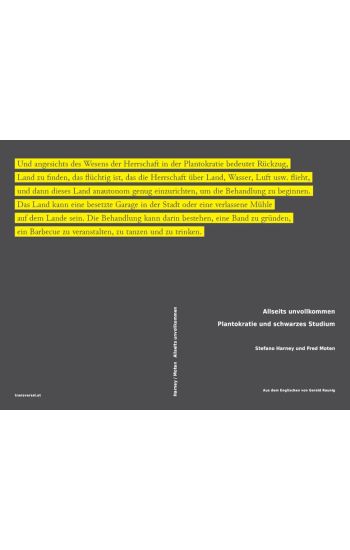
Kirjat ja teokset yhdessä paikassa: 12 kirjaa, julkaisuja vuosilta 1997-2026, suosituimpien joukossa Allseits unvollkommen. Vertaile teosten hintoja ja tarkista saatavuus suomalaisista kirjakaupoista.
12 kirjaa
Kirjojen julkaisuhaarukka 1997-2026.
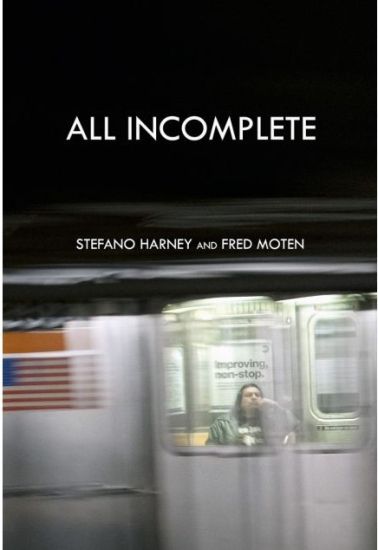
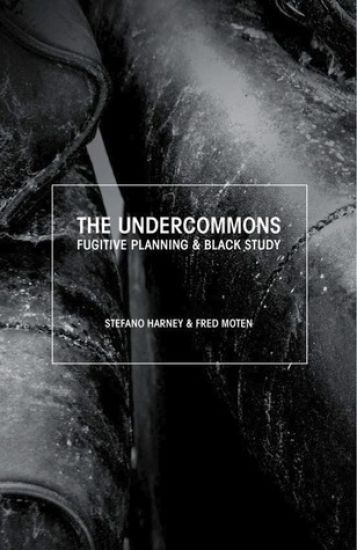
Literary Nonfiction. African American Studies. Politics. Philosophy & Critical Theory. Introduction by Jack Halberstam. In this series of essays, Fred Moten and Stefano Harney draw on the theory and practice of the black radical tradition as it supports, inspires, and extends contemporary social and political thought and aesthetic critique. Today the general wealth of social life finds itself confronted by mutations in the mechanisms of control: the proliferation of capitalist logistics, governance by credit, and the management of pedagogy. Working from and within the social poesis of life in THE UNDERCOMMONS, Moten and Harney develop and expand an array of concepts: study, debt, surround, planning, and the shipped. On the fugitive path of an historical and global blackness, the essays in this volume unsettle and invite the reader to the self-organised ensembles of social life that are launched every day and every night amid the general antagonism of THE UNDERCOMMONS."This is a powerful book, made of words and sounds, crisscrossed by subversion and love, written and studied 'with and for, ' as Stefano Harney and Fred Moten put it. The roar of the battle is never distant while reading THE UNDERCOMMONS. The London riots and occupy, practices of refusal, marronage and flight, slave revolts and anti-colonial uprisings frame a challenging rethinking of concepts such as policy and planning, debt and credit, governance and logistics. THE UNDERCOMMONS is a homage to the black radical tradition, to its generative and constituent power before the task of imagining 'dispossessed feelings in common' as the basis of a renewed communism." Sandro Mezzadra"What kind of intervention can cut through neoliberal configuration of today's university, which betrays its own liberal commitment to bring about emancipation? THE UNDERCOMMONS is a powerful and necessary intervention that invites us to imagine and realise social life otherwise. In this intimate and intense example of affected writing writing which is always already other, with an other Harney and Moten dare us to fall. Following, feeling, an other possible manner living together, or as one may say with Glissant to be 'born into the world, ' which is the fate and gift of blackness. Otherwise living, as in the quilombos created by Brazilian slaves, is the promise that is escape " Denise Ferreira da Silva"
From filo faxes to palm pilots; from cell phones to laptops; from spreadsheets to online banking, many of us try to make the most of our day, to not waste any time, to maximize our efficiency. These are the hallmarks of time, financial, and information management. More and more we find ourselves managing our time, health, finances, careers and families. We are all managers now.In The Culture of Management, Stefano Harney investigates how the principles of management now shape our lives, both individually and collectively. Ironically, as we embrace the tools of management in our personal lives, as workers we are often leery of the promises of Management. In examining the work world, Harney finds that the age-old clash between Management and Worker is alive and well. But, instead of vilifying Management, Harney asks: What new opportunities can the New Management offer us? Chapters include coverage on such issues as popular management literature; management in a global context, the new labor movement versus the new management.The Culture of Management shows us that, for better or worse, we are all in the business with ourselves.

From filo faxes to palm pilots; from cell phones to laptops; from spreadsheets to online banking, many of us try to make the most of our day, to not waste any time, to maximize our efficiency. These are the hallmarks of time, financial, and information management. More and more we find ourselves managing our time, health, finances, careers and families. We are all managers now.In The Culture of Management, Stefano Harney investigates how the principles of management now shape our lives, both individually and collectively. Ironically, as we embrace the tools of management in our personal lives, as workers we are often leery of the promises of Management. In examining the work world, Harney finds that the age-old clash between Management and Worker is alive and well. But, instead of vilifying Management, Harney asks: What new opportunities can the New Management offer us? Chapters include coverage on such issues as popular management literature; management in a global context, the new labor movement versus the new management.The Culture of Management shows us that, for better or worse, we are all in the business with ourselves.
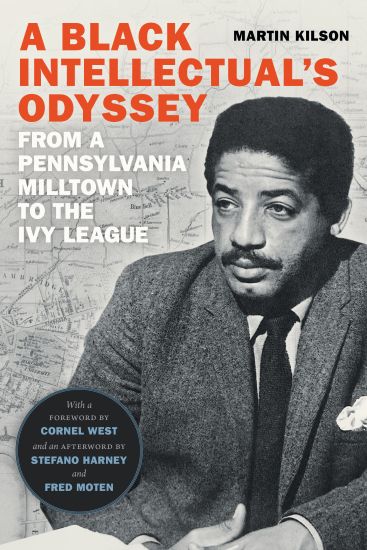
A Black Intellectual's Odyssey
Martin Kilson; Cornel West; Stefano Harney; Fred Moten
Duke University Press
2021
sidottu
In 1969, Martin Kilson became the first tenured African American professor at Harvard University, where he taught African and African American politics for over thirty years. In A Black Intellectual's Odyssey, Kilson takes readers on a fascinating journey from his upbringing in the small Pennsylvania milltown of Ambler to his experiences attending Lincoln University-the country's oldest HBCU-to pursuing graduate study at Harvard before spending his entire career there as a faculty member. This is as much a story of his travels from the racist margins of twentieth-century America to one of the nation's most prestigious institutions as it is a portrait of the places that shaped him. He gives a sweeping sociological tour of Ambler as a multiethnic, working-class company town while sketching the social, economic, and racial elements that marked everyday life. From narrating the area's history of persistent racism and the racial politics in the integrated schools to describing the Black church's role in buttressing the town's small Black community, Kilson vividly renders his experience of northern small-town life during the 1930s and 1940s. At Lincoln University, Kilson's liberal political views coalesced as he became active in the local NAACP chapter. While at Lincoln and during his graduate work at Harvard, Kilson observed how class, political, and racial dynamics influenced his peers' political engagement, diverse career paths, and relationships with white people. As a young professor, Kilson made a point of assisting Harvard's African American students in adapting to life at a white institution. Throughout his career, Kilson engaged in pioneering scholarship while mentoring countless students. A Black Intellectual's Odyssey features contributions from three of his students: a foreword by Cornel West and an afterword by Stefano Harney and Fred Moten.
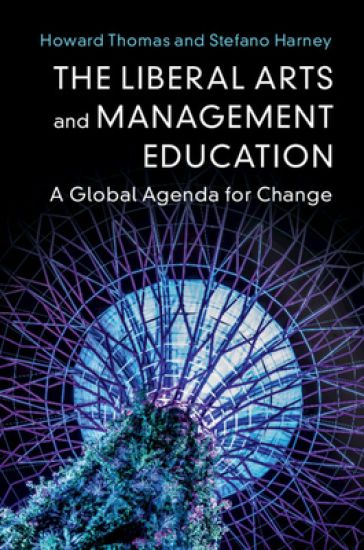
The Liberal Arts and Management Education
Stefano Harney; Howard Thomas
Cambridge University Press
2020
sidottu
Calling for the transformation of undergraduate education, Thomas and Harney argue that the liberal arts should be integrated into the traditional management curriculum to blend technical and analytic acumen with creativity, critical thinking, and ethical intelligence. In describing their vision for a new liberal management education, the authors demonstrate how a holistic pedagogy that does not sacrifice one wealth of learning for another instead encourages participation and integration to the benefit of students and society. Global in sweep, the book provides case studies of successfully implemented experimental courses in Asia and Britain, as well as a speculative chapter on how an African liberal management education could take shape, based on African-centred principles and histories. Finally, the book argues that the stakes of this agenda go beyond mere curricular reform and pedagogical innovation and speak directly to the environmental, business, political, and social challenges we face today.


911 A Public Emergency?
Brent Hayes Edwards; Stefano Harney; Randy Martin; Timothy Mitchell; Ella Shohat; Fred Moten
Duke University Press
2002
pokkari
Since September 11, public discourse has often been framed in terms of absolutes: an age of innocence gives way to a present under siege, while the United States and its allies face off against the Axis of Evil. This special issue of Social Text aims to move beyond these binaries toward thoughtful analysis. The editors argue that the challenge for the Left is to develop an antiterrorism stance that acknowledges the legacy of U.S. trade and foreign policy as well as the diversity of the Muslim faith and the dangers presented by fundamentalism of all kinds.Examining the strengths and shortcomings of area, race, and gender studies in the search for understanding, this issue considers cross-cultural feminism as a means of combating terrorism; racial profiling of Muslims in the context of other racist logics; and the homogenization of dissent. The issue includes poetry, photographic work, and an article by Judith Butler on the discursive space surrounding the attacks of September 11. This impressive range of contributions questions the meaning and implications of the events of September 11 and their aftermath.Contributors. Muneer Ahmad, Meena Alexander, Lopamudra Basu, Judith Butler, Zillah Eisenstein, Stefano Harney, Randy Martin, Rosalind C. Morris, Fred Moten, Sandrine Nicoletta, Yigal Nizri, Jasbir K. Puar, Amit S. Rai, Ella Shohat, Ban Wang
An innovative contribution to political theory, State Work examines the labor of government workers in North America. Arguing that this work needs to be theorized precisely because it is vital to the creation and persistence of the state, Stefano Harney draws on thinking from public administration and organizational sociology, as well as poststructuralist theory and performance studies, to launch a cultural studies of the state. Countering conceptions of the government and its employees as remote and inflexible, Harney uses the theory of mass intellectuality developed by Italian worker-theorists to illuminate the potential for genuine political progress inherent within state work.State Work begins with an ethnographic account of Harney’s work as a midlevel manager within an Ontario government initiative charged with leading the province’s efforts to combat racism. Through readings of material such as The X-Files and Law & Order, Harney then reviews how popular images of the state and government labor are formed within American culture and how these ideas shape everyday life. He highlights the mutually dependent roles played in state work by the citizenry and civil servants. Using as case studies Al Gore’s National Partnership for Reinventing Government and a community-policing project in New York City, Harney also critiques public management literature and performance measurement theories. He concludes his study with a look at the motivations of state workers.
An innovative contribution to political theory, State Work examines the labor of government workers in North America. Arguing that this work needs to be theorized precisely because it is vital to the creation and persistence of the state, Stefano Harney draws on thinking from public administration and organizational sociology, as well as poststructuralist theory and performance studies, to launch a cultural studies of the state. Countering conceptions of the government and its employees as remote and inflexible, Harney uses the theory of mass intellectuality developed by Italian worker-theorists to illuminate the potential for genuine political progress inherent within state work.State Work begins with an ethnographic account of Harney’s work as a midlevel manager within an Ontario government initiative charged with leading the province’s efforts to combat racism. Through readings of material such as The X-Files and Law & Order, Harney then reviews how popular images of the state and government labor are formed within American culture and how these ideas shape everyday life. He highlights the mutually dependent roles played in state work by the citizenry and civil servants. Using as case studies Al Gore’s National Partnership for Reinventing Government and a community-policing project in New York City, Harney also critiques public management literature and performance measurement theories. He concludes his study with a look at the motivations of state workers.
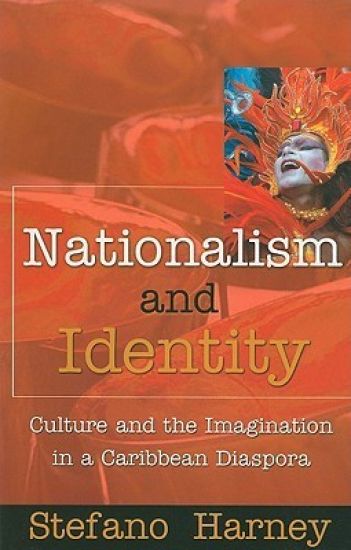
The nation-state of Trinidad and Tobago offers a unique nation-space, as Homi K Bhabha would say, for the study of the forces and ideologies of nationalism. This book reveals how this ethnically diverse nation, independent for less than forty years, has provided fertile ground for the creative tension between the imagination of the writer and the official discourse on nationalism. Harney argues that this discourse has in turn been embedded in a struggle that propelled the nation‘s story. He explores the influences on the sense of national identity caused by migration and the ethnicization of migrant communities in the cities. Adding to the comparative tone of much of this book, models of nationalism and ethnicity, often based on other societies, are tested against the imaginings of Trinidad by such essayists as VS Naipaul, CLR James, Willi Chen, Valerie Belgrave and Earl Lovelace. Using the wealth of imaginative literature produced by Trinidadians at home and abroad over the last forty years, together with European-based scholarship on theories of nationalism, this book provides a fascinating understanding of the forging of a national identity.