

Kirjailija
Steffen Mau
Kirjat ja teokset yhdessä paikassa: 21 kirjaa, julkaisuja vuosilta 2003-2026, suosituimpien joukossa Das metrische Wir. Vertaile teosten hintoja ja tarkista saatavuus suomalaisista kirjakaupoista.
21 kirjaa
Kirjojen julkaisuhaarukka 2003-2026.

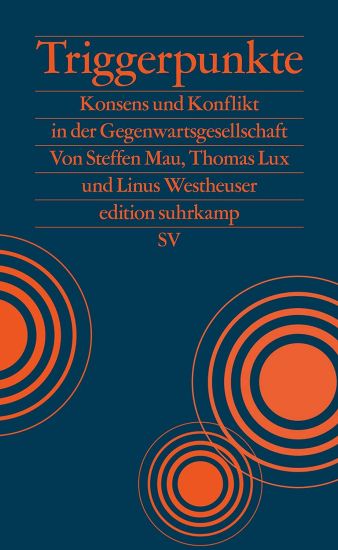
Available open access digitally under CC-BY-NC-ND licence. Today’s political debates are fiercely polarized. But looking beyond the headlines, this book shows that ordinary citizens hold much more nuanced, less divided views. Drawing on rich survey data and group discussions, this work maps four major areas of conflict: migration, climate change, diversity and economic justice. Across these conflicts, most citizens take positions that are middle-of-the-road, contradictory or undecided. It is only certain “trigger points” – like gendered pronouns or refugee admissions – that predictably ignite tensions and deep disagreement. Political entrepreneurs know this and weaponize trigger points for their agenda. Yet the real key to contemporary conflicts, the book argues, lies in social inequality. This is a vital work that maps today’s political landscape without sensationalism, offering a fresh lens on public debate.

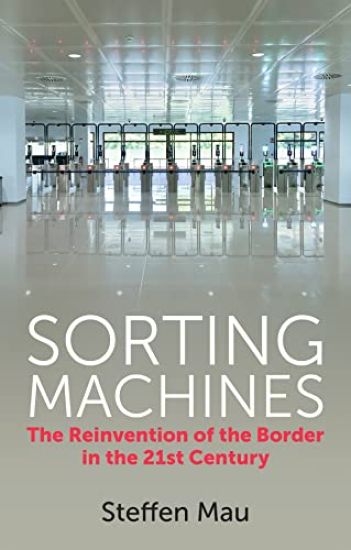
It is commonly thought that, thanks to globalization, nation-state borders are becoming increasingly porous. Steffen Mau shows that this view is misleading: borders are not getting more permeable today, but rather are being turned into powerful sorting machines. Supported by digitalization, they have been upgraded to smart borders, and border control has expanded spatially on a massive scale. Mau shows how the new sorting machines create mobility and immobility at the same time: for some travellers, borders open readily, but for others they are closed more firmly than ever. While a small circle of privileged people can travel almost anywhere today, the vast majority of the world’s population continues to be systematically excluded. Nowhere is the Janus nature of globalization more evident than at the borders of the 21st century.
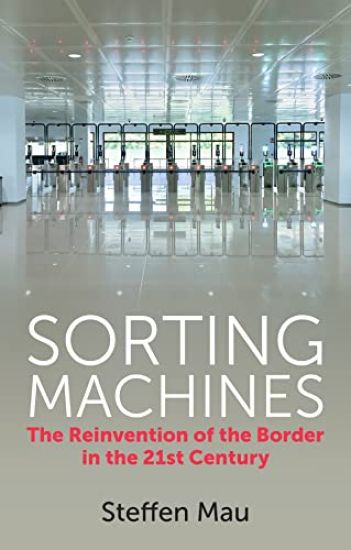
It is commonly thought that, thanks to globalization, nation-state borders are becoming increasingly porous. Steffen Mau shows that this view is misleading: borders are not getting more permeable today, but rather are being turned into powerful sorting machines. Supported by digitalization, they have been upgraded to smart borders, and border control has expanded spatially on a massive scale. Mau shows how the new sorting machines create mobility and immobility at the same time: for some travellers, borders open readily, but for others they are closed more firmly than ever. While a small circle of privileged people can travel almost anywhere today, the vast majority of the world’s population continues to be systematically excluded. Nowhere is the Janus nature of globalization more evident than at the borders of the 21st century.



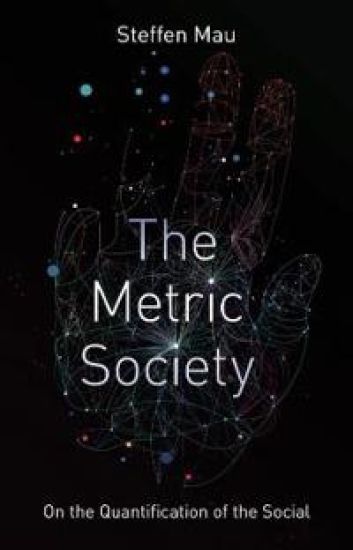
In today’s world, numbers are in the ascendancy. Societies dominated by star ratings, scores, likes and lists are rapidly emerging, as data are collected on virtually every aspect of our lives. From annual university rankings, ratings agencies and fitness tracking technologies to our credit score and health status, everything and everybody is measured and evaluated. In this important new book, Steffen Mau offers a critical analysis of this increasingly pervasive phenomenon. While the original intention behind the drive to quantify may have been to build trust and transparency, Mau shows how metrics have in fact become a form of social conditioning. The ubiquitous language of ranking and scoring has changed profoundly our perception of value and status. What is more, through quantification, our capacity for competition and comparison has expanded significantly – we can now measure ourselves against others in practically every area. The rise of quantification has created and strengthened social hierarchies, transforming qualitative differences into quantitative inequalities that play a decisive role in shaping the life chances of individuals. This timely analysis of the pernicious impact of quantification will appeal to students and scholars across the social sciences, as well as anyone concerned by the cult of numbers and its impact on our lives and societies today.
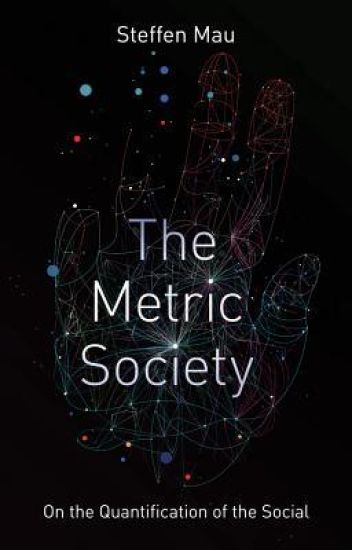
In today’s world, numbers are in the ascendancy. Societies dominated by star ratings, scores, likes and lists are rapidly emerging, as data are collected on virtually every aspect of our lives. From annual university rankings, ratings agencies and fitness tracking technologies to our credit score and health status, everything and everybody is measured and evaluated. In this important new book, Steffen Mau offers a critical analysis of this increasingly pervasive phenomenon. While the original intention behind the drive to quantify may have been to build trust and transparency, Mau shows how metrics have in fact become a form of social conditioning. The ubiquitous language of ranking and scoring has changed profoundly our perception of value and status. What is more, through quantification, our capacity for competition and comparison has expanded significantly – we can now measure ourselves against others in practically every area. The rise of quantification has created and strengthened social hierarchies, transforming qualitative differences into quantitative inequalities that play a decisive role in shaping the life chances of individuals. This timely analysis of the pernicious impact of quantification will appeal to students and scholars across the social sciences, as well as anyone concerned by the cult of numbers and its impact on our lives and societies today.

This book investigates why people are willing to support an institutional arrangement that realises large-scale redistribution of wealth between social groups of society. Steffen Mau introduces the concept of 'the moral economy' to show that acceptance of welfare exchanges rests on moral assumptions and ideas of social justice people adhere to. Analysing both the institution of welfare and the public attitudes towards such schemes, the book demonstrates that people are neither selfish nor altruistic; rather they tend to reason reciprocally.

Handwörterbuch Zur Gesellschaft Deutschlands
Steffen Mau; Nadine M. Schoneck
Springer vs
2013
nidottu
Dieses Handbuch stellt in 70 Artikeln wesentliche Aspekte der Strukturen und Dynamik des gesellschaftlichen Systems Deutschlands dar. Es ist ein umfassendes, bersichtlich gestaltetes und zuverl ssiges Grundlagenwerk f r alle, die sich in Studium, Forschung oder Beruf mit der Gesellschaft Deutschlands auseinandersetzen. In den Beitr gen werden der jeweilige Untersuchungsgegenstand definiert und seine sozialgeschichtliche Entwicklungslinie nachgezeichnet, gegenw rtige und prognostizierte Auspr gungen beleuchtet sowie die gesellschaftspolitische Relevanz des Gegenstands thematisiert. Zu den behandelten Themen z hlen u. a. Alter und Altern, Arbeitsmarkt und Besch ftigung, Bev lkerung, Bildung, Deutschland und Europa, Einkommen und Verm gen, Eliten, Familie und Lebensformen, Frauen, Gesundheit, Gleichstellung, Globalisierung, Jugend, Kinder, Kultur, Lebensstandard und Lebensqualit t, Lebensverlauf, Migration, Modernisierung und Individualisierung, soziale Mobilit t, Sozialstaat, Sozialstruktur, Transnationalisierung, Verkehr und Mobilit t, Werte und Wertewandel, Wohnen, Zeitverwendung.

Liberal States and the Freedom of Movement
Steffen Mau; H. Brabandt; L. Laube; Christof Roos
Palgrave Macmillan
2012
sidottu
State borders regulate cross-border mobility and determine peoples' chances to travel, work, and study across the globe. This book looks at how global mobility is defined by borders in 2011 in comparison to the 1970s. The authors trace the transformation of OECD-state borders in recent decades and show how borders have become ever more selective.

In recent decades, the rise of world markets and the technological revolutions in transportation and communication have brought what was once distant and inaccessible within easy reach of the individual. The territorial and social closure that characterized nation-states is fading, and this is reflected not only in new forms of governance and economic globalization, but also in individual mobility and transnational transactions, affiliations and networks. Social Transnationalism explores new forms of cross-border interactions and mobility which have expanded across physical space by looking at the individual level. It asks whether we are dealing with unbridled movements and cross-border interactions which transform the lifeworlds of individuals fundamentally. Furthermore, it investigates whether, and to what degree, increases in the volume of transnational interactions weaken the individual citizen's bond to the nation-state as such, and to what extent citizens' national identities are being replaced or complemented by cosmopolitan ones
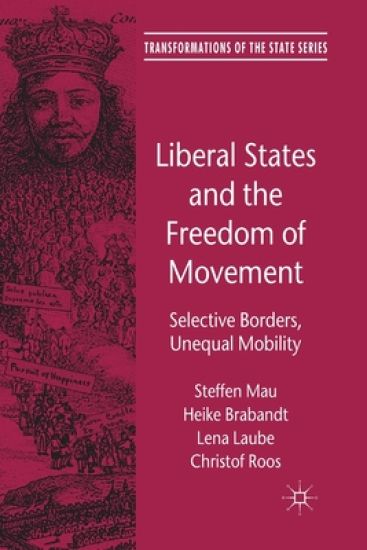
Liberal States and the Freedom of Movement
Steffen Mau; H. Brabandt; L. Laube; Christof Roos
Palgrave Macmillan
2012
nidottu
State borders regulate cross-border mobility and determine peoples' chances to travel, work, and study across the globe. This book looks at how global mobility is defined by borders in 2011 in comparison to the 1970s. The authors trace the transformation of OECD-state borders in recent decades and show how borders have become ever more selective.

This comprehensive textbook provides a thorough analysis of the nature of European societies across the expanded EU member states. Using a wealth of data, the authors compare the different dimensions of the territorial and social order of Europe and address a range of issues relating to Europeanisation and key topics such as inequality, migration, poverty, population and family, the labour market and education. Presented in a student friendly way, this book also helps unravel people's attitudes towards Europe, European integration and citizens of other European countries. It will be an essential read for under- and post-graduate students and academics of sociology, European studies, social stratification, social policy and political sciences.
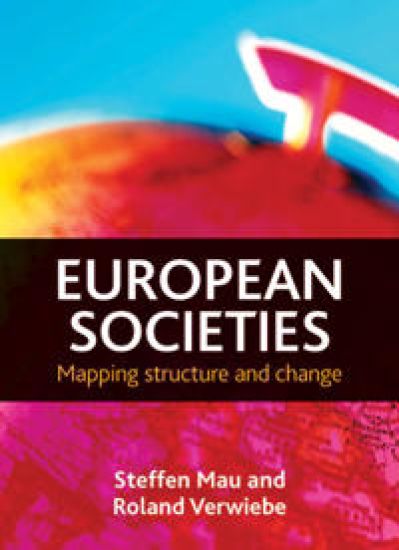
This comprehensive textbook provides a thorough analysis of the nature of European societies across the expanded EU member states. Using a wealth of data, the authors compare the different dimensions of the territorial and social order of Europe and address a range of issues relating to Europeanisation and key topics such as inequality, migration, poverty, population and family, the labour market and education. Presented in a student friendly way, this book also helps unravel people's attitudes towards Europe, European integration and citizens of other European countries. It will be an essential read for under- and post-graduate students and academics of sociology, European studies, social stratification, social policy and political sciences.

In recent decades, the rise of world markets and the technological revolutions in transportation and communication have brought what was once distant and inaccessible within easy reach of the individual. The territorial and social closure that characterized nation-states is fading, and this is reflected not only in new forms of governance and economic globalization, but also in individual mobility and transnational transactions, affiliations and networks. Social Transnationalism explores new forms of cross-border interactions and mobility which have expanded across physical space by looking at the individual level. It asks whether we are dealing with unbridled movements and cross-border interactions which transform the lifeworlds of individuals fundamentally. Furthermore, it investigates whether, and to what degree, increases in the volume of transnational interactions weaken the individual citizen's bond to the nation-state as such, and to what extent citizens' national identities are being replaced or complemented by cosmopolitan ones