Kirjojen hintavertailu. Mukana 12 595 353 kirjaa ja 12 kauppaa.

Kirjailija

Stephan H. Lindner

Kirjat ja teokset yhdessä paikassa: 3 kirjaa, julkaisuja vuosilta 2008-2011, suosituimpien joukossa Au Coeur de l'Ig Farben. l'Usine Chimique de Hoechst Sous Le Troisieme Reich. Vertaile teosten hintoja ja tarkista saatavuus suomalaisista kirjakaupoista.

3 kirjaa

Kirjojen julkaisuhaarukka 2008-2011.

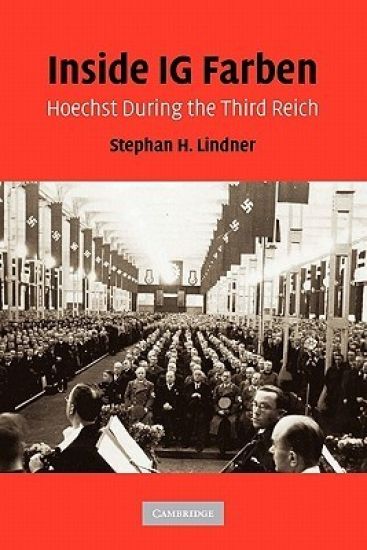
Inside IG Farben

Inside IG Farben

Stephan H. Lindner

Cambridge University Press
2011
pokkari
In 1925, the three leading chemical firms in Germany - BASF, Bayer, and Hoechst - merged, together with some smaller firms, to become IG Farben. IG Farben became, like no other firm, synonymous with the participation of German industry in the most heinous crimes of the Nazi regime. This book deals in depth with one of IG Farben's leading factories, Hoechst, during the Third Reich. On the basis of long and meticulous archival research, including previously inaccessible company records, the author describes and analyzes the relationship between management and employees, and with the Nazi party and its organizations. The exclusion and persecution of employees, particularly Jewish employees, is revealed, as is the extent of Hoechst's involvement in the exploitation of forced labor, and its active participation in human experiments in concentration camps. Throughout, the author sheds light on the motivations of those responsible for this conduct.
Au Coeur de l'Ig Farben. l'Usine Chimique de Hoechst Sous Le Troisieme Reich
En 1925, les trois principales entreprises de la chimie allemande - BASF, Bayer et Hoechst - se sont regroupees avec quelques autres de moindre importance au sein du conglomerat IG Farbenindustrie AG. Plus que toute autre firme, cette IG Farben incarne aujourd'hui, dans la memoire commune, la compromission de l'industrie allemande dans les crimes du Troisieme Reich. Ce livre est une histoire de l'usine chimiquede Hoechst pres de Francfort-sur-le-Main en tant que composante de l'IG Farben sous le nazisme.Sur la base de vastes recherches dans des archives internes inedites, Stephan H. Lindner interroge les relations entre la direction et son personnel avec le parti national-socialiste et ses organisations satellites. Il porte une attention particuliere a la question des marges de manoeuvre face a la double tutelle du regime et de la direction centrale du groupe. Comment les dirigeants de l'usine ont-ils reagi a la nouvelle situation politique a partir de 1933? La vie et le travail a Hoechst sous le nazisme etaient marques a la fois par l'adaptation ainsi que par l'exclusion et la repression. Dans quelle mesure l'etablissement, sa direction et ses salaries ont-ils ete lies au nouveau regime, a ses representants et organisations? A quel point ont-ils ete impliques dans ses crimes, voire activement partie prenante de ceux-ci? Sont ainsi evoques les plus sombres aspects de l'histoire de l'usine: le sort fait aux salaries juifs ou consideres comme tels, les conditions de travail et d'existence des travailleurs etrangers forces de differentes origines ainsi que l'implication dans des experiences medicales sur des detenus de camps de concentration. Cet ouvrage sans complaisance apporte une avancee decisive a la connaissance d'une singularite du monde industriel du Troisieme Reich.
Inside IG Farben

Inside IG Farben

Stephan H. Lindner

Cambridge University Press
2008
sidottu
In 1925, the three leading chemical firms in Germany - BASF, Bayer, and Hoechst - merged, together with some smaller firms, to become IG Farben. IG Farben became, like no other firm, synonymous with the participation of German industry in the most heinous crimes of the Nazi regime. This book deals in depth with one of IG Farben's leading factories, Hoechst, during the Third Reich. On the basis of long and meticulous archival research, including previously inaccessible company records, the author describes and analyzes the relationship between management and employees, and with the Nazi party and its organizations. The exclusion and persecution of employees, particularly Jewish employees, is revealed, as is the extent of Hoechst's involvement in the exploitation of forced labor, and its active participation in human experiments in concentration camps. Throughout, the author sheds light on the motivations of those responsible for this conduct.