Kirjojen hintavertailu. Mukana 12 345 059 kirjaa ja 12 kauppaa.
Kirjailija
Stephan Thernstrom
Kirjat ja teokset yhdessä paikassa: 6 kirjaa, julkaisuja vuosilta 1973-2004, suosituimpien joukossa Beyond the Color Line. Vertaile teosten hintoja ja tarkista saatavuus suomalaisista kirjakaupoista.
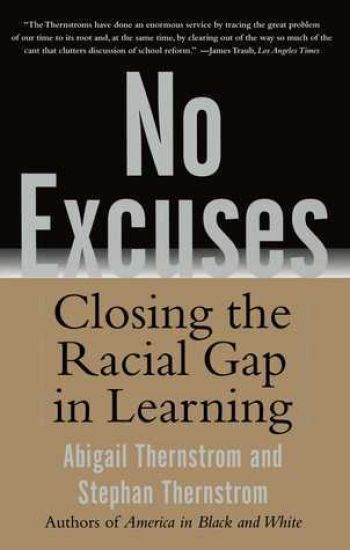
A concerned appraisal of the racial gap in education today cites educational inequalities as a central civil rights issue, highlighting inner-city schools that demonstrate models of educational excellence while suggesting ways that educational problems can be overcome. Reprint. 35,000 first printing.
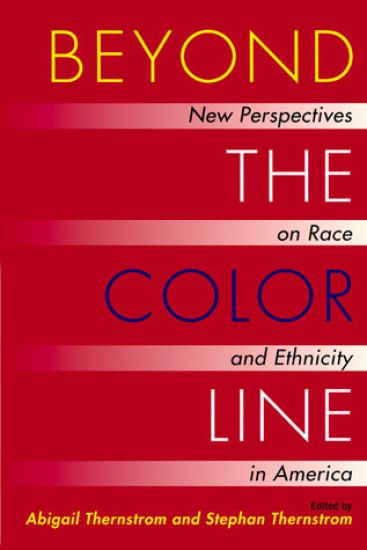
Twenty-five essays covering a range of areas from religion and immigration to family structure and crime examine America's changing racial and ethnic scene. They clearly show that old civil rights strategies will not solve today's problems and offer a bold new civil rights agenda based on today's realities.
In a book destined to become a classic, Stephan and Abigail Thernstrom present important new information about the positive changes that have been achieved and the measurable improvement in the lives of the majority of African-Americans. Supporting their conclusions with statistics on education, earnings, and housing, they argue that the perception of serious racial divisions in this country is outdated -- and dangerous.
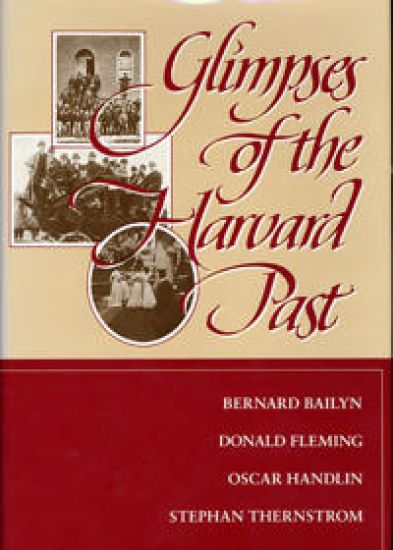
This happy combination of literary essay and exceptionally well-written history, providing insights into a past still important in the twentieth century, will quickly take an honored place on the shelves of Harvardiana.Bernard Bailyn writes on the origins of Harvard and the foundations of Harvard’s persistent character, structure, and style of governance, and contributes another chapter on the unhappy ending to the administration of the beloved President Kirkland, who presided over but could not control a period of profound change. Oscar Handlin describes the shifting relationships and power struggles among faculty, administration, and students over the years (“Making Men of the Boys”) and Harvard’s evolution from an ingrown community of teachers and students into a large, complex institution with worldwide prestige. Donald Fleming has chapters on the presidency of Charles William Eliot (“the greatest man in the history of Harvard”) and the colorful personalities of Harvard (not only “Copey” and Santayana and Charles Eliot Norton, but also “Old Sophy,” who kept a pet chicken in his room in Holworthy). Stephan Thernstrom examines the growing diversity of the student body as to finances, geography, religion, and racial background from the eighteenth century to the 1980s.The subjects are of continuing interest not only to members of the Harvard community, who will treasure this memento of Harvard’s 350th anniversary, but also to historians of higher education and ordinary readers, who will enjoy the new information, original personalities, and thoughtful perspectives the book offers.
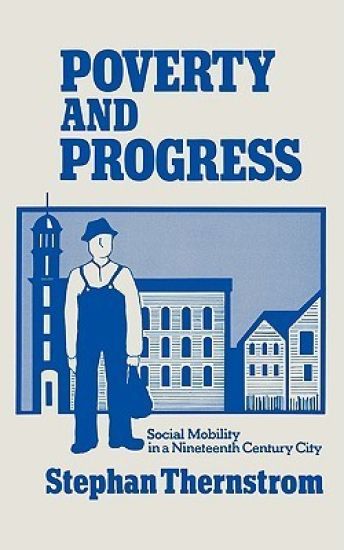
Embedded in the consciousness of Americans throughout much of the country’s history has been the American Dream: that every citizen, no matter how humble his beginnings, is free to climb to the top of the social and economic ladder. Poverty and Progress assesses the claims of the American Dream against the actual structure of economic and social opportunities in a typical nineteenth century industrial community—Newburyport, Massachusetts.Here is local history. With the aid of newspapers, census reports, and local tax, school, and savings bank records Stephan Thernstrom constructs a detailed and vivid portrait of working class life in Newburyport from 1850 to 1880, the critical years in which this old New England town was transformed into a booming industrial city. To determine how many self-made men there really were in the community, he traces the career patterns of hundreds of obscure laborers and their sons over this thirty year period, exploring in depth the differing mobility patterns of native-born and Irish immigrant workmen. Out of this analysis emerges the conclusion that opportunities for occupational mobility were distinctly limited. Common laborers and their sons were rarely able to attain middle class status, although many rose from unskilled to semiskilled or skilled occupations.But another kind of mobility was widespread. Men who remained in lowly laboring jobs were often strikingly successful in accumulating savings and purchasing homes and a plot of land. As a result, the working class was more easily integrated into the community; a new basis for social stability was produced which offset the disruptive influences that accompanied the first shock of urbanization and industrialization.Since Newburyport underwent changes common to other American cities, Thernstrom argues, his findings help to illuminate the social history of nineteenth century America and provide a new point of departure for gauging mobility trends in our society today. Correlating the Newburyport evidence with comparable studies of twentieth century cities, he refutes the popular belief that it is now more difficult to rise from the bottom of the social ladder than it was in the idyllic past. The “blocked mobility” theory was proposed by Lloyd Warner in his famous “Yankee City” studies of Newburyport; Thernstrom provides a thorough critique of the “Yankee City” volumes and of the ahistorical style of social research which they embody.