Kirjojen hintavertailu. Mukana 12 109 061 kirjaa ja 12 kauppaa.

Kirjailija

Stephanie Davies

Kirjat ja teokset yhdessä paikassa: 6 kirjaa, julkaisuja vuosilta 2010-2026, suosituimpien joukossa Waiting Times. Vertaile teosten hintoja ja tarkista saatavuus suomalaisista kirjakaupoista.

6 kirjaa

Kirjojen julkaisuhaarukka 2010-2026.

Waiting Times

Waiting Times

Kelechi Anucha; Lisa Baraitser; Jocelyn Catty; Stephanie Davies; Michael J. Flexer; Martin D. Moore; Martin O'Brien; Jordan Osserman; Laura Salisbury

BLOOMSBURY PUBLISHING PLC
2026
sidottu
In a world characterised by ‘poly crisis’, two major crises stand out: a crisis of time and a crisis of care. This open access book investigates what it means to wait in and for healthcare in an era when care is politicised and rationed and time is lived at increasingly different and complex tempos. Waiting times within the UK National Health Service (NHS) have been at historic levels through and since the Covid-19 pandemic. Although this sense of a crisis of waiting is culturally and historically specific, it casts important light on the ‘crisis’ of welfare structures across the Global North. Such a crisis in waiting times brings both a call for judgment and a call to action. This book argues that all healthcare entails waiting and other forms of elongated time, such as pausing to observe, staying alongside patients at end of life, or stopping treatment as an ethical intervention. Instead of trying to 'solve' the crisis of the NHS by moving people more quickly through the system, reallocating time to address ‘shortfalls’ to reduce waits to access care, or even abandoning the social commitment to a universal service, the authors argue that it is vital to pay attention, first, to how time and care continue to be made in the current system. It is only by reckoning with the essential ‘untimeliness’ of care that we might then be able to conceptualise interventions in the NHS that are ‘timely’ and that sustain its social mission. The ebook editions of this book are available open access under a CC BY-NC-ND 4.0 licence on bloomsburycollections.com. Open access was funded by The Wellcome Trust.

Waiting Times

Waiting Times

Kelechi Anucha; Lisa Baraitser; Jocelyn Catty; Stephanie Davies; Michael J. Flexer; Martin D. Moore; Martin O'Brien; Jordan Osserman; Laura Salisbury

BLOOMSBURY PUBLISHING PLC
2026
nidottu
In a world characterised by ‘poly crisis’, two major crises stand out: a crisis of time and a crisis of care. This open access book investigates what it means to wait in and for healthcare in an era when care is politicised and rationed and time is lived at increasingly different and complex tempos. Waiting times within the UK National Health Service (NHS) have been at historic levels through and since the Covid-19 pandemic. Although this sense of a crisis of waiting is culturally and historically specific, it casts important light on the ‘crisis’ of welfare structures across the Global North. Such a crisis in waiting times brings both a call for judgment and a call to action. This book argues that all healthcare entails waiting and other forms of elongated time, such as pausing to observe, staying alongside patients at end of life, or stopping treatment as an ethical intervention. Instead of trying to 'solve' the crisis of the NHS by moving people more quickly through the system, reallocating time to address ‘shortfalls’ to reduce waits to access care, or even abandoning the social commitment to a universal service, the authors argue that it is vital to pay attention, first, to how time and care continue to be made in the current system. It is only by reckoning with the essential ‘untimeliness’ of care that we might then be able to conceptualise interventions in the NHS that are ‘timely’ and that sustain its social mission. The ebook editions of this book are available open access under a CC BY-NC-ND 4.0 licence on bloomsburycollections.com. Open access was funded by The Wellcome Trust.

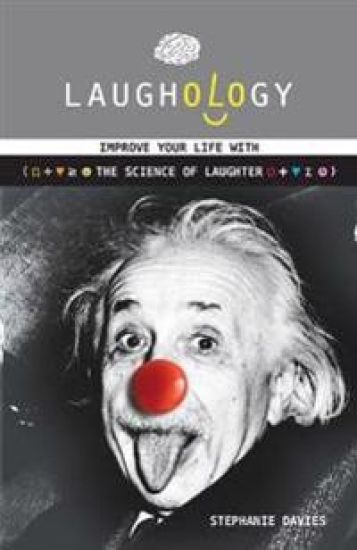
Laughology

Laughology

Stephanie Davies

Crown House Publishing
2013
nidottu
From those first baby giggles, we begin to use laughter. It can be used to make us popular and it can be used as an emotional release mechanism. Whilst we are born with the physical ability to laugh, the capacity to utilise it as a social tool is something we learn. And in order to do this, we need to develop a sense of humour. Stephanie Davies is one of the country's preeminent laughter experts. A former stand-up comedian, she studied the science of laughter and founded Laughology, a unique enterprise which teaches individuals in the public and private sectors how to enhance their potential through laughter and humour. She has over ten years' experience of developing interventions that have been applied in a wide variety of settings dealing with complex public and mental health issues and building teams in high profile organisations. The book explains simple techniques that will improve the reader's ability to gain a morepositive perspective in difficult situations and increase his or her happiness through adopting the techniques from the Laughology model. The key subjects covered are: What is laughter? What is humour? The psychological connection What makes us laugh and how to find your humour trigger Your inner child - the natural comedian Appropriate humour and laughter The SMILE strategy How to find and sustain your giggle For such an integral facet of humanity, the academic study of laughter and humour is still a relatively new field. Increasingly, however, experts are beginning to investigate the personal and social benefits of laughter. One of the best documented examples of the effect laughter can have on health involves the writer Norman Cousins, who was diagnosed with a debilitating spinal disease and given a one in 500 chance of survival in 1964. Rather than stay in hospital, he checked into a hotel where he took large doses of vitamin C and devised a treatment programme consisting of positive behaviours such as laughter, love and joy. He watched as much comedy as he could, including episodes of Candid Camera and The Marx Brothers movies and found that, over time, laughter stimulated chemicals in his body which allowed him several hours of pain-free sleep. He continued the treatment until, eventually, his disease went into remission and he was able to return to work. He wrote: I made the joyous discovery that 10 minutes of genuine belly laughter had an anaesthetic effect and would give me at least two hours of pain-free sleep.
Egos and Greed

Egos and Greed

Stephanie Davies

AuthorHouse
2010
pokkari
Climbing to the top is tough - Staying there is even harderBrought up in a world, where your Dad is a notorious gangster, and so is your Uncle along with everyone in your family - what does that make you?The Warner Empire is built on a foundation of drugs, a lap dancing club and East End violence. But when the head of the family is murdered, the equilibrium of leadership changes - fingers begin pointing and hands quickly start grabbing for the power and control ....Business is business and family is family - blended together in Egos & Greed as one business, three families and hundreds of hidden agendas.