Kirjojen hintavertailu. Mukana 12 581 024 kirjaa ja 12 kauppaa.

Kirjailija

Stephanie Pincetl

Kirjat ja teokset yhdessä paikassa: 4 kirjaa, julkaisuja vuosilta 2020-2026, suosituimpien joukossa The Myth of Sustainable Cities. Vertaile teosten hintoja ja tarkista saatavuus suomalaisista kirjakaupoista.

4 kirjaa

Kirjojen julkaisuhaarukka 2020-2026.

The Myth of Sustainable Cities

The Myth of Sustainable Cities

Stephanie Pincetl

TAYLOR FRANCIS LTD
2026
nidottu
These foreboding times are producing an understandable sense of urgency, a desire to envision and enact alternative systems as soon as possible. This book is written for readers who wish not just to understand the roots of our current political and environmental dilemmas, but for those seeking a new path toward reconciling humans and the planet. High energy cities have been normalized across the world and touted as the ultimate home of humans. We’ve all heard the claims that dense cities with their shared infrastructure and public transportation are one of the key solutions to the climate crisis. But what if cities are not just part of the problem, but are making things worse? What if these arguments for cities are obscuring real problems — and real solutions? Stephanie S. Pincetl presents a counterhegemonic argument about cities and development. Pincetl explains how the intrinsic energy needs of cities cannot be sustained in a post-hydrocarbon future without continuing the unequal extraction of resources and the continued de-development of non-Western, non-affluent countries. Instead, the book seeks to convince readers that relying on urbanization as a solution to climate change will only continue the extraction of enormous amounts of resources while impoverishing, polluting, and exterminating entire ways of life and obscuring the possibility that an alternative path is both necessary and possible. Taking an interdisciplinary approach and drawing on decades of the author’s scholarly and personal experience working on environmental policy and governance, this innovative volume will be of great interest to students and scholars of urban studies, sustainability, energy transitions, political ecology, and science studies.
The Myth of Sustainable Cities

The Myth of Sustainable Cities

Stephanie Pincetl

TAYLOR FRANCIS LTD
2026
sidottu
These foreboding times are producing an understandable sense of urgency, a desire to envision and enact alternative systems as soon as possible. This book is written for readers who wish not just to understand the roots of our current political and environmental dilemmas, but for those seeking a new path toward reconciling humans and the planet. High energy cities have been normalized across the world and touted as the ultimate home of humans. We’ve all heard the claims that dense cities with their shared infrastructure and public transportation are one of the key solutions to the climate crisis. But what if cities are not just part of the problem, but are making things worse? What if these arguments for cities are obscuring real problems — and real solutions? Stephanie S. Pincetl presents a counterhegemonic argument about cities and development. Pincetl explains how the intrinsic energy needs of cities cannot be sustained in a post-hydrocarbon future without continuing the unequal extraction of resources and the continued de-development of non-Western, non-affluent countries. Instead, the book seeks to convince readers that relying on urbanization as a solution to climate change will only continue the extraction of enormous amounts of resources while impoverishing, polluting, and exterminating entire ways of life and obscuring the possibility that an alternative path is both necessary and possible. Taking an interdisciplinary approach and drawing on decades of the author’s scholarly and personal experience working on environmental policy and governance, this innovative volume will be of great interest to students and scholars of urban studies, sustainability, energy transitions, political ecology, and science studies.
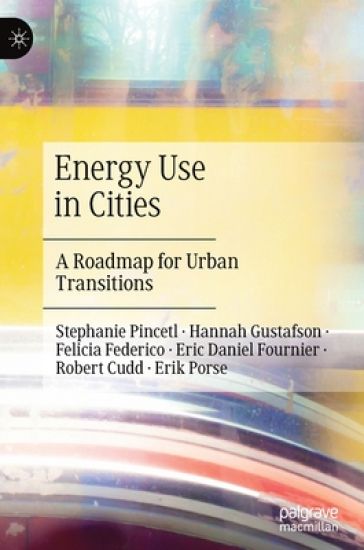
Energy Use in Cities

Energy Use in Cities

Stephanie Pincetl; Hannah Gustafson; Felicia Federico; Eric Daniel Fournier; Robert Cudd; Erik Porse

Springer Nature Switzerland AG
2021
nidottu
In an era of big data and smart cities, this book is an innovative and creative contribution to our understanding of urban energy use. Societies have basic data needs to develop an understanding of energy flows for planning energy sustainability. However, this data is often either not utilized or not available. Using California as an example, the book provides a roadmap for using data to reduce urban greenhouse gas emissions by targeting programs and initiatives that will successfully and parsimoniously improve building performance while taking into account issues of energy affordability. This first of its kind methodology maps high-detail building energy use to understand patterns of consumption across buildings, neighborhoods, and socioeconomic divisions in megacities. The book then details the steps required to replicate this methodology elsewhere, and shows the importance of openly-accessible building energy data for transitioning cities to meet the climate planning goals of thetwenty-first century. It also explains why actual data, not modeled or sampled, is critical for accurate analysis and insights. Finally, it acknowledges the complex institutional context for this work and some of the obstacles – utility reluctance, public agency oversight, funding and path dependencies. This book will be of great value to scholars across the environmental sectors, but especially to those studying sustainable urban energy as well as practitioners and policy makers in these areas.
Energy Use in Cities

Energy Use in Cities

Stephanie Pincetl; Hannah Gustafson; Felicia Federico; Eric Daniel Fournier; Robert Cudd; Erik Porse

Springer Nature Switzerland AG
2020
sidottu
In an era of big data and smart cities, this book is an innovative and creative contribution to our understanding of urban energy use. Societies have basic data needs to develop an understanding of energy flows for planning energy sustainability. However, this data is often either not utilized or not available. Using California as an example, the book provides a roadmap for using data to reduce urban greenhouse gas emissions by targeting programs and initiatives that will successfully and parsimoniously improve building performance while taking into account issues of energy affordability. This first of its kind methodology maps high-detail building energy use to understand patterns of consumption across buildings, neighborhoods, and socioeconomic divisions in megacities. The book then details the steps required to replicate this methodology elsewhere, and shows the importance of openly-accessible building energy data for transitioning cities to meet the climate planning goals of thetwenty-first century. It also explains why actual data, not modeled or sampled, is critical for accurate analysis and insights. Finally, it acknowledges the complex institutional context for this work and some of the obstacles – utility reluctance, public agency oversight, funding and path dependencies. This book will be of great value to scholars across the environmental sectors, but especially to those studying sustainable urban energy as well as practitioners and policy makers in these areas.