Kirjojen hintavertailu. Mukana 12 390 323 kirjaa ja 12 kauppaa.

Kirjailija

Stephanie S. Pane

Kirjat ja teokset yhdessä paikassa: 2 kirjaa, julkaisuja vuodelta 2008, suosituimpien joukossa Staffing the Contemporary Organization. Vertaile teosten hintoja ja tarkista saatavuus suomalaisista kirjakaupoista.

2 kirjaa

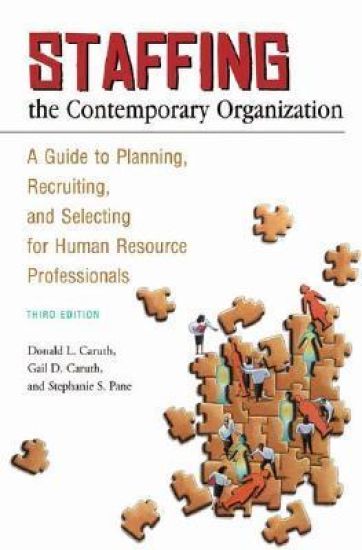
Staffing the Contemporary Organization

Staffing the Contemporary Organization

Donald L. Caruth; Gail D. Caruth; Stephanie S. Pane

Praeger Publishers Inc
2008
sidottu
Few business functions are more important than putting people where they can do the most good. Get it right, and the business soars. Get it wrong, and the business pays dearly in reduced sales, profits, and productivity. Staffing the Contemporary Organization provides a comprehensive treatment of staffing procedures, policies, techniques, and problems. It includes a number of human resources topics not usually covered in one volume—HR planning, legal aspects of staffing, recruiting, selecting, performance appraisal, career development, and many others—in an integrated system. The method presented is a proven, useful tool that managers and HR people can employ to build stronger, more resilient organizations.This thoroughly revised edition provides a comprehensive treatment of staffing procedures, policies, techniques, and problems. It covers areas newly developed since the last edition, like recruiting via the Internet and new court decisions that clarify the scope and application of antidiscrimination laws in the workplace. Among other topics, it covers the following areas in detail: -Employment law -Job analysis -Recruiting and interviewing -Selecting and selection tests -Appraisals and employee development -Administration: Handling promotions, demotions, layoffs, terminations, etc. -Career planning -Measuring the effectiveness of the HR function. Staffing, the authors contend, must encompass the entire range of activities associated with planning for, obtaining, utilizing, and developing human resources. Suitable for business students as well as professionals, this is the first book to present a systems view of the staffing function—a view necessary to maximize the contribution of any company's most important asset: its people.
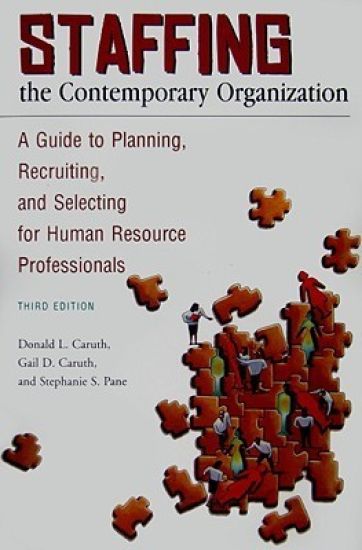
Staffing the Contemporary Organization

Staffing the Contemporary Organization

Donald L. Caruth; Gail D. Caruth; Stephanie S. Pane

Praeger Publishers Inc
2008
nidottu
Few business functions are more important than putting people where they can do the most good. Get it right, and the business soars. Get it wrong, and the business pays dearly in reduced sales, profits, and productivity. Staffing the Contemporary Organization provides a comprehensive treatment of staffing procedures, policies, techniques, and problems. It includes a number of human resources topics not usually covered in one volume—HR planning, legal aspects of staffing, recruiting, selecting, performance appraisal, career development, and many others—in an integrated system. The method presented is a proven, useful tool that managers and HR people can employ to build stronger, more resilient organizations.This thoroughly revised edition provides a comprehensive treatment of staffing procedures, policies, techniques, and problems. It covers areas newly developed since the last edition, like recruiting via the Internet and new court decisions that clarify the scope and application of antidiscrimination laws in the workplace. Among other topics, it covers the following areas in detail: -Employment law -Job analysis -Recruiting and interviewing -Selecting and selection tests -Appraisals and employee development -Administration: Handling promotions, demotions, layoffs, terminations, etc. -Career planning -Measuring the effectiveness of the HR function. Staffing, the authors contend, must encompass the entire range of activities associated with planning for, obtaining, utilizing, and developing human resources. Suitable for business students as well as professionals, this is the first book to present a systems view of the staffing function—a view necessary to maximize the contribution of any company's most important asset: its people.