Kirjojen hintavertailu. Mukana 12 390 323 kirjaa ja 12 kauppaa.

Kirjailija

Stephen Breyer

Kirjat ja teokset yhdessä paikassa: 12 kirjaa, julkaisuja vuosilta 1984-2025, suosituimpien joukossa Collaborative Governance. Vertaile teosten hintoja ja tarkista saatavuus suomalaisista kirjakaupoista.

12 kirjaa

Kirjojen julkaisuhaarukka 1984-2025.

Collaborative Governance

Collaborative Governance

John D. Donahue; Richard J. Zeckhauser; Stephen Breyer

Princeton University Press
2012
pokkari
All too often government lacks the skill, the will, and the wallet to meet its missions. Schools fall short of the mark while roads and bridges fall into disrepair. Health care costs too much and delivers too little. Budgets bleed red ink as the cost of services citizens want outstrips the taxes they are willing to pay. Collaborative Governance is the first book to offer solutions by demonstrating how government at every level can engage the private sector to overcome seemingly insurmountable problems and achieve public goals more effectively. John Donahue and Richard Zeckhauser show how the public sector can harness private expertise to bolster productivity, capture information, and augment resources. The authors explain how private engagement in public missions--rightly structured and skillfully managed--is not so much an alternative to government as the way smart government ought to operate. The key is to carefully and strategically grant discretion to private entities, whether for-profit or nonprofit, in ways that simultaneously motivate and empower them to create public value. Drawing on a host of real-world examples-including charter schools, job training, and the resurrection of New York's Central Park--they show how, when, and why collaboration works, and also under what circumstances it doesn't. Collaborative Governance reveals how the collaborative approach can be used to tap the resourcefulness and entrepreneurship of the private sector, and improvise fresh, flexible solutions to today's most pressing public challenges.

Reading the Constitution: Why I Chose Pragmatism, Not Textualism
New York Times Bestseller In a provocative and brilliant analysis, retired Supreme Court Justice Stephen Breyer deconstructs the textualist philosophy of the current Supreme Court's supermajority and makes the case for a more pragmatic approach of the Constitution. "You will not read a more important legal work this election year." --Bob Woodward, Washington Post reporter and author of fifteen #1 New York Times bestselling books "A dissent for the ages." --The Washington Post "Breyer's candor about the state of the court is refreshing and much needed." --The Boston Globe The relatively new judicial philosophy of textualism dominates the Supreme Court. Textualists claim that the right way to interpret the Constitution and statutes is to read the text carefully and examine the language as it was understood at the time the documents were written. This, however, is not Justice Breyer's philosophy nor has it been the traditional way to interpret the Constitution since the time of Chief Justice John Marshall. Justice Breyer recalls Marshall's exhortation that the Constitution must be a workable set of principles to be interpreted by subsequent generations. Most important in interpreting law, says Breyer, is to understand the statutes as well as the consequences of deciding a case one way or another. He illustrates these principles by examining some of the most important cases in the nation's history, among them the Dobbs and Bruen decisions from 2022 that he argues were wrongly decided and have led to harmful results.
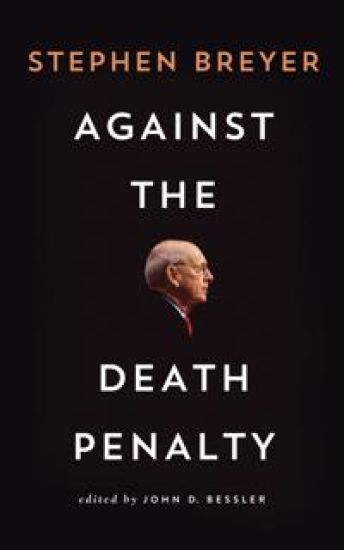
Against the Death Penalty

Against the Death Penalty

Stephen Breyer

BLOOMSBURY PUBLISHING PLC
2023
nidottu
"A landmark dissenting opinion arguing against the death penalty.Does the death penalty violate the Constitution? In Against the Death Penalty, Justice Stephen Breyer argues that it does; that it is carried out unfairly and inconsistently and, thus, violates the ban on ""cruel and unusual punishments"" specified by the Eighth Amendment to the Constitution.“Today’s administration of the death penalty,” Breyer writes, “involves three fundamental constitutional defects: (1) serious unreliability, (2) arbitrariness in application, and (3) unconscionably long delays that undermine the death penalty’s penological purpose. Perhaps as a result, (4) most places within the United States have abandoned its use.”This volume contains Breyer's dissent in the case of Glossip v. Gross, which involved an unsuccessful challenge to Oklahoma's use of a lethal-injection drug because it might cause severe pain. Justice Breyer's legal citations have been edited to make them understandable to a general audience, but the text retains the full force of his powerful argument that the time has come for the Supreme Court to revisit the constitutionality of the death penalty.Breyer was joined in his dissent from the bench by Justice Ruth Bader Ginsburg. Their passionate argument has been cited by many legal experts including fellow Justice Antonin Scalia—as signaling an eventual Court ruling striking down the death penalty. A similar dissent in 1963 by Breyer's mentor, Justice Arthur J. Goldberg, helped set the stage for a later ruling, imposing what turned out to be a four-year moratorium on executions."
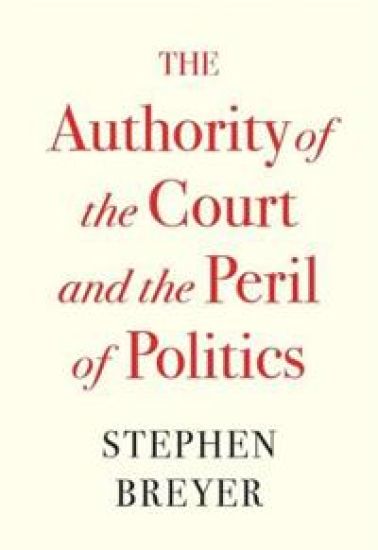
The Authority of the Court and the Peril of Politics

The Authority of the Court and the Peril of Politics

Stephen Breyer

Harvard University Press
2021
sidottu
A sitting justice reflects upon the authority of the Supreme Court—how that authority was gained and how measures to restructure the Court could undermine both the Court and the constitutional system of checks and balances that depends on it.A growing chorus of officials and commentators argues that the Supreme Court has become too political. On this view the confirmation process is just an exercise in partisan agenda-setting, and the jurists are no more than “politicians in robes”—their ostensibly neutral judicial philosophies mere camouflage for conservative or liberal convictions. Stephen Breyer, drawing upon his experience as a Supreme Court justice, sounds a cautionary note. Mindful of the Court’s history, he suggests that the judiciary’s hard-won authority could be marred by reforms premised on the assumption of ideological bias. Having, as Hamilton observed, “no influence over either the sword or the purse,” the Court earned its authority by making decisions that have, over time, increased the public’s trust. If public trust is now in decline, one part of the solution is to promote better understandings of how the judiciary actually works: how judges adhere to their oaths and how they try to avoid considerations of politics and popularity.Breyer warns that political intervention could itself further erode public trust. Without the public’s trust, the Court would no longer be able to act as a check on the other branches of government or as a guarantor of the rule of law, risking serious harm to our constitutional system.
Against the Death Penalty

Against the Death Penalty

Stephen Breyer

Brookings Institution
2016
sidottu
"A landmark dissenting opinion arguing against the death penalty.Does the death penalty violate the Constitution? In Against the Death Penalty, Justice Stephen Breyer argues that it does; that it is carried out unfairly and inconsistently and, thus, violates the ban on ""cruel and unusual punishments"" specified by the Eighth Amendment to the Constitution.“Today’s administration of the death penalty,” Breyer writes, “involves three fundamental constitutional defects: (1) serious unreliability, (2) arbitrariness in application, and (3) unconscionably long delays that undermine the death penalty’s penological purpose. Perhaps as a result, (4) most places within the United States have abandoned its use.”This volume contains Breyer's dissent in the case of Glossip v. Gross, which involved an unsuccessful challenge to Oklahoma's use of a lethal-injection drug because it might cause severe pain. Justice Breyer's legal citations have been edited to make them understandable to a general audience, but the text retains the full force of his powerful argument that the time has come for the Supreme Court to revisit the constitutionality of the death penalty.Breyer was joined in his dissent from the bench by Justice Ruth Bader Ginsburg. Their passionate argument has been cited by many legal experts including fellow Justice Antonin Scalia—as signaling an eventual Court ruling striking down the death penalty. A similar dissent in 1963 by Breyer's mentor, Justice Arthur J. Goldberg, helped set the stage for a later ruling, imposing what turned out to be a four-year moratorium on executions."
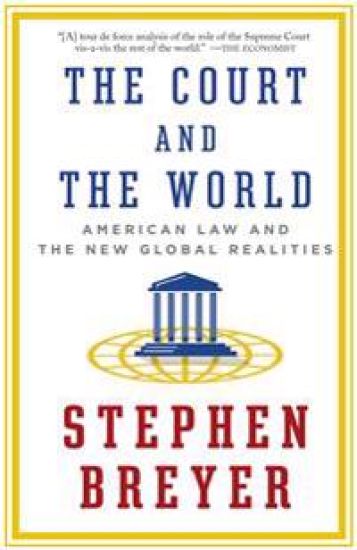
The Court and the World

The Court and the World

Stephen Breyer

Knopf Books for Young Readers
2016
pokkari
In this original, far-reaching, and timely book, Justice Stephen Breyer examines the work of the Supreme Court of the United States in an increasingly interconnected world, a world in which all sorts of activity, both public and private--from the conduct of national security policy to the conduct of international trade--obliges the Court to understand and consider circumstances beyond America's borders. Written with unique authority and perspective, The Court and the World reveals an emergent reality few Americans observe directly but one that affects the life of every one of us. Here is an invaluable understanding for lawyers and non-lawyers alike.
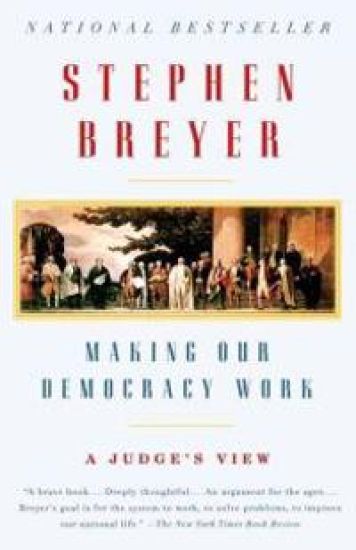
Making Our Democracy Work: A Judge's View
Charged with the responsibility of interpreting the Constitution, the Supreme Court has the awesome power to strike down laws enacted by our elected representatives. Why does the public accept the Court's decisions as legitimate and follow them, even when those decisions are highly unpopular? What must the Court do to maintain the public's faith? How can it help make our democracy work? In this groundbreaking book, Justice Stephen Breyer tackles these questions and more, offering an original approach to interpreting the Constitution that judges, lawyers, and scholars will look to for many years to come.
America's Supreme Court

America's Supreme Court

Stephen Breyer

Oxford University Press
2010
sidottu
The American Supreme Court is one of the most powerful and controversial judicial bodies in the world. The Court has assumed the role of settling fundamental issues of American social policy through its power of constitutional interpretation, and its rulings are among the most divisive, and controversial events in American political life. How did the American court come to acquire such power? How does it maintain its authority and public confidence in the face of deep political divides. In this book Stephen Breyer, a leading intellect in the current Court, gives an insider's view on how America's Supreme Court came to acquire such a prominent role in American public life, how the Court operates, and how it can continue to maintain the trust of the American public as the final arbiter of the values underlying America's democratic constitution. Breyer introduces the history of the Court by telling the stories of the landmark cases that defined the role the Court would play in American politics. He then offers a powerful restatement of his views on how a constitutional court should fulfil its function as final interpreter of a democratic constitution. In doing so, he examines some of the Court's most controversial recent decisions, on issues such as the legality of detention in Guantanamo Bay, and the scope of protection of gun ownership in Heller. The book offers a unique introduction to how the American Supreme Court does and should operate, invaluable to all students of American law and politics, and anyone looking to understand the workings of American politics.
Active Liberty

Active Liberty

Stephen Breyer

Oxford University Press
2008
sidottu
What role should courts play in a modern democracy? How should fundamental provisions of a democratic constitution be interpreted? These questions have divided constitutional theorists and those responsible for interpreting and applying constitutional law including, notoriously, the current U.S. Supreme Court. Justice Breyer is the most prominent liberal voice in the Supreme Court, this book distils his experience of interpreting the U.S. constitution and outlines a general liberal theory of the role of constitutional courts. Breyer argues that the primary role of a democratic constitution is to preserve and encourage 'Active Liberty': citizen participation in shaping government and its laws. The book argues that promoting active liberty requires judicial modesty and deference to legislative bodies; it also requires the recognition of the changing needs and demands of the populace. Breyer makes a powerful case against treating constitutions as a static guide for a world that has passed into history. Throughout the book, active liberty is employed as a foundational concept to illuminate the interpretation of key constitutional questions, and recent Supreme Court controversies, such as the scope of free speech and racial equality protection. For this revised, international edition of the book, Justice Breyer extends his discussion of democratic theory to examine topical questions in European constitutional law, including the legitimacy of the European Union, religious freedom under the European Convention on Human Rights.
Active Liberty: Interpreting Our Democratic Constitution
The Supreme Court justice defines and examines the legal principles of active liberty and emphasizes its importance in constitutional and statutory interpretation, using examples from the areas of federalism to affirmative action to argue that the Constitution and its tenets may adapt to changing situations and times. Reprint. 35,000 first printing.
Breaking the Vicious Circle

Breaking the Vicious Circle

Stephen Breyer

Harvard University Press
1995
nidottu
Breaking the Vicious Circle is a tour de force that should be read by everyone who is interested in improving our regulatory processes. Written by a highly respected federal judge, who would go on to serve on the Supreme Court, and who obviously recognizes the necessity of regulation but perceives its failures and weaknesses as well, it pinpoints the most serious problems and offers a creative solution that would for the first time bring rationality to bear on the vital issue of priorities in our era of limited resources.
Regulation and Its Reform

Regulation and Its Reform

Stephen Breyer

Harvard University Press
1984
nidottu
This book will become the bible of regulatory reform. No broad, authoritative treatment of the subject has been available for many years except for Alfred Kahn’s Economics of Regulation (1970). And Stephen Breyer’s book is not merely a utilitarian analysis or a legal discussion of procedures; it employs the widest possible perspective to survey the full implications of government regulation—economic, legal, administrative, political—while addressing the complex problems of administering regulatory agencies.Only a scholar with Judge Breyer’s practical experience as chief counsel to the Senate Judiciary Committee could have accomplished this task. He develops an ingenious original system for classifying regulatory activities according to the kinds of problems that have called for, or have seemed to call for, regulation; he then examines how well or poorly various regulatory regimes remedy these market defects. This enables him to organize an enormous amount of material in a coherent way, and to make significant and useful generalizations about real-world problems.Among the regulatory areas he considers are health and safety; environmental pollution, trucking, airlines, natural gas, public utilities, and telecommunications. He further gives attention to related topics such as cost-of-service ratemaking, safety standards, antitrust, and property rights. Clearly this is a book whose time is here—a veritable how-to-do-it book for administration deregulators, legislators, and the judiciary; and because it is comprehensive and superbly organized, with a wealth of highly detailed examples, it is practical for use in law schools and in courses on economics and political science.