
Kirjailija
Stephen C. Meyer
Kirjat ja teokset yhdessä paikassa: 11 kirjaa, julkaisuja vuosilta 2003-2023, suosituimpien joukossa The Return of the God Hypothesis. Vertaile teosten hintoja ja tarkista saatavuus suomalaisista kirjakaupoista.
Mukana myös kirjoitusasut: Stephen C Meyer
11 kirjaa
Kirjojen julkaisuhaarukka 2003-2023.
After a substantial author's preface recounting the author's life-journey with the question of science and design in nature, An Informed Cosmos pulls together essays that jointly cover the core arguments for a scientific theory of intelligent design. Along with a foreword by philosopher of science and leading design theorist Stephen C. Meyer, and a wide range of recommended resources, An Informed Cosmos offers an informed overview of the contemporary case for intelligent design.

After a substantial author's preface recounting the author's life-journey with the question of science and design in nature, An Informed Cosmos pulls together essays that jointly cover the core arguments for a scientific theory of intelligent design. Along with a foreword by philosopher of science and leading design theorist Stephen C. Meyer, and a wide range of recommended resources, An Informed Cosmos offers an informed overview of the contemporary case for intelligent design.
Lavish musical soundtracks contributed a special grandeur to the new widescreen, stereophonic sound movie experience of postwar biblical epics such as Samson and Delilah, Ben-Hur, and Quo Vadis. In Epic Sound, Stephen C. Meyer shows how music was utilized for various effects, sometimes serving as a vehicle for narrative plot and at times complicating biblical and cinematic interpretation. In this way, the soundscapes of these films reflected the ideological and aesthetic tensions within the genre, and more generally, within postwar American society. By examining key biblical films, Meyer adeptly engages musicology with film studies to explore cinematic interpretations of the Bible during the 1940s through the 1960s.

When Charles Darwin finished The Origin of Species, he thought that he had explained every clue, but one. Though his theory could explain many facts, Darwin knew that there was a significant event in the history of life that his theory did not explain. During this event, the -Cambrian explosion, - many animals suddenly appeared in the fossil record without apparent ancestors in earlier layers of rock. In Darwin's Doubt, Stephen C. Meyer tells the story of the mystery surrounding this explosion of animal life--a mystery that has intensified, not only because the expected ancestors of these animals have not been found, but because scientists have learned more about what it takes to construct an animal. During the last half century, biologists have come to appreciate the central importance of biological information--stored in DNA and elsewhere in cells--to building animal forms.Expanding on the compelling case he presented in his last book, Signature in the Cell, Meyer argues that the origin of this information, as well as other mysterious features of the Cambrian event, are best explained by intelligent design, rather than purely undirected evolutionary processes.

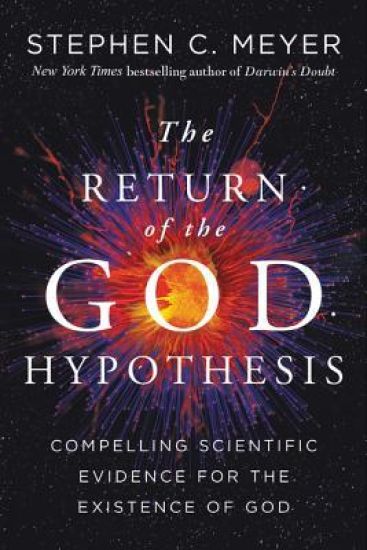
The New York Times bestselling author of Darwin’s Doubt presents groundbreaking scientific evidence of the existence of God, based on breakthroughs in physics, cosmology, and biology.Beginning in the late 19th century, many intellectuals began to insist that scientific knowledge conflicts with traditional theistic belief—that science and belief in God are “at war.” Philosopher of science Stephen Meyer challenges this view by examining three scientific discoveries with decidedly theistic implications. Building on the case for the intelligent design of life that he developed in Signature in the Cell and Darwin’s Doubt, Meyer demonstrates how discoveries in cosmology and physics coupled with those in biology help to establish the identity of the designing intelligence behind life and the universe. Meyer argues that theism—with its affirmation of a transcendent, intelligent and active creator—best explains the evidence we have concerning biological and cosmological origins. Previously Meyer refrained from attempting to answer questions about “who” might have designed life. Now he provides an evidence-based answer to perhaps the ultimate mystery of the universe. In so doing, he reveals a stunning conclusion: the data support not just the existence of an intelligent designer of some kind—but the existence of a personal God.
Why is the cosmos intellectually accessible to the human mind?A host of philosophers, theologians, scientists, and mathematicians of the Great Western Tradition have been struck by the uncanny interconnection between three fundamentally distinct domains of reality: nature, mathematics, and the human mind. This resonance has been discussed since antiquity and often attributed to a transcendent rational source of both material and immaterial aspects of reality. Johannes Kepler, a devout Christian who was greatly influenced by this intellectual tradition, was instrumental in transforming classical astronomy into a true celestial physics. He was convinced that a tripartite harmony of archetype, copy, and image explained the interconnections that made his natural philosophy possible-that allowed him to share in God's own thoughts. Rather than being diminished by the past few centuries of scientific progress, Keplerian natural theology is a more robust explanation of cosmic comprehensibility than ever before.

Signaturen i cellen : om DNA och intelligent design
Stephen C. Meyer; Ola Hössjer
Timoteus förlag
2022
nidottu
Hur uppkom livet?Med Signaturen i Cellen presenterar Stephen C. Meyer ett litet mästerverk: Från den mystiska élan vital (livskraften) via ursoppan och DNA-molekylens upptäckt fram till kemisk evolution, slumphypotesen, intelligent design med mera, guidar Stephen C. Meyer oss genom forskningen samtidigt som han berättar om sin egen resa från oljeindustrin i Texas till doktorandstudier i Tyskland och forskning kring ”livets uppkomst”. Vetenskapens talrika försök att lösa detta mysterium blir levande för oss när de förklaras med pedagogisk finess och analyseras med vetenskaplig noggrannhet. Vad är upphovet till DNA-molekylens information?Meyer visar övertygande att argumenten för intelligent design inte bygger på okunskap eller på ”ovetenskap”, utan tvärt om på gedigen vetenskaplig grund.Dr Stephen C. Meyer doktorerade i vetenskapsfilosofi vid universitetet i Cambridge. Som tidigare geofysiker och collegeprofessor är han nu direktor för Centrum för Vetenskap och Kultur på Discoveryinstitutet i Seattle. Han har framträtt i olika TV-sammanhang och tidningar i USA, samt vid två tillfällen varit förstasidesstoff i New York Times. Signaturen i Cellen valdes till en av årets böcker av den ansedda litteraturtidskriften The Times Literary Supplement.Med förord av prof Ola Hössjer, Stockholms universitet
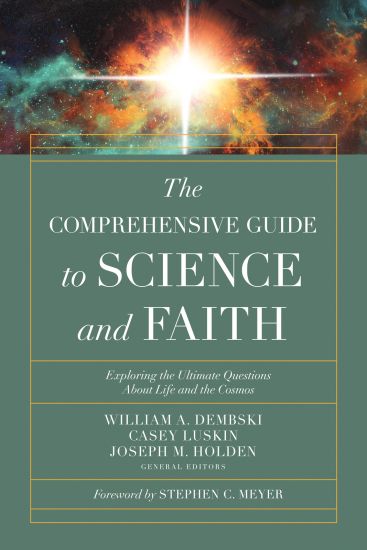
The Comprehensive Guide to Science and Faith
William A. Dembski; Casey Luskin; Joseph M. Holden; Stephen C. Meyer
Harvest House Publishers,U.S.
2021
pokkari
Science and Faith Can—and Do—Support Each Other Science and Christianity are often presented as opposites, when in fact the order of the universe and the complexity of life powerfully testify to intelligent design. With this comprehensive resource that includes the latest research, you’ll witness how the findings of scientists provide compelling reasons to acknowledge the mind and presence of a creator. Featuring more than 45 entries by top-caliber experts, you’ll better understand… how scientific concepts like intelligent design are supported by evidencethe scientific findings that support the history and accounts found in the Biblethe biases that lead to scientific information being presented as a challenge—rather than a complement—to Christianity Whether you’re looking for answers to your own questions or seeking to explain the case for intelligent design to others, The Comprehensive Guide to Science and Faith is an invaluable apologetic tool that will help you explore and analyze the relevant facts, research, and theories in light of biblical truth.

"Signature in the Cell is a defining work in the discussion of life's origins and the question of whether life is a product of unthinking matter or of an intelligent mind. For those who disagree with ID, the powerful case Meyer presents cannot be ignored in any honest debate. For those who may be sympathetic to ID, on the fence, or merely curious, this book is an engaging, eye-opening, and often eye-popping read" -- American Spectator Named one of the top books of 2009 by the Times Literary Supplement (London), this controversial and compelling book from Dr. Stephen C. Meyer presents a convincing new case for intelligent design (ID), based on revolutionary discoveries in science and DNA. Along the way, Meyer argues that Charles Darwin's theory of evolution as expounded in The Origin of Species did not, in fact, refute ID. If you enjoyed Francis Collins's The Language of God, you'll find much to ponder--about evolution, DNA, and intelligent design--in Signature in the Cell.

Carl Maria Von Weber and the Search for a German Opera
Stephen C. Meyer
Indiana University Press
2003
sidottu
Stephen C. Meyer details the intricate relationships between the operas Der Freischütz and Euryanthe, and contemporary discourse on both the "Germany of the imagination" and the new nation itself. In so doing, he presents excerpts from a wide range of philosophical, political, and musical writings, many of which are little known and otherwise unavailable in English. Individual chapters trace the multidimensional concept of German and "foreign" opera through the 19th century. Meyer's study of Der Freischütz places the work within the context of emerging German nationalism, and a chapter on Euryanthe addresses the opera's stylistic and topical shifts in light of changing cultural and aesthetic circumstances. As a result, Meyer argues that the search for a new German opera was not merely an aesthetic movement, but a political and social critique as well.