Kirjojen hintavertailu. Mukana 12 595 353 kirjaa ja 12 kauppaa.

Kirjailija

Stephen Cohen

Kirjat ja teokset yhdessä paikassa: 12 kirjaa, julkaisuja vuosilta 1993-2026, suosituimpien joukossa Courtesan Spies -Book 1. Vertaile teosten hintoja ja tarkista saatavuus suomalaisista kirjakaupoista.

12 kirjaa

Kirjojen julkaisuhaarukka 1993-2026.

Dynamics of Tethered Satellites and Space Elevators

Dynamics of Tethered Satellites and Space Elevators

Arun K. Misra; Stephen Cohen

Elsevier - Health Sciences Division
2026
nidottu
Since the key concept of the space elevator first appeared, tethered space systems have generated much curiosity and interest. Modern-day developments in engineering technology and changes in the space environment have made these technologies a not-so distant reality, although not without the need for further research to be carried out. Dynamics of Tethered Satellites and Space Elevators aims to provide a comprehensive overview of the current state of knowledge on the subject. Written by two widely recognized experts in the field, the book starts with a brief history of tethered space systems, their potential applications, and a description of past and current space tether missions. This is followed by an in-depth investigation into various aspects of the dynamics and control of rigid and flexible single-tether space systems, tether propulsion, and multi-tether satellite systems. The use of tethers to remove space debris is discussed next alongside other sustainability-related considerations, which make the content all the more relevant in view of the present global pressures that stakeholders in the space sector face. A whole section of chapters on the dynamics of partial and full space elevators concludes the volume.
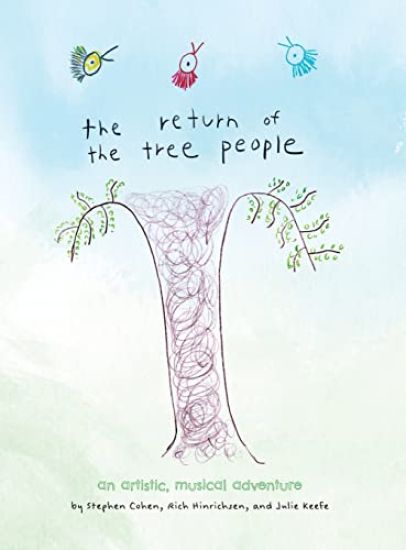
The Return of The Tree People

The Return of The Tree People

Stephen Cohen; Rich Hinrichsen; Julie Keefe

Wake-Robin Press
2022
sidottu
Lyrics, drawings, photos, sheet music, and thoughts about The Tree People and their return. The Return of The Tree People album was recorded in 2021 at Dead Aunt Thelma's Studio in Portland, Oregon in one weekend, with musicians Stephen Cohen, Rich Hinrichsen, Maeve Stier (daughter of the late Jeff Stier), John Savage, Jen Harrison and Ron Tuttle. The album and this book were released in 2022.
Mark of Aaron

Mark of Aaron

Stephen Cohen

iUniverse
2018
pokkari
A secular Jew spends his life as a prosecutor in Los Angeles. He goes to the California desert town of Borrego Springs and comes to believe he is a direct descendant of Aaron, Mosess older brother. He leaves his job, his family, and departs on a mystical and magical journey that brings him to a revelation. He decides he is compelled to build the Temple of Solomon in the desert town. But to get this done, he encounters drug dealers, neo-Nazis, Arab sheiks, and a few billionaires. He picks up some desert characters that will take bullets for him, and they do. The journey mixes real events, true archeology, and historical figures with the creations of the novel. The challenge for the reader is to identify fact from fiction. It is one wild, raucous ride that has most unexpected turns and stops along the way. There is nothing like thispart history, part religion, and part mysticism. And you will wonder: is this fantasy, prophesy, or reality?
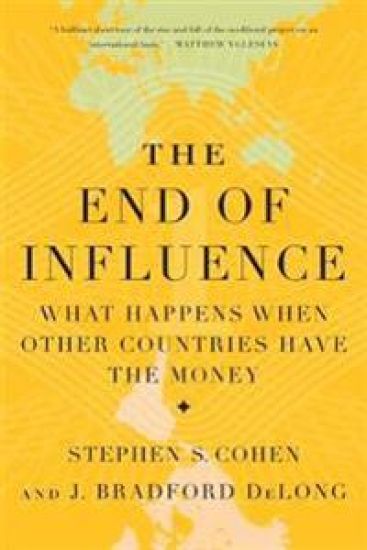
The End of Influence

The End of Influence

J. Bradford DeLong; Stephen Cohen

Basic Books
2011
pokkari
At the end of World War II, America had all the money,and all the power. Now, after the Great Crash of 2008, America is cash poor. In The End of Influence , economists Stephen S .Cohen and J. Bradford DeLong argue that this loss of liquid capital will have grave consequences for our standing in the world. An essential read for business executives and connoisseurs of world politics alike, The End of Influence tells us what we can do to maintain stability in the world.
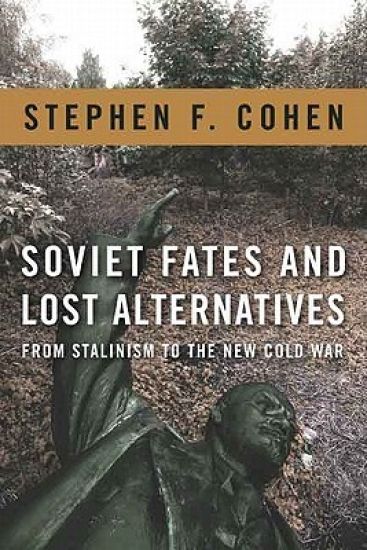
Soviet Fates and Lost Alternatives

Soviet Fates and Lost Alternatives

Stephen Cohen

Columbia University Press
2011
pokkari
In this wide-ranging and acclaimed book, Stephen F. Cohen challenges conventional wisdom about the course of Soviet and post-Soviet history. Reexamining leaders from Nikolai Bukharin, Stalin's preeminent opponent, and Nikita Khrushchev to Mikhail Gorbachev and his rival Yegor Ligachev, Cohen shows that their defeated policies were viable alternatives and that their tragic personal fates shaped the Soviet Union and Russia today. Cohen's ramifying arguments include that Stalinism was not the predetermined outcome of the Communist Revolution; that the Soviet Union was reformable and its breakup avoidable; and that the opportunity for a real post-Cold War relationship with Russia was squandered in Washington, not in Moscow. This is revisionist history at its best, compelling readers to rethink fateful events of the twentieth and early twenty-first centuries and the possibilities ahead. In his new epilogue, Cohen expands his analysis of U.S. policy toward post-Soviet Russia, tracing its development in the Clinton and Obama administrations and pointing to its initiation of a "new Cold War" that, he implies, has led to a fateful confrontation over Ukraine.
Soviet Fates and Lost Alternatives

Soviet Fates and Lost Alternatives

Stephen Cohen

Columbia University Press
2009
sidottu
In this wide-ranging and acclaimed book, Stephen F. Cohen challenges conventional wisdom about the course of Soviet and post-Soviet history. Reexamining leaders from Nikolai Bukharin, Stalin's preeminent opponent, and Nikita Khrushchev to Mikhail Gorbachev and his rival Yegor Ligachev, Cohen shows that their defeated policies were viable alternatives and that their tragic personal fates shaped the Soviet Union and Russia today. Cohen's ramifying arguments include that Stalinism was not the predetermined outcome of the Communist Revolution; that the Soviet Union was reformable and its breakup avoidable; and that the opportunity for a real post-Cold War relationship with Russia was squandered in Washington, not in Moscow. This is revisionist history at its best, compelling readers to rethink fateful events of the twentieth and early twenty-first centuries and the possibilities ahead. In his new epilogue, Cohen expands his analysis of U.S. policy toward post-Soviet Russia, tracing its development in the Clinton and Obama administrations and pointing to its initiation of a "new Cold War" that, he implies, has led to a fateful confrontation over Ukraine.
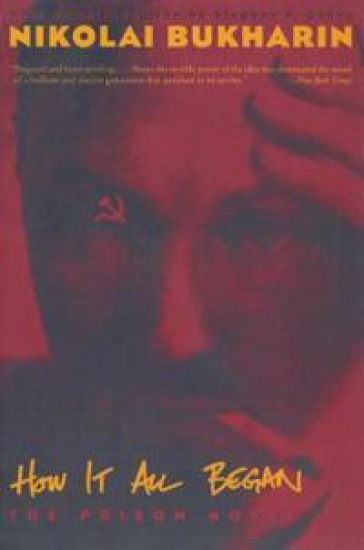
How It All Began

How It All Began

Nikolai Bukharin; Stephen Cohen

Columbia University Press
1999
pokkari
Here at last in English is Nikolai Bukharin's autobiographical novel and final work. Many dissident texts of the Stalin era were saved by chance, by bravery, or by cunning; others were systematically destroyed. Bukharin's work, however, was simultaneously preserved and suppressed within Stalin's personal archives. At once novel, memoir, political apology, and historical document, How It All Began, known in Russia as "the prison novel," adds deeply to our understanding of this vital intellectual and maligned historical figure. The panoramic story, composed under the worst of circumstances, traces the transformation of a sensitive young man into a fiery agitator, and presents a revealing new perspective on the background and causes of the revolution that transformed the face of the twentieth century. Among the millions of victims of the reign of terror in the Soviet Union of the 1930's, Bukharin stands out as a special case. Not yet 30 when the Bolsheviks took power, he was one of the youngest, most popular, and most intellectual members of the Communist Party. In the 1920's and 30's, he defended Lenin's liberal New Economic Policy, claiming that Stalin's policies of forced industrialization constituted a "military-feudal exploitation" of the masses. He also warned of the approaching tide of European fascism and its threat to the new Bolshevik revolution. For his opposition, Bukharin paid with his freedom and his life. He was arrested and spent a year in prison. In what was one of the most infamous "show trials" of the time, Bukharin confessed to being a "counterrevolutionary" while denying any particular crime and was executed in his prison cell on March 15, 1938. While in prison, Bukharin wrote four books, of which this unfinished novel was the last. It traces the development of Nikolai "Kolya" Petrov (closely modeled on Nikolai "Kolya" Bukharin) from his early childhood though to age fifteen. In lyrical and poetic terms it paints a picture of Nikolai's growing political consciousness and ends with his activism on the eve of the failed 1905 revolution. The novel is presented here along with the only surviving letter from Bukharin to his wife during his time in prison, an epistle filled with fear, longing, and hope for his family and his nation. The introduction by Stephen F. Cohen articulates Bukharin's significance in Soviet history and reveals the troubled journey of this novel from Stalin's archives into the light of day.
How It All Began

How It All Began

Nikolai Bukharin; Stephen Cohen

Columbia University Press
1998
sidottu
Here at last in English is Nikolai Bukharin's autobiographical novel and final work. Many dissident texts of the Stalin era were saved by chance, by bravery, or by cunning; others were systematically destroyed. Bukharin's work, however, was simultaneously preserved and suppressed within Stalin's personal archives. At once novel, memoir, political apology, and historical document, How It All Began, known in Russia as "the prison novel," adds deeply to our understanding of this vital intellectual and maligned historical figure. The panoramic story, composed under the worst of circumstances, traces the transformation of a sensitive young man into a fiery agitator, and presents a revealing new perspective on the background and causes of the revolution that transformed the face of the twentieth century. Among the millions of victims of the reign of terror in the Soviet Union of the 1930's, Bukharin stands out as a special case. Not yet 30 when the Bolsheviks took power, he was one of the youngest, most popular, and most intellectual members of the Communist Party. In the 1920's and 30's, he defended Lenin's liberal New Economic Policy, claiming that Stalin's policies of forced industrialization constituted a "military-feudal exploitation" of the masses. He also warned of the approaching tide of European fascism and its threat to the new Bolshevik revolution. For his opposition, Bukharin paid with his freedom and his life. He was arrested and spent a year in prison. In what was one of the most infamous "show trials" of the time, Bukharin confessed to being a "counterrevolutionary" while denying any particular crime and was executed in his prison cell on March 15, 1938. While in prison, Bukharin wrote four books, of which this unfinished novel was the last. It traces the development of Nikolai "Kolya" Petrov (closely modeled on Nikolai "Kolya" Bukharin) from his early childhood though to age fifteen. In lyrical and poetic terms it paints a picture of Nikolai's growing political consciousness and ends with his activism on the eve of the failed 1905 revolution. The novel is presented here along with the only surviving letter from Bukharin to his wife during his time in prison, an epistle filled with fear, longing, and hope for his family and his nation. The introduction by Stephen F. Cohen articulates Bukharin's significance in Soviet history and reveals the troubled journey of this novel from Stalin's archives into the light of day.
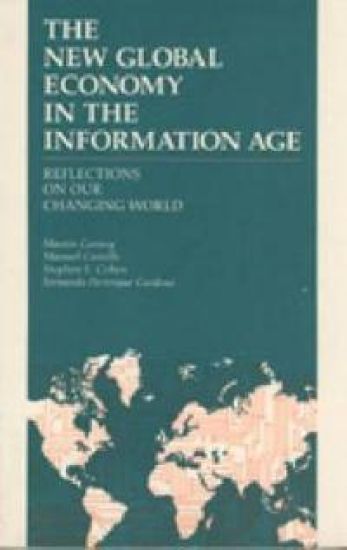
The New Global Economy in the Information Age

The New Global Economy in the Information Age

Carnoy Martin; Manuel Castells; Stephen Cohen; Fernando-Henrique Cardoso

Pennsylvania State University Press
1993
sidottu
Most studies of the world economy focus on highly developed countries and only on economic strategies. The New Global Economy in the Information Age is unique in integrating the political with the economic and in the truly global view it takes of the changes under way. It focuses on the effects of new computer and telecommunications technology in conditioning the policy choices of nation-states in both the less and more economically developed regions of the world.The authors analyze the new economic context in which nation-states operate, the main issues confronting them, and the way in which the politics of national development should change in the post-Cold War information age. They argue that the new world economy cannot be separated easily from the new world society, and that national and international politics is the cement binding the two.