Kirjojen hintavertailu. Mukana 12 323 876 kirjaa ja 12 kauppaa.

Kirjailija

Stephen D. Houston

Kirjat ja teokset yhdessä paikassa: 5 kirjaa, julkaisuja vuosilta 2006-2019, suosituimpien joukossa The Memory of Bones. Vertaile teosten hintoja ja tarkista saatavuus suomalaisista kirjakaupoista.

5 kirjaa

Kirjojen julkaisuhaarukka 2006-2019.

The Memory of Bones

The Memory of Bones

Stephen D. Houston; David Stuart; Karl Taube

University of Texas Press
2006
pokkari
All of human experience flows from bodies that feel, express emotion, and think about what such experiences mean. But is it possible for us, embodied as we are in a particular time and place, to know how people of long ago thought about the body and its experiences? In this groundbreaking book, three leading experts on the Classic Maya (ca. AD 250 to 850) marshal a vast array of evidence from Maya iconography and hieroglyphic writing, as well as archaeological findings, to argue that the Classic Maya developed a coherent approach to the human body that we can recover and understand today.The authors open with a cartography of the Maya body, its parts and their meanings, as depicted in imagery and texts. They go on to explore such issues as how the body was replicated in portraiture; how it experienced the world through ingestion, the senses, and the emotions; how the body experienced war and sacrifice and the pain and sexuality that were intimately bound up in these domains; how words, often heaven-sent, could be embodied; and how bodies could be blurred through spirit possession.From these investigations, the authors convincingly demonstrate that the Maya conceptualized the body in varying roles, as a metaphor of time, as a gendered, sexualized being, in distinct stages of life, as an instrument of honor and dishonor, as a vehicle for communication and consumption, as an exemplification of beauty and ugliness, and as a dancer and song-maker. Their findings open a new avenue for empathetically understanding the ancient Maya as living human beings who experienced the world as we do, through the body.
Royal Courts Of The Ancient Maya

Royal Courts Of The Ancient Maya

Takeshi Inomata; Stephen D. Houston

Routledge
2019
sidottu
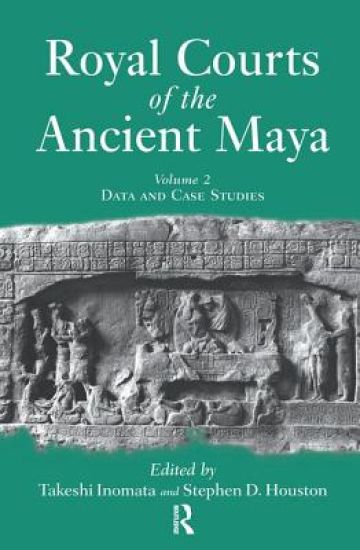
This book discusses courts at specific centers and areas, presenting data from major research projects. It examines the beginning of the Copan dynasty and the possibility of its foreign origin. The book addresses the functions and meanings of thrones, referring to archaeological data from Uaxactun.
Royal Courts Of The Ancient Maya

Royal Courts Of The Ancient Maya

Takeshi Inomata; Stephen D. Houston

Routledge
2019
sidottu
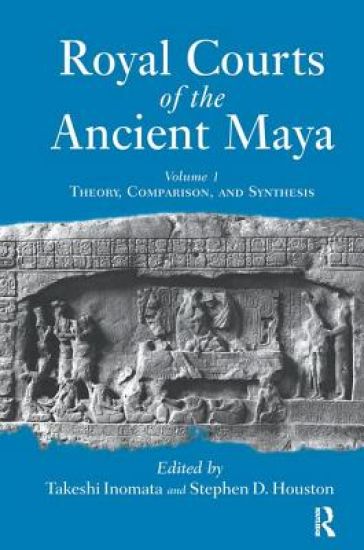
This book provides theory, comparison, and synthesis to establish a carefully considered framework for approaching the study of courts and their functions throughout the world of the ancient Maya. It is based on the annual meeting of the American Anthropological Association.
The Classic Maya

The Classic Maya

Stephen D. Houston; Takeshi Inomata

Cambridge University Press
2009
sidottu
In the first millennium AD, the Classic Maya created courtly societies in and around the Yucatan Peninsula that have left some of the most striking intellectual and aesthetic achievements of the ancient world, including large settlements like Tikal, Copan, and Palenque. This book is the first in-depth synthesis of the Classic Maya. It is richly informed by new decipherment of hieroglyphs, decades of intensive excavation and survey. Structured by categories of person in society, it reports on kings, queens, nobles, gods, and ancestors, as well as the many millions of farmers and other figures who lived in societies predicated on sacred kingship and varying political programs. The Classic Maya presents a tandem model of societies bound by moral covenants and convulsed by unavoidable tensions between groups, affected by demographic trends and changing environments. It will serve as the basic source for all readers interested in the civilisation of the Maya.
Veiled Brightness

Veiled Brightness

Stephen D. Houston; Claudia Brittenham; Cassandra Mesick; Alexandre Tokovinine; Christina Warinner

University of Texas Press
2009
sidottu
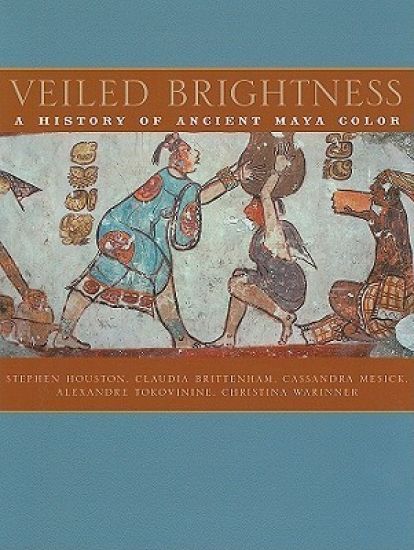
Color is an integral part of human experience, so common as to be overlooked or treated as unimportant. Yet color is both unavoidable and varied. Each culture classifies, understands, and uses it in different and often surprising ways, posing particular challenges to those who study color from long-ago times and places far distant. Veiled Brightness reconstructs what color meant to the ancient Maya, a set of linked peoples and societies who flourished in and around the Yucatan Peninsula of Mexico and Central America. By using insights from archaeology, linguistics, art history, and conservation, the book charts over two millennia of color use in a region celebrated for its aesthetic refinement and high degree of craftsmanship.The authors open with a survey of approaches to color perception, looking at Aristotelian color theory, recent discoveries in neurophysiology, and anthropological research on color. Maya color terminology receives new attention here, clarifying not just basic color terms, but also the extensional or associated meanings that enriched ancient Maya perception of color. The materials and technologies of Maya color production are assembled in one place as never before, providing an invaluable reference for future research.From these investigations, the authors demonstrate that Maya use of color changed over time, through a sequence of historical and artistic developments that drove the elaboration of new pigments and coloristic effects. These findings open fresh avenues for investigation of ancient Maya aesthetics and worldview and provide a model for how to study the meaning and making of color in other ancient civilizations.