
Kirjailija
Stephen Duncombe
Kirjat ja teokset yhdessä paikassa: 10 kirjaa, julkaisuja vuosilta 2006-2025, suosituimpien joukossa Dream or Nightmare. Vertaile teosten hintoja ja tarkista saatavuus suomalaisista kirjakaupoista.
10 kirjaa
Kirjojen julkaisuhaarukka 2006-2025.
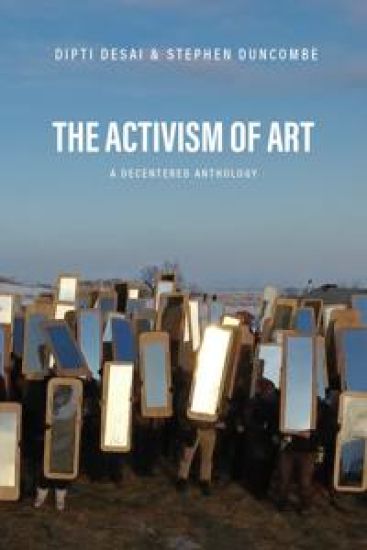
A radical anthology shaking up the canon by bringing together perspectives on art and activism across eras and cultures. Thinkers, activists, and artists have long grappled with definitions of art, the role of activism, and the relationship between the two—answers that shift across historical and cultural frameworks. This anthology challenges and expands the canon by deliberately juxtaposing radically different conceptions of art and activism, bringing together thinkers from different eras, cultures, and geographies. Rather than including case studies or manifestos, the texts are organized thematically: Art Unsettles: Social Systems and Critique; Art Reveals: Making the Invisible Visible; Art Resists: Everyday Interventions; Art Acts: Activism as Art; Art (Re)Orders: Making Sense of the World; and Art Imagines: Envisioning New Worlds. Through this thematic structure, the anthology seeks to expand and decenter traditional canons. Each thematic section opens with a brief essay by the editors framing the central conceptual debates, inviting readers to engage with the tensions and possibilities at the intersection of art and politics. Among the writers included are: Gloria Anzaldúa, John Berger, Leanne Betasamosake Simpson, Octavia Butler, John Dewey, W.E.B. Du Bois, Frantz Fanon, Safdar Hashmi, bell hooks, Juan López Intzín, Audre Lorde, Herbert Marcuse, Jacques Rancière, and Ngugi wa Thiong’o.
The first book to seriously identify how artistic activism works and how to make it work better The past decade has seen an explosion in the hybrid practice of "artistic activism," as artists have turned toward activism to make their work more socially impactful and activists have adopted techniques and perspectives from the arts to make their interventions more creative. Yet questions haunt the practice: Does artistic activism work aesthetically? Does it work politically? And what does "working" even mean when one combines art and activism? In Æffect, author Stephen Duncombe sets out to address these questions at the heart of the field of artistic activism. Written by the co-founder and current Research Director of the internationally recognized Center for Artistic Activism, Æffect draws on Duncombe's more than twenty-five years of experience in the field and one hundred in-depth interviews with artistic activists worldwide. More than a mere academic exercise, the theory, research, and tools in this book lay the groundwork for artistic activists to evaluate and strengthen their practice and to create better projects. The exploration of good artistic activism is grounded in three sets of concerns. 1) Change: Upon what theories of change is artistic activism based? 2) Intention: What do we hope and expect artistic activism to do, and how does it do this? 3) Evaluation: What actually happens as the result of an artistic activist intervention? Can it be measured? Æffect is rich with examples that demonstrate successful artistic activism, including Undocubus, an old bus painted "No Fear" across its side that was driven cross-country by a group of undocumented immigrant activists; Journal Rappé, a video show created by Senegalese rappers who created long-form investigative reports by rapping the current news in French and Wolof; and War on Smog, a staged a public performance piece by artistic activists in the city of Chongqing in Southwest China. Scannable QR codes are included to provide tools that help readers assess the æffect of their artistic activism.
The first book to seriously identify how artistic activism works and how to make it work better The past decade has seen an explosion in the hybrid practice of "artistic activism," as artists have turned toward activism to make their work more socially impactful and activists have adopted techniques and perspectives from the arts to make their interventions more creative. Yet questions haunt the practice: Does artistic activism work aesthetically? Does it work politically? And what does "working" even mean when one combines art and activism? In Æffect, author Stephen Duncombe sets out to address these questions at the heart of the field of artistic activism. Written by the co-founder and current Research Director of the internationally recognized Center for Artistic Activism, Æffect draws on Duncombe's more than twenty-five years of experience in the field and one hundred in-depth interviews with artistic activists worldwide. More than a mere academic exercise, the theory, research, and tools in this book lay the groundwork for artistic activists to evaluate and strengthen their practice and to create better projects. The exploration of good artistic activism is grounded in three sets of concerns. 1) Change: Upon what theories of change is artistic activism based? 2) Intention: What do we hope and expect artistic activism to do, and how does it do this? 3) Evaluation: What actually happens as the result of an artistic activist intervention? Can it be measured? Æffect is rich with examples that demonstrate successful artistic activism, including Undocubus, an old bus painted "No Fear" across its side that was driven cross-country by a group of undocumented immigrant activists; Journal Rappé, a video show created by Senegalese rappers who created long-form investigative reports by rapping the current news in French and Wolof; and War on Smog, a staged a public performance piece by artistic activists in the city of Chongqing in Southwest China. Scannable QR codes are included to provide tools that help readers assess the æffect of their artistic activism.

Elegantly written and charmingly illustrated, The Activist Angler shows how lessons learned from angling can guide political activism and vice versa. Patience, preparation and precision are needed to catch fish . . . and to build a movement. Looking for a retreat during the stress of the pandemic, the activist and teacher Steve Duncombe took up fishing, a sport he had abandoned in his youth. After many years away from his rod, he had to re-learn how to fish and approached the practice with what Zen masters call “Beginner’s Mind.” Having no recent experience to fall back on, every fish successfully caught or line hopelessly snarled served as a lesson. Hours spent doing little more than casting and retrieving meant plenty of time to think. One of the things Steve thought a lot about was activism. The art of angling, he discovered, has a lot to teach about the art of activism. The Activist Angler brings together these lessons in an engaging journey from the street to the beach and back. The format is simple: one reflection on fishing followed by another on what might be learned and applied to activism, with each accompanied by an illustration. Topics range from telling fish stories and the trap of activist nostalgia, to the impossibility of thinking like a fish yet the necessity for an organizer to understand their audience, with detours through reflections on self-care, catch-and-release, and taking responsibility for the human cost of one’s political actions.
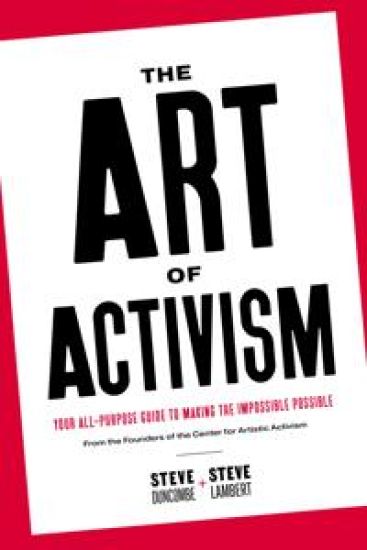
The Art of Activism is an all-purpose guide to artistic activism, combining the creative power of the arts to move us emotionally with the strategic planning of activism necessary to bring about social change. With contemporary case studies and historical examples, chapters on cultural and cognitive theory, sections on what can be learned from unlikely sources like popular culture and marketing techniques, along with investigations into ethics and evaluation, explorations of the creative process and the importance of utopian thinking, and an attached workbook with over fifty exercises to practice, the co-founders of the Center for Artistic Activism take readers step-by-step through the process of becoming, or becoming even better, artistic activists.
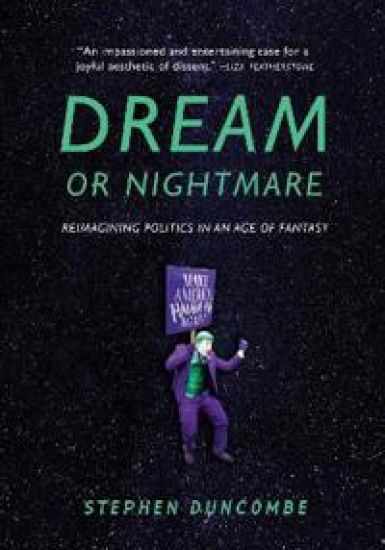
In an era of political theatre, reason alone won’t cut it. Dream or Nightmare is a book of left wing strategy like no other: It proposes that, to compete with the right, progressives cannot depend on reason and hard fact. They must also deploy drama in the battle of ideas. Donald Trump's presidency has shown how this is done, albeit to ends that are deplorable. Abandoning logic and truth, the Fabulist-in -hief conjures up spectacle to energize his base. Troops are dispatched to counter a fictional threat from convoys of helpless refugees. A powerful Supreme Court nominee is reduced to tears by accusations from a woman who has been sexually assaulted. Open fascists are described as "good people", physical attacks on journalists are lauded in front of cheering crowds. If they are to engage with this Barnum-like politics, leftists must learn how to communicate in today's "vernacular of the spectacular", invoking symbol and emotion themselves, as well as truth. Matching the right in this fashion does not mean adopting its values. Rather Duncombe sets out what he calls a politics of "ethical spectacle". Of extraordinary relevance to the dark carnival of contemporary politics, this new edition of the book sets out an electrifying new vision of progressive politics that is both persuasive and provocative.
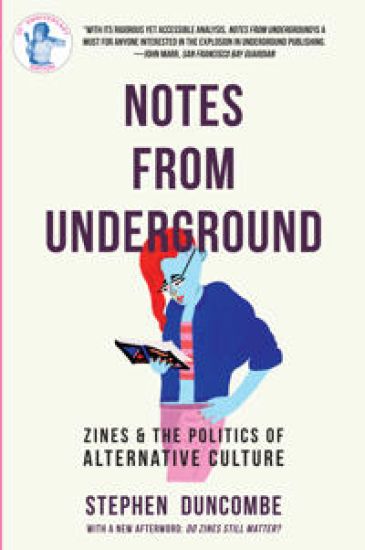
An engaging and scholastic presentation of zines and modern culture Much history and theory is uncovered here in the first comprehensive study of zine publishing. From their origins in early 20th century science fiction cults, their more proximate roots in 1960s counter-culture and their rapid proliferation in the wake of punk rock, Stephen Duncombe pays full due to the political importance of zines as a vital network of popular culture. He also analyzes how zines measure up to their utopian and escapist outlook in achieving fundamental social change. Packed with extracts and illustrations, he provides a useful overview of the contemporary underground in all its splendor and misery.

The Open Utopia is a complete English language edition of Thomas More's Utopia that honors the primary precept of Utopia itself: that all property is common property. Licensed under Creative Commons, The Open Utopia conveys this message and continues the tradition. But Utopia is more than the story of a far-off land with no private property. It's a text that instructs us how to approach texts, be they literary or political, in an open manner: open to criticism, open to participation, and open to re-creation. Utopia is no-place, and therefore it is up to all of us to imagine it. Opinion polls, volatile voting patterns, and street protests demonstrate widespread dissatisfaction with the current system, yet the popular response so far has largely been limited to the angry outcries. But negation, by itself, affects nothing. The dominant system doesn't dominate because people agree with it; it rules because we're convinced there is no alternative. We need to be able to imagine a radical alternative - a Utopia - yet we are haunted by the disasters of "actually existing" Utopias of the past century, from fascism to authoritarian socialism. In this re-issue of Thomas More's generative volume, scholar and activist Stephen Duncombe re-imagines Utopia as an open text, one designed by More as an imaginal machine freeing us from the tyranny of the present while undermining master plans for the future. In this volume Utopia is re-imagined and brought into the participatory digital age as a technology for undermining authority and facilitating new imagination.

Illuminates the life and image of one of New York City's most fashionable criminals—Celia Cooney Ripped straight from the headlines of the Jazz Age, The Bobbed Haired Bandit is a tale of flappers and fast cars, of sex and morality. In the spring of 1924, a poor, 19-year-old laundress from Brooklyn robbed a string of New York grocery stores with a "baby automatic," a fur coat, and a fashionable bobbed hairdo. Celia Cooney's crimes made national news, with the likes of Ring Lardner and Walter Lippman writing about her exploits for enthralled readers. The Bobbed Haired Bandit brings to life a world of great wealth and poverty, of Prohibition and class conflict. With her husband Ed at her side, Celia raised herself from a life of drudgery to become a celebrity in her own pulp-fiction novel, a role she consciously cultivated. She also launched the largest manhunt in New York City's history, humiliating the police with daring crimes and taunting notes. Sifting through conflicting accounts, Stephen Duncombe and Andrew Mattson show how Celia's story was used to explain the world, to wage cultural battles, to further political interest, and above all, to sell newspapers. To progressives, she was an example of what happens when a community doesn't protect its children. To conservatives, she symbolized a permissive society that gave too much freedom to the young, poor, and female. These competing stories distill the tensions of the time. In a gripping account that reads like a detective serial, Duncombe and Mattson have culled newspaper reports, court records, interviews with Celia's sons, and even popular songs and jokes to capture what William Randolph Hearst's newspaper called "the strangest, weirdest, most dramatic, most tragic, human interest story ever told."