

Kirjailija
Stephen Dunn
Kirjat ja teokset yhdessä paikassa: 31 kirjaa, julkaisuja vuosilta 1984-2027, suosituimpien joukossa Preparing for and Dealing with Cyber Threats. Vertaile teosten hintoja ja tarkista saatavuus suomalaisista kirjakaupoista.
31 kirjaa
Kirjojen julkaisuhaarukka 1984-2027.
Hailed as "indispensable" (David Wojahn), poet Stephen Dunn masterfully shifts between the metaphysical and the ironic, never wavering in his essential honesty. His graceful poems confront our contradictions with tenderness and wit, enliven the ordinary with penetrating observation and alert us to the haunting wonders and relationships that surround us. The Not Yet Fallen World draws from all nineteen of Stephen Dunn’s crystalline volumes, including his most recent, Pagan Virtues (2019); the National Book Critics Circle Award Finalist Loosestrife (1996); and the Pulitzer Prize–winning Different Hours (2000). By turns sardonic and profound, Dunn examines the disguises we don to hide from ourselves and reveals sublime beauty hidden within seemingly mundane interactions. Nine new poems extend the poet’s inquiry into the paradoxes of contemporary life; as he writes in "Love Poem Near the End of the World", "Something keeps me holding on / to a future I didn’t think possible". Arranged to further Dunn’s signature themes—mortality, morality and the roles we play in the essential human comedy of getting through each day—this final collection captures the breadth of an acclaimed poet’s achievement. His legacy is a poetic expanse suffused with fearless generosity and perceptive wisdom.
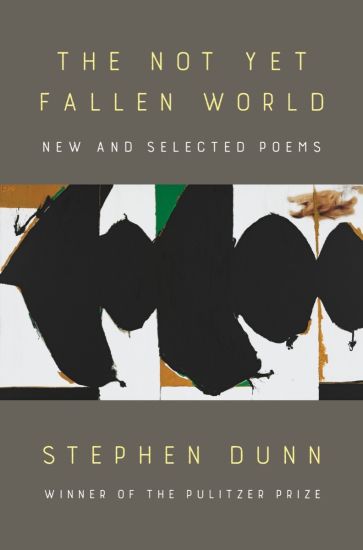
Hailed as "indispensable" (David Wojahn), Pulitzer Prize–winning poet Stephen Dunn masterfully shifts between the metaphysical and the ironic, never wavering in his essential honesty. His graceful poems confront our contradictions with tenderness and wit, enliven the ordinary with penetrating observation, and alert us to the haunting wonders and relationships that surround us. The Not Yet Fallen World draws from all nineteen of Stephen Dunn’s crystalline volumes, including his most recent, Pagan Virtues (2019); the National Book Critics Circle Award Finalist Loosestrife (1996); and the Pulitzer Prize–winning Different Hours (2000). By turns sardonic and profound, Dunn examines the disguises we don to hide from ourselves and reveals sublime beauty hidden within seemingly mundane interactions. Nine new poems extend the poet’s inquiry into the paradoxes of contemporary life; as he writes in "Love Poem Near the End of the World," "Something keeps me holding on / to a future I didn’t think possible." Arranged to further Dunn’s signature themes—mortality, morality, and the roles we play in the essential human comedy of getting through each day—this final collection captures the breadth of an acclaimed poet’s achievement. His legacy is a poetic expanse suffused with fearless generosity and perceptive wisdom.
In this meditative and incisive collection, Pulitzer Prize winner Stephen Dunn draws on themes of morality and mortality to explore the innermost machinations of human nature. Shifting in tone but never wavering in their essential honesty, these poems reflect on desire, restraint and the roles we play in an ever-evolving society. A stunning sequence on the relationship between the speaker and “Mrs. Cavendish” examines an intimacy sustained and repelled by politics, philosophy and attraction. Wide-ranging, intellectually daring and wry, Pagan Virtues reminds us of Dunn’s penetrating eye for the universal and the specific, and his ability to highlight our contradictions with tenderness and wit.
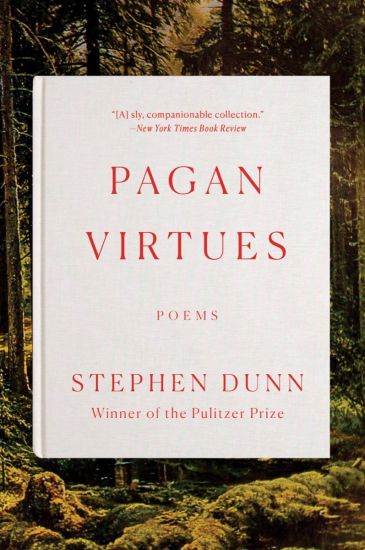
In this meditative and incisive collection, Stephen Dunn draws on themes of morality and mortality to explore the innermost machinations of human nature. Shifting in tone but never wavering in their essential honesty, these poems reflect on desire, restraint, and the roles we play in an ever-evolving society. In Pagan Virtues, Dunn reminds us of his penetrating eye for the universal and the specific, and his ability to highlight our contradictions with tenderness and wit. Two poems dedicated to Dunn’s eulogist, in advance, bookend the collection. The first introduces us to the poet’s sardonic candor and unflinching gaze at his own mortality, while the latter, written nineteen years later, reflects on what it means to continue to live in the “despoiled and radiant now.” A stunning sequence on the relationship between the speaker and “Mrs. Cavendish” examines an intimacy sustained and repelled by politics, philosophy, and attraction. Wry, observational, and wide-reaching, Pagan Virtues offers indispensable truths from a master of contemporary poetry.
Incisively capturing the oddities of our logic and the whimsies of our reason, the poems in Whereas show there is always another side to a story. With graceful rhythm and equal parts humour and seriousness, Stephen Dunn considers the superstition and sophistry embedded in everyday life: household objects that seem to turn against us, the search for meaning in the barrage of daily news, the surprising confessions between neighbours across a row of hedges. Finding beauty in the ordinary, this collection affirms the absurdity of making affirmations, allowing room for more rethinking, reflection, revision, prayer and magic in the world.
Incisively capturing the oddities of our logic and the whimsies of our reason, the poems in Whereas show there is always another side to a story. With graceful rhythm and equal parts humor and seriousness, Stephen Dunn considers the superstition and sophistry embedded in everyday life: household objects that seem to turn against us, the search for meaning in the barrage of daily news, the surprising confessions between neighbors across a row of hedges. Finding beauty in the ordinary, this collection affirms the absurdity of making affirmations, allowing room for more rethinking, reflection, revision, prayer, and magic in the world.

A Pulitzer Prize-winning author details an unconsummated love affair that sustains political, philosophical, and sexual interest over a lifetime. The truth is always different from what anyone says out loud, but who really cares? Not I, said the man I chose to be, nor I nor I nor I— among the many of us she left teetering. Stephen Dunn is a Pulitzer Prize winner and the author of seventeen collections of poetry, most recently Lines of Defense, Here and Now, and What Goes On: Selected & New Poems: 1995-2009. He teaches at Richard Stockton College of New Jersey.
In his seventeenth collection of poetry, Pulitzer Prize winner Stephen Dunn confronts the lines we fight against and the ones we draw for ourselves. Lines of Defense poignantly captures the absurdities of modern life, expectations derailed, the lived life juxtaposed to the imagined life, and the defences we don to make do. The poems in Lines of Defense are wry and elegiac, precisely observed and wide-reaching. As with the best of Dunn’s work, they take stock of the quotidian aspects of life, of the essential comedy of getting through the day: finding a lost cat; not being invited to a party; taking a granddaughter to a carnival. The lines of defense are the lines of the verse itself, as poetry forms a stronghold against mortality. This essential volume showcases a poet writing at the height of his powers.
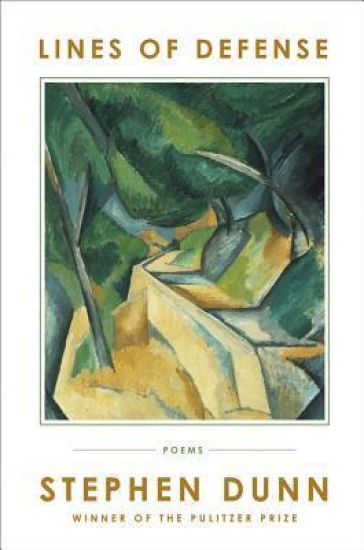
In his seventeenth collection of poetry, Pulitzer Prize winner Stephen Dunn confronts the lines we fight against and the ones we draw for ourselves. Lines of Defense poignantly captures the absurdities of modern life, expectations derailed, the lived life juxtaposed to the imagined life, and the defenses we don to make do. The poems in Lines of Defense are wry and elegiac, precisely observed and wide-reaching. As with the best of Dunn’s work, they take stock of the quotidian aspects of life, of the essential comedy of getting through the day: finding a lost cat; not being invited to a party; taking a granddaughter to a carnival. The lines of defense are the lines of the verse itself, as poetry forms a stronghold against mortality. This essential volume showcases a poet writing at the height of his powers. From “Before We Leave”: Where are we going? It’s not an issue of here or there. And if you ever feel you can’t take another step, imagine how you might feel to arrive, if not wiser, a little more aware how to inhabit the middle ground between misery and joy.
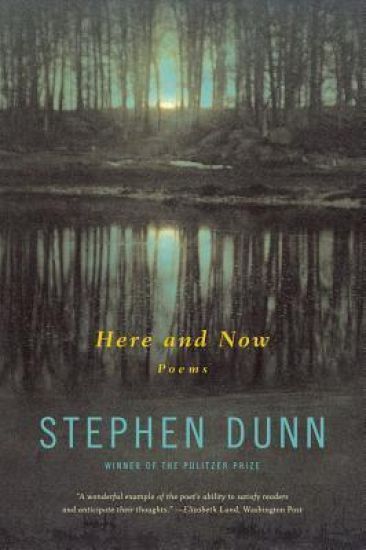
In his sixteenth collection, Stephen Dunn continues to bring his imagination and intelligence to what Wallace Stevens calls “the problems of the normal,” which of course pervade most of our lives. The poem “Don’t Do That” opens with the lines: “It was bring-your-own if you wanted anything / hard, so I brought Johnnie Walker Red / along with some resentment I’d held in / for a few weeks.” In other poems, Dunn contemplates his own mortality, echoing Yeats—“That is no country for old men / cadenced everything I said”—only to discover he’s joined their ranks. In “The Writer of Nudes” his speaker is in search of the body’s “grammar” but tells his models, “Don’t expect to see yourself as other / than I see you.” Full of grace, wit, humor, and masterful precision, the poems in Here and Now attest to the contradictions we live with in the here and now. Political and metaphysical, these astonishing poems remind us of the essential human comedy of getting through each day. from "The House on the Hill" . . . from out of the fog, a large, welcoming house would emerge made out of invention and surprise. No things without ideas! you'd shout, and the doors would open, and the echoes would cascade down to the valleys and the faraway towns.
The Fall and Rise of the Asiatic Mode of Production (Routledge Revivals)
Stephen Dunn
Routledge
2012
nidottu
This reissue was first published in 1982. It deals specifically with the ‘Asiatic mode of production’ described by Karl Marx in his basic evolutionary model for human society. The term defines a special form of society marked by state ownership of the means of production and extensive intervention by the state in all forms of social life. In the soviet Union, the concept has had a chequered and controversial career: leading writers, primarily Stalin, have denied its very existence, mobilizing the heavy artillery of state ideology in their defence, whilst later scholars show signs of reversing this trend.Drawing on a large body of Soviet writing on historiography, Stephen Dunn develops a critical analysis of the issue, and introduces important corrections to the accounts hitherto available in the West. His work should be of major interest to students of Soviet politics, economists and Marxists.
Full of grace and masterful precision, the poems in Stephen Dunn's sixteenth book of poetry attest to the contradictions we live with in the here and now, both political and metaphysical, and the essential human comedy of getting through the day. from "The House on the Hill" . . . from out of the fog, a large, welcoming house would emerge made out of invention and surprise. No things without ideas! you'd shout, and the doors would open, and the echoes would cascade down to the valleys and the faraway towns.
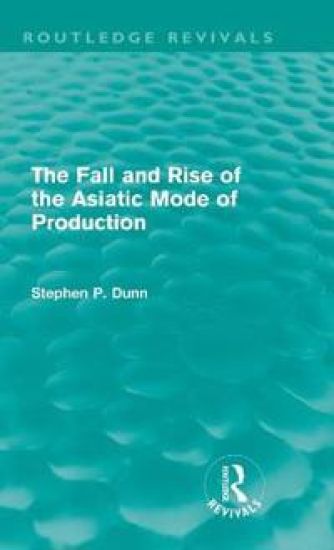
The Fall and Rise of the Asiatic Mode of Production (Routledge Revivals)
Stephen Dunn
Routledge
2011
sidottu
This reissue was first published in 1982. It deals specifically with the ‘Asiatic mode of production’ described by Karl Marx in his basic evolutionary model for human society. The term defines a special form of society marked by state ownership of the means of production and extensive intervention by the state in all forms of social life. In the soviet Union, the concept has had a chequered and controversial career: leading writers, primarily Stalin, have denied its very existence, mobilizing the heavy artillery of state ideology in their defence, whilst later scholars show signs of reversing this trend.Drawing on a large body of Soviet writing on historiography, Stephen Dunn develops a critical analysis of the issue, and introduces important corrections to the accounts hitherto available in the West. His work should be of major interest to students of Soviet politics, economists and Marxists.
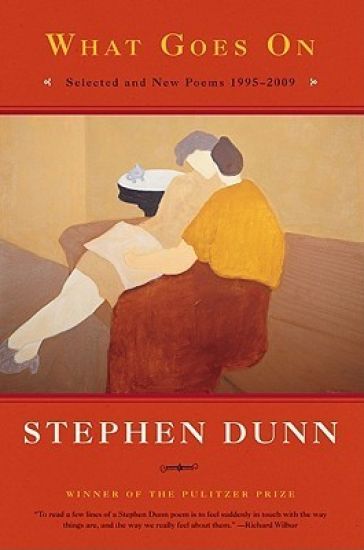
What Goes On displays the evolving style and sensibility of a major award-winning poet, and a traceable growth that has blossomed into a provocative confrontation with questions of consciousness and existence. Stephen Dunn’s poems probe life’s big questions without ever losing sight of the significance of the mundane.
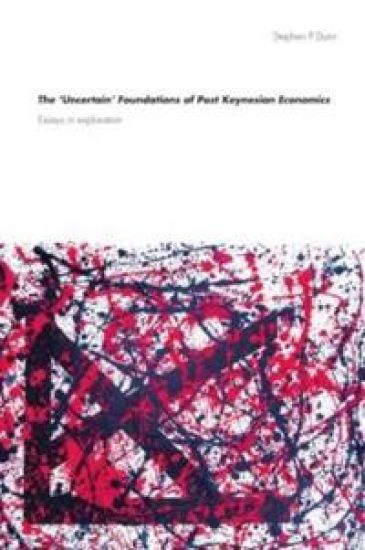
This important new book introduces, analyzes and takes forward a post-Keynesian theory of the firm. It makes a vital contribution to the conceptualisation of uncertainty that is consistent with the methodological presuppositions of Post Keynesian economics. The author attempts to make a positive contribution to the development of Post Keynesian economics by refuting allegations of incoherence, detailing some of the salient implications of a transmutable conception of economic processes and then starting to explore what this means for how Post Keynesians conceptualise uncertainty. The book argues that the Post Keynesian distinctive view of time, understood as a non-deterministic open systems process, is a core and defining characteristic which is linked to its theoretical discussion of money and the principle of effective demand.Covering areas such as the coherence of Post Keynesianism, the future of Post Keynesian economics and Keynesian methodological debates, this book is useful reading for all Post Keynesian scholars with a strong interest in economic methodology and the philosophical underpinnings of economics.
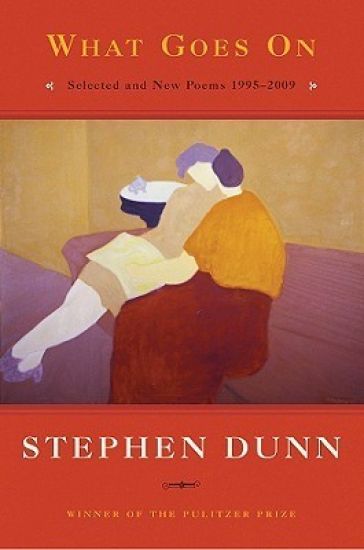
"Good poems are triumphs over the unlikely," Stephen Dunn says. "They make us pay attention in new ways." In his second new and selected collection, Dunn subtly enlarges our sense of possibility. His new poems, suffused with affection and rue for our world, occasionally address the metaphysical, as in these lines— from “Talk to God”Ease into your misgivingsAsk him if in his weaknesshe was ever responsiblefor a pettiness—some weather, say,brought in to show who’s bosswhen no one seemed sufficiently movedby a sunset or the shape of an egg.Ask him if when he gave us desirehe had underestimated its power.
This important new book introduces, analyzes and takes forward a post-Keynesian theory of the firm. It makes a vital contribution to the conceptualisation of uncertainty that is consistent with the methodological presuppositions of Post Keynesian economics. The author attempts to make a positive contribution to the development of Post Keynesian economics by refuting allegations of incoherence, detailing some of the salient implications of a transmutable conception of economic processes and then starting to explore what this means for how Post Keynesians conceptualise uncertainty. The book argues that the Post Keynesian distinctive view of time, understood as a non-deterministic open systems process, is a core and defining characteristic which is linked to its theoretical discussion of money and the principle of effective demand.Covering areas such as the coherence of Post Keynesianism, the future of Post Keynesian economics and Keynesian methodological debates, this book is useful reading for all Post Keynesian scholars with a strong interest in economic methodology and the philosophical underpinnings of economics.
In his fourteenth collection, Stephen Dunn, “one of our indispensable poets” (Miami Herald), continues to probe brilliantly the unsaid and the elusive in the lives we live, in language that Gerald Stern has called “unbearably fearless and beautiful.”