

Kirjailija
Stephen E Fowl
Kirjat ja teokset yhdessä paikassa: 18 kirjaa, julkaisuja vuosilta 2005-2025, suosituimpien joukossa Reading Scripture with the Saints. Vertaile teosten hintoja ja tarkista saatavuus suomalaisista kirjakaupoista.
Mukana myös kirjoitusasut: Stephen E. Fowl
18 kirjaa
Kirjojen julkaisuhaarukka 2005-2025.

Reading Scripture with the Church – Toward a Hermeneutic for Theological Interpretation
A. K. M. Adam; Stephen E. Fowl; Kevin J. Vanhoozer; Francis Watson
Baker Academic, Div of Baker Publishing Group
2006
nidottu
Theological interpretation of the Bible is key to the health and vitality as well as the belief and practice of the church. Just how it is done has been the subject of much discussion and debate over the centuries. In Reading Scripture with the Church, four leading biblical scholars make the case for theological interpretation. Each author is given the opportunity to interact with the other three, and all four interact with premodern, modern, and postmodern approaches to biblical interpretation. This is an important book for pastors, teachers, and other serious students of the Bible who will be motivated to embrace the task of interpreting the Bible with greater energy, caution, and precision.
The Shape of Our Lives
Philip D Kenneson; Debra Dean Murphy; Stephen E Fowl
Englewood Press
2024
pokkari
Desire. Conviction. Character. Story. Practice. Institution. The Shape of Our Lives digs into how these six factors-often operating beneath our consciousness-profoundly affect our spiritual formation, both as individuals and congregations. As Christians across America grapple with the value and purpose of church, this accessible volume provides a roadmap for exploring what motivates and forms us. The Shape of Our Lives equips readers to look beneath the surface, understanding the forces impacting our formation. The book lays a theological and practical foundation for congregations and communities to be transformed more into the image of Christ. How does a community of people-with their different and sometimes competing values-grow together? How can congregations make room for God's spirit to be at work? The Shape of Our Lives will give you and your Christian community the language to renew these conversations and embark on the journey of congregational formation."In these times of disillusionment with church, there could not be a more timely book. " --David Fitch, Lindner Chair of Evangelical Theology at Northern Seminary
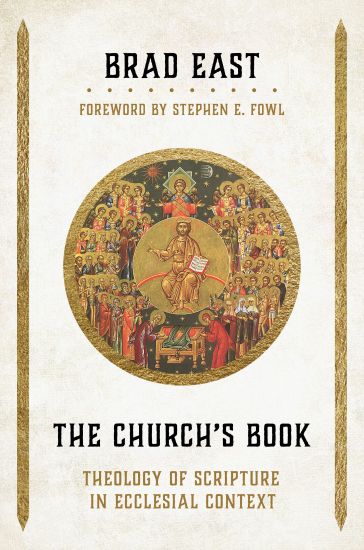
What role do varied understandings of the church play in the doctrine and interpretation of Scripture?In The Church's Book, Brad East explores recent accounts of the Bible and its exegesis in modern theology and traces the differences made by divergent, and sometimes opposed, theological accounts of the church. Surveying first the work of Karl Barth, then that of John Webster, Robert Jenson, and John Howard Yoder (following an excursus on interpreting Yoder's work in light of his abuse), East delineates the distinct understandings of Scripture embedded in the different traditions that these notable scholars represent. In doing so, he offers new insight into the current impasse between Christians in their understandings of Scripture--one determined far less by hermeneutical approaches than by ecclesiological disagreements. East's study is especially significant amid the current prominence of the theological interpretation of Scripture, which broadly assumes that the Bible ought to be read in a way that foregrounds confessional convictions and interests. As East discusses in the introduction to his book, that approach to Scripture cannot be separated from questions of ecclesiology--in other words, how we interpret the Bible theologically is dependent upon the context in which we interpret it.

No one purposefully chooses to become an idolater. No one consciously abandons the living God to fall prey to a pantheon of earthly gods. Yet idolatry has a way of subtly seeping into the cracks of human life.In Idolatry, Stephen E. Fowl explores how believers lapse into idolatry, a process he insists is much different from the decision of those who have rejected belief in God. He asserts that the Old Testament's account of Israel's idolatry as dramatic folly and betrayal describes the after effects of idolatry, not the process of how believers lapse into idolatry. Idolatry is a process of slowly diverting love and attention away from the one true God and toward false gods.Fowl identifies the various habits, practices, and dispositions that can lead to this process, using Scripture to demonstrate different ways believers become inclined to idolatry. He first turns to Deuteronomy to show how to combat idolatry by remembering the grace of God. He then examines Ephesians and Colossians to demonstrate how the suggested practices of thanksgiving and gratitude can serve as the antidotes to idolatrous greed. He looks to 1 John to find the love that casts out the fear and insecurity that the books of Kings, Isaiah, and Luke name as the forerunners of idolatry. Finally, he examines curiosity, traditionally considered a vice, and how it turns believers toward idols unless it is countered by an undistracted focus on Jesus.Idolatry looms over believers in a world overflowing with false gods, but Fowl offers hope. By diagnosing and defining the root causes of idolatry before these initial temptations become precipitated actions, Christians learn to navigate a world littered with false idols to live abundantly with the one true God.
Judges & Ruth
Stephen E. Fowl; Laura A. Smit; R. Reno; Robert Jenson; Robert Wilken
Brazos Press, Div of Baker Publishing Group
2018
sidottu
The Brazos Theological Commentary on the Bible encourages readers to explore how the vital roots of the ancient Christian tradition inform and shape faithfulness today. In this addition to the series, two respected scholars offer a theological reading of Judges and Ruth. As with other volumes in the series, this commentary is designed to serve the church--providing a rich resource for preachers, teachers, students, and study groups--and to demonstrate the continuing intellectual and practical viability of theological interpretation of the Bible.
In this guide Stephen E. Fowl introduces students to both theological fruit and critical issues of the letter to the Ephesians. On the theological front, Fowl shows how Ephesians offers an unparalleled cosmic vision of the significance of the death and resurrection of Jesus, of the role of heavenly powers in the universe, and of how the community of Christians is to engage with those powers. Fowl also opens up the major identity questions Ephesians shows existed for early Christians: how to conceive the relationship of Gentiles with the Jews from among whom their faith emerged, and how to live as a Christian within households ordered on patriarchal lines while not capitulating to patriarchy. On the critical front, Fowl provides an introduction to the key critical questions and issues, such as whether this letter was actually written to a church in Ephesus, and whether Paul the apostle was indeed the author of the letter. Yet, whilst there are demanding linguistic, historical and cultural questions to be answered, Fowl is careful to point out that this should not be done at the expense of reading the text closely and appreciating its meaning and message.
In this book Fowl examines the role played by three poetic texts, Phil. 2.6-11, Col. 1.15-20, and 1Tim. 3.16 in the arguments of their epistles. Rather than functioning as criteria of christological orthodoxy, these poetic narrations of Christ's person and work are used by Paul to support various ethical positions. For Paul and the Christians he addresses, these stories of Christ are exemplars for the life and practice of the church.
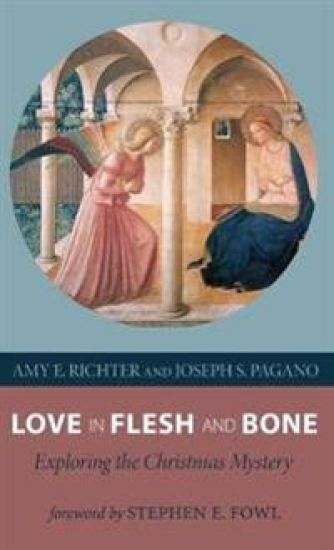
Love in Flesh and Bone
Amy E Richter; Joseph S Pagano; Stephen E Fowl
Wipf Stock Publishers
2014
sidottu
On the weekend of April 22, 2012 the St. Anne's Church website received thousands of visitors. That Sunday, in the New York Times Magazine, an article appeared about the Rev. Dr. Amy E. Richter competing in a physique competition. The strong reactions to the article got Richter and her husband and fellow clergyperson, the Rev. Dr. Joseph Pagano, thinking about the scandal of the Incarnation. The claim that God entered fully into our flesh-and-blood human existence makes some of us squeamish. And yet, this shocking claim is at the heart of the good news that in Christ God is with us no matter what. There is nothing that can happen to us--no pain, no humiliation, no anguish--that can separate us from the love of God in Christ Jesus our Lord. In sermons for the seasons of Advent, Christmas, and Epiphany, Richter and Pagano proclaim the good news of the scandalous love of God in flesh and bone.

Love in Flesh and Bone
Amy E Richter; Joseph S Pagano; Stephen E Fowl
Wipf Stock Publishers
2014
pokkari
About the Contributor(s): Amy E. Richter is Rector of St. Anne's Episcopal Church and Visiting Instructor at the Ecumenical Institute at St. Mary's Seminary and University in Baltimore, Maryland. She is author of Enoch and the Gospel of Matthew. Joseph S. Pagano is Associate Rector of St. Anne's Episcopal Church in Annapolis, Maryland, and Affiliate Professor of Theology at Loyola University in Baltimore, Maryland. He is author of The Origins and Development of the Triadic Structure of Faith in H. Richard Niebuhr, and co-author of A Man, A Woman, a Word of Love, with his wife and colleague Amy Richter.
"Stephen Fowl's rich volume on this rich letter displays his careful reading of the text that yields a truly theological commentary."--Michael J. Gorman, Raymond E. Brown Chair in Biblical Studies and Theology, St. Mary's Seminary and University"Stephen Fowl brings his considerable gifts in theological interpretation to the profound theological message of the Letter to the Ephesians. The result is a refreshingly irenic commentary that reflects a thorough knowledge of the critical discussions while eschewing lengthy debate." --Andrew T. Lincoln, Portland Professor of New Testament, University of Gloucestershire"Reading Stephen Fowl's work is always a wonderful experience. His prose is tight and clear, his thinking fresh, and his commentary on Scripture always targets the sacred text and what it may teach the church about its relationship with God and one another." --Robert W. Wall, Paul T. Walls Professor of Scripture and Wesleyan Studies, Seattle Pacific UniversityEven though it was written some two millennia ago, Ephesians still speaks to Christians today in themes quite familiar to the modern reader. In a context where the church had become overwhelmingly, if not exclusively, Gentile, the Christian community needed to be reminded of the priority of Israel and the astonishing work of reconciliation that God willed to accomplish in the life, death, and resurrection of Jesus Christ. This volume in the highly acclaimed New Testament Library series reveals the great theological promises of Ephesians while discussing issues of context, authorship, and style.

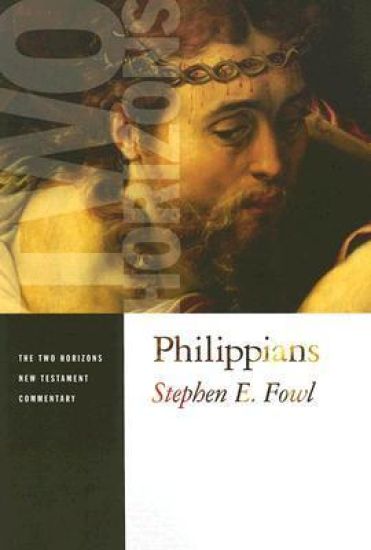
In this fine new commentary on Paul's letter to the Philippians, Stephen Fowl notes that for the great pre-modern commentators of the Christian tradition, the literal sense of Scripture is always regulated by theological concerns. Thus, unlike commentaries that simply append theology to historical criticism, Fowl's volume displays disciplined attention to the text of Philippians in ways that enhance, rather than frustrate, theological inquiry.