Kirjojen hintavertailu. Mukana 12 390 323 kirjaa ja 12 kauppaa.

Kirjailija

Stephen E. Gregg

Kirjat ja teokset yhdessä paikassa: 4 kirjaa, julkaisuja vuosilta 2015-2021, suosituimpien joukossa Swami Vivekananda and Non-Hindu Traditions. Vertaile teosten hintoja ja tarkista saatavuus suomalaisista kirjakaupoista.

4 kirjaa

Kirjojen julkaisuhaarukka 2015-2021.

Swami Vivekananda and Non-Hindu Traditions
The Hindu thinker Swami Vivekananda (1863-1902) was and remains an important figure both within India, and in the West, where he was notable for preaching Vedanta. Scholarship surrounding Vivekananda is dominated by hagiography and his (mis)appropriation by the political Hindu Right. This work demonstrates that Vivekananda was no simplistic pluralist, as portrayed in hagiographical texts, nor narrow exclusivist, as portrayed by some modern Hindu nationalists, but a thoughtful, complex inclusivist.The book shows that Vivekananda formulated a hierarchical and inclusivistic framework of Hinduism, based upon his interpretations of a four-fold system of Yoga. It goes on to argue that Vivekananda understood his formulation of Vedanta to be universal, and applied it freely to non-Hindu traditions, and in so doing, demonstrates that Vivekananda was consistently critical of ‘low level’ spirituality, not only in non-Hindu traditions, but also within Hinduism.Demonstrating that Vivekananda is best understood within the context of ‘Advaitic primacy’, rather than ‘Hindu chauvinism’, this book will be of interest to scholars of Hinduism and South Asian religion and of South Asian diaspora communities and religious studies more generally.
Swami Vivekananda and Non-Hindu Traditions
The Hindu thinker Swami Vivekananda (1863-1902) was and remains an important figure both within India, and in the West, where he was notable for preaching Vedanta. Scholarship surrounding Vivekananda is dominated by hagiography and his (mis)appropriation by the political Hindu Right. This work demonstrates that Vivekananda was no simplistic pluralist, as portrayed in hagiographical texts, nor narrow exclusivist, as portrayed by some modern Hindu nationalists, but a thoughtful, complex inclusivist.The book shows that Vivekananda formulated a hierarchical and inclusivistic framework of Hinduism, based upon his interpretations of a four-fold system of Yoga. It goes on to argue that Vivekananda understood his formulation of Vedanta to be universal, and applied it freely to non-Hindu traditions, and in so doing, demonstrates that Vivekananda was consistently critical of ‘low level’ spirituality, not only in non-Hindu traditions, but also within Hinduism.Demonstrating that Vivekananda is best understood within the context of ‘Advaitic primacy’, rather than ‘Hindu chauvinism’, this book will be of interest to scholars of Hinduism and South Asian religion and of South Asian diaspora communities and religious studies more generally.
Engaging with Living Religion

Engaging with Living Religion

Stephen E. Gregg; Lynne Scholefield

Routledge
2015
sidottu
Understanding living religion requires students to experience everyday religious practice in diverse environments and communities. This guide provides the ideal introduction to fieldwork and the study of religion outside the lecture theatre. Covering theoretical and practical dimensions of research, the book helps students learn to ‘read’ religious sites and communities, and to develop their understanding of planning, interaction, observation, participation and interviews. Students are encouraged to explore their own expectations and sensitivities, and to develop a good understanding of ethical issues, group-learning and individual research. The chapters contain student testimonies, examples of student work and student-led questions.
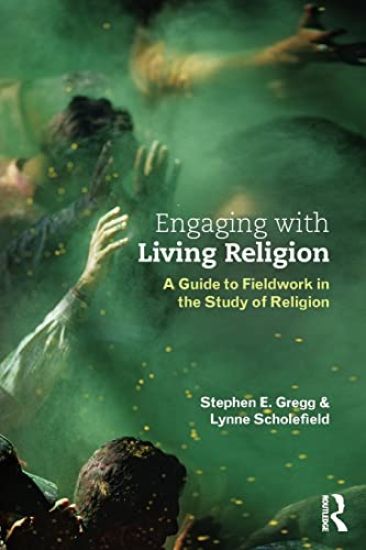
Engaging with Living Religion

Engaging with Living Religion

Stephen E. Gregg; Lynne Scholefield

Routledge
2015
nidottu
Understanding living religion requires students to experience everyday religious practice in diverse environments and communities. This guide provides the ideal introduction to fieldwork and the study of religion outside the lecture theatre. Covering theoretical and practical dimensions of research, the book helps students learn to ‘read’ religious sites and communities, and to develop their understanding of planning, interaction, observation, participation and interviews. Students are encouraged to explore their own expectations and sensitivities, and to develop a good understanding of ethical issues, group-learning and individual research. The chapters contain student testimonies, examples of student work and student-led questions.