Kirjojen hintavertailu. Mukana 12 390 323 kirjaa ja 12 kauppaa.

Kirjailija

Stephen Emmitt

Kirjat ja teokset yhdessä paikassa: 26 kirjaa, julkaisuja vuosilta 2002-2025, suosituimpien joukossa Collaborative Design Management. Vertaile teosten hintoja ja tarkista saatavuus suomalaisista kirjakaupoista.

26 kirjaa

Kirjojen julkaisuhaarukka 2002-2025.

Barry's Construction Technology

Barry's Construction Technology

Stephen Emmitt; Tony Bryan

JOHN WILEY SONS INC
2025
nidottu
Updated resource guiding readers through the analysis and choices required to ensure a building will perform as expected Robin Barry's Construction of Buildings was first published in 1958 as a five-volume set and rapidly became a standard work on the subject. Following Barry's death in 2002, a two-volume format was adopted with new authors. Developed from an earlier book by Tony Bryan, this new third volume, Barry's Construction Technology, extends the coverage to show how decisions about the design, production, maintenance and disposal of buildings may be thought through given the materials and technology available. The book challenges the reader to think about the consequences of making choices and decisions rather than relying on using what has been used before. Barry's Construction Technology Analysis and Choice includes information on: The climate emergency and the low carbon agenda as a fundamental part of construction technology analysis and choiceRegenerative design, net zero buildings, and the circular economy for the built environmentConstraints that location, legislation, codes and standards, sustainability, insurance, and commercial pressures apply to the performance of buildingsSpecific construction technology examples, with emphasis on questioning what we do and why, with the aim of informing and stimulating the reader to ask questions when confronted with all design and construction projects Barry's Construction Technology Analysis and Choice is an essential, practical, and up-to-date reference on the subject for undergraduate students of all building construction programmes including surveying, construction management, architectural technology, and architecture.
Design Management for Architects

Design Management for Architects

Stephen Emmitt

TAYLOR FRANCIS LTD
2024
nidottu
This unique and established guide to the management of design and designers has been comprehensively reimagined and updated. Written for students of architecture and early career architects, the book explores the benefits of design management from the context of managing design projects and the management of the architectural businesses. It aligns with the need for architects to improve design management competences and business skills as set out by the ARB and the RIBA.Design Management for Architects is presented in three parts. Part One is dedicated to explaining what design management is and what a design manager does. Part Two focuses on the main project stages and how design management can help to identify, explore, and deliver design value for clients, architects, and society. Part Three looks at how design management is applied within the architectural business and how it relates to successful projects and businesses. Emphasis is on the management of designers (people), design activities (processes) and outputs (information and products). Chapters include reflective exercises that can be addressed individually, or in small discussion groups to aid learning. Written in an accessible and engaging manner, the book is essential reading for students studying towards qualification as an architect and for nascent architects looking to improve their management competences.
Design Management for Architects

Design Management for Architects

Stephen Emmitt

TAYLOR FRANCIS LTD
2024
sidottu
This unique and established guide to the management of design and designers has been comprehensively reimagined and updated. Written for students of architecture and early career architects, the book explores the benefits of design management from the context of managing design projects and the management of the architectural businesses. It aligns with the need for architects to improve design management competences and business skills as set out by the ARB and the RIBA.Design Management for Architects is presented in three parts. Part One is dedicated to explaining what design management is and what a design manager does. Part Two focuses on the main project stages and how design management can help to identify, explore, and deliver design value for clients, architects, and society. Part Three looks at how design management is applied within the architectural business and how it relates to successful projects and businesses. Emphasis is on the management of designers (people), design activities (processes) and outputs (information and products). Chapters include reflective exercises that can be addressed individually, or in small discussion groups to aid learning. Written in an accessible and engaging manner, the book is essential reading for students studying towards qualification as an architect and for nascent architects looking to improve their management competences.
Barry's Advanced Construction of Buildings

Barry's Advanced Construction of Buildings

Stephen Emmitt

JOHN WILEY AND SONS LTD
2023
nidottu
BARRY’S ADVANCED CONSTRUCTION OF BUILDINGS An up-to-date edition of the comprehensive guide to building practice Since 1958, Barry’s Construction of Buildings has served as a standard guide to building practices and construction skills. The second volume of this two-volume format, Barry’s Advanced Construction of Buildings builds on the introductory material of the first volume to offer readers a thorough grounding in construction and its various facets. Emphasizing large-scale buildings, particularly those with load-bearing frames in timber, concrete and steel, and supported by chapters on offsite construction, piling, envelopes to framed buildings, fit-out and second fix, lifts and escalators, building pathology, upgrading and demolition, this latest edition incorporates critical new material, including New questions in each chapter designed to enhance learningUpdates throughout reflecting the latest building practices and professional knowledgeA new focus on low-carbon construction Barry’s Advanced Construction of Buildings is an essential tool for any student working towards qualifications in building and construction, and a handy reference for construction professionals in any area.
Handbook for the Architectural Manager

Handbook for the Architectural Manager

Stephen Emmitt; Mohammed A. Alharbi

Wiley-Blackwell
2018
nidottu
The essential resource for becoming more effective in the highly competitive architectural marketplace Handbook for the Architectural Manager offers architects a comprehensive resource that brings together critical information on four interlinked areas: managing the architectural office, projects, stakeholders, and learning. Unlike other books on the topic that only stress management of the business or the management of projects, this book offers a guiding framework that encompasses the architectural manager's role in developing the practice’s competitive strategies and overseeing the project portfolio. Written by noted experts in the field, Handbook for the Architectural Manager is grounded in current research in which, for the first time, the components of architectural management have been analyzed systematically, tested, and developed for practical application. Designed to explore typical architectural management issues, the book provides clear and concise direction with practical step-by-step guidance as well as helpful checklists, templates and scenarios, and case studies to illustrate best practice. This essential resource: Offers a groundbreaking handbook that contains a comprehensive management framework for architectural practiceContains new insights and guidance based on solid research on managing the architectural practiceBrings together in one book the best management techniques of the office, projects, stakeholders, and learningIncludes a well-grounded critical review of the existing literature on the topicDesigned for professionals in the field but written in accessible language suitable for students Handbook for the Architectural Manager offers a practical guide for overseeing the development of architectural designs and associated activities and ensuring all work is consistent (i.e. adheres to current standards, legislation, client specifications, and office protocols) and completed on time as well as information on staff development and learning.
Aspects of Building Design Management
Achieving design value depends upon the collective efforts of all participants involved in the design and realization of buildings, necessitating the establishment of appropriate managerial frames as well as the assembly and maintenance of effective teams. Building design management is a rapidly evolving field and this special issue of the journal Architectural Engineering and Design Management examines a variety of approaches to design management from different perspectives. The underlying argument is for the better management of design value in an increasingly complex building sector. Written by international experts in the field, the core themes include the modelling, coordination and management of design information; the definition and realization of architectural value; digital outsourcing of architectural services; knowledge capital in architectural education; and the importance of cultural issues. Design management is addressed from the perspective of consultants and contractors, which helps to illustrate the dynamic interrelationships between people, technologies and management. This peer-reviewed publication will be invaluable reading for lecturers and students on architecture, built environment and civil engineering courses. The contents will also be of interest to professional architects, engineers and sponsors of design and construction projects. Published with CIB
Architectural Management in Practice
Architectural Management in Practice is intended to provide both an introduction to the architectural management discipline and a bridge between education and practice.The book informs students about the management issues faced by architects, architectural technologists and surveyors in a competitive marketplace and the practices that should be adopted to enable them to compete effectively. It is split into four main sections. Section One sets the background to the profession, looking at how architectural management is evolving and the environment in which the profession sits. Section Two looks at the assets of a practice, that is people, information and business strategies. Section Three covers the practice of architectural management and looks at all the main management issues: managing projects, design, quality and construction. Finally, Section Four defines competitive advantage for a design practice, and shows how to achieve it and how to promote the company.
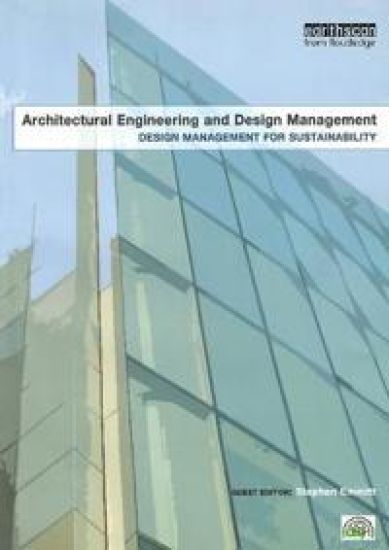
Design Management for Sustainability
Building on the special edition Aspects of Design Management (Volume 3:1, 2007), this publication brings together the rapidly developing field of design management with that of environmental sustainability. Eight articles drawn from around the world help to provide some critical insights into the relationship between ecological sustainability and the application of design management in a number of different contexts. Contributions range from early policy decisions and public procurement options; to corporate social responsibility of architects and the promotion of materials and products to specifiers; to encouraging change and a design process evaluation method; to investigations into the role and contribution of construction design managers and facilities managers to a sustainable built environment. Collectively the articles provide a unique, multi-disciplinary, contribution to the theoretical development of the design management field as well as guidance on the practical application of methods and tools.
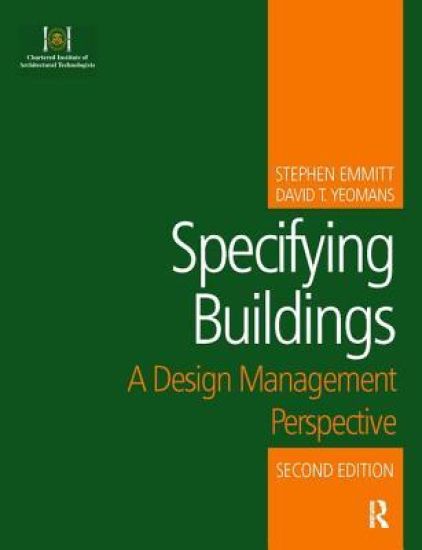
Specifying Buildings

Specifying Buildings

Stephen Emmitt; David T Yeomans

Routledge
2017
sidottu
Selecting the best materials, techniques and systems for each project and then specifying them correctly to meet all the requirements of quality, time, value, constructability, maintenance and durability is a fundamental aspect of architectural design. It also helps to determine the quality and environmental impact of the project. Specifying Buildings: A Design Management Perspective provides a unique insight into the entire specification process, from selecting materials and products to writing the specification, dealing with changes and minimising risk. This new edition has been extensively revised and includes new case studies, research findings and reviews to illustrate how to translate design intent into building assembly. The book is structured to meet the needs of students on construction-related programmes such as architecture, engineering, surveying and construction management. It provides valuable insights and practical guidance, with end of chapter exercises helping students achieve a thorough understanding of the specification process
Design Management

Design Management

Stephen Emmitt

Routledge
2016
sidottu
This is a design guide for architects, engineers and contractors concerning the principles and application of design management. This book addresses the value that design management and design managers contribute to construction projects. As part of the PocketArchitecture series, Design Management is divided into two parts: Fundamentals and Application. In Part 1, Fundamentals, the chapters address the why, what, how and when questions in a simple and informative style, illustrated with vignettes from design management professionals. In Part 2, case studies from Colombia, Norway and the USA represent unique examples of the application of design management. This book offers a concise overview of design management for postgraduate students and early career design managers.
Design Management

Design Management

Stephen Emmitt

Routledge
2016
nidottu
This is a design guide for architects, engineers and contractors concerning the principles and application of design management. This book addresses the value that design management and design managers contribute to construction projects. As part of the PocketArchitecture series, Design Management is divided into two parts: Fundamentals and Application. In Part 1, Fundamentals, the chapters address the why, what, how and when questions in a simple and informative style, illustrated with vignettes from design management professionals. In Part 2, case studies from Colombia, Norway and the USA represent unique examples of the application of design management. This book offers a concise overview of design management for postgraduate students and early career design managers.
Communication in Construction Teams

Communication in Construction Teams

Stephen Emmitt; Christopher Gorse

Routledge
2015
nidottu
Construction teams are usually complex, interdisciplinary and temporary, and, as such, the need for effective communication is crucial. However, published data regarding the manner in which individuals interact within the temporary project team is scarce, with little other than anecdotal evidence available.Recognizing this gap, Communication in Construction Teams provides a comprehensive overview of the literature on interpersonal communication and delivers a critical review of various research methods previously used in and outside the construction management field. Making use of Bales' interaction process analysis (IPA), a tool used successfully in many fields to collect interaction data, the text investigates the link between successful projects and the effectiveness of communication, finding that participants in the construction process exhibit regular patterns of interaction and, most significantly, that there are different patterns of interaction associated with successful and unsuccessful projects.Putting forward a number of practical suggestions to assist all actors involved in construction projects, this insightful publication will be of interest to researchers in the fields of building design and construction management.
Design Management for Architects

Design Management for Architects

Stephen Emmitt

John Wiley Sons Inc
2014
nidottu
This guide integrates theory and practice to offer practical solutions for architects to improve their design management skills. This unique guide helps architects improve their management skills by addressing the relationship between the management of the design project and the design office. The author demonstrates how a professionally managed project, conceived and delivered within a professionally managed office ensures that client values are translated into construction without loss of creativity. Design Management for Architects divides into two parts. Part 1: Managing Creative Projects covers the context and infrastructure of projects; looks at client values; describes developing, detailing and realising the design; and shows how to learn from projects. Part 2: Managing Creative Organisations describes the business of architecture; explains how to manage creative people and the design studio – covering communication and knowledge-sharing, information management, financial management and attracting/retaining clients. This second edition has been extensively rewritten in response to student feedback and to the rapid evolution of design management in architecture. New features include: the ‘Why Management?’ question addressed in a design contextVignettes to demonstrate the value of design managementpractical advice is incorporated into each chapter under ‘Project to Office Interface’more specifics on the design manager role, and the contribution of ICTs (including BIM) to effective design management. By integrating theory and practice, and offering practical solutions for architects to improve their design management skills, this book provides clear guidance to all designers and (design) managers.
Architectural Technology

Architectural Technology

Stephen Emmitt

John Wiley Sons Inc
2013
sidottu
… it gives me great pleasure to support the first ever publication to specifically address the area of research, and in particular its relationship with practice, in the discipline of architectural technology…not only ground breaking because it is the first book of its kind, but also because it provides at long last one of the accepted foundations needed to underpin the emerging academic discipline, namely a recognised research base. CIAT, in supporting this publication, is aware of the need for books such as this to sustain the process of research informed practice, as an aid for both students and those practising within the discipline of architectural technology. Norman Wienand MCIAT, Vice President Education, Chartered Institute of Architectural Technologists Architectural technology is the realisation of architecture through the application of building science, forming the constructive link between the abstract and the physical. Architectural Technology: research and practice demonstrates the importance of research in architectural technology and aims to stimulate further research and debate by enlightening, informing and challenging readers. Chapter authors address the interplay between research and practice in the field of architectural technology, examining the influence of political, economic, social, environmental and technological issues. The focus throughout is on creating sustainable buildings that are constructed economically and function effectively and efficiently within their service life cycle. The book’s mix of chapters and case studies bring together a number of different themes and provides invaluable insights into the world of research from the perspective of those working within the architectural technology field - practitioners, academics and students. The underlying message is that architectural technology is not just a profession; it is a way of thinking and a way of acting. This is highlighted by contributions from architects and architectural technologists passionate about architectural technology as a field of knowledge. Contributions range from the theoretical and polemic to the pragmatic and applied, further helping to demonstrate the richness of the field. About the Editor Stephen Emmitt is Professor of Architectural Technology at Loughborough University UK and Visiting Professor of Innovation Sciences at Halmstad University, Sweden and a member of CIAT’s Research Group.
Collaborative Design Management

Collaborative Design Management

Stephen Emmitt; Kirti Ruikar

Routledge
2013
sidottu
The design process has always been central to construction, but recent years have seen its significance increase, and the ways of approaching it multiply. To an increasing degree, other stakeholders such as contractors have input at the design stage, and the designer’s role includes tasks that were traditionally the realm of other professions.This presents challenges as well as opportunities, and both are introduced, discussed, and analysed in Collaborative Design Management. Case studies from the likes of ARUP, Buro Happold, VINCI Construction UK Ltd, and CIOB show how technologies (BIM, podcasting), innovative working (information management, collaboration), and the evolution of roles (the designer-contractor interface, environmental compliance) have changed design management as a process. Starting from a basic level, the reader is introduced to the key themes and background to the design management role, including definitions of the responsibilities now commonly involved, and the strategic importance of design. Influential technologies currently in use are evaluated, and the importance they are likely to have in future is explored. This combination of case studies from leading practitioners, clear explanations of design management roles and activities, and an exploration of how to succesfully achieve collaborative design management makes this a highly topical and uniquely valuable book. This is essential reading for professionals and students of all levels interested in construction design management, from all AEC backgrounds.
Collaborative Design Management

Collaborative Design Management

Stephen Emmitt; Kirti Ruikar

Routledge
2013
nidottu
The design process has always been central to construction, but recent years have seen its significance increase, and the ways of approaching it multiply. To an increasing degree, other stakeholders such as contractors have input at the design stage, and the designer’s role includes tasks that were traditionally the realm of other professions.This presents challenges as well as opportunities, and both are introduced, discussed, and analysed in Collaborative Design Management. Case studies from the likes of ARUP, Buro Happold, VINCI Construction UK Ltd, and CIOB show how technologies (BIM, podcasting), innovative working (information management, collaboration), and the evolution of roles (the designer-contractor interface, environmental compliance) have changed design management as a process. Starting from a basic level, the reader is introduced to the key themes and background to the design management role, including definitions of the responsibilities now commonly involved, and the strategic importance of design. Influential technologies currently in use are evaluated, and the importance they are likely to have in future is explored. This combination of case studies from leading practitioners, clear explanations of design management roles and activities, and an exploration of how to succesfully achieve collaborative design management makes this a highly topical and uniquely valuable book. This is essential reading for professionals and students of all levels interested in construction design management, from all AEC backgrounds.
Architectural Technology

Architectural Technology

Stephen Emmitt

Wiley-Blackwell (an imprint of John Wiley Sons Ltd)
2012
nidottu
Since the publication of the first edition of Architectural Technology, in 2002, there have been significant developments in the number of courses, the profile of the discipline as well as significant changes in the Construction sector. The Second edition of Architectural Technology addresses these challenges directly. Much greater emphasis is given to the three core themes of the book - Environmental Sustainability; Innovation; and Design. An increase in the visual material included reinforces the critical role of Design, aiding students to better translate conceptual designs into built artefacts. Building upon solid teaching practice from the previous edition, Architectural Technology is now more concisely structured to take the reader through the whole life cycle of a building, emphasising sustainability and building performance. Material on digital information, building information modelling (BIM) and information communication technologies has been updated. Most chapters have been re-titled to emphasise the importance of design and make the book more accessible to a wider range of students. Chapters conclude with updated/more extensive links to further reading. Architectural Technology, 2nd Edition: Bridges the knowledge gap between design and construction Tackles the core subjects of management, technologies and design from a sustainable building angle Addresses the buildability and performance of a design from a whole life perspective Thoroughly revised and updated this undergraduate level textbook is essential for Architectural Technology courses. Students studying Architectural Engineering, Architecture, Building Surveying; and more general Construction courses, will find the material invaluable.
Managing Interdisciplinary Projects

Managing Interdisciplinary Projects

Stephen Emmitt

Routledge
2010
sidottu
Construction, architecture and engineering projects are complex undertakings, involving a temporary grouping of people and companies, with different agendas and experience, coming together to achieve a project goal. This book investigates the dynamics of the relationships between individuals involved in architecture, engineering and construction projects. It combines a structured theoretical framework, derived from social psychology and mainstream management theory, with case studies and research from the built environment sector. Focusing on how people interact, communicate and work together, it examines how best to manage the interdisciplinary relationships that form and reform during the project life cycle.The book covers vital areas of project management, whose importance has recently come to be recognized, and will be valuable for students at both undergraduate and graduate level. Practitioners will also find it a useful insight into the social aspect of project management, with implications and applications that apply to all projects in the built environment sector.
Managing Interdisciplinary Projects

Managing Interdisciplinary Projects

Stephen Emmitt

Routledge
2010
nidottu
Construction, architecture and engineering projects are complex undertakings, involving a temporary grouping of people and companies, with different agendas and experience, coming together to achieve a project goal. This book investigates the dynamics of the relationships between individuals involved in architecture, engineering and construction projects. It combines a structured theoretical framework, derived from social psychology and mainstream management theory, with case studies and research from the built environment sector. Focusing on how people interact, communicate and work together, it examines how best to manage the interdisciplinary relationships that form and reform during the project life cycle.The book covers vital areas of project management, whose importance has recently come to be recognized, and will be valuable for students at both undergraduate and graduate level. Practitioners will also find it a useful insight into the social aspect of project management, with implications and applications that apply to all projects in the built environment sector.
Design Management for Sustainability

Design Management for Sustainability

Stephen Emmitt

Earthscan Ltd
2009
nidottu
Building on the special edition Aspects of Design Management (Volume 3:1, 2007), this publication brings together the rapidly developing field of design management with that of environmental sustainability. Eight articles drawn from around the world help to provide some critical insights into the relationship between ecological sustainability and the application of design management in a number of different contexts. Contributions range from early policy decisions and public procurement options; to corporate social responsibility of architects and the promotion of materials and products to specifiers; to encouraging change and a design process evaluation method; to investigations into the role and contribution of construction design managers and facilities managers to a sustainable built environment. Collectively the articles provide a unique, multi-disciplinary, contribution to the theoretical development of the design management field as well as guidance on the practical application of methods and tools.