Kirjojen hintavertailu. Mukana 12 390 323 kirjaa ja 12 kauppaa.

Kirjailija

Stephen Farrall

Kirjat ja teokset yhdessä paikassa: 17 kirjaa, julkaisuja vuosilta 2005-2026, suosituimpien joukossa Criminal Lives. Vertaile teosten hintoja ja tarkista saatavuus suomalaisista kirjakaupoista.

17 kirjaa

Kirjojen julkaisuhaarukka 2005-2026.

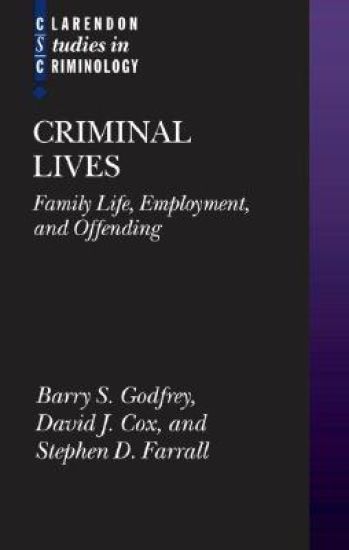
Criminal Lives

Criminal Lives

Barry S. Godfrey; David J. Cox; Stephen Farrall

Oxford University Press
2007
sidottu
This book uses historical data to directly address modern criminological debates. There is currently a huge growth of interest in histories of crime, and intellectual conversations and connections between historians and criminologists are becoming much more frequent. However, published work which uses historical data to this extent is rare. This book's aim is to draw a wide audience from the worlds of criminology, history, and social policy and engage in a genuinely interdisciplinary debate. This book addresses a number of important questions about offenders' persistence in, or desistance from, crime and questions the current theoretical frameworks that are given to explain why some people stop, or slow down, their offending, and why offenders' children become involved in crime. By using criminal registers, census material, and newspaper reports from 1880 -1940 for one industrial town in North-West England, this book asks how and why did some people stop offending, and what part did employment, relationship formation, and family responsibility play in that process; was criminality passed on from parent to child, and if so, how; and to what extent were persistent offenders also persistent victims?
Re-Entry and Desistance from Crime in a Digital Era

Re-Entry and Desistance from Crime in a Digital Era

Isabelle F.-Dufour; Stephen Farrall; Eeva Järveläinen; Hanna Rantala; Ailie Rennie; Birgitta Tetra; Luna Ihamouine-Molto

TAYLOR FRANCIS LTD
2026
sidottu
The volume reports on an empirical study of men and women who started were imprisoned in Canada, England and Finland, during or after the covid pandemic and who were subsequently released back into the community. Drawing on studies of the offenders and practitioners involved, through a comparative lens the men and women’s experiences of their return to society, Re-Entry and Desistance from Crime in a Digital Era explores the roles of existing social and economic arrangements and the use of digital technologies in their journeys away from crime. It pushes us to consider desistance from crime not just as an individually motivated and determined process, but to look to governments and the role which their policies relating to welfare, economic management and criminal justice may also be part of the story of how people desist from crime and how easy or difficult a process it is for them. The authors offer a fresh and compelling contribution to work in the growing field of comparative desistance studies.
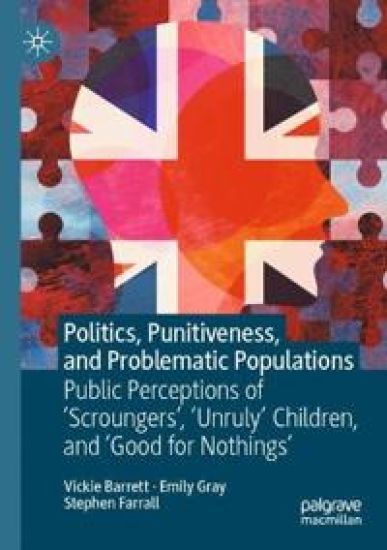
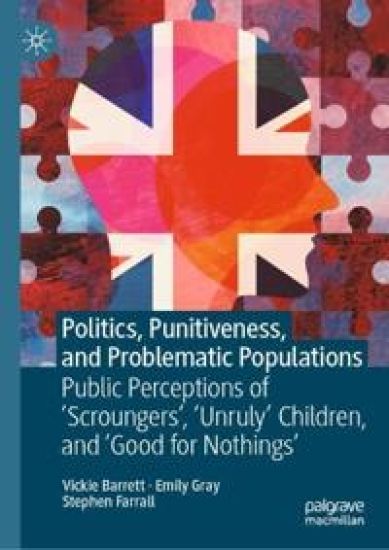
Politics, Punitiveness, and Problematic Populations

Politics, Punitiveness, and Problematic Populations

Vickie Barrett; Emily Gray; Stephen Farrall

Springer International Publishing AG
2024
nidottu
This book speaks to those interested in topics related to punitiveness and public attitudes to crime and punishment. Punitiveness has been the focus of increasing criminological attention in recent decades. This book extends this focus by taking a multi-disciplinary approach to examining punitiveness in the criminal justice system, the welfare system, and the education system in British society today. In doing so, this study uses new survey data (n=5,781) applying ordinal and linear regression and structural equation modelling to examine the relationship between public punitiveness towards ‘rulebreakers’ and political values. This is explored through assessing punitive attitudes towards the treatment of i) school pupils who break school rules, ii) towards the treatment of benefit recipients who fail to comply with the rules, and iii) towards people who break the law. It examines the relationship between political attitudes (neo-conservative values, neo-liberal values), nostalgic values (social, economic, and political), and public punitive attitudes towards the three rule-breaking groups. This book’s appeal may extend to an interdisciplinary audience including welfare, education, and social policy disciplines.
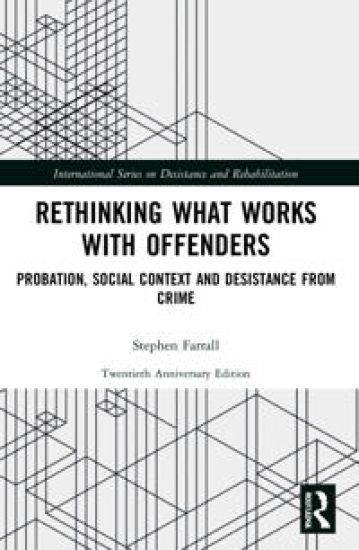
Rethinking What Works with Offenders

Rethinking What Works with Offenders

Stephen Farrall

TAYLOR FRANCIS LTD
2024
nidottu
When it was published twenty years ago, Rethinking What Works with Offenders made a major contribution to criminological knowledge on why people stopped offending, and the impact the probation service had on the desistance process. Unlike other studies that had relied on official conviction data, it was the first to make use of self-reported data, including interviews with men and women on probation, and their supervising Probation Officers. It reconceptualised probation outcomes in terms of degrees of success rather than as 'successful' or 'unsuccessful' and offered important policy implications of these conclusions. The Twentieth Anniversary edition contains the original text along with a new Foreword by Shadd Maruna and Fergus McNeill, locating the book historically and assessing its continued importance to Criminology. It also includes a new chapter by the author reporting on the key findings of the follow-up interviews in 2004 and 2010-12, reflecting on key developments in the field and developing a theory of assisted desistance. Furthermore, it features four new commentaries from Mark Halsey, Isabelle F.-Dufour, Martine Herzog-Evans and José Cid reflecting on the importance and legacy of the book.This book presents an important and challenging range of findings on 'what works' in probation and with offenders and remains essential reading for anybody professionally concerned with the present and future of probation.
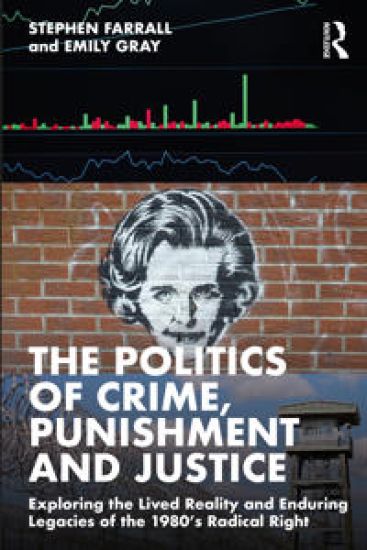
The Politics of Crime, Punishment and Justice

The Politics of Crime, Punishment and Justice

Stephen Farrall; Emily Gray

TAYLOR FRANCIS LTD
2024
nidottu
This book explores the impact of right-wing political ideology on crime, the criminal justice system, and attitudes towards punishment in Britain. Grounded in a rigorous analysis of repeated cross-sectional surveys such as the British Social Attitudes Survey and the British Crime Survey, as well as individual-level cohort data such as the 1958 National Child Development Study and the 1970 British Cohort Study, it examines changes in long-term crime rates, criminal justice policies, and their integration with social and economic policies in Britain over four decades. It offers a detailed discussion of how radical social and economic changes affected the fear of crime and attitudes to punishment, and how well Thatcherite social and economic values were embedded in contemporary British society. Drawing on a wide literature across criminology, political science, sociology, and social policy, this book demonstrates how a thorough understanding of crime cannot take place without an examination of the wider social policies enacted, the life-courses of the individuals affected, and their communities and the political environment in which they live. It is essential reading for criminologists, sociologists, political philosophers, and social theorists alike since it combines thinking from political sciences, life-courses theories, and detailed analyses of the outcomes of social policy change.The Open Access version of this book, available at http://www.taylorfrancis.com, has been made available under a Creative Commons [Attribution-Non Commercial-No Derivatives (CC-BY)] 4.0 license.
The Politics of Crime, Punishment and Justice

The Politics of Crime, Punishment and Justice

Stephen Farrall; Emily Gray

TAYLOR FRANCIS LTD
2024
sidottu
This book explores the impact of right-wing political ideology on crime, the criminal justice system, and attitudes towards punishment in Britain. Grounded in a rigorous analysis of repeated cross-sectional surveys such as the British Social Attitudes Survey and the British Crime Survey, as well as individual-level cohort data such as the 1958 National Child Development Study and the 1970 British Cohort Study, it examines changes in long-term crime rates, criminal justice policies, and their integration with social and economic policies in Britain over four decades. It offers a detailed discussion of how radical social and economic changes affected the fear of crime and attitudes to punishment, and how well Thatcherite social and economic values were embedded in contemporary British society. Drawing on a wide literature across criminology, political science, sociology, and social policy, this book demonstrates how a thorough understanding of crime cannot take place without an examination of the wider social policies enacted, the life-courses of the individuals affected, and their communities and the political environment in which they live. It is essential reading for criminologists, sociologists, political philosophers, and social theorists alike since it combines thinking from political sciences, life-courses theories, and detailed analyses of the outcomes of social policy change.The Open Access version of this book, available at http://www.taylorfrancis.com, has been made available under a Creative Commons [Attribution-Non Commercial-No Derivatives (CC-BY)] 4.0 license.
Politics, Punitiveness, and Problematic Populations

Politics, Punitiveness, and Problematic Populations

Vickie Barrett; Emily Gray; Stephen Farrall

Springer International Publishing AG
2023
sidottu
This book speaks to those interested in topics related to punitiveness and public attitudes to crime and punishment. Punitiveness has been the focus of increasing criminological attention in recent decades. This book extends this focus by taking a multi-disciplinary approach to examining punitiveness in the criminal justice system, the welfare system, and the education system in British society today. In doing so, this study uses new survey data (n=5,781) applying ordinal and linear regression and structural equation modelling to examine the relationship between public punitiveness towards ‘rulebreakers’ and political values. This is explored through assessing punitive attitudes towards the treatment of i) school pupils who break school rules, ii) towards the treatment of benefit recipients who fail to comply with the rules, and iii) towards people who break the law. It examines the relationship between political attitudes (neo-conservative values, neo-liberal values), nostalgic values (social, economic, and political), and public punitive attitudes towards the three rule-breaking groups. This book’s appeal may extend to an interdisciplinary audience including welfare, education, and social policy disciplines.
Rethinking What Works with Offenders

Rethinking What Works with Offenders

Stephen Farrall

TAYLOR FRANCIS LTD
2022
sidottu
When it was published twenty years ago, Rethinking What Works with Offenders made a major contribution to criminological knowledge on why people stopped offending, and the impact the probation service had on the desistance process. Unlike other studies that had relied on official conviction data, it was the first to make use of self-reported data, including interviews with men and women on probation, and their supervising Probation Officers. It reconceptualised probation outcomes in terms of degrees of success rather than as 'successful' or 'unsuccessful' and offered important policy implications of these conclusions. The Twentieth Anniversary edition contains the original text along with a new Foreword by Shadd Maruna and Fergus McNeill, locating the book historically and assessing its continued importance to Criminology. It also includes a new chapter by the author reporting on the key findings of the follow-up interviews in 2004 and 2010-12, reflecting on key developments in the field and developing a theory of assisted desistance. Furthermore, it features four new commentaries from Mark Halsey, Isabelle F.-Dufour, Martine Herzog-Evans and José Cid reflecting on the importance and legacy of the book.This book presents an important and challenging range of findings on 'what works' in probation and with offenders and remains essential reading for anybody professionally concerned with the present and future of probation.
Building Complex Temporal Explanations of Crime

Building Complex Temporal Explanations of Crime

Stephen Farrall

Springer Nature Switzerland AG
2021
sidottu
This book seeks to bring understanding of both complexity and temporality into criminology. It outlines why these are important in criminological models of causation and explanation and explores them by drawing on theories and approaches in political science, comparative history, social theory and systems analyses. It discusses what is meant by complexity and introduces historical institutionalism (which is rarely used in criminology) to criminological audiences; it introduces what is known as ‘why-because’ analyses to the social sciences. This style of thinking is used to explore the causes of major transportation accidents (such as aeroplane or ferry disasters) and involves the integration of structural, organisational and agentic inputs in accounting for such disasters. Chapters on realistic evaluation, theories of structuration and agency, and research design and research methods are included with an example project based on the author's recent studies of Thatcherism which shows how these theories can be applied to empirical data. This book speaks to those interested in criminology, sociology, political science, research methods and the wider social sciences.
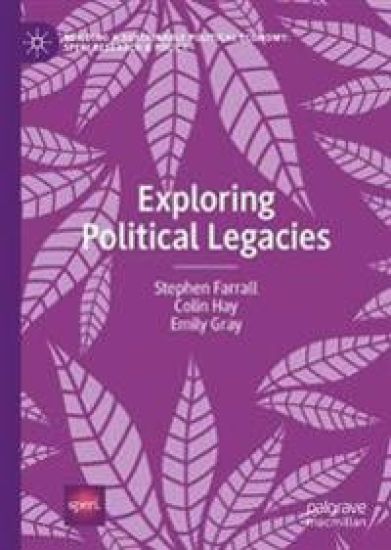
Exploring Political Legacies

Exploring Political Legacies

Stephen Farrall; Colin Hay; Emily Gray

Springer Nature Switzerland AG
2021
nidottu
The concept of the political legacy, despite its importance for institutionalist and historically-minded political analysts more generally, remains both elusive and undeveloped theoretically. This book seeks to address that oversight by building on existing studies which have approached the notion of a legacy to offer a clear definition and operationalisation of the term which might be used to inform future research. Legacies we view as traces of the past in the present; the claim to the existence of a legacy is both a causal and a counter-factual claim. We propose, in the light of this, a multi-dimensional approach to gauging political legacies, reflecting on some of the theoretical, analytical and methodological concerns which need to be addressed in establishing credible claims to their existence. These we develop and illustrate with respect to the literature on Thatcherism.
Exploring Political Legacies

Exploring Political Legacies

Stephen Farrall; Colin Hay; Emily Gray

Springer Nature Switzerland AG
2020
sidottu
The concept of the political legacy, despite its importance for institutionalist and historically-minded political analysts more generally, remains both elusive and undeveloped theoretically. This book seeks to address that oversight by building on existing studies which have approached the notion of a legacy to offer a clear definition and operationalisation of the term which might be used to inform future research. Legacies we view as traces of the past in the present; the claim to the existence of a legacy is both a causal and a counter-factual claim. We propose, in the light of this, a multi-dimensional approach to gauging political legacies, reflecting on some of the theoretical, analytical and methodological concerns which need to be addressed in establishing credible claims to their existence. These we develop and illustrate with respect to the literature on Thatcherism.
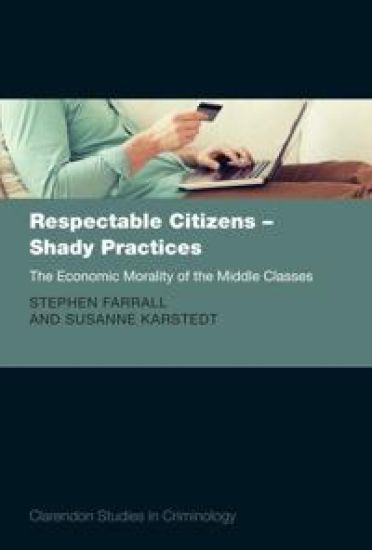
Respectable Citizens - Shady Practices

Respectable Citizens - Shady Practices

Stephen Farrall; Susanne Karstedt

Oxford University Press
2020
sidottu
Respectable Citizens - Shady Practices seeks to explore a previously neglected aspect of crime in modern society - namely those crimes that are committed by otherwise 'respectable' citizens in the market arena. The book delves into the 'grey zone' where illegal, unfair, unethical, and 'shady' practices coalesce: from the retailers who see themselves as victims of customers who take unfair and often illegal advantage of generous offers, to the consumers sold 'useless' insurance and financial packages and 'defrauded' by 'small print' clauses.The authors outline the contours of the contemporary moral economy, driven and shaped by technological innovation as much as new economic policies, and ask, is a 'predatory society' emerging from the central sphere of consumption?
Re-Examining The Crime Drop

Re-Examining The Crime Drop

Stephen Farrall

Springer International Publishing AG
2018
nidottu
The crime drop is one of the most important puzzles in contemporary criminology: since the early-1990s many countries appear to exhibit a pronounced decline in crime rates. While there have been many studies on the topic, this book argues that the current crime drop literature relies too heavily on a single methodological approach, and in turn, provides a new method for examining the falling rates of crime, based on ideas from political science and comparative historical social science. Farrall’s original new research forwards an understanding of trends in crime and responses to them by questioning the received theoretical assumptions. The book therefore encourages a ‘deepening’ in the nature of the sorts of studies which have been undertaken so far. Firmly grounded in Political Science, this innovative study is a must read for scholars of Critical Criminology, Criminological Theory, and Politics.
Re-Examining The Crime Drop

Re-Examining The Crime Drop

Stephen Farrall

Springer International Publishing AG
2017
sidottu
The crime drop is one of the most important puzzles in contemporary criminology: since the early-1990s many countries appear to exhibit a pronounced decline in crime rates. While there have been many studies on the topic, this book argues that the current crime drop literature relies too heavily on a single methodological approach, and in turn, provides a new method for examining the falling rates of crime, based on ideas from political science and comparative historical social science. Farrall’s original new research forwards an understanding of trends in crime and responses to them by questioning the received theoretical assumptions. The book therefore encourages a ‘deepening’ in the nature of the sorts of studies which have been undertaken so far. Firmly grounded in Political Science, this innovative study is a must read for scholars of Critical Criminology, Criminological Theory, and Politics.
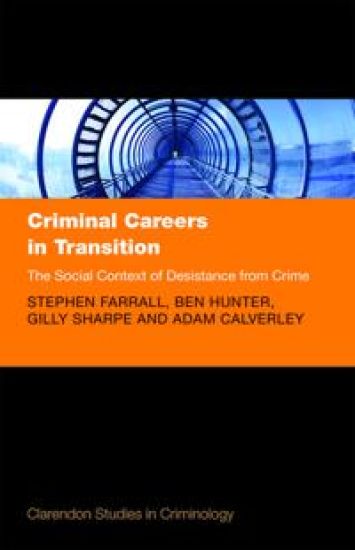
Criminal Careers in Transition

Criminal Careers in Transition

Stephen Farrall; Ben Hunter; Gilly Sharpe; Adam Calverley

Oxford University Press
2014
sidottu
Continuing previous work exploring why people stop offending, and the processes by which they are rehabilitated in the community, Criminal Careers in Transition: The Social Context of Desistance from Crime follows the completion of a fifth sweep of interviews with members of a cohort of former probationers interviewed since the late-1990s. The research undertaken since the inception of the project in 1996 has focused on developing a long-term evidence base, rather than a rapid assessment, examining whether (and how) probation supervision assists desistance from crime. Building on interviews from previous sweeps, the authors continue their exploration into the needs identified by probation officers and probationers, the extent to which these have been successfully met over the medium to long-term, and whether this suggests that probation helps probationers to desist. The authors argue that probation supervision did indeed help the probationers, but that this had taken a long time to 'bear fruit' and was related to other social and personal changes. There is discussion of a number of key topics, including sample members' continued social and personal development (including the impact of parenthood on them) and their motivation to change and maintain a law-abiding lifestyle, as well as their experiences of dealing with the stigma of a criminal record and the long-term process of 'remaking' themselves. This core empirical research and analysis is framed by a comprehensive review of not only the contemporary literature on desistance and reoffending, but also what constitutes a successful and effective research design in this field. Whilst there have been several attempts to develop theories of desistance, few have attempted to understand and theorise the long-term impacts of probation supervision. Criminal Careers in Transition addresses this by building an account of the processes which help to shape the speed, nature, and direction of an individual's efforts to avoid further offending and, thus, develop a theory of assisted desistance. The book continues the authors' exploration of the emotional trajectories of crime, victimisation, and desistance and the role of citizenship values in pathways out of crime, as well as original research into the spatial dynamics of desistance.
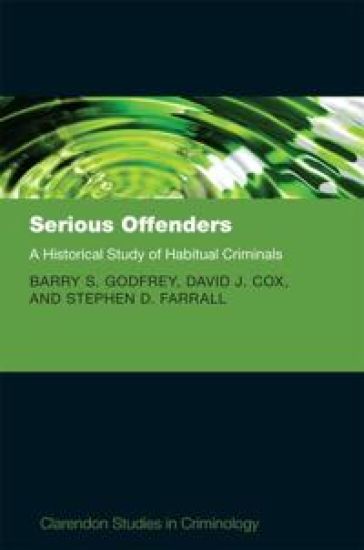
Serious Offenders

Serious Offenders

Barry Godfrey; David Cox; Stephen Farrall

Oxford University Press
2010
sidottu
Serious Offenders: A Historical Study of Habitual Criminals examines the persistent offending careers of men and women operating in northwest England between the 1840s and 1940s. The book focuses on a group of serious and persistent offenders who as well as offending in the region, had lengthy offending careers spanning several decades in various other locations. These were highly mobile persistent serious offenders who appear not to have been so closely bound in to the processes and structures which aided desistence from offending for the vast majority of the petty offenders. The authors discuss questions such as: Why did some people remain minor offenders, whilst others developed into serious offenders? What were the triggers which propelled previously minor offenders towards persistent serious criminality? What part did changes in criminal legislation play in these processes? They conclude by drawing on the lessons to be learnt for today's debates about the regulation and surveillance of serious habitual offenders.
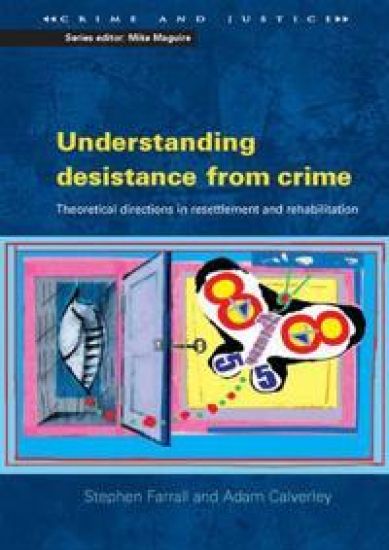
Understanding Desistance from Crime

Understanding Desistance from Crime

Stephen Farrall; Adam Calverley

Open University Press
2005
nidottu
Why do people stop offending?What are the processes they undergo in stopping?What can be done to help more people who have offended put their pasts behind them?The growth of interest in why people stop offending and how they are resettled following punishment has been remarkable. Once a marginal topic in criminology, it is now a central topic of research and theorising amongst those studying criminal careers. This book is both an introduction to research on desistance, and the report on a follow-up of two hundred probationers sentenced to supervision in the late 1990s. The reader is introduced to some of the wider issues and debates surrounding desistance via a consideration of the criminal careers of a group of ex-offenders. This lively engagement with both data and theoretical matters makes the book a useful tool for both academics and students. The book will appeal to undergraduates, postgraduates and academics studying criminology, criminal justice, sociology, social work, social policy and psychology, as well as trainee probation officers.