Kirjojen hintavertailu. Mukana 12 290 406 kirjaa ja 12 kauppaa.

Kirjailija

Stephen G. Brush

Kirjat ja teokset yhdessä paikassa: 11 kirjaa, julkaisuja vuosilta 1970-2015, suosituimpien joukossa Making 20th Century Science. Vertaile teosten hintoja ja tarkista saatavuus suomalaisista kirjakaupoista.

11 kirjaa

Kirjojen julkaisuhaarukka 1970-2015.

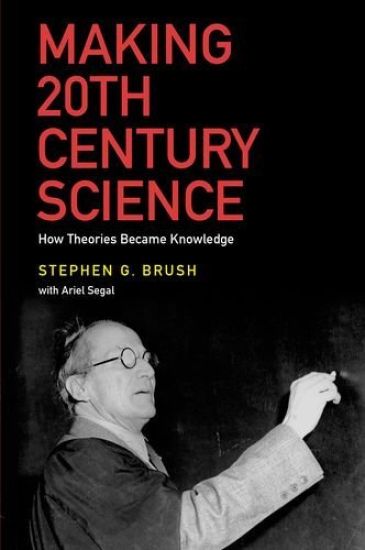
Making 20th Century Science

Making 20th Century Science

Stephen G. Brush

Oxford University Press Inc
2015
sidottu
Historically, the scientific method has been said to require proposing a theory, making a prediction of something not already known, testing the prediction, and giving up the theory (or substantially changing it) if it fails the test. A theory that leads to several successful predictions is more likely to be accepted than one that only explains what is already known but not understood. This process is widely treated as the conventional method of achieving scientific progress, and was used throughout the twentieth century as the standard route to discovery and experimentation. But does science really work this way? In Making 20th Century Science, Stephen G. Brush discusses this question, as it relates to the development of science throughout the last century. Answering this question requires both a philosophically and historically scientific approach, and Brush blends the two in order to take a close look at how scientific methodology has developed. Several cases from the history of modern physical and biological science are examined, including Mendeleev's Periodic Law, Kekule's structure for benzene, the light-quantum hypothesis, quantum mechanics, chromosome theory, and natural selection. In general it is found that theories are accepted for a combination of successful predictions and better explanations of old facts. Making 20th Century Science is a large-scale historical look at the implementation of the scientific method, and how scientific theories come to be accepted.
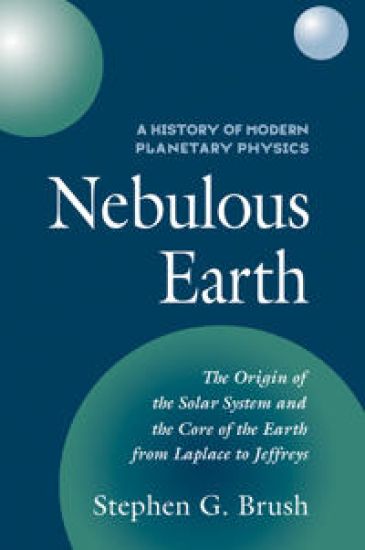
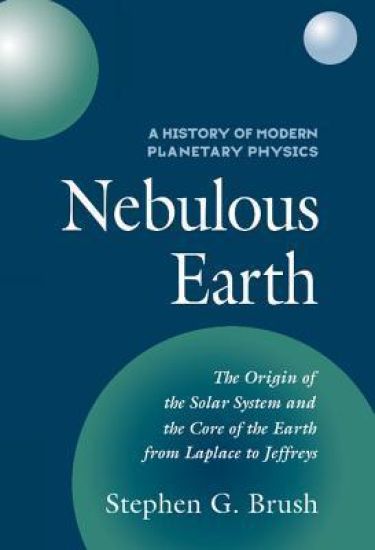
A History of Modern Planetary Physics: Volume 1, The Origin of the Solar System and the Core of the Earth from LaPlace to Jeffreys
Where did we come from? Before there was life there had to be something to live on - a planet, a solar system. During the past 200 years, astronomers and geologists have developed and tested several different theories about the origin of the solar system and the nature of the Earth. Did the Earth and other planets form as a by-product of a natural process that formed the Sun? Did the solar system come into being as the result of catastrophic encounter of two stars? Is the inside of the Earth solid, liquid or gaseous? The three volumes that make up A History of Modern Planetary Physics present a survey of these theories. Nebulous Earth follows the development of the nineteenth-century's most popular explanation for the origin of the solar system, Laplace's Nebular Hypothesis. This theory supposes that a flattened mass of gas extending beyond Neptune's orbit cooled and shrank, throwing off in the process successive rings that in time coalesced to form several planets.
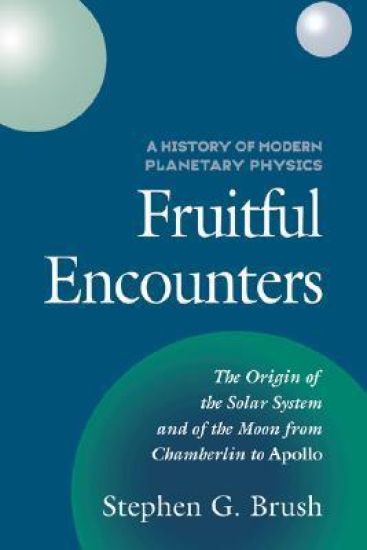
A History of Modern Planetary Physics: Volume 3, The Origin of the Solar System and of the Moon from Chamberlain to Apollo
Where did we come from? Before there was life there had to be something to live on - a planet, a solar system. During the past 200 years, astronomers and geologists have developed and tested several different theories about the origin of the solar system and the nature of the Earth. Together, the three volumes that make up A History of Modern Planetary Physics present a survey of these theories. The early twentieth century saw the replacement of the Nebular Hypothesis with the Chamberlain-Moulton theory that the solar system resulted from the encounter of the Sun with a passing star. Fruitful Encounters follows the eventual refutation of the encounter theory and the subsequent revival of a modernised Nebular Hypothesis. Professor Brush also discusses the role of findings from the Apollo space programme, especially the analysis of lunar samples, culminating in the establishment, in the 1980s, of the 'giant impact' theory of the Moon's origin.
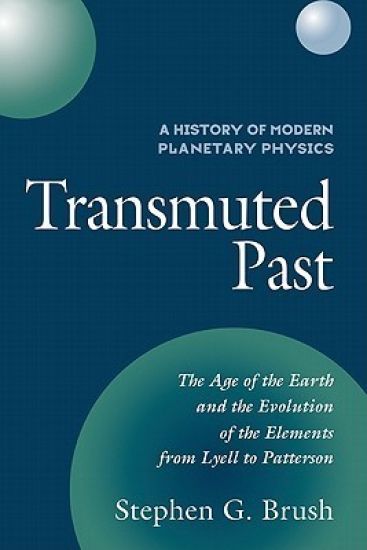
A History of Modern Planetary Physics: Volume 2, The Age of the Earth and the Evolution of the Elements from Lyell to Patterson
Where did we come from? Before there was life there had to be something to live on - a planet, a solar system. During the past 200 years, astronomers and geologists have developed and tested several different theories about the origin of the solar system and the nature of the Earth. The three volumes that together make up A History of Modern Planetary Physics present a survey of these theories. The age of the Earth has been one of the most disputed numbers in science since the seventeenth century. Transmuted Past follows the development of theories of stellar evolution and nucleosynthesis in the twentieth century and describes radiometric methods for estimating the age of the Earth. Professor Brush also offers perspectives on the changing reputation of planetary science relative to the 'pure' sciences, such as physics, and a comparison of history and geology as ways of studying the past.
Physics, the Human Adventure

Physics, the Human Adventure

Stephen G. Brush; Gerald Holton

Rutgers University Press
2001
nidottu
Winner of the 2001 Joseph Hazen Education Prize of the History of Science Society?Physics, the Human Adventure is the third edition of the classic text Introduction to Concepts and Theories in Physical Science. Authored by Gerald Holton, the text was a landmark in science education. It was the first modern textbook in physics (or in any other science) to make full and effective use of the history and philosophy of science in presenting for both the general and the science-oriented student an account of the nature of physical science. A second edition, prepared by Stephen G. Brush, brought the book up to date by increasing the coverage of topics in modern physics and by taking account of recent scholarly research in the history of science. In the new book Physics, The Human Adventure, each of the chapters has been reworked to further clarify the physics concepts and to incorporate recent physical advances and research. The book shows the unifying power of science by bringing in connections to chemistry, astronomy, and geoscience. In short, the aid of the new edition is to teach good physics while presenting physical science as a human adventure that has become a major force in our civilization. New chapters discuss theories of the origin of the solar system and the expanding universe; fission, fusion, and the Big Bang–Steady State Controversy; and thematic elements and styles in scientific thought. New topics include:• Theories of vision: does the eye send out rays or receive them?• Distances in the solar system• The prediction of the return of Halley’s comet and analysis of deviations from Kepler’s laws• Angular momentum conservation and Laplace’s nebular hypothesis• Relation between symmetries and conservation laws: Emmy Noether’s theorem• First estimates of atomic sizes• Consequences of the indistinguishability of elementary particles of the same kind• Applications of quantum mechanics to many-particle systems• Dirac’s prediction of anti-matter• The anthropic principle and other controversial issues on the frontiers of research
A History of Modern Planetary Physics

A History of Modern Planetary Physics

Stephen G. Brush

Cambridge University Press
1996
sidottu
Where did we come from? Before there was life there had to be something to live on - a planet, a solar system. During the past 200 years, astronomers and geologists have developed and tested several different theories about the origin of the solar system and the nature of the Earth. Did the Earth and other planets form as a byproduct of a natural process that formed the Sun? Did the solar system come into being as the result of a catastrophic encounter of two stars? Together, the three volumes that make up A History of Modern Planetary Physics present a survey of these theories. Nebulous Earth follows the development of Laplace’s Nebular Hypothesis, its connection with ideas about the interior of the Earth, and its role in the establishment of the ‘evolutionary’ worldview that dominated science in the latter part of the nineteenth century. Brush also explores Saturn’s rings, Poincaré’s contributions to ideas about cosmic evolution, the use of seismology to probe the Earth’s core, and explanations of the Earth’s magnetic field.
A History of Modern Planetary Physics

A History of Modern Planetary Physics

Stephen G. Brush

Cambridge University Press
1996
sidottu
Where did we come from? Before there was life there had to be something to live on - a planet, a solar system. During the past 200 years, astronomers and geologists have developed and tested several different theories about the origin of the solar system and the nature of the Earth. Together, the three volumes that make up A History of Modern Planetary Physics present a survey of these theories. The early twentieth century saw the replacement of the Nebular Hypothesis with the Chamberlain-Moulton theory that the solar system resulted from the encounter of the Sun with a passing star. Fruitful Encounters follows the eventual refutation of the encounter theory and the subsequent revival of a modernised Nebular Hypothesis. Professor Brush also discusses the role of findings from the Apollo space programme, especially the analysis of lunar samples, culminating in the establishment, in the 1980s, of the 'giant impact' theory of the Moon's origin.
A History of Modern Planetary Physics

A History of Modern Planetary Physics

Stephen G. Brush

Cambridge University Press
1996
sidottu
Where did we come from? Before there was life there had to be something to live on - a planet, a solar system. During the past 200 years, astronomers and geologists have developed and tested several different theories about the origin of the solar system and the nature of the Earth. The three volumes that together make up A History of Modern Planetary Physics present a survey of these theories. The age of the Earth has been one of the most disputed numbers in science since the seventeenth century. Transmuted Past follows the development of theories of stellar evolution and nucleosynthesis in the twentieth century and describes radiometric methods for estimating the age of the Earth. Professor Brush also offers perspectives on the changing reputation of planetary science relative to the ‘pure’ sciences, such as physics, and a comparison of history and geology as ways of studying the past.
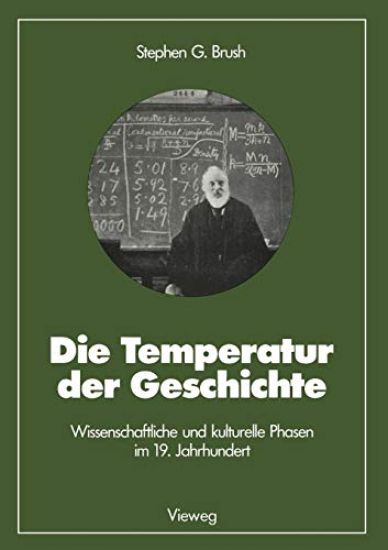
Die Temperatur der Geschichte

Die Temperatur der Geschichte

Stephen G. Brush

Springer Vieweg
1987
nidottu
"Da Mathematiker stets in denselben Bahnen zu denken pflegen, haben sie das freie Feld der Gedan- ken in eine Art Gleissystem gezwiingt und sind so versucht, querlaufende Spekulationen zu vernach- liissigen. " (fames Clerk Maxwell im Jahre 1873 zu Herbert Spencer; vgl. Duncan 1908: 162) Es wird wohl niemand bestreiten, dass die Entwicklung der modernen Wissenschaft ein wesentliches Moment der neueren Geschichte der Zivi- lisation bildet; die Wechselbeziehung zwischen den wissenschaftlichen Theorien und der Gesamtkultur wird jedoch nur selten genauer analy- siert. Die Faszination vieler technischer Errungenschaften hat in Ver- bindung mit der Schwerverstandlichkeit der wissenschaftlichen Aus- drucksform die Tatsache verschleiert, dass Wissenschaftler viele der in Philosophie, Literatur und Kunst massgeblichen Ideen aufgegriffen haben oder zumindest davon beeinflusst wurden. Deshalb wollen wir hier einige Ideen, die in der theoretischen Physik des neunzehnten Jahrhunderts eine wichtige Rolle spielten, untersuchen und sehen, in welcher Beziehung sie zu Stroemungen auf anderen Gebieten der Wissen- schaft und der Kultur stehen. Die in Wissenschaft und Kultur auftretenden Ideen koennen auf verschie- dene Weise miteinander verknupft sein. Es kommt vor, dass eine Idee aus dem Bereich der Kultur in den der Wissenschaft uberwechselt, wo sie bestimmte Theorierichtungen zu stimulieren, neue Experimente nahzulegen und zu neuen Entdeckungen zu fuhren vermag. Eben dies geschah mit dem aus der Romantik stammenden Gedanken der Einheit aller Naturkrafte.
Kinetische Theorie II

Kinetische Theorie II

Stephen G. Brush

Springer Fachmedien Wiesbaden
1970
nidottu
Dies ist der zweite Band einer Sammlung grundlegender Arbeiten über die kinetische Gastheorie; er enthält ins­ besondere die zwei Arbeiten von MAXWELL und BOLTz­ MANN, in denen die Grundgleichungen für Transport­ prozesse in Gasen formuliert werden, einschließlich der ersten Herleitung des BOLTZMANNschen "H -Theorems", sowie eine Probe der späteren Diskussion dieses Satzes und des Irreversibilitätsproblems. Während wir uns in Band I darauf beschränkt haben, kurze Arbeiten relativ elementaren Charakters nachzu­ drucken, und von längeren Arbeiten nur Auszüge gegeben haben, wird der vorliegende Band fast vollständig von zwei ziemlich langen und ins einzelne gehenden Abhand­ lungen eingenommen. Wir hoffen, daß ernsthafte Stu­ dierende der Physik (fortgeschrittene Studenten oder Doktoranden) aus einem eingehenden Studium dieser Arbeiten Nutzen ziehen werden. Wenn auch einige der Ergebnisse der Untersuchungen MAXWELLS und BOLTz­ MANNS in moderne Lehrbücher eingegangen sind, werden die Ableitungen doch gewöhnlich in sehr geraffter Form dargeboten. Die Darstellung von BOLTZMANN fällt in das andere Extrem und ist vielleicht übermäßig kompliziert und wiederholt sich oft; dennoch kann man zu einem tieferen Verständnis des Gegenstandes gelangen, wenn man sich die Zeit nimmt, die Einzelheiten der Ableitungen zu verfolgen (wie auch aus der anhaltenden und zu Recht bestehenden Popularität des großartigen TOLMANschen Buches "The Principles of Statistical Mechanics" hervor­ geht).