Kirjojen hintavertailu. Mukana 12 152 606 kirjaa ja 12 kauppaa.

Kirjailija

Stephen G. Covell

Kirjat ja teokset yhdessä paikassa: 3 kirjaa, julkaisuja vuosilta 2005-2025, suosituimpien joukossa The Teaching and Teachings of Temple Buddhism in Contemporary Japan. Vertaile teosten hintoja ja tarkista saatavuus suomalaisista kirjakaupoista.

3 kirjaa

Kirjojen julkaisuhaarukka 2005-2025.

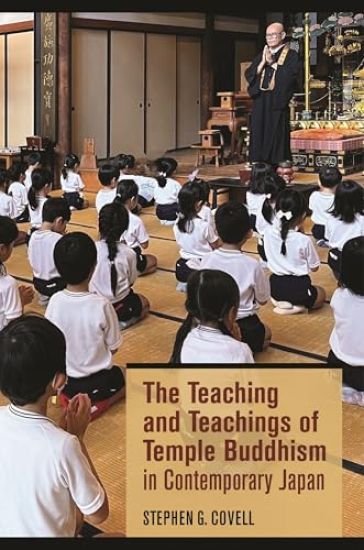
The Teaching and Teachings of Temple Buddhism in Contemporary Japan

The Teaching and Teachings of Temple Buddhism in Contemporary Japan

Stephen G. Covell

UNIVERSITY OF HAWAI'I PRESS
2025
nidottu
How have Buddhist teachings come to be in modern and contemporary Japan and how are they taught? This pioneering work seeks to answer these questions by highlighting the public teachings of Temple Buddhism institutions, in particular Temple Buddhism kindergartens and Buddhist secondary schools and colleges. The community outreach provided by these Buddhist facilities is far greater than any other with the possible exception of funerals yet until now it has received little attention from scholars of Japanese religion. After determining what is taught in Buddhist education and how, Stephen Covell introduces readers to a select group of monks who undergo some of the most grueling practices in Japanese Temple Buddhism to determine if the public-facing teachings of Buddhist education are unique or similar to those of elite Buddhist practitioners. The teachings and sites of teaching examined here include but are not limited to classical doctrinal studies and temples focused on the education of Buddhist clergy. Covell uncovers the arguments made by priests involved in morals education, the dharma talks of famous ascetics, and the ways in which laws and legal codes have changed Buddhist education. He looks at what is taught on the ground, online, and in popular texts to discuss the current teachings embraced as Buddhism within the institutions of Temple Buddhism. Among his numerous findings is such teachings and worldview are remarkably similar to those of New Religions and Buddhist lay movements as outlined by Japan religion scholars and government bodies in charge of education. The Teaching and Teachings of Temple Buddhism in Contemporary Japan will be welcomed by students and scholars in Japanese religious studies and early childhood and higher education as well as those interested in current Buddhist practice and teachings in general.
The Teaching and Teachings of Temple Buddhism in Contemporary Japan

The Teaching and Teachings of Temple Buddhism in Contemporary Japan

Stephen G. Covell

UNIVERSITY OF HAWAI'I PRESS
2024
sidottu
How have Buddhist teachings come to be in modern and contemporary Japan and how are they taught? This pioneering work seeks to answer these questions by highlighting the public teachings of Temple Buddhism institutions, in particular Temple Buddhism kindergartens and Buddhist secondary schools and colleges. The community outreach provided by these Buddhist facilities is far greater than any other with the possible exception of funerals yet until now it has received little attention from scholars of Japanese religion. After determining what is taught in Buddhist education and how, Stephen Covell introduces readers to a select group of monks who undergo some of the most grueling practices in Japanese Temple Buddhism to determine if the public-facing teachings of Buddhist education are unique or similar to those of elite Buddhist practitioners. The teachings and sites of teaching examined here include but are not limited to classical doctrinal studies and temples focused on the education of Buddhist clergy. Covell uncovers the arguments made by priests involved in morals education, the dharma talks of famous ascetics, and the ways in which laws and legal codes have changed Buddhist education. He looks at what is taught on the ground, online, and in popular texts to discuss the current teachings embraced as Buddhism within the institutions of Temple Buddhism. Among his numerous findings is such teachings and worldview are remarkably similar to those of New Religions and Buddhist lay movements as outlined by Japan religion scholars and government bodies in charge of education.The Teaching and Teachings of Temple Buddhism in Contemporary Japan will be welcomed by students and scholars in Japanese religious studies and early childhood and higher education as well as those interested in current Buddhist practice and teachings in general.
Japanese Temple Buddhism

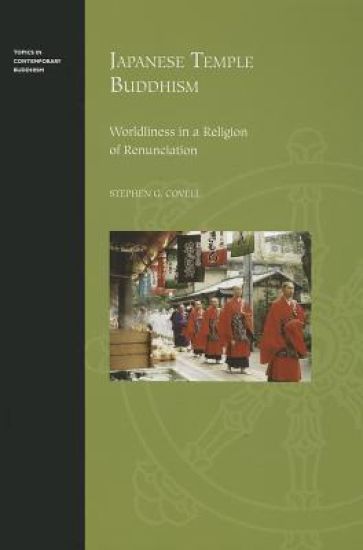
Japanese Temple Buddhism

Stephen G. Covell

University of Hawai'i Press
2005
nidottu
There have been many studies that focus on aspects of the history of Japanese Buddhism. Until now, none have addressed important questions of organization and practice in contemporary Buddhism, questions such as how Japanese Buddhism came to be seen as a religion of funeral practices; how Buddhist institutions envision the role of the laity; and how a married clergy has affected life at temples and the image of priests. This volume is the first to address fully contemporary Buddhist life and institutions - topics often overlooked in the conflict between the rhetoric of renunciation and the practices of clerical marriage and householding that characterize much of Buddhism in today's Japan. Informed by years of field research and his own experiences training to be a Tendai priest, Stephen Covell skillfully refutes this ""corruption paradigm"" while revealing the many (often contradictory) facets of contemporary institutional Buddhism, or as Covell terms it, temple Buddhism. Covell significantly broadens the scope of inquiry to include how Buddhism is approached by both laity and clerics when he takes into account temple families, community involvement, and the commodification of practice. He considers law and tax issues, temple strikes, and the politics of temple boards of directors to shed light on how temples are run and viewed by their inhabitants, supporters, and society in general. In doing so he uncovers the economic realities that shape ritual practices and shows how mundane factors such as taxes influence the debate over temple Buddhism's role in contemporary Japanese society. In addition, through interviews and analyses of sectarian literature and recent scholarship on gender and Buddhism, he provides a detailed look at priests' wives, who have become indispensable in the management of temple affairs.