Kirjojen hintavertailu. Mukana 12 390 323 kirjaa ja 12 kauppaa.

Kirjailija

Stephen Gaukroger

Kirjat ja teokset yhdessä paikassa: 36 kirjaa, julkaisuja vuosilta 1989-2023, suosituimpien joukossa Why Bother with Mission?. Vertaile teosten hintoja ja tarkista saatavuus suomalaisista kirjakaupoista.

36 kirjaa

Kirjojen julkaisuhaarukka 1989-2023.

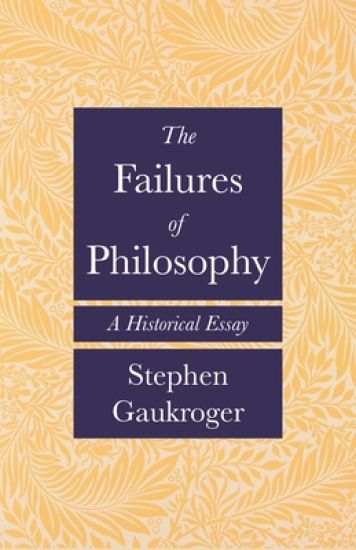
The Failures of Philosophy

The Failures of Philosophy

Stephen Gaukroger

PRINCETON UNIVERSITY PRESS
2023
pokkari
The first book to address the historical failures of philosophy—and what we can learn from themPhilosophers are generally unaware of the failures of philosophy, recognizing only the failures of particular theories, which are then remedied with other theories. But, taking the long view, philosophy has actually collapsed several times, been abandoned, sometimes for centuries, and been replaced by something quite different. When it has been revived it has been with new aims that are often accompanied by implausible attempts to establish continuity with a perennial philosophical tradition. What do these failures tell us?The Failures of Philosophy presents a historical investigation of philosophy in the West, from the perspective of its most significant failures: attempts to provide an account of the good life, to establish philosophy as a discipline that can stand in judgment over other forms of thought, to set up philosophy as a theory of everything, and to construe it as a discipline that rationalizes the empirical and mathematical sciences. Stephen Gaukroger argues that these failures reveal more about philosophical inquiry and its ultimate point than its successes ever could. These failures illustrate how and why philosophical inquiry has been conceived and reconceived, why philosophy has been thought to bring distinctive skills to certain questions, and much more.An important and original account of philosophy’s serial breakdowns, The Failures of Philosophy ultimately shows how these shortcomings paradoxically reveal what matters most about the field.
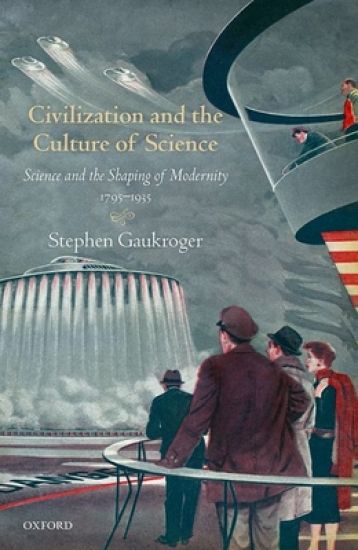
Civilization and the Culture of Science

Civilization and the Culture of Science

Stephen Gaukroger

Oxford University Press
2022
nidottu
How did science come to have such a central place in Western culture? How did cognitive values—and subsequently moral, political, and social ones—come to be modelled around scientific values? In Civilization and the Culture of Science, Stephen Gaukroger explores how these values were shaped and how they began, in turn, to shape those of society. The core nineteenth- and twentieth-century development is that in which science comes to take centre stage in determining ideas of civilization, displacing Christianity in this role. Christianity had provided a unifying thread in the study of the world, however, and science had to match this, which it did through the project of the unity of the sciences. The standing of science came to rest or fall on this question, which the book sets out to show in detail is essentially ideological, not something that arose from developments within the sciences, which remained pluralistic and modular. A crucial ingredient in this process was a fundamental rethinking of the relations between science and ethics, economics, philosophy, and engineering. In his engaging description of this transition to a scientific modernity, Gaukroger examines five of the issues which underpinned this shift in detail: changes in the understanding of civilization; the push to unify the sciences; the rise of the idea of the limits of scientific understanding; the concepts of 'applied' and 'popular' science; and the way in which the public was shaped in a scientific image.
The Failures of Philosophy

The Failures of Philosophy

Stephen Gaukroger

PRINCETON UNIVERSITY PRESS
2020
sidottu
The first book to address the historical failures of philosophy—and what we can learn from themPhilosophers are generally unaware of the failures of philosophy, recognizing only the failures of particular theories, which are then remedied with other theories. But, taking the long view, philosophy has actually collapsed several times, been abandoned, sometimes for centuries, and been replaced by something quite different. When it has been revived it has been with new aims that are often accompanied by implausible attempts to establish continuity with a perennial philosophical tradition. What do these failures tell us?The Failures of Philosophy presents a historical investigation of philosophy in the West, from the perspective of its most significant failures: attempts to provide an account of the good life, to establish philosophy as a discipline that can stand in judgment over other forms of thought, to set up philosophy as a theory of everything, and to construe it as a discipline that rationalizes the empirical and mathematical sciences. Stephen Gaukroger argues that these failures reveal more about philosophical inquiry and its ultimate point than its successes ever could. These failures illustrate how and why philosophical inquiry has been conceived and reconceived, why philosophy has been thought to bring distinctive skills to certain questions, and much more.An important and original account of philosophy’s serial breakdowns, The Failures of Philosophy ultimately shows how these shortcomings paradoxically reveal what matters most about the field.
French Philosophy

French Philosophy

Stephen Gaukroger; Knox Peden

Oxford University Press
2020
nidottu
French culture is unique in that philosophy has played a significant role from the early-modern period onwards, intimately associated with political, religious, and literary debates, as well as with epistemological and scientific ones. While Latin was the language of learning there was a universal philosophical literature, but with the rise of vernacular literatures things changed and a distinctive national form of philosophy arose in France. This Very Short Introduction covers French philosophy from its origins in the sixteenth century up to the present, analysing it within its social, political, and cultural context. Beginning with psychology and epistemology, Stephen Gaukroger and Knox Peden then move onto the emergence of radical philosophy in the eighteenth century, before considering post-revolutionary philosophy in the nineteenth century, philosophy in the world wars, the radical thought of the 1960s, and finally French philosophy today. Throughout, they explore the dilemma sustained by the markedly national conception of French philosophy, and its history of speaking out on matters of universal concern. ABOUT THE SERIES: The Very Short Introductions series from Oxford University Press contains hundreds of titles in almost every subject area. These pocket-sized books are the perfect way to get ahead in a new subject quickly. Our expert authors combine facts, analysis, perspective, new ideas, and enthusiasm to make interesting and challenging topics highly readable.
Civilization and the Culture of Science

Civilization and the Culture of Science

Stephen Gaukroger

Oxford University Press
2020
sidottu
How did science come to have such a central place in Western culture? How did cognitive values--and subsequently moral, political, and social ones--come to be modelled around scientific values? In Civilization and the Culture of Science, Stephen Gaukroger explores how these values were shaped and how they began, in turn, to shape those of society. The core nineteenth- and twentieth-century development is that in which science comes to take centre stage in determining ideas of civilization, displacing Christianity in this role. Christianity had provided a unifying thread in the study of the world, however, and science had to match this, which it did through the project of the unity of the sciences. The standing of science came to rest or fall on this question, which the book sets out to show in detail is essentially ideological, not something that arose from developments within the sciences, which remained pluralistic and modular. A crucial ingredient in this process was a fundamental rethinking of the relations between science and ethics, economics, philosophy, and engineering. In his engaging description of this transition to a scientific modernity, Gaukroger examines five of the issues which underpinned this shift in detail: changes in the understanding of civilization; the push to unify the sciences; the rise of the idea of the limits of scientific understanding; the concepts of 'applied' and 'popular' science; and the way in which the public was shaped in a scientific image.
The Genealogy of Knowledge

The Genealogy of Knowledge

Stephen Gaukroger

Routledge
2020
nidottu
First published in 1997, this volume expands the analytical philosophical tradition in the face of parochial Anglo-American philosophical interests. The essays making up the section on ‘Antiquity’ share one concern: to show that there are largely unrecognised but radical differences between the way in which certain fundamental questions – concerning the nature of number, sense perception, and scepticism – were thought of in antiquity and the way in which they were thought of from the 17th century onwards. Part 2, on early modern thought, explores the theoretical characterisation of the role of experiment in early modern physical theory through Galileo’s embracing of experiments, along with Descartes’ automata and issues in a relatively neglected but especially intractable part of Descartes’ philosophy: how he conceives of what a successful inference consists in and what it is that makes it successful. The final section deals with the philosophical foundations of physical theory, the distinction between the human and the natural sciences, the philosophical-cum-scientific foundations of Marx’s idea of socialism, and Nietzche’s criticisms of the very notion of science, concluding that Nietzsche’s probing questions cannot be dismissed, as he has opened up some genuinely challenging issues which we ignore at our peril.
First Steps

First Steps

Stephen Gaukroger

Wipf Stock Publishers
2019
nidottu
So you've become a Christian. Fantastic It's the most important commitment you could ever make. You're a new person, with tremendous potential. But now there are changes to consider. What about going to church? Reading the Bible? Praying? Telling other people? There's a lot to re-think. . . lifestyle issues to reflect on. . . Here's the practical and inspirational book that will hold your hand through it all on your own First Steps contains 10 session outlines for small groups--ideal for post-Alpha groups, follow-on to evangelistic events, enquirers groups.
It Makes Sense

It Makes Sense

Stephen Gaukroger

Wipf Stock Publishers
2019
nidottu
Easily qualifying for all the 'bestseller' superlatives you could throw at it, It Makes Sense is destined to be a classic. With well over 100,000 copies in print, this is a revised and completely updated edition, with new illustrations. It tackles head-on all the real crunch questions about Christianity: What's so great about Jesus? What about other religions? What about suffering? Can I trust the Bible? Doesn't science disprove God? If you want answers to questions like these, delivered with honesty, humor, clarity and street cred, look no further.
It Makes Sense

It Makes Sense

Stephen Gaukroger

Wipf Stock Publishers
2019
sidottu
Easily qualifying for all the 'bestseller' superlatives you could throw at it, It Makes Sense is destined to be a classic. With well over 100,000 copies in print, this is a revised and completely updated edition, with new illustrations. It tackles head-on all the real crunch questions about Christianity: What's so great about Jesus? What about other religions? What about suffering? Can I trust the Bible? Doesn't science disprove God? If you want answers to questions like these, delivered with honesty, humor, clarity and street cred, look no further.
Being Baptised

Being Baptised

Stephen Gaukroger

Wipf Stock Publishers
2019
nidottu
Baptism is a significant rite of passage for many Christians--a public demonstration of a changed heart and a new life, an act with deep spiritual meaning in response to the biblical command. This lively easy-to-read handbook covers the meaning and mandate for baptism as well as offering guidelines for preparation to get the best out of the event. A great gift for anyone considering baptism, and an excellent resource for church leaders to use in baptism classes.
First Steps

First Steps

Stephen Gaukroger

Wipf Stock Publishers
2019
sidottu
So you've become a Christian. Fantastic It's the most important commitment you could ever make. You're a new person, with tremendous potential. But now there are changes to consider. What about going to church? Reading the Bible? Praying? Telling other people? There's a lot to re-think. . . lifestyle issues to reflect on. . . Here's the practical and inspirational book that will hold your hand through it all on your own First Steps contains 10 session outlines for small groups--ideal for post-Alpha groups, follow-on to evangelistic events, enquirers groups.
Being Baptised

Being Baptised

Stephen Gaukroger

Wipf Stock Publishers
2019
sidottu
Baptism is a significant rite of passage for many Christians--a public demonstration of a changed heart and a new life, an act with deep spiritual meaning in response to the biblical command. This lively easy-to-read handbook covers the meaning and mandate for baptism as well as offering guidelines for preparation to get the best out of the event. A great gift for anyone considering baptism, and an excellent resource for church leaders to use in baptism classes.
The Genealogy of Knowledge

The Genealogy of Knowledge

Stephen Gaukroger

Routledge
2019
sidottu
First published in 1997, this volume expands the analytical philosophical tradition in the face of parochial Anglo-American philosophical interests. The essays making up the section on ‘Antiquity’ share one concern: to show that there are largely unrecognised but radical differences between the way in which certain fundamental questions – concerning the nature of number, sense perception, and scepticism – were thought of in antiquity and the way in which they were thought of from the 17th century onwards. Part 2, on early modern thought, explores the theoretical characterisation of the role of experiment in early modern physical theory through Galileo’s embracing of experiments, along with Descartes’ automata and issues in a relatively neglected but especially intractable part of Descartes’ philosophy: how he conceives of what a successful inference consists in and what it is that makes it successful. The final section deals with the philosophical foundations of physical theory, the distinction between the human and the natural sciences, the philosophical-cum-scientific foundations of Marx’s idea of socialism, and Nietzche’s criticisms of the very notion of science, concluding that Nietzsche’s probing questions cannot be dismissed, as he has opened up some genuinely challenging issues which we ignore at our peril.
The Natural and the Human

The Natural and the Human

Stephen Gaukroger

Oxford University Press
2018
nidottu
Stephen Gaukroger presents an original account of the development of empirical science and the understanding of human behaviour from the mid-eighteenth century. Since the seventeenth century, science in the west has undergone a unique form of cumulative development in which it has been consolidated through integration into and shaping of a culture. But in the eighteenth century, science was cut loose from the legitimating culture in which it had had a public rationale as a fruitful
The Natural and the Human

The Natural and the Human

Stephen Gaukroger

Oxford University Press
2016
sidottu
Stephen Gaukroger presents an original account of the development of empirical science and the understanding of human behaviour from the mid-eighteenth century. Since the seventeenth century, science in the west has undergone a unique form of cumulative development in which it has been consolidated through integration into and shaping of a culture. But in the eighteenth century, science was cut loose from the legitimating culture in which it had had a public rationale as a fruitful and worthwhile form of enquiry. What kept it afloat between the middle of the eighteenth and the middle of the nineteenth centuries, when its legitimacy began to hinge on an intimate link with technology? The answer lies in large part in an abrupt but fundamental shift in how the tasks of scientific enquiry were conceived, from the natural realm to the human realm. At the core of this development lies the naturalization of the human, that is, attempts to understand human behaviour and motivations no longer in theological and metaphysical terms, but in empirical terms. One of the most striking feature of this development is the variety of forms it took, and the book explores anthropological medicine, philosophical anthropology, the 'natural history of man', and social arithmetic. Each of these disciplines re-formulated basic questions so that empirical investigation could be drawn upon in answering them, but the empirical dimension was conceived very differently in each case, with the result that the naturalization of the human took the form of competing, and in some respects mutually exclusive, projects.
Discover Acts

Discover Acts

Stephen Gaukroger

Inter-Varsity Press
2013
nidottu
Follow the story of the dynamic growth of the early church. Meet the cast of characters with their strengths, faults and failings just like ours. Always God’s power shines through, in spite of opposition and misunderstanding. Then, as now, men and women prayed, searched the Scriptures and listened for God’s promptings. This volume will inspire and inform our faith. It will fill us with renewed appreciation for our heritage. But above all, as we â€~discover Acts’, tracing the adventures of the early church, we cannot fail to refocus afresh on our great and powerful God.
The Collapse of Mechanism and the Rise of Sensibility

The Collapse of Mechanism and the Rise of Sensibility

Stephen Gaukroger

Oxford University Press
2012
nidottu
Understanding the emergence of a scientific culture - one in which cognitive values generally are modelled on, or subordinated to, scientific ones - is one of the foremost historical and philosophical problems with which we are now confronted. The significance of the emergence of such scientific values lies above all in their ability to provide the criteria by which we come to appraise cognitive enquiry, and which shape our understanding of what it can achieve. The period between the 1680s and the middle of the eighteenth century is a very distinctive one in this development. It is then that we witness the emergence of the idea that scientific values form a model for all cognitive claims. It is also at this time that science explicitly goes beyond technical expertise and begins to articulate a world-view designed to displace others, whether humanist or Christian. But what occurred took place in a peculiar and overdetermined fashion, and the outcome in the mid-eighteenth century was not the triumph of 'reason', as has commonly been supposed, but rather a simultaneous elevation of the standing of science and the beginnings of a serious questioning of whether science offers a comprehensive form of understanding. The Collapse of Mechanism and the Rise of Sensibility is the sequel to Stephen Gaukroger's acclaimed 2006 book The Emergence of a Scientific Culture. It offers a rich and fascinating picture of the development of intellectual culture in a period where understandings of the natural realm began to fragment.