Kirjojen hintavertailu. Mukana 12 595 353 kirjaa ja 12 kauppaa.

Kirjailija

Stephen Glass

Kirjat ja teokset yhdessä paikassa: 2 kirjaa, julkaisuja vuodelta 2014, suosituimpien joukossa Subjective Grounds: Writings by Persons with the Initials S.G.. Vertaile teosten hintoja ja tarkista saatavuus suomalaisista kirjakaupoista.

2 kirjaa

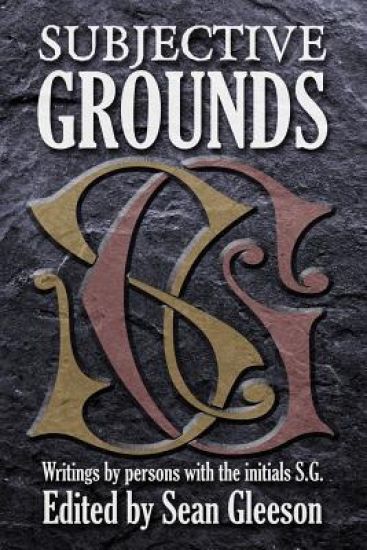
Subjective Grounds: Writings by Persons with the Initials S.G.

Subjective Grounds: Writings by Persons with the Initials S.G.

Stephen Glass; Susan Glaspell; Samuel Gompers

Createspace Independent Publishing Platform
2014
nidottu
A fascinating and eclectic anthology of writings from diverse times, places, and cultures - from ancient Rome and China to present-day America - spanning many genres, including short fiction, essays, poetry, letters, and history. And the authors all share one trait: their initials are "S.G." An anthology must have a theme. So what happens when the theme is essentially meaningless? The anthology becomes a game to play, and a puzzle to solve. A scavenger hunt and jigsaw puzzle, with the pieces scattered all over the world, and the final picture unknown until it is finished. An adventure of discovery for both the anthologist and the reader. These are all short works, or short excerpts from longer works, compiled and edited by Sean Gleeson, with a brief introduction to each piece. Here are some of the great reads you'll discover: The incredible Stephen Glass story "Hack Heaven" as seen in the movie Shattered Glass. The scandalous article that destroyed Glass's career, and marked the ascendancy of online journalism. The funny short story "Freckles M'Grath" by Susan Glaspell. "Why You Can't Have Saint Paul's Head," an actual letter written in 594 A.D. from Saint Gregory to Empress Constantina explaining, well, why she can't have Saint Paul's head. "No More unto My Thoughts Appear" by Cavalier poet Sidney Godolphin. "Penmanship Wisdom" by Sun Guoting, excerpted from his preface to his Treatise on Calligraphy. The famous essay "What Does Labor Want?" by Samuel Gompers, founder of the American Federation of Labor. "Deeds of Erik Shrewd-Spoken" by Saxo Grammaticus, entertaining tales of a crafty hero excerpted from Volume Five of his Deeds of the Danes. "Hotel and Tea-House Girls of Japan" by Sidney Gulick, excerpted from his book Working Women of Japan. The science fiction short story "Breakaway" by Stanley Gimble. "The Camel and the Thief" by Sarath Ghosh, a detective story excerpted from his book The Wonders of the Jungle. "Leo Learns His Lesson" by Sean Gleeson, in which a man wishes for a world without beer. This is a quality print edition, with great care taken to ensure a gorgeous and error-free book.
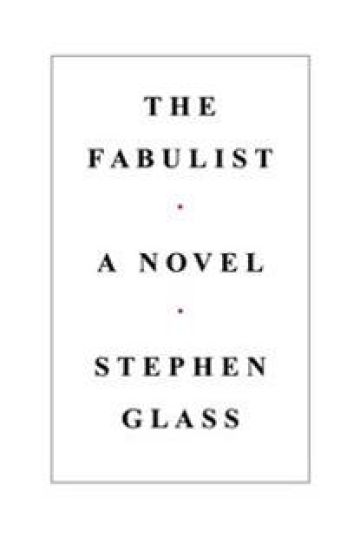
The Fabulist

The Fabulist

Stephen Glass

SIMON SCHUSTER
2014
pokkari
A NOVEL OF AN IGNOMINIOUS FALL, THE RISE TO INFAMY, AND LIFE AFTER BOTH. - It is the summer of 1998, and Stephen Glass is a young magazine journalist whose work is gaining more and more acclaim -- until a rival magazine tells Glass's editor that it suspects one of his stories is fabricated. As his editor sorts out the truth, Glass is busy inventing it -- spinning rich and complex blends of fact and fiction, and exploiting the gray world in between. But Glass is caught. His fabulism is uncovered and his career instantly unravels. Worse, his editor learns that it's not the first time. Soon, a long history of invention, passed off as journalism, emerges. Glass suddenly becomes a household name -- an emblem of hubris and a flashpoint for Americans' distrust and dislike of the press. The media is consumed with the story: Once the young man who had been known for mastering the "takedown" article, Glass now becomes the one every journalist wants to take even further down. Once the hunter, Glass becomes the hunted -- the story of the year. Glass responds to this agonizing public scrutiny with a self-imposed exile, first near Chicago with his family and then in the anonymous suburbs of Washington, D.C. There, he begins a long personal struggle with his misdeeds, working out his own answers to the questions of why he fabricated, how he can learn to stop lying, and whether, at age twenty-five, he has destroyed his life irrevocably. Glass encounters a world far stranger than his own fabrications -- one populated by eccentric coworkers, ailing animals, angry masseuses, sexy librarians, competitive bingo players, synchronized swimmers, a soulful stripper, and a mysterious guardian angel who dresses only in purple. Meanwhile, Glass is chased by marauding journalists whose desperation and ruthlessness manage to match even his own. As he dodges his pursuers, Glass grasps at straws only to find that, wondrously, they sometimes hold. Despite himself, he rediscovers the Judaism he'd left far behind in Hebrew school, and falls helplessly in love with a young woman who turns out to have her own shameful past. In the end, The Fabulist is as much about family, friendship, religion, and love -- about getting through somehow, even when it seems impossible -- as it is about reality and fantasy. At once hilarious and harrowing, The Fabulist is one of the year's most provocative novels.