Kirjojen hintavertailu. Mukana 12 595 353 kirjaa ja 12 kauppaa.

Kirjailija

Stephen Greenblatt

Kirjat ja teokset yhdessä paikassa: 47 kirjaa, julkaisuja vuosilta 1990-2026, suosituimpien joukossa Dunkle Renaissance. Vertaile teosten hintoja ja tarkista saatavuus suomalaisista kirjakaupoista.

47 kirjaa

Kirjojen julkaisuhaarukka 1990-2026.

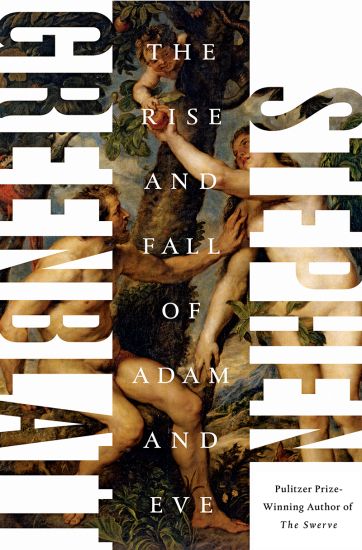
The Rise and Fall of Adam and Eve

The Rise and Fall of Adam and Eve

Stephen Greenblatt

W. W. Norton Company
2017
sidottu
Bolder, even, than the ambitious books for which Stephen Greenblatt is already renowned, The Rise and Fall of Adam and Eve explores the enduring story of humanity's first parents. Comprising only a few ancient verses, the story of Adam and Eve has served as a mirror in which we seem to glimpse the whole, long history of our fears and desires, as both a hymn to human responsibility and a dark fable about human wretchedness.Tracking the tale into the deep past, Greenblatt uncovers the tremendous theological, artistic, and cultural investment over centuries that made these fictional figures so profoundly resonant in the Jewish, Christian, and Muslim worlds and, finally, so very "real" to millions of people even in the present. With the uncanny brilliance he previously brought to his depictions of William Shakespeare and Poggio Bracciolini (the humanist monk who is the protagonist of The Swerve), Greenblatt explores the intensely personal engagement of Augustine, D rer, and Milton in this mammoth project of collective creation, while he also limns the diversity of the story's offspring: rich allegory, vicious misogyny, deep moral insight, and some of the greatest triumphs of art and literature.The biblical origin story, Greenblatt argues, is a model for what the humanities still have to offer: not the scientific nature of things, but rather a deep encounter with problems that have gripped our species for as long as we can recall and that continue to fascinate and trouble us today.
Will In The World

Will In The World

Stephen Greenblatt

Vintage Publishing
2016
pokkari
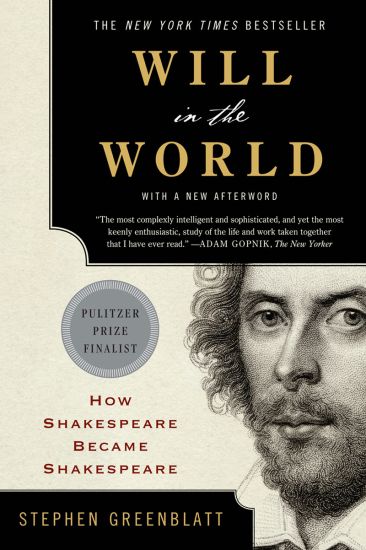
Shakespeare was a man of his time, constantly engaging with his audience's deepest desires and fears. In this book, by reconnecting with this historic reality we are able to experience the true character of the playwright himself. It traces Shakespeare's unfolding imaginative generosity.
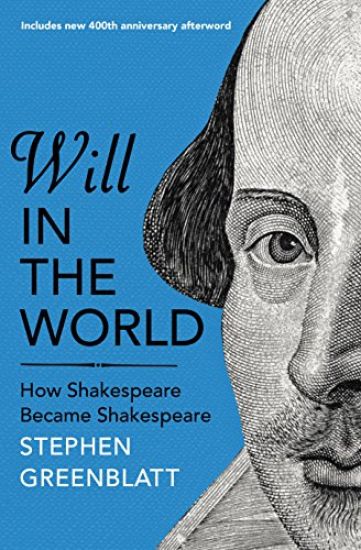
Will in the World: How Shakespeare Became Shakespeare

Will in the World: How Shakespeare Became Shakespeare

Stephen Greenblatt

W. W. Norton Company
2016
nidottu
A young man from a small provincial town moves to London in the late 1580s and, in a remarkably short time, becomes the greatest playwright not of his age alone but of all time. How is an achievement of this magnitude to be explained? Stephen Greenblatt brings us down to earth to see, hear, and feel how an acutely sensitive and talented boy, surrounded by the rich tapestry of Elizabethan life, could have become the world's greatest playwright.
Learning to Curse

Learning to Curse

Stephen Greenblatt

Routledge
2015
sidottu
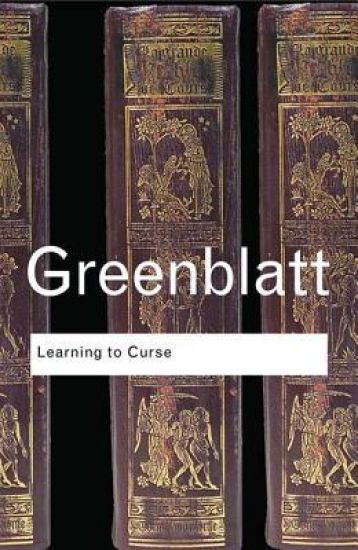
Stephen Greenblatt argued in these celebrated essays that the art of the Renaissance could only be understood in the context of the society from which it sprang. His approach - 'New Historicism' - drew from history, anthropology, Marxist theory, post-structuralism, and psychoanalysis and in the process, blew apart the academic boundaries insulating literature from the world around it. Learning to Curse charts the evolution of that approach and provides a vivid and compelling exploration of a complex and contradictory epoch.
Reynard the Fox

Reynard the Fox

Stephen Greenblatt

Liveright Publishing Corporation
2015
sidottu
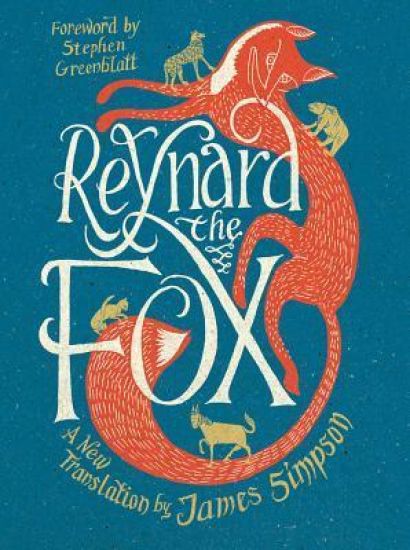
James Simpson’s translation of the late-middle-English version restores Reynard as part of a tradition that extends to Animal Farm. With all new illustrations, "Reynard the Fox is the animal fable’s version of Homer’s Odyssey" (Stephen Greenblatt).
Hamlet in Purgatory

Hamlet in Purgatory

Stephen Greenblatt

Princeton University Press
2013
pokkari
In Hamlet in Purgatory, renowned literary scholar Stephen Greenblatt delves into his longtime fascination with the ghost of Hamlet's father, and his daring and ultimately gratifying journey takes him through surprising intellectual territory. It yields an extraordinary account of the rise and fall of Purgatory as both a belief and a lucrative institution--as well as a capacious new reading of the power of Hamlet. In the mid-sixteenth century, English authorities abruptly changed the relationship between the living and dead. Declaring that Purgatory was a false "poem," they abolished the institutions and banned the practices that Christians relied on to ease the passage to Heaven for themselves and their dead loved ones. Greenblatt explores the fantastic adventure narratives, ghost stories, pilgrimages, and imagery by which a belief in a grisly "prison house of souls" had been shaped and reinforced in the Middle Ages. He probes the psychological benefits as well as the high costs of this belief and of its demolition. With the doctrine of Purgatory and the elaborate practices that grew up around it, the church had provided a powerful method of negotiating with the dead. The Protestant attack on Purgatory destroyed this method for most people in England, but it did not eradicate the longings and fears that Catholic doctrine had for centuries focused and exploited. In his strikingly original interpretation, Greenblatt argues that the human desires to commune with, assist, and be rid of the dead were transformed by Shakespeare--consummate conjurer that he was--into the substance of several of his plays, above all the weirdly powerful Hamlet. Thus, the space of Purgatory became the stage haunted by literature's most famous ghost. This book constitutes an extraordinary feat that could have been accomplished by only Stephen Greenblatt. It is at once a deeply satisfying reading of medieval religion, an innovative interpretation of the apparitions that trouble Shakespeare's tragic heroes, and an exploration of how a culture can be inhabited by its own spectral leftovers. This expanded Princeton Classics edition includes a new preface by the author.
Swerve

Swerve

Stephen Greenblatt

Random House UK
2012
pokkari
WINNER OF THE PULITZER PRIZE FOR NON-FICTION 2012Almost six hundred years ago, a short, genial man took a very old manuscript off a library shelf.
The Swerve: How the World Became Modern

The Swerve: How the World Became Modern

Stephen Greenblatt

W. W. Norton Company
2012
nidottu
In the winter of 1417, a short, genial, cannily alert man in his late thirties plucked a very old manuscript off a dusty shelf in a remote monastery, saw with excitement what he had discovered, and ordered that it be copied. He was Poggio Bracciolini, the greatest book hunter of the Renaissance. His discovery, Lucretius' ancient poem On the Nature of Things, had been almost entirely lost to history for more than a thousand years. It was a beautiful poem of the most dangerous ideas: that the universe functions without the aid of gods, that religious fear is damaging to human life, that pleasure and virtue are not opposites but intertwined, and that matter is made up of very small material particles in eternal motion, randomly colliding and swerving in new directions. Its return to circulation changed the course of history. The poem's vision would shape the thought of Galileo and Freud, Darwin and Einstein, and--in the hands of Thomas Jefferson--leave its trace on the Declaration of Independence. From the gardens of the ancient philosophers to the dark chambers of monastic scriptoria during the Middle Ages to the cynical, competitive court of a corrupt and dangerous pope, Greenblatt brings Poggio's search and discovery to life in a way that deepens our understanding of the world we live in now. "An intellectually invigorating, nonfiction version of a Dan Brown-like mystery-in-the-archives thriller." --Boston Globe
Shakespeare's Freedom

Shakespeare's Freedom

Stephen Greenblatt

University of Chicago Press
2012
nidottu
Shakespeare lived in a world of absolutes - the absolute authority claimed for God over the world, for the holy scriptures over the faithful, monarchs over subjects, fathers over wives and children, men over women, the old over the young, and the gentle over the baseborn. With the elegance and verve for which he is well known, Stephen Greenblatt, author of the best-selling "Will in the World", shows that Shakespeare was strikingly averse to such absolute claims and constantly probed the possibility of freedom from them. Greenblatt explores this rich theme by addressing four of Shakespeare's preoccupations across all the genres in which he worked: beauty, hatred, authority, and autonomy. He considers Shakespeare's challenge to the cult of featureless perfection, his sense of the inherent limits of murderous hatred, his awareness of the ethical ambiguity of power, and his doubt that artists, guided by distinctive forms of perception, were at liberty to create without constraints of any kind. A book that could only have been written by Stephen Greenblatt, "Shakespeare's Freedom" is a wholly original and eloquent meditation by the most acclaimed and influential Shakespearean of our time.
Shakespeare's Festive Comedy

Shakespeare's Festive Comedy

Cesar Lombardi Barber; Stephen Greenblatt

Princeton University Press
2011
pokkari
In this classic work, acclaimed Shakespeare critic C. L. Barber argues that Elizabethan seasonal festivals such as May Day and Twelfth Night are the key to understanding Shakespeare's comedies. Brilliantly interweaving anthropology, social history, and literary criticism, Barber traces the inward journey--psychological, bodily, spiritual--of the comedies: from confusion, raucous laughter, aching desire, and aggression, to harmony. Revealing the interplay between social custom and dramatic form, the book shows how the Elizabethan antithesis between everyday and holiday comes to life in the comedies' combination of seriousness and levity. "I have been led into an exploration of the way the social form of Elizabethan holidays contributed to the dramatic form of festive comedy. To relate this drama to holiday has proved to be the most effective way to describe its character. And this historical interplay between social and artistic form has an interest of its own: we can see here, with more clarity of outline and detail than is usually possible, how art develops underlying configurations in the social life of a culture."--C. L. Barber, in the Introduction This new edition includes a foreword by Stephen Greenblatt, who discusses Barber's influence on later scholars and the recent critical disagreements that Barber has inspired, showing that Shakespeare's Festive Comedy is as vital today as when it was originally published.
Shakespeare's Freedom

Shakespeare's Freedom

Stephen Greenblatt

University of Chicago Press
2010
sidottu
Shakespeare lived in a world of absolutes-of claims for the absolute authority of scripture, monarch, and God, and the authority of fathers over wives and children, the old over the young, and the gentle over the baseborn. With the elegance and verve for which he is well known, Stephen Greenblatt, author of the best-selling Will in the World, shows that Shakespeare was strikingly averse to such absolutes and constantly probed the possibility of freedom from them. Again and again, Shakespeare confounds the designs and pretensions of kings, generals, and churchmen. His aversion to absolutes even leads him to probe the exalted and seemingly limitless passions of his lovers. Greenblatt explores this rich theme by addressing four of Shakespeare's preoccupations across all the genres in which he worked. He first considers the idea of beauty in Shakespeare's works, specifically his challenge to the cult of featureless perfection and his interest in distinguishing marks. He then turns to Shakespeare's interest in murderous hatred, most famously embodied in Shylock but seen also in the character Bernardine in Measure for Measure. Next Greenblatt considers the idea of Shakespearean authority-that is, Shakespeare's deep sense of the ethical ambiguity of power, including his own. Ultimately, Greenblatt takes up Shakespearean autonomy, in particular the freedom of artists, guided by distinctive forms of perception, to live by their own laws and to claim that their creations are singularly unconstrained. A book that could only have been written by Stephen Greenblatt, Shakespeare's Freedom is a wholly original and eloquent meditation by the most acclaimed and influential Shakespearean of our time.
Shakespeares Shylock och antisemitismen

Shakespeares Shylock och antisemitismen

Willmar Sauter; Yael Feiler; Stephen Greenblatt; Jesper Svartvik; Håkan Blomqvist; Lars M. Andersson; David Titelman; Anna-Lena Lodenius; Anat Gesser Edelsburg

Stiftelsen för utgivning av teatervetenskapliga studier
2010
nidottu
Var Shakespeare antisemit? Eller är hans judiska Shylock snarare ett tecken på det diskursiva klimatet som rådde i England under 1500-talet? Rymmer Köpmannen i Venedig antisemitisk propaganda och är den därför rentav farlig, oavsett tidsandan och den sceniska framställningen? Til syvende og sidst är det bara åskådarna som kan ge besked.I sin uppsättning på Dramaten 2004, med Malin Ek i rollen som Shylock, sökte Mats Ek åstadkomma ett motgift. Teaterforskare verksamma vid Teater- och dansvetenskap, Stockholms universitet, genomförde en publikundersökning som visade att tvärtemot sitt syfte hade Dramatenföreställningen lockat fram antisemitiska tendenser hos åskådarna. Under ett tre dagars symposium diskuterades detta alarmerande resultat i ett tvärvetenskapligt sammanhang.Shakespeares Shylock och antisemitismen innehåller de bidrag som nio forskare presenterade i samband med symposiet: Harvardprofessorn och Shakespearespecialisten Stephen Greenblatt (i Hans Kellermans översättning), teologen Jesper Svartvik, historikerna Lars M. Andersson och Håkan Blomqvist, psykoanalytikern David Titelman, journalisten och författaren Anna Lena Lodenius, receptionsforskaren Anat Gesser-Edelsburg och teatervetarna Yael Feiler och Willmar Sauter vilka även redigerat och sammanställt boken.Denna andra utgåva av Shakespares Shylock och antisemitismen innehåller ett tillägg till förordet och en ny artikel av Yael Feiler som följer upp de olika forskningsresultat som projektet genererat de senaste åren.
Cultural Mobility

Cultural Mobility

Stephen Greenblatt; Ines Županov; Reinhard Meyer-Kalkus; Heike Paul; Pál Nyíri; Friederike Pannewick

Cambridge University Press
2009
pokkari
Cultural Mobility is a blueprint and a model for understanding the patterns of meaning that human societies create. Drawn from a wide range of disciplines, the essays collected here under the distinguished editorial guidance of Stephen Greenblatt share the conviction that cultures, even traditional cultures, are rarely stable or fixed. Radical mobility is not a phenomenon of the twenty-first century alone, but is a key constituent element of human life in virtually all periods. Yet academic accounts of culture tend to operate on exactly the opposite assumption and to celebrate what they imagine to be rooted or whole or undamaged. To grasp the shaping power of colonization, exile, emigration, wandering, contamination, and unexpected, random events, along with the fierce compulsions of greed, longing, and restlessness, cultural analysis needs to operate with a new set of principles. An international group of authors spells out these principles and puts them into practice.
Cultural Mobility

Cultural Mobility

Stephen Greenblatt; Ines Županov; Reinhard Meyer-Kalkus; Heike Paul; Pál Nyíri; Friederike Pannewick

Cambridge University Press
2009
sidottu
Cultural Mobility is a blueprint and a model for understanding the patterns of meaning that human societies create. Drawn from a wide range of disciplines, the essays collected here under the distinguished editorial guidance of Stephen Greenblatt share the conviction that cultures, even traditional cultures, are rarely stable or fixed. Radical mobility is not a phenomenon of the twenty-first century alone, but is a key constituent element of human life in virtually all periods. Yet academic accounts of culture tend to operate on exactly the opposite assumption and to celebrate what they imagine to be rooted or whole or undamaged. To grasp the shaping power of colonization, exile, emigration, wandering, contamination, and unexpected, random events, along with the fierce compulsions of greed, longing, and restlessness, cultural analysis needs to operate with a new set of principles. An international group of authors spells out these principles and puts them into practice.
Learning to Curse

Learning to Curse

Stephen Greenblatt

Routledge
2007
nidottu
Stephen Greenblatt argued in these celebrated essays that the art of the Renaissance could only be understood in the context of the society from which it sprang. His approach - 'New Historicism' - drew from history, anthropology, Marxist theory, post-structuralism, and psychoanalysis and in the process, blew apart the academic boundaries insulating literature from the world around it. Learning to Curse charts the evolution of that approach and provides a vivid and compelling exploration of a complex and contradictory epoch.
Renaissance Self-Fashioning

Renaissance Self-Fashioning

Stephen Greenblatt

University of Chicago Press
2005
nidottu
"Renaissance Self-Fashioning" is a study of sixteenth-century life and literature that spawned a new era of scholarly inquiry. Stephen Greenblatt examines the structure of selfhood as evidenced in major literary figures of the English Renaissance - More, Tyndale, Wyatt, Spenser, Marlowe, and Shakespeare - and finds that in the early modern period new questions surrounding the nature of identity heavily influenced the literature of the era. Now a classic text in literary studies, "Renaissance Self-Fashioning" continues to be of interest to students of the Renaissance, English literature, and the new historicist tradition, and this new edition includes a preface by the author on the book's creation and influence.
The Greenblatt Reader

The Greenblatt Reader

Stephen Greenblatt

Wiley-Blackwell (an imprint of John Wiley Sons Ltd)
2004
nidottu
Stephen Greenblatt is one of the most influential practitioners of new historicism. This Reader makes available in one volume Greenblatt’s most important writings on culture, Renaissance studies, and Shakespeare. It also features occasional pieces on subjects as diverse as story-telling and miracles, demonstrating the range of his cultural interests. Taken together, the texts collected here dispel the idea that new historicism is antithetical to literary and aesthetic value.