Kirjojen hintavertailu. Mukana 12 207 188 kirjaa ja 12 kauppaa.

Kirjailija

Stephen Halliday

Kirjat ja teokset yhdessä paikassa: 24 kirjaa, julkaisuja vuosilta 1996-2025, suosituimpien joukossa London. Vertaile teosten hintoja ja tarkista saatavuus suomalaisista kirjakaupoista.

24 kirjaa

Kirjojen julkaisuhaarukka 1996-2025.

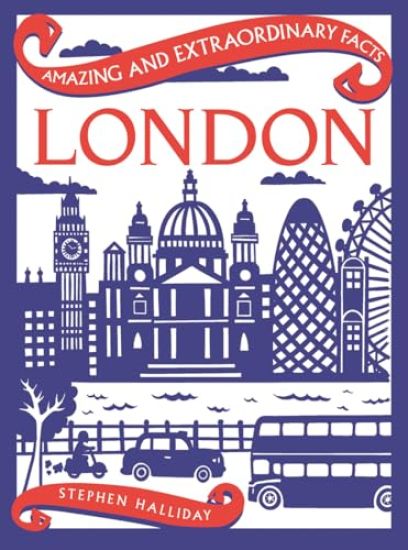
London

London

Stephen Halliday

Rydon Publishing
2025
sidottu
London's long history is an extraordinarily rich source of amazing facts, whether your interest is political, social, architectural or historical. "The Amazing and Extraordinary Facts series" presents interesting, surprising and little-known facts and stories about a wide range of topics which are guaranteed to inform, absorb and entertain in equal measure.
London Underground

London Underground

Stephen Halliday

Rydon Publishing
2024
sidottu
This is is a fascinating and useful reference to the history of the London Underground that reveals new insights into the history of the iconic transport system - the perfect gift for commuters, tourists and railway enthusiasts alike. For anyone who has lived, worked, visited or even passed through London, the tube is one of the iconic and defining characteristics of the city. "Amazing & Extraordinary Facts: London Underground" takes you from the famous roundel symbol and standing on the right of the escalators, to the instantly recognisable and hugely influential route map. This title helps to discover the tales of the building of the first lines in the mid-nineteenth century and the steam trains that ran along them, the ever expanding network of routes, the abandoned ghost stations, the notorious incidents and colourful characters that have all played a part in the amazing and extraordinary history of the London Underground.
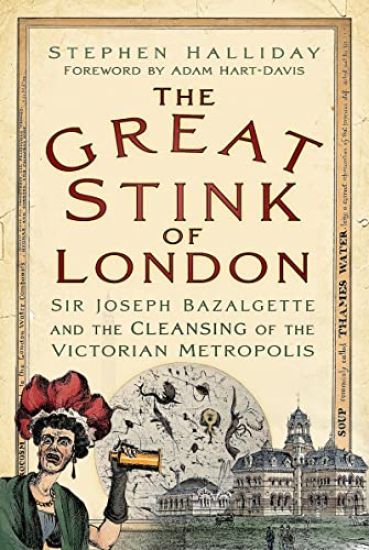
The Great Stink of London

The Great Stink of London

Stephen Halliday; Adam Hart-Davis

THE HISTORY PRESS LTD
2023
nidottu
‘An extraordinary history’ - Peter Ackroyd, The Times‘A lively account of (Bazalgette’s) magnificent achievements. . . graphically illustrated’ - Hermione Hobhouse‘Halliday is good on sanitary engineering and even better on cloaca, crud and putrefaction . . . (he) writes with the relish of one who savours his subject and has deeply researched it. . . splendidly illustrated’ - Ruth RendellIn the sweltering summer of 1858, sewage generated by over two million Londoners was pouring into the Thames, producing a stink so offensive that it drove Members of Parliament from the chamber of the House of Commons.The Times called the crisis ‘The Great Stink’. Parliament had to act – drastic measures were required to clean the Thames and to improve London’s primitive system of sanitation. The great engineer entrusted with this enormous task was Sir Joseph Bazalgette, who rose to the challenge and built the system of intercepting sewers, pumping stations and treatment works that serves London to this day. In the process, he cleansed the Thames and helped banish cholera.The Great Stink of London offers a vivid insight into Bazalgette’s achievements and the era in which he worked and lived, including his heroic battles with politicians and bureaucrats that would transform the face and health of the world’s then largest city.
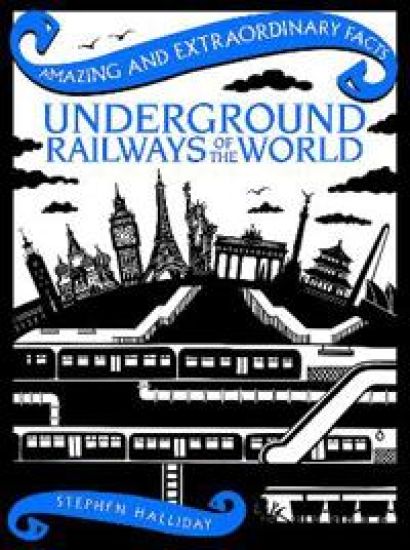
Underground Railways of the World

Underground Railways of the World

STEPHEN HALLIDAY

Rydon Publishing
2021
sidottu
Amazing and Extraordinary Facts: Underground Railways of the World explores tales of secret networks and nuclear shelters, art nouveau and woolly mammoths through which the enticing history of the world's underground systems are revealed.
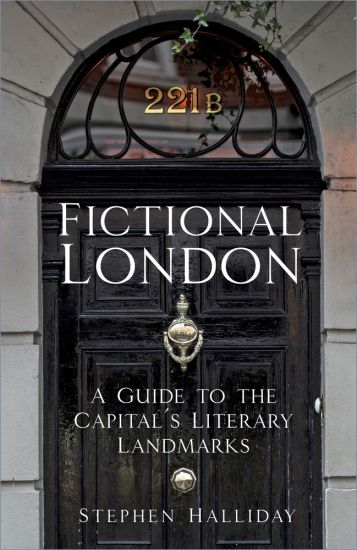
Fictional London

Fictional London

Stephen Halliday

The History Press Ltd
2020
sidottu
‘By seeing London, I have seen as much of life as the world can show.’ - Samuel JohnsonFrom Chaucer’s pilgrims meeting in a Southwark inn to the Hogwarts Express leaving from King’s Cross, London has always been a popular place for writers to weave into their own work. With its bustling, multicultural population and unique localised weather, the city is almost a character in its own right. Fictional London explores the capital through the eyes of both the reader and the writer. Celebrated London historian Stephen Halliday traces the stories from one end of London to the other, digging into the history and character that has made it an unrivalled source of inspiration for authors and poets from the Middle Ages to the early 2000s and beyond.
An Underground Guide to Sewers

An Underground Guide to Sewers

Stephen Halliday; Peter Bazalgette

Thames Hudson Ltd
2019
sidottu
Lose yourself in the vast sewer networks that lie beneath the world’s great cities – past and present. Let detailed archival plans, maps and photographs guide you through these subterranean labyrinths – previously accessible only to their builders, engineers and, perhaps, the odd rogue explorer. This execrable exploration traces the evolution of waste management from the ingenious infra-structures of the ancient world to the seeping cesspits and festering open sewers of the medieval period. It investigates and celebrates the work of the civil engineers whose pioneering integrated sewer systems brought to a close the devastating cholera epidemics of the mid-19th century and continue to serve a vastly increased population today. And let’s not forget those giant fatbergs clogging our underground arteries, or the storm-surge super-structures of tomorrow.
Great Britain

Great Britain

Stephen Halliday

Rydon Publishing
2019
sidottu
Whether you want to learn about the teenager's skeleton from 1550 BC found at Stonehenge, explore the history of Britain's favourite beverages, tea and coffee, or discover how taxation on windows coined the expression 'daylight robbery', there is something for every enthusiast to dip into. The Amazing and Extraordinary Facts series presents interesting, surprising and little-known facts and stories about a wide range of topics which are guaranteed to inform, absorb and entertain in equal measure.
Journey to Crossrail

Journey to Crossrail

Stephen Halliday

The History Press Ltd
2018
nidottu
Why did London have to wait so long for a main-line railway beneath its streets? For a few years in the mid-nineteenth century, Isambard Kingdom Brunel’s broad-gauge Great Western trains ran from Reading to Faringdon. Now, after many false starts, his vision is being realised as the Elizabeth Line prepares to carry passengers from Reading to the City once again, and beyond to Essex and Kent, using engineering that would have earned the admiration of the greatest Victorian engineers. London historian Stephen Halliday presents an engaging discussion of Crossrail’s fascinating origins and the heroic engineering that made it all possible.
London At War

London At War

Stephen Halliday

Rydon Publishing
2016
sidottu
AmazingExtraordinary Facts: London at War is a unique collection of surprising revelations, heroic deeds and other quirky pieces of trivia from the conflicts that have shaped London's fascinating past.
London

London

Stephen Halliday

Rydon Publishing
2015
sidottu
This is a unique collection of strange laws, heroic deeds, surprising revelations and other quirky stories that have shaped the unique history of Britain's capital. London's long history is an extraordinarily rich source of amazing facts, whether your interest is political, social, architectural or historical.
Cathedrals and Abbeys

Cathedrals and Abbeys

Stephen Halliday

Rydon Publishing
2015
sidottu
Cathedrals and abbeys are the most beautiful buildings of the British Isles, and have formed the bedrock of our nation for centuries. This collection opens the doors to reveal the rich historical and architectural heritage of these structures.
The Little Book of Crime and Punishment

The Little Book of Crime and Punishment

Stephen Halliday

The History Press Ltd
2014
sidottu
The Little Book of Crime and Punishment is a repository of fascinating, obscure, strange and entertaining facts and trivia about the history of the British criminal justice system. Learn of the days when noses, hands and heads were cut off, heretics were burned at the stake and rebels were hanged, drawn and quartered. A reference book and a quirky guide, this can be dipped in to time and time again to reveal something new about the various forms of punishments; from ducking scolds, imposing curfews, tagging persistent offenders and, of course, imprisonment
London's Markets

London's Markets

Stephen Halliday

The History Press Ltd
2014
nidottu
London is a city of markets: markets in meat, fish, fruit, vegetables, money, insurance, shipping and, occasionally, in stolen goods. As both a major port and the nation’s capital, it was almost inevitable that commerce became the bedrock on which the city has risen to be one of the world’s greatest modern marketplaces. Many of today’s street names remind the observant pedestrian of the commercial centres that were to be found in them in times past: Bread Street, Milk Street and Ironmonger Lane; London’s market history is all around us. Stephen Halliday’s book is a comprehensive account of the long, lurid and often controversial history of London’s markets, from Roman Londinium to the London of Boris Johnson, as well as a guide to visiting them (and emerging with a bargain). He explores the historic markets still in existence, and the sites of those that no longer exist, and recounts the fascinating stories of the famous, not-so-famous and sometimes infamous Londoners who have populated them, both as buyers and sellers, through the ages.
Underground to Everywhere

Underground to Everywhere

Stephen Halliday

The History Press Ltd
2013
nidottu
London's Underground is one of the best-known and most distinctive aspects of the city. Since Victorian times, this remarkable feat of engineering has made an extraordinary contribution to the economy of the capital and played a vital role in the daily life of generations of Londoners.Stephen Halliday's informative, entertaining, wide-ranging history of the Underground celebrates the vision and determination of the Victorian Pioneers who conceived this revolutionary transport system. His book records the scandal, disappointments, and disasters that have punctuated the story and the careers of the gifted, dedicated, sometimes corrupt individuals that have shaped its history. It also gives a fascinating insight into the neglected, often unseen aspects of this subterranean system - the dense network of tunnels, shafts and chambers that have been created beneath the city streets.
Making the Metropolis

Making the Metropolis

Stephen Halliday; Maxwell Hutchinson

DB Publishing
2012
nidottu
Stephen Halliday's beautifully illustrated book shows how the ramshackle collection of communities that entered the 19th century became the world's first metropolis. This fascinating story is told through the lives of eight men who created the Victorian capital and is a must read for all! In 1801 the population of London was almost one million. A century later, on the death of Queen Victoria, it had passed six million, and the city had been transformed. John Nash defined the modern West End with his 'New Street' (Regent Street) between the farm at Regent's Park and the swamp at St James' Park. Marc Brunel invented the tunnelling shield that made the underground railways possible. Thomas Cubitt built houses for aristocrats in Belgravia and homes for the middle classes at Pimlico and Bloomsbury. Sir Charles Barry built the New Palace of Westminster to replace the charred ruins of the old one. Sir Joseph Paxton designed the Crystal Palace for the Great Exhibition of 1851, the profits of which enabled...Alfred Waterhouse to build the Natural History Museum and thus begin the South Kensington museums.Sir Joseph Bazalgette built the sewers, streets and parks that made the metropolis a safe place to live, and...Sir Edward Watkin, chairman of the Metropolitan Railway, began the process that created the suburbs of Metroland and elsewhere. Stephen Halliday's portraits of these remarkable men give a fascinating insight into the diversity of their careers and achievements. They created the imperial capital from which Victoria ruled over the greatest empire the world had ever seen.
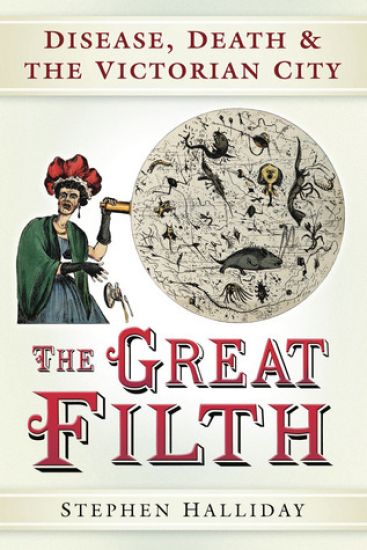
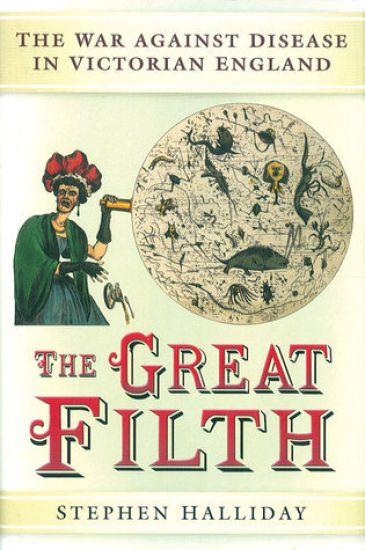
The Great Filth

The Great Filth

Stephen Halliday

The History Press Ltd
2011
nidottu
Victorian Britain was the world's industrial powerhouse. Its factories, mills and foundries supplied a global demand for manufactured goods. As Britain changed from an agricultural to an industrial ecomony, people swarmed into the towns and cities where the work was; by the end of Queen Victoria's reign, almost 80 per cent of the population was urban. Overcrowding and filthy living conditions, though, were a recipe for disaster, and diseases such as cholera, typhoid, scarlet fever, smallpox and puerperal (childbed) fever were a part of everyday life for (usually poor) town-and city-dwellers. However, thanks to a dedicated band of doctors, nurses, midwives, scientists, engineers and social reformers, by the time the Victorian era became the Edwardian, they were almost eradicated, and no longer a constant source of fear. Stephen Halliday tells the fascinating story of how these individuals fought opposition from politicians, taxpayers and often their own colleagues to overcome these diseases and make the country a safer place for everyone to live.
Our Troubles with Food

Our Troubles with Food

Stephen Halliday

The History Press Ltd
2009
sidottu
For millennia the normal, natural and pleasurable activity of eating has been surrounded by fear and anxiety. Religious traditions have long decreed what foods are right for their followers to eat, but secularisation and scientific progress have not made the situation easier. Our present obsession with health, obesity, ethics and science has seemingly developed from a society that is over-supplied with the necessities of life. For the first time, social historian Stephen Halliday looks at the history of our fascinating relationship with food, from Galen in the first century AD declaring that fruit was the worst kind of food to eat, to John Kellogg's belief that eating wholegrain cereals would prevent masturbation and bring people closer to God. Through modern fears and food scares such as mad cow disease to our current fascination with superfoods, 'friendly' bacteria and organic farming, Our Troubles with Food is a thorough analysis of our changing attitudes towards food and a reminder that we are not so very different from our forbears after all.
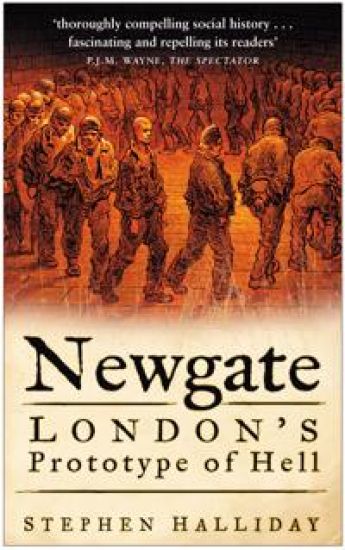
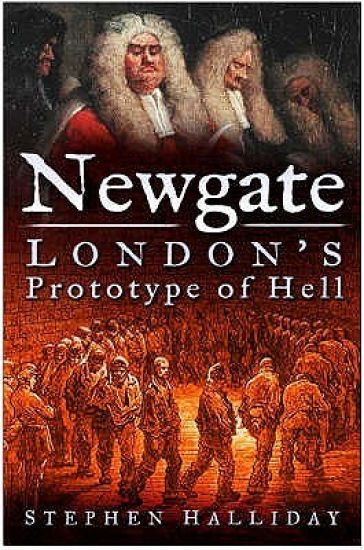
Newgate

Newgate

Stephen Halliday

The History Press Ltd
2007
nidottu
There have been more prisons in London than in any other European city. Of these, Newgate was the largest, most notorious and worst. Built during the twelfth century, it became a legendary place - the inspiration of more poems, plays and novels than any other building in London. It was a place of cruelty and wretchedness, at various times holding Dick Turpin, Titus Oates, Daniel Defoe, Jack Sheppard and Casanova. Because prisons were privately run, any time spent in prison had to be paid for by the prisoner. Housing varied from a private cell with a cleaning woman and a visiting prostitute, to simply lying on the floor with no cover. Those who died inside - and only a quarter of prisoners survived until their execution day - had to stay in Newgate as a rotting corpse until relatives found the money for the body to be released. Stephen Halliday tells the story of Newgate's origins, the criminals it held, the punishments meted out and its rebuilding and reform. This is a compelling slice of London's social and criminal history.
The Great Filth

The Great Filth

Stephen Halliday

The History Press Ltd
2007
sidottu
Victorian Britain was the world’s industrial powerhouse. Its factories, mills and foundries supplied a global demand for manufactured goods. As Britain changed from an agricultural to an industrial economy, people swarmed into the towns and cities where the work was; by the end of Queen Victoria’s reign, almost 80 per cent of the population was urban. Overcrowding and filthy living conditions, though, were a recipe for disaster, and diseases such as cholera, typhoid, scarlet fever, smallpox and puerperal (childbed) fever were a part of everyday life for (usually poor) town- and city-dwellers. However, thanks to a dedicated band of doctors, nurses, midwives, scientists, engineers and social reformers, by the time the Victorian era became the Edwardian, they were almost eradicated, and no longer a constant source of fear. Stephen Halliday tells the fascinating story of how these individuals fought opposition from politicians, taxpayers and often their own colleagues to overcome these diseases and make the country a safer place for everyone to live.
Newgate

Newgate

Stephen Halliday

Sutton Publishing Ltd
2006
sidottu
The hellish noise, the roaring, swelling and clamour, the stench and nastiness, an emblem of hell itself. - Moll Flanders, Daniel Defoe. There have been more prisons in London than in any other European city. Of these, Newgate was the largest, most notorious and worst. Built during the twelfth century, it became a legendary place, the inspiration of more poems, plays and novels than any other building in London. It was a place of cruelty and wretchedness, at various times holding Dick Turpin, Titus Oates, Daniel Defoe, Jack Sheppard and Casanova. Because prisons were privately run, any time spent in prison had to be paid for by the prisoner. Housing varied from a private cell with a cleaning woman and a visiting prostitute, to simply lying on the floor with no cover. Those who died inside, and only a quarter of prisoners survived until their execution day, had to stay in Newgate as a rotting corpse until relatives found the money for the body to be released. Stephen Halliday tells the story of Newgate's origins, the criminals it held, the punishments meted out and its rebuilding and reform. This is a compelling slice of London's social and criminal history.