Kirjojen hintavertailu. Mukana 12 657 676 kirjaa ja 12 kauppaa.

Kirjailija

Stephen Halliwell

Kirjat ja teokset yhdessä paikassa: 16 kirjaa, julkaisuja vuosilta 1986-2023, suosituimpien joukossa Marginal Comment. Vertaile teosten hintoja ja tarkista saatavuus suomalaisista kirjakaupoista.

16 kirjaa

Kirjojen julkaisuhaarukka 1986-2023.

Marginal Comment

Marginal Comment

K. J. Dover; Stephen Halliwell; Christopher Stray

BLOOMSBURY PUBLISHING PLC
2023
nidottu
Marginal Comment, which attracted keen and widespread interest on its original publication in 1994, is the remarkable memoir of one of the most distinguished classical scholars of the modern era. Its author, Sir Kenneth Dover, whose academic publications included the pathbreaking book Greek Homosexuality (1978, reissued by Bloomsbury in 2016), conceived of it as an ‘experimental’ autobiography – ruthlessly candid in retracing the full range of the author’s experiences, both private and public, and unflinching in its attempt to analyse the entanglements between the life of the mind and the life of the body.Dover’s distinguished career involved not only an influential series of writings about the ancient Greeks but also a number of prominent positions of leadership, including the presidencies of Corpus Christi College, Oxford, and the British Academy. It was in those positions that he became involved in several high-profile controversies, including the blocking of an honorary degree for Margaret Thatcher from Oxford University, and a bitter debate in the British Academy over the fellowship of Anthony Blunt after his exposure as a former Soviet spy. This edition of Marginal Comment is much more than a reissue: it includes an introduction which frames the book in relation to its author’s life and work, as well as annotations based in part on materials originally excluded by Dover but left in his personal papers on this death. Now newly available, the memoir provides not only the self-portrait of an exceptional individual but a rich case-study in the intersections between an intellectual life and its social contexts.

Marginal Comment

Marginal Comment

K. J. Dover; Stephen Halliwell; Christopher Stray

BLOOMSBURY PUBLISHING PLC
2023
sidottu
Marginal Comment, which attracted keen and widespread interest on its original publication in 1994, is the remarkable memoir of one of the most distinguished classical scholars of the modern era. Its author, Sir Kenneth Dover, whose academic publications included the pathbreaking book Greek Homosexuality (1978, reissued by Bloomsbury in 2016), conceived of it as an ‘experimental’ autobiography – ruthlessly candid in retracing the full range of the author’s experiences, both private and public, and unflinching in its attempt to analyse the entanglements between the life of the mind and the life of the body.Dover’s distinguished career involved not only an influential series of writings about the ancient Greeks but also a number of prominent positions of leadership, including the presidencies of Corpus Christi College, Oxford, and the British Academy. It was in those positions that he became involved in several high-profile controversies, including the blocking of an honorary degree for Margaret Thatcher from Oxford University, and a bitter debate in the British Academy over the fellowship of Anthony Blunt after his exposure as a former Soviet spy. This edition of Marginal Comment is much more than a reissue: it includes an introduction which frames the book in relation to its author’s life and work, as well as annotations based in part on materials originally excluded by Dover but left in his personal papers on this death. Now newly available, the memoir provides not only the self-portrait of an exceptional individual but a rich case-study in the intersections between an intellectual life and its social contexts.
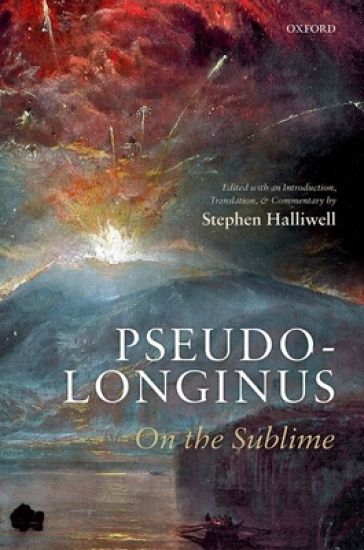
Pseudo-Longinus: On the Sublime

Pseudo-Longinus: On the Sublime

Stephen Halliwell

Oxford University Press
2022
sidottu
This is the first new edition in English for more than half a century of one of the most influential works in the entire history of aesthetics, the treatise On the Sublime, whose author is unknown but usually called Longinus. It was On the Sublime which was chiefly responsible, in the early modern period, for giving the vocabulary of 'sublimity' the important place which it has held ever since in critical discourse about literature, visual art, music, and the experience of nature. This edition contains a substantial introduction to the contents of the work; a newly edited Greek text with facing English translation (designed to be both accurate and readable, and therefore of assistance to non-specialists); and a comprehensive commentary which deals with everything from details of language to the work's overarching ideas and arguments. The book undertakes the fullest and most probing engagement with On the Sublime yet attempted in any language. It advances many new interpretations and seeks to make sense of the treatise both as a remarkable document in its own right and in relation to the traditions of ancient Greek and Roman literature, philosophy, and criticism. In addition to supplying all the needs of scholars and students directly concerned with Graeco-Roman culture, the introduction and translation make the book also of value to the many other kinds of readers--philosophers of aesthetics, art-historians, literary critics, historians of ideas, and more besides--who are interested in the ancient origins as well as the modern development of concepts of the sublime.
Aristophanes: Acharnians, Knights, Wasps, Peace

Aristophanes: Acharnians, Knights, Wasps, Peace

Stephen Halliwell

Oxford University Press
2022
sidottu
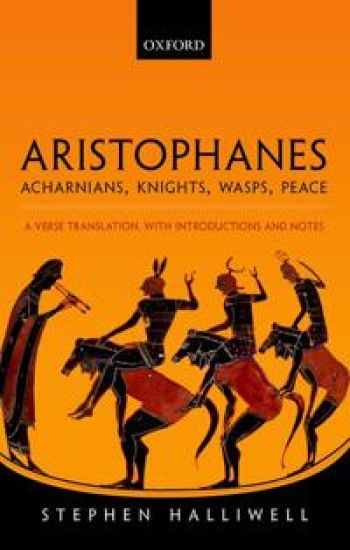
Aristophanes is the only surviving representative of Greek Old Comedy, an exuberant form of festival drama which flourished in Athens during the fifth century BC. One of the most original playwrights in the entire Western tradition, his comedies are remarkable for their brilliant combination of fantasy and satire, their constantly inventive manipulation of language, and their use of absurd characters and plots to expose his society's institutions and values to the bracing challenge of laughter. This is the third and final volume of a new verse translation of the complete plays of Aristophanes. It contains four of his most overtly political plays: Acharnians, in which an Athenian farmer rebels against the city's war policies; Knights, a biting satire of populist demagogues; Wasps, whose main theme is the Athenian system of lawcourts; and Peace, in which escape from war is symbolized in images of rustic fertility and sensuality. The translation combines historical accuracy with a sensitive attempt to capture the rich dramatic and literary qualities of Aristophanic comedy. Each play is presented with a thought-provoking introduction and extensive editorial notes to accompany the vivid translations, balancing performability with faithfulness to the original.
Greek Homosexuality

Greek Homosexuality

K. J. Dover; Stephen Halliwell; Mark Masterson; James Robson

Bloomsbury Academic
2016
nidottu
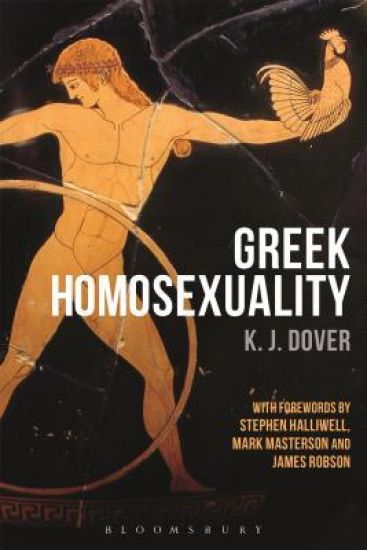
Hailed as magisterial when it first appeared, Greek Homosexuality remains an academic milestone and continues to be of major importance for students and scholars of gender studies. Kenneth Dover explores the understanding of homosexuality in ancient Greece, examining a vast array of material and textual evidence that leads him to provocative conclusions. This new release of the 1989 second edition, for which Dover wrote an epilogue reflecting on the impact of his book, includes two specially commissioned forewords assessing the author’s legacy and the place of his text within modern studies of gender in the ancient world.
Aristophanes: Clouds, Women at the Thesmophoria, Frogs

Aristophanes: Clouds, Women at the Thesmophoria, Frogs

Stephen Halliwell

Oxford University Press
2015
sidottu
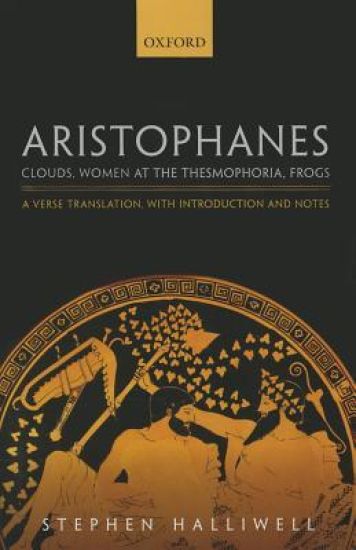
Aristophanes is the only surviving representative of Greek Old Comedy, an exuberant form of festival drama which flourished in Athens during the fifth century BC. One of the most original playwrights in the entire Western tradition, his comedies are remarkable for their brilliant combination of fantasy and satire, their constantly inventive manipulation of language, and their use of absurd characters and plots to expose his society's institutions and values to the bracing challenge of laughter. This vibrant collection of verse translations of Aristophanes' works combines historical accuracy with a sensitive attempt to capture the rich dramatic and literary qualities of Aristophanic comedy. The volume presents Clouds, with its famous caricature of the philosopher Socrates; Women at the Thesmophoria (or Thesmophoriazusae), a work which mixes elaborate parody of tragedy with a great deal of transvestite burlesque; and Frogs, in which the dead tragedians Aeschylus and Euripides engage in a vituperative contest of 'literary criticism' of each other's plays. Featuring expansive introductions to each play and detailed explanatory notes, the volume also includes an illuminating appendix, which provides information and selected fragments from the lost plays of Aristophanes.
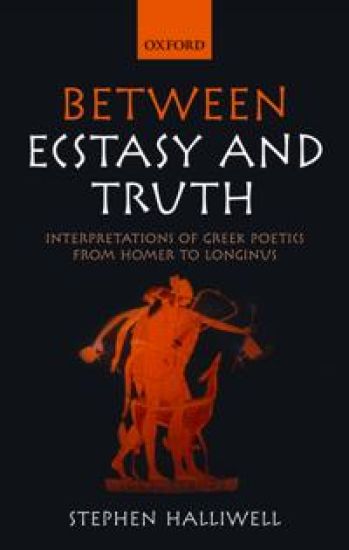
Between Ecstasy and Truth

Between Ecstasy and Truth

Stephen Halliwell

Oxford University Press
2015
nidottu
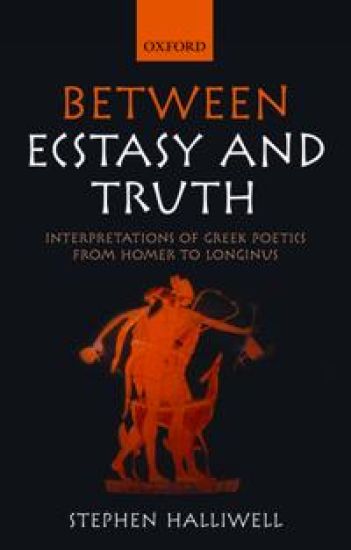
As well as producing one of the finest of all poetic traditions, ancient Greek culture produced a major tradition of poetic theory and criticism. Halliwell's volume offers a series of detailed and challenging interpretations of some of the defining authors and texts in the history of ancient Greek poetics: the Homeric epics, Aristophanes' Frogs, Plato's Republic, Aristotle's Poetics, Gorgias's Helen, Isocrates' treatises, Philodemus' On Poems, and Longinus' On the Sublime. The volume's fundamental concern is with how the Greeks conceptualized the experience of poetry and debated the values of that experience. The book's organizing theme is a recurrent Greek dialectic between ideas of poetry as, on the one hand, a powerfully enthralling experience in its own right (a kind of 'ecstasy') and, on the other, a medium for the expression of truths which can exercise lasting influence on its audiences' views of the world. Citing a wide range of modern scholarship, and making frequent connections with later periods of literary theory and aesthetics, Halliwell questions many orthodoxies and received opinions about the texts analysed. The resulting perspective casts new light on ways in which the Greeks attempted to make sense of the psychology of poetic experience-including the roles of emotion, ethics, imagination, and knowledge-in the life of their culture. Readership: Scholars and students of Greek literature, Greek poetics, and literary theory and criticism.
Between Ecstasy and Truth

Between Ecstasy and Truth

Stephen Halliwell

Oxford University Press
2012
sidottu
As well as producing one of the finest of all poetic traditions, ancient Greek culture produced a major tradition of poetic theory and criticism. Halliwell's volume offers a series of detailed and challenging interpretations of some of the defining authors and texts in the history of ancient Greek poetics: the Homeric epics, Aristophanes' Frogs, Plato's Republic, Aristotle's Poetics, Gorgias's Helen, Isocrates' treatises, Philodemus' On Poems, and Longinus' On the Sublime. The volume's fundamental concern is with how the Greeks conceptualized the experience of poetry and debated the values of that experience. The book's organizing theme is a recurrent Greek dialectic between ideas of poetry as, on the one hand, a powerfully enthralling experience in its own right (a kind of 'ecstasy') and, on the other, a medium for the expression of truths which can exercise lasting influence on its audiences' views of the world. Citing a wide range of modern scholarship, and making frequent connections with later periods of literary theory and aesthetics, Halliwell questions many orthodoxies and received opinions about the texts analysed. The resulting perspective casts new light on ways in which the Greeks attempted to make sense of the psychology of poetic experience - including the roles of emotion, ethics, imagination, and knowledge - in the life of their culture.
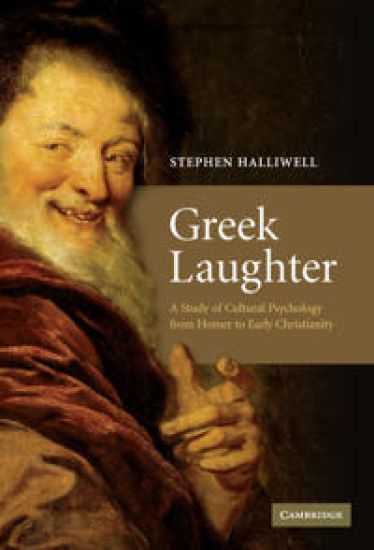
Greek Laughter

Greek Laughter

Stephen Halliwell

Cambridge University Press
2008
sidottu
The first book to offer an integrated reading of ancient Greek attitudes to laughter. Taking material from various genres and contexts, the book analyses both the theory and the practice of laughter as a revealing expression of Greek values and mentalities. Greek society developed distinctive institutions for the celebration of laughter as a capacity which could bridge the gap between humans and gods; but it also feared laughter for its power to expose individuals and groups to shame and even violence. Caught between ideas of pleasure and pain, friendship and enmity, laughter became a theme of recurrent interest in various contexts. Employing a sophisticated model of cultural history, Stephen Halliwell traces elaborations of the theme in a series of important texts: ranging far beyond modern accounts of 'humour', he shows how perceptions of laughter helped to shape Greek conceptions of the body, the mind and the meaning of life.
Greek Laughter

Greek Laughter

Stephen Halliwell

Cambridge University Press
2008
pokkari
The first book to offer an integrated reading of ancient Greek attitudes to laughter. Taking material from various genres and contexts, the book analyses both the theory and the practice of laughter as a revealing expression of Greek values and mentalities. Greek society developed distinctive institutions for the celebration of laughter as a capacity which could bridge the gap between humans and gods; but it also feared laughter for its power to expose individuals and groups to shame and even violence. Caught between ideas of pleasure and pain, friendship and enmity, laughter became a theme of recurrent interest in various contexts. Employing a sophisticated model of cultural history, Stephen Halliwell traces elaborations of the theme in a series of important texts: ranging far beyond modern accounts of 'humour', he shows how perceptions of laughter helped to shape Greek conceptions of the body, the mind and the meaning of life.
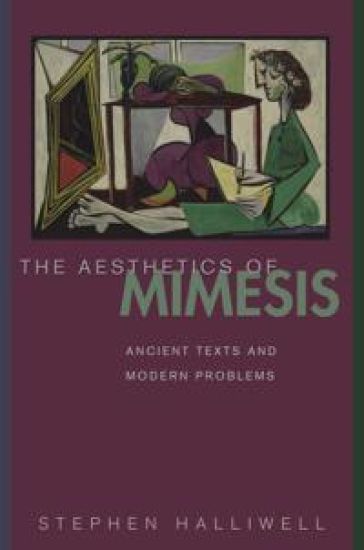
The Aesthetics of Mimesis

The Aesthetics of Mimesis

Stephen Halliwell

Princeton University Press
2002
pokkari
Mimesis is one of the oldest, most fundamental concepts in Western aesthetics. This book offers a new, searching treatment of its long history at the center of theories of representational art: above all, in the highly influential writings of Plato and Aristotle, but also in later Greco-Roman philosophy and criticism, and subsequently in many areas of aesthetic controversy from the Renaissance to the twentieth century. Combining classical scholarship, philosophical analysis, and the history of ideas--and ranging across discussion of poetry, painting, and music--Stephen Halliwell shows with a wealth of detail how mimesis, at all stages of its evolution, has been a more complex, variable concept than its conventional translation of "imitation" can now convey. Far from providing a static model of artistic representation, mimesis has generated many different models of art, encompassing a spectrum of positions from realism to idealism. Under the influence of Platonist and Aristotelian paradigms, mimesis has been a crux of debate between proponents of what Halliwell calls "world-reflecting" and "world-simulating" theories of representation in both the visual and musico-poetic arts. This debate is about not only the fraught relationship between art and reality but also the psychology and ethics of how we experience and are affected by mimetic art. Moving expertly between ancient and modern traditions, Halliwell contends that the history of mimesis hinges on problems that continue to be of urgent concern for contemporary aesthetics.
Aristotle`s Poetics

Aristotle`s Poetics

Stephen Halliwell

University of Chicago Press
1998
nidottu
This interpretation of Aristotle's "Poetics" seeks to demonstrate that it is a coherent statement of a challenging theory of poetic art and that it hints towards a theory of mimetic art in general. Assessing this theory against the background of earlier Greek views on poetry and art, particularly Plato's, Stephen Halliwell sets Aristotle's ideas in the wider context of his philosophical system. The core of the book is an appraisal of Aristotle's view of tragic drama, in which Halliwell contends that at the heart of the "Poetics" lies a philosophical urge to instill a secularized understanding of Greek tragedy.
Aristotle's "Poetics"

Aristotle's "Poetics"

Stephen Halliwell

Bristol Classical Press
1998
pokkari
An analysis of Aristotle's "Poetics", this work attempts a sustained interpretation of the text, contending that it states a challenging theory of poetic art. It hints at a theory of mimetic art, and represents Aristotle's philosophical urge to work out a secularized understanding of Greek tragedy.
"Poetics" of Aristotle

"Poetics" of Aristotle

Stephen Halliwell

Bristol Classical Press
1987
pokkari
Incorporating the best modern work on the Poetics, Halliwell's translation is aimed at those who want a reliable version of Aristotle's ideas along with concise and stimulating guidance. A running commentary explains the structure and detail of Aristotle's argument, attempts to provoke further thought about the work's strengths and weaknesses, and offers suggestions on relating the Poetics to later stages of literary theory and practice.