

Kirjailija
Stephen Holmes
Kirjat ja teokset yhdessä paikassa: 16 kirjaa, julkaisuja vuosilta 1996-2026, suosituimpien joukossa The Adventures of Charlotte and Cameron. Vertaile teosten hintoja ja tarkista saatavuus suomalaisista kirjakaupoista.
16 kirjaa
Kirjojen julkaisuhaarukka 1996-2026.

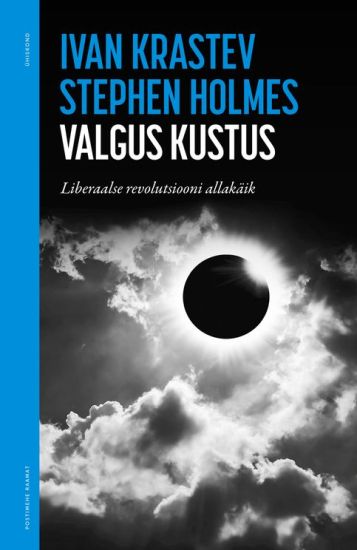
1990. aastate alguses olid lootused liberaalse demokraatia levimiseks itta kõrged. Kuid ometi tõi Ida-Euroopa riikide ümberkujundamine kaasa eemaldumise liberalismist. Autorite sõnul osutus kommunismi lõpp autokraatide ajastu alguseks ja iroonilisel kombel on Donald Trumpi poliitika seadnud selle eeskujuks Ameerika Ühendriikidele. "Valgus kustus" on märgilise tähendusega raamat, mis heidab valgust lääne ideaali allakäigu erakordsele ajaloole.*Autorid annavad vastuse mitmetele meie aja intrigeerivatele küsimustele. Miks tõusis Ungaris esile Viktor Orban ning Poolas Jaroslaw Kaczynski? Miks on mõlema püüdlused, liikumaks eemale läänelikust liberaaldemokraatiast, pälvinud nii suure osa valijaskonna poolehoiu? Mis juhtus Venemaal, et Putini impeeriumi taastamise projektile on saanud osaks samasugune vaikiv sisemaine heakskiit? Lääs üritas Ida-Euroopast teha enda sarnast koopiat, kuid alamat sorti ja ülemäära kuulekat, väidavad Krastev ja Holmes. Selle ürituse ebaõnnestumise viljad on nüüd käes.- Tõnis Saarts, Tallinna Ülikooli politoloogAutorist:Stephen Holmes on New Yorgi ülikooli õigusteaduskonna professor ja mitmete raamatute autor. Nõukogude Liidu ja Ida-Euroopa riigiõiguse ja õigusreformi spetsialistina uurib ta õigusriigi reformiga kaasnevaid probleeme Venemaal ja teistes postkommunistlikes riikides.Bulgaaria päritolu politoloog Ivan Krastev on Sofia Liberaalstrateegiate Keskuse esimees ja Viini Inimteaduste Instituudi alaline teadur, ajalehe New York Times kaasautor ning tunnustatud raamatu "Pärast Euroopat" (eesti keeles 2019) autor.


In the early 1990s, hopes for the eastward spread of liberal democracy were high. And yet the transformation of Eastern European countries gave rise to a bitter repudiation of liberalism itself, not only in the East but also back in the heartland of the West.In this brilliant work of political psychology, Ivan Krastev and Stephen Holmes argue that the supposed end of history turned out to be only the beginning of an Age of Imitation. Reckoning with the history of the last thirty years, they show that the most powerful force behind the wave of populist xenophobia that began in Eastern Europe stems from resentment at the post-1989 imperative to become Westernized.Through this prism, the Trump revolution represents an ironic fulfillment of the promise that the nations exiting from communist rule would come to resemble the United States. In a strange twist, Trump has elevated Putin's Russia and Orbán's Hungary into models for the United States.Written by two pre-eminent intellectuals bridging the East/West divide, The Light that Failed is a landmark book that sheds light on the extraordinary history of our Age of Imitation.
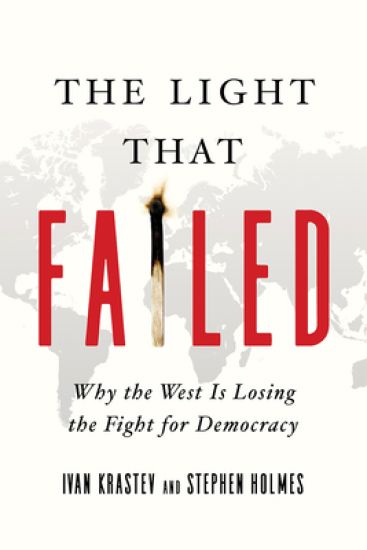
The Light That Failed: Why the West Is Losing the Fight for Democracy
Stephen Holmes; Ivan Krastev
Pegasus Books
2020
sidottu
A landmark book that completely transforms our understanding of the crisis of liberalism, from two pre-eminent intellectuals. Why did the West, after winning the Cold War, lose its political balance? In the early 1990s, hopes for the eastward spread of liberal democracy were high. And yet the transformation of Eastern European countries gave rise to a bitter repudiation of liberalism itself, not only there but also back in the heartland of the West. In this brilliant work of political history, Ivan Krastev and Stephen Holmes argue that the supposed end of Communism turned out to be only the beginning of the age of the autocrat. Reckoning with the history of the last thirty years, they show that the most powerful force behind the wave of populist xenophobia that began in Eastern Europe stems from resentment at the post-1989 imperative to become Westernized. Through this prism, the Trump revolution represents an ironic fulfillment of the promise that the nations exiting from communist rule would come to resemble the United States. In a strange twist, Trump has elevated Putin's Russia and Orba n's Hungary into models for the United States. Written by two pre-eminent intellectuals bridging the East/West divide, The Light That Failed is a landmark book that sheds light on the extraordinary history of the fall of the Western ideal.


Ljuset som försvann. En vidräkning med imitationens epok
Ivan Krastev; Stephen Holmes
Bokförlaget Daidalos
2019
sidottu
När Berlinmuren föll 1989 tycktes framtiden både självklar och hoppfull. Den skulle bli demokratisk och liberal och omfatta östs integration i väst – västmakterna hade ju vunnit den ideologiska kampen, kapitalismen visat sin överlägsenhet över den socialistiska planekonomin och historien så att säga nått sitt slut. Några decennier senare, efter elfte september, Irakkriget, inbördeskriget i Syrien, annekteringen av Krim och en rad andra omskakande händelser, ter sig historien obehagligt närvarande igen och framtiden allt annat än självklar. Ivan Krastev och Stephen Holmes visar i denna bok hur liberalismen har blivit ett offer för sin egen seger i kalla kriget. De menar att vi sedan dess har befunnit oss i en "imitationens epok" och att den öst- och centraleuropeiska ressentimentspolitiken i mångt och mycket går att förstå som en förvrängd spegelbild av en självtillräcklig liberalism. Vad högerpopulister från Viktor Orbán till Donald Trump har gemensamt är dessutom upplevelsen att ständigt vara ett offer för andras manipulationer, vilket får ursäkta alla egna aggressioner. "Ljuset som försvann" belyser dagens stor- och maktpolitiska dynamik ur många överraskande synvinklar och diskuterar bland annat den fräcka, obesvärade och lojalitetstestande politiska lögnen och Kinas maktpolitiska pragmatism, två fenomen som håller på att förändra politikens spelregler. Har liberalismen – med eller utan förvrängda spegelbilder – längre någon framtid? IVAN KRASTEV är medarbetare vid Institutionen för humaniora (IMW) i Wien och en av grundarna till den proeuropeiska tankesmedjan European Council on Foreign Relations (ECFR). Han har skrivit en rad böcker, bland annat den uppmärksammade "Efter Europa" som utkom 2018. STEPHEN HOLMES är Walter E. Meyer Professor of Law vid NYU School of Law. Hans forskning inbegriper liberalismens historia den liberala demokratins kris efter kommunismens fall.
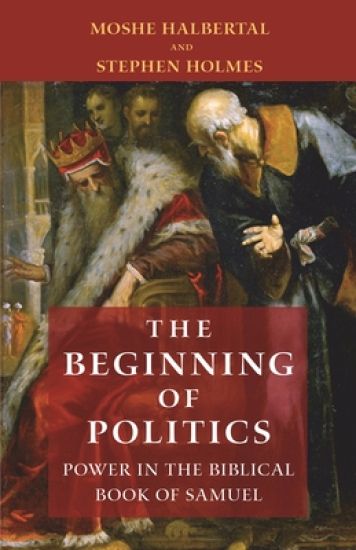
How the book of Samuel offers a timeless meditation on the dilemmas of statecraftThe book of Samuel is universally acknowledged as one of the supreme achievements of biblical literature. Yet the book’s anonymous author was more than an inspired storyteller. The author was also an uncannily astute observer of political life and the moral compromises and contradictions that the struggle for power inevitably entails. The Beginning of Politics mines the story of Israel’s first two kings to unearth a natural history of power, providing a forceful new reading of what is arguably the first and greatest work of Western political thought.Through stories such as Saul’s madness, David’s murder of Uriah, the rape of Tamar, and the rebellion of Absalom, the author of Samuel deepens our understanding not only of the necessity of sovereign rule but also of its costs—to the people it is intended to protect and to those who wield it. Moshe Halbertal and Stephen Holmes show how these beautifully crafted narratives cut to the core of politics, offering a timely meditation on the dark side of sovereign power and the enduring dilemmas of statecraft.

The anthology The Hidden World of the Sex Offender: Readings on Sex Crimes and the Criminal Justice System gives readers insight into the hidden world of the sex offender. This carefully curated selection of readings examines deviant sexual behaviors from historical and geographical perspectives, and discusses how some of them were not only permitted, but encouraged in certain societies and eras. Students learn about types of sex offenders and differences between nuisance sex offenders and dangerous sex criminals. Specific chapters are devoted to the characteristics of offenders, aberrant forms of sexual behavior, paraphilias, pedophilia, child pornography, and cyber-predators, and sex trafficking. Most notable is the text's attention to the often overlooked topics of female sex offenders and the forms, extent, victimology, and future of male prostitution. The Hidden World of the Sex Offender asks students to thoughtfully consider issues such as the role of fantasy in aberrant forms of behavior, and how both ritualism and symbolism play integral parts in sexual practice. The anthology can be used in courses in sex crimes and sexual deviancy, and those devoted to how the criminal justice system deal with them.Stephen Holmes, who earned his Ph.D. in criminal justice at the University of Cincinnati, is an associate professor at the University of Central Florida. He has numerous book chapters, books, and articles to his name. Dr. Holmes's most recent book is Violence in the United States.Ronald Holmes is an emeritus professor in the Department of Justice Administration at the University of Louisville, and a world-renowned author and expert on serial murder, sex crimes, and criminal profiling. He received his doctorate from Indiana University and has completed more than five hundred psychological profiles for police departments across the United States.
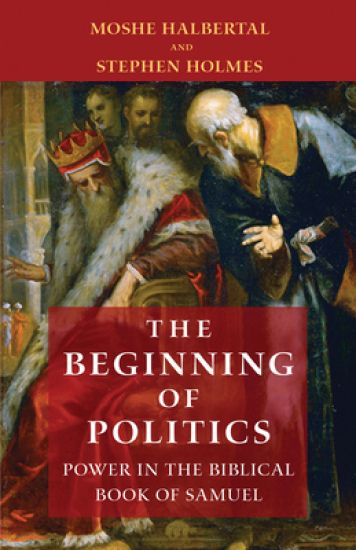
New insights into how the Book of Samuel offers a timeless meditation on the dilemmas of statecraft The Book of Samuel is universally acknowledged as one of the supreme achievements of biblical literature. Yet the book's anonymous author was more than an inspired storyteller. The author was also an uncannily astute observer of political life and the moral compromises and contradictions that the struggle for power inevitably entails. The Beginning of Politics mines the story of Israel's first two kings to unearth a natural history of power, providing a forceful new reading of what is arguably the first and greatest work of Western political thought. Moshe Halbertal and Stephen Holmes show how the beautifully crafted narratives of Saul and David cut to the core of politics, exploring themes that resonate wherever political power is at stake. Through stories such as Saul's madness, David's murder of Uriah, the rape of Tamar, and the rebellion of Absalom, the book's author deepens our understanding not only of the necessity of sovereign rule but also of its costs--to the people it is intended to protect and to those who wield it. What emerges from the meticulous analysis of these narratives includes such themes as the corrosive grip of power on those who hold and compete for power; the ways in which political violence unleashed by the sovereign on his own subjects is rooted in the paranoia of the isolated ruler and the deniability fostered by hierarchical action through proxies; and the intensity with which the tragic conflict between political loyalty and family loyalty explodes when the ruler's bloodline is made into the guarantor of the all-important continuity of sovereign power. The Beginning of Politics is a timely meditation on the dark side of sovereign power and the enduring dilemmas of statecraft.
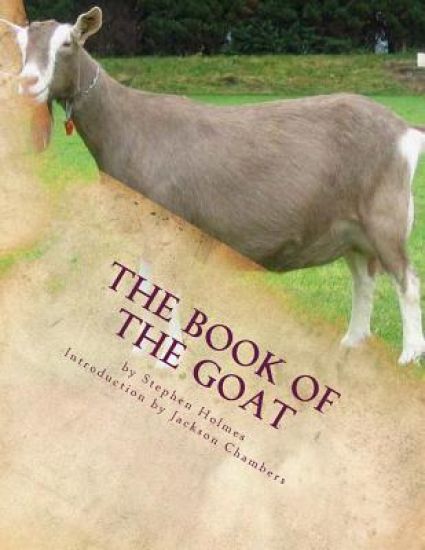
The Book of the Goat: Raising Goats Book 7
Stephen Holmes
Createspace Independent Publishing Platform
2016
nidottu

The Matador's Cape delves into the causes of the catastrophic turn in American policy at home and abroad since 9/11. In a collection of searing essays, the author explores Washington's inability to bring 'the enemy' into focus, detailing the ideological, bureaucratic, electoral and (not least) emotional forces that severely distorted the American understanding of, and response to, the terrorist threat. He also shows how the gratuitous and disastrous shift of attention from al Qaeda to Iraq was shaped by a series of misleading theoretical perspectives on the end of deterrence, the clash of civilizations, humanitarian intervention, unilateralism, democratization, torture, intelligence gathering and wartime expansions of presidential power. The author's breadth of knowledge about the War on Terror leads to conclusions about present-day America that are at once sobering in their depth of reference and inspiring in their global perspective.
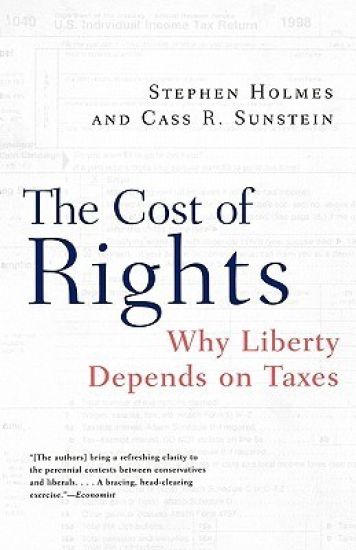
The simple insight that all legally enforceable rights cost money reminds us that freedom is not violated by a government that taxes and spends, but requires it—and requires a citizenry vigilant about how money is allocated. Drawing from these practical, commonsense notions, The Cost of Rights provides a useful corrective to the all-or-nothing feel of much political debate nowadays (The Economist).
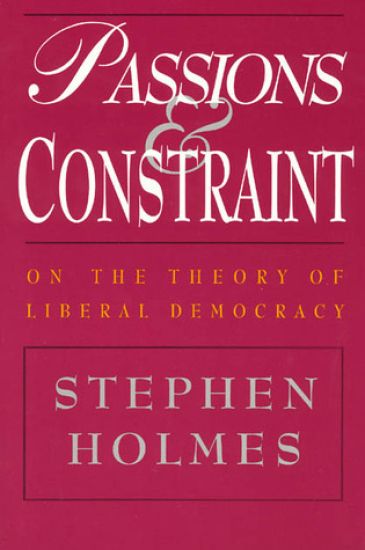
Passions and Constraint – On the Theory of Liberal Democracy
Stephen Holmes
University of Chicago Press
1997
nidottu
A collection of essays on the core values of liberalism which challenges assumptions about liberal theory. By placing it into its original historical context, this text presents an interconnected argument meant to fundamentally change the conception of liberalism. According to Holmes, three elements of classical liberal theory are commonly used to attack contemporary liberalism as antagonistic to genuine democracy and the welfare state: constitutional constraints on majority rule; the identification of individual freedom with an absence of government involvement; and a strong emphasis on the principle of self-interest. Holmes argues that the aspirations of liberal democracy - including individual liberty, the equal dignity of citizens, and a tolerance for diversity - are best understood in relation to two central themes of classical liberal theory: the psychological motivations of individuals and the necessary constraint on individual passions provided by institutions. By restricting the arbitrary powers of government officials, Holmes states, a liberal constitution can increase the state's capacity to focus on specific problems and mobilize collective resources for common purposes.
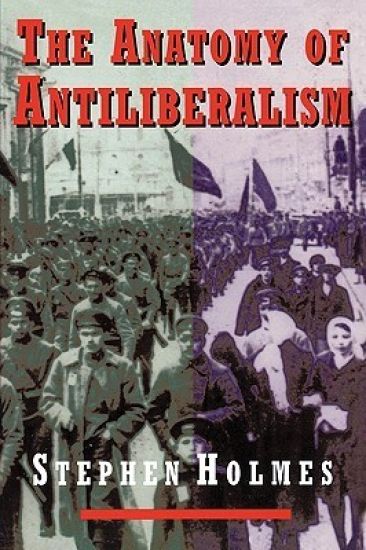
Liberal: spoken in a certain tone, heard more and more often lately, it summons up permissiveness, materialism, rootlessness, skepticism, relativism run rampant. How has liberalism, the grand democratic ideal, come to be a dirty word? This book shows us what antiliberalism means in the modern world—where it comes from, whom it serves, and why it speaks with such a forceful, if ever-changing, voice.In the past, in a battle pitting one offspring of eighteenth-century rationalism against another, Marxism has been liberalism’s best known and most vociferous opponent. But with the fall of Communism, the voices of ethnic particularism, communitarianism, and religious fundamentalism—a tradition Stephen Holmes traces to Joseph de Maistre—have become louder in rejection of the Enlightenment, failing to distinguish between the descendants of Karl Marx and Adam Smith. Holmes uses the tools of the political theorist and the intellectual historian to expose the philosophical underpinnings of antiliberalism in its nonmarxist guise. Examining the works of some of liberalism’s severest critics—including Maistre, Carl Schmitt, Leo Strauss, and Alasdair MacIntyre—Holmes provides, in effect, a reader’s guide to antiliberal culture, in all its colorful and often seductive, however nefarious, variety. As much a mindset as a theory, as much a sensibility as an argument, antiliberalism appears here in its diverse efforts to pit “spiritual truths” and “communal bonds” against a perceived cultural decay and moral disintegration. This corrosion of the social fabric—rather than the separation of powers, competitive elections, a free press, religious tolerance, public budgets, and judicial controls on the police—is what the antiliberal forces see as the core of liberal politics. Against this picture, Holmes outlines the classical liberal arguments most often misrepresented by the enemies of liberalism and most essential to the future of democracy.Constructive as well as critical, this book helps us see what liberalism is and must be, and why it must and always will engender deep misgivings along with passionate commitment.