Kirjojen hintavertailu. Mukana 12 595 353 kirjaa ja 12 kauppaa.

Kirjailija

Stephen Houston

Kirjat ja teokset yhdessä paikassa: 7 kirjaa, julkaisuja vuosilta 2000-2026, suosituimpien joukossa The Maya. Vertaile teosten hintoja ja tarkista saatavuus suomalaisista kirjakaupoista.

7 kirjaa

Kirjojen julkaisuhaarukka 2000-2026.

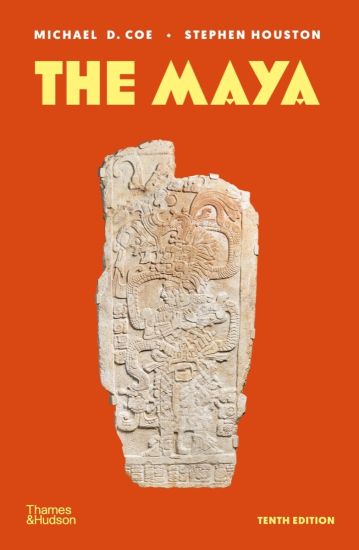
The Maya

The Maya

Michael D. Coe; Stephen Houston

THAMES HUDSON LTD
2022
nidottu
The definitive history of the Maya, fully updated with the latest archaeological studies. The Maya has long been established as the best, most readable introduction to the ancient Maya on the market today. This classic book has been updated by distilling the latest scholarship for the general reader and student. This tenth edition incorporates the most recent archaeological and epigraphic findings, which continue to proceed at a fast pace, along with full-colour illustrations. The new material includes evidence of the earliest human occupants of the Maya region and the beginnings of agriculture and settled life; analysis from lidar on swampy areas, such as Usumacinta, that show enormous rectangle earthworks, including Aguada Fénix, dating from 1050 to 750 BC; and recent advances in decoding Maya writing and imagery. It also expands on information on the roles of women, courtiers and outsiders; covers novel research about Maya cities, including research into water quality, marketplaces, fortifications and integrated road systems; and features coverage of more recent Maya history, including the displacement and mistreatment of the Maya people, along with growing affirmations of their cultural identity and rights. Highlighting the vitality of current scholarship about this brilliant culture, The Maya remains the gold standard introductory book on the subject.
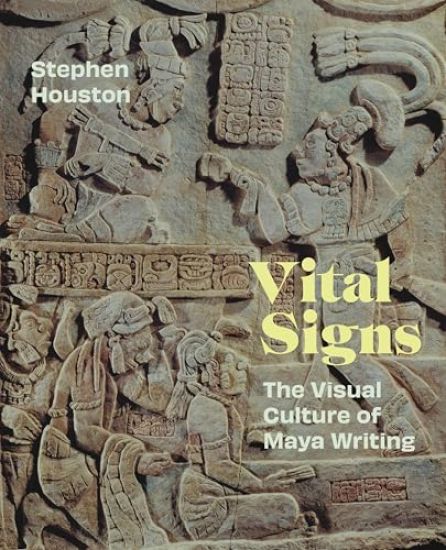
Vital Signs

Vital Signs

Stephen Houston

PRINCETON UNIVERSITY PRESS
2026
sidottu
How scribes of the ancient Maya pictured sound and meaning through inventive hieroglyphic writing that pulsed with vitality and wit For two millennia, the ancestral Maya of Mexico and Central America created a rich legacy of image and text. Vital Signs is the first book to fully explain how this system worked, shedding new light on its design, intent, and authorship. One of the few civilizations of the ancient world with hieroglyphic writing, the Maya developed an innovative form of visual representation in which written signs, known as “glyphs,” took their shape from pictures. In this extraordinary book, archaeologist and anthropologist Stephen Houston shows how recent decipherment of this system unveils a world where sacred kings and dynastic courts sought a way to affirm the truths that undergirded their authority and informed their cosmos. He explores how their scribes created vibrant, sometimes humorous glyphs and images saturated with esoteric messages that conveyed sound, movement, size, and scale. Houston covers a host of topics along the way, such as how Maya scribes depicted the ephemeral and configured artful space. Drawing on more than four decades of research by one of the world’s leading scholars of these ancient writings, Vital Signs reveals larger human histories of how sounds might pass into the eyes, how the eyes can be coaxed to hear, and how static shapes were brought to life in the visual culture of the Maya.
A Maya Universe in Stone

A Maya Universe in Stone

Stephen Houston

Getty Publications
2021
sidottu
In 1950, Dana Lamb, an explorer of some notoriety, stumbled on a Maya ruin in the tropical forests of northern Guatemala. Lamb failed to record the location of the site he called Laxtunich, turning his find into the mystery at the center of this book. The lintels he discovered there, long since looted, are probably of a set with two others that are among the masterworks of Maya sculpture from the Classic period. Using fieldwork, physical evidence, and Lamb's expedition notes, the authors identify a small area with archaeological sites where the carvings were likely produced. Remarkably, the vividly colored lintels, replete with dynastic and cosmic information, can be assigned to a carver, Mayuy, who sculpted his name on two of them. To an extent nearly unique in ancient America, Mayuy can be studied over time as his style developed and his artistic ambition grew. An in-depth analysis of Laxtunich Lintel 1 examines how Mayuy grafted celestial, seasonal, and divine identities onto a local magnate and his overlord from the kingdom of Yaxchilan, Mexico. This volume contextualizes the lintels and points the way to their reprovenancing and, as an ultimate aim, repatriation to Guatemala.
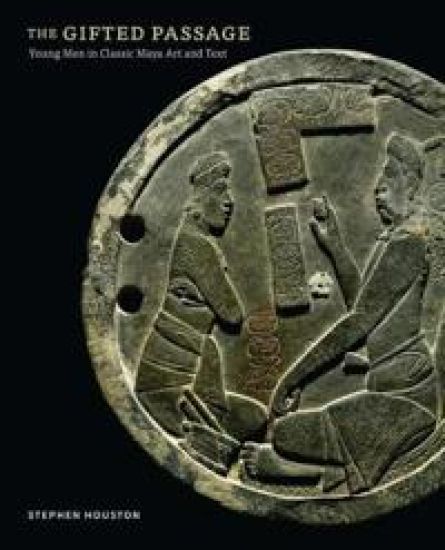
The Gifted Passage

The Gifted Passage

Stephen Houston

Yale University Press
2018
sidottu
In this thought-provoking book, preeminent scholar Stephen Houston turns his attention to the crucial role of young males in Classic Maya society, drawing on evidence from art, writing, and material culture. The Gifted Passage establishes that adolescent men in Maya art were the subjects and makers of hieroglyphics, painted ceramics, and murals, in works that helped to shape and reflect masculinity in Maya civilization. The political volatility of the Classic Maya period gave male adolescents valuable status as potential heirs, and many of the most precious surviving ceramics likely celebrated their coming-of-age rituals. The ardent hope was that youths would grow into effective kings and noblemen, capable of leadership in battle and service in royal courts. Aiming to shift mainstream conceptions of the Maya, Houston argues that adolescent men were not simply present in images and texts, but central to both.
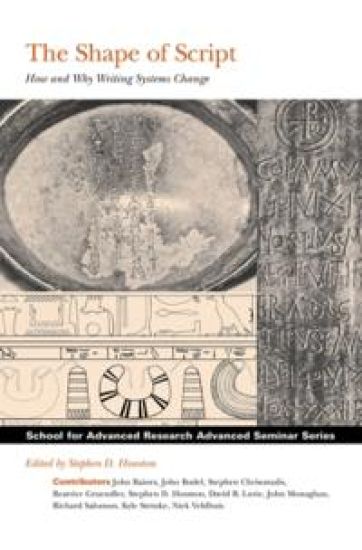
Shape of Script

Shape of Script

Stephen Houston

SAR Press
2012
nidottu
Stephen D. Houston has spent decades studying the nature of writing systems, which “are so very basic as nodes of connection among many aspects of human experience,” such as language, communication, identity, technology, and the recording of memory. “One of the misconceptions about writing is that a particular system of script comes into existence, remains the same, and then ‘dies,’” said Houston.“This notion radically and wrongly dehistoricizes systems of writing. We now know that scripts exist as fluid sets of practices, shifting over long periods of time and in response to changing historical circumstances, conditions of learning, and arenas of patronage and use.” For this advanced seminar “The Shape of Script: How and Why Writing Systems Change,” 10 specialists convened to address “the question of what happens between the origins of a writing system and the time of eventual ‘script death,’ or extinction.” Although scholars are close to conceptualizing the way scripts emerge and pass into obsolescence, they are still far from explaining how scripts maintain themselves over time or how and why they change when they do. “This is unfortunate: writing is one of the central cultural productions in human history, yet its many modulations and shifts seem largely to be taken for granted, without need for explanation. Writing is a pivotal intermediary in many human transactions. But it needs to be brought back into the fold of anthropology, not as a marginal specialty but as an indispensable tool by which knowledge is transmitted.” The seminar, conceived as a capstone to a 10-year project to resuscitate and renovate the study of past writing systems within anthropology, brought together experts in script traditions including Egyptian hieroglyphs, Latin writing and Mediterranean alphabets, cuneiform, South Asian scripts, ancient Roman script, and premodern Arabic, Japanese, Chinese, and Mesoamerican writing systems. Using cross-cultural comparisons, the participants sought to understand the forces that influence the courses of writing systems. Houston emphasized the importance of examining context:“What is the physical, temporal, social, and cultural setting for the way the message of writing is accessed? That is where history enters the picture, within a place of contingency, challenge, and opportunity.” Among the questions driving the discussions were the following: What processes affected formal changes in scripts? What agents or actors were involved in such shifts, either actively or passively? How was literacy achieved, then futhered or restricted? How did aesthetics and the use of script shape each other? What influence did technologies have on script forms? How was writing “gendered” or “aged” or “classed”?And what are the linkages between images and script? Of particular interest was the issue of generational transfer. “This brings us to matters on the cutting edge of anthropology:What is the role of being a child, or an adolescent? What do we learn? When and why do we learn it? This is what’s involved in making sure that script survives more than that initial act of innovation, so that it’s used again and again, across generations,” Houston said.
Royal Courts Of The Ancient Maya

Royal Courts Of The Ancient Maya

Stephen Houston; Takeshi Inomata

Westview Press Inc
2001
pokkari
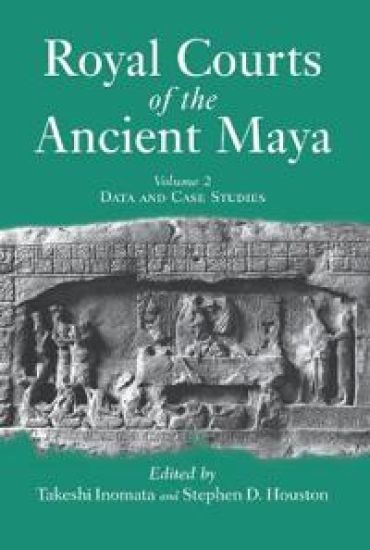
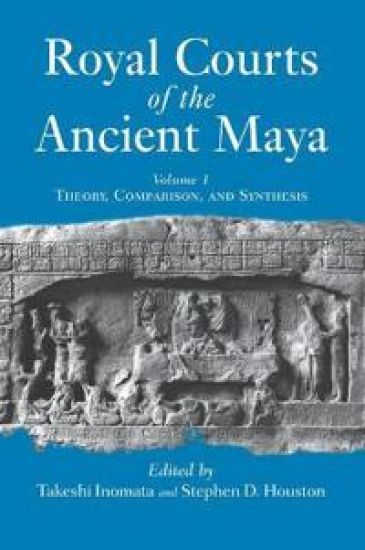
The two volumes of Royal Courts of the Ancient Maya provide current archaeological perspectives on Maya courts conceived as vital, functioning social groups composed of lords, courtiers, scribes, priests, and entertainers, among many others. In addition to archaeological data on the architecture and other spatial attributes of courts, the studies in the two volumes bring to bear on the topic the most recent evidence from inscriptions, vase paintings, murals and friezes, and ethnohistoric records in order to flesh out a portrait of the actors and roles that made up Maya courts through time and across space. The attributes of courts are explored in the Maya highlands and lowlands, from the origins of early kingship through the Classic period to the Postclassic and Terminal epochs. Pertinent comparisons are also drawn from the Aztecs and other ancient and contemporary societies. Volume 1: Theory, Comparison, and Synthesis establishes a carefully considered framework for approaching the study of courts and their functions throughout the world of the ancient Maya. Volume 2: Data and Case Studies provides authoritatively current data and insights from key Maya sites, including Copán, Tikal, Caracol, Bonampak, and Calakmul.
Royal Courts Of The Ancient Maya

Royal Courts Of The Ancient Maya

Stephen Houston; Takeshi Inomata

Westview Press Inc
2000
pokkari
The two volumes of Royal Courts of the Ancient Maya provide current archaeological perspectives on Maya courts conceived as vital, functioning social groups composed of lords, courtiers, scribes, priests, and entertainers, among many others. In addition to archaeological data on the architecture and other spatial attributes of courts, the studies in the two volumes bring to bear on the topic the most recent evidence from inscriptions, vase paintings, murals and friezes, and ethnohistoric records in order to flesh out a portrait of the actors and roles that made up Maya courts through time and across space. The attributes of courts are explored in the Maya highlands and lowlands, from the origins of early kingship through the Classic period to the Postclassic and Terminal epochs. Pertinent comparisons are also drawn from the Aztecs and other ancient and contemporary societies. Volume 1: Theory, Comparison, and Synthesis establishes a carefully considered framework for approaching the study of courts and their functions throughout the world of the ancient Maya. Volume 2: Data and Case Studies provides authoritatively current data and insights from key Maya sites, including Copán, Tikal, Caracol, Bonampak, and Calakmul.