Kirjailija
Stephen J. Andriole
Kirjat ja teokset yhdessä paikassa: 14 kirjaa, julkaisuja vuosilta 1995-2025, suosituimpien joukossa How Executives Should Think About AI. Vertaile teosten hintoja ja tarkista saatavuus suomalaisista kirjakaupoista.
Mukana myös kirjoitusasut: Stephen J Andriole
14 kirjaa
Kirjojen julkaisuhaarukka 1995-2025.
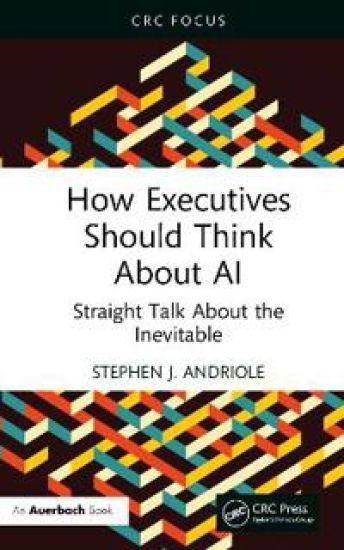
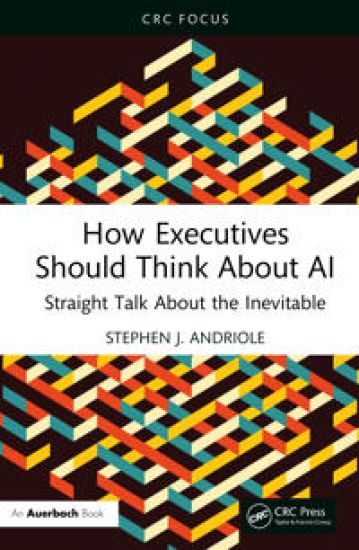
Much of what is said about AI is misleading – or just plain wrong. It’s also sometimes intended to frighten everyone about a future that’s unlikely to occur (think Bill Gates, Elon Musk, Steve Wozniak and Geoffrey Hinton, among others). AI will not steal children, hold hostages for bitcoins or start nuclear wars. But it will fundamentally change business through the intelligent automation of many routine – and nonroutine – tasks that companies perform all the time. Old business models will die as fast as new ones emerge. Whole industries will be reengineered, reinvented and reimagined. Some will be displaced altogether. Some industries will be disrupted in every sense of the word – in just three-to-five years. In fact, it’s already begun. How Executives Should Think About AI: Straight Talk About the Inevitableprepares executives for the AI future. It’s not a complicated treatise on AI, or a theoretical look at how new technology can transform business models and processes. It’s a series of conversations masquerading as chapters designed to help executives quickly understand AI, what it can do and what they should do about AI, machine learning (ML) and generative AI (GenAI) right now. These conversations about AI are intended to get executives up to speed on AI, ML and GenAI so that they become “AI comfortable” in many ways, including launching a steady stream of demonstration prototypes to help their companies explore AI's capabilities and potential benefits. These timely conversations can help executives understand how AI will impact their companies and their professional success. It’s straight talk about the most important technology since the Internet. Executives have no choice but to embrace AI to accomplish their professional goals. This book helps accomplish these goals. It helps them make decisions about what AI can and cannot do for their companies.
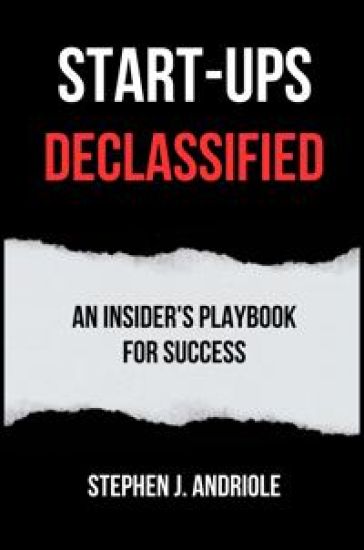
This book is about increasing the probability of success–a playbook for entrepreneurs.You're an entrepreneur and should already be thinking about how to get rich – filthy rich – before you write one line of code or define the service you plan to offer. If you die, you die. But you should not die without dreaming about a house in the Hamptons and a private jet. This is why you never sleep.Start-Ups DECLASSIFIED can help. It's a must read because it describes the real start-up process based on actual cases – not "theories" about how to create, grow or exit start-ups. The book offers lessons learned for every step of the start-up process ranging from ideation to fundraising to scaling to exiting – as well as a real description of how the sometimes-audacious cast of characters actually behaves. Every lesson is grounded in experience. It's a practical book full of insider analyses, observations and lessons from start-up cases where the author was "in the room."This book describes the real start-up process – not the one described by pundits or the uninitiated – followed by the steps necessary to cut through the articles, books and TED talks about how to "do" start-ups. Start-Ups DECLASSIFIED is a playbook for entrepreneurs.Start-Ups DECLASSIFIED says the quiet things out loud. The book is about increasing the probability of success. It leapfrogs the nonsense that permeates startup myths and movies. If you're a serious entrepreneur, you will love this book.
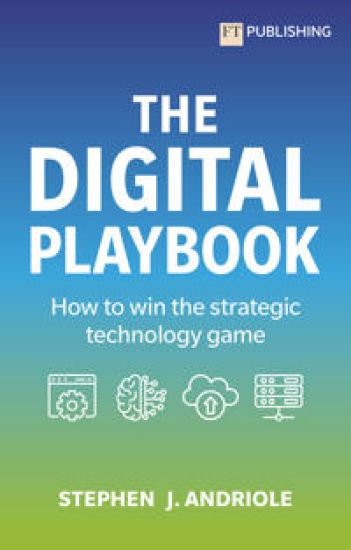
The Digital Playbook: How to win the strategic technology game
Stephen J. Andriole
pearson education limited
2023
nidottu
This readable and engaging book will help managers and executives understand the major trends affecting digital technology so they are prepared to make the right decisions for their organisation. With case studies, and practical guidance, it's split into short sections you can dip into at any time.
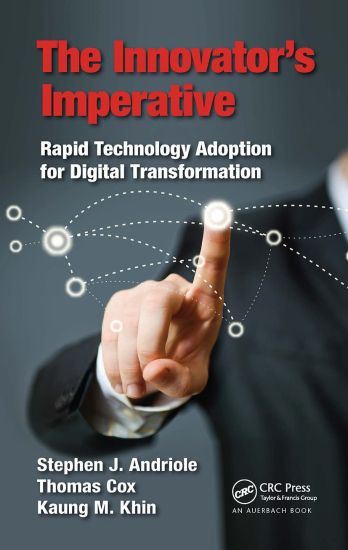
The Innovator’s Imperative
Stephen J Andriole; Thomas Cox; Kaung M. Khin
TAYLOR FRANCIS LTD
2023
nidottu
The pace of technological change is accelerating, hyper competition is growing, opportunities for business model disruption are exploding, and comprehensive cloud delivery is readily available. These factors challenge every aspect of business technology strategy. The Innovator’s Imperative: Rapid Technology Adoption for Digital Transformation prepares twenty-first century businesses leaders for competing and leading in this disruptive digital environment. Five years of research conducted by the authors suggests that leading companies have all but abandoned the requirements analysis and modeling best practices of the twentieth century. Accordingly, the authors put forth the innovator’s imperative that contends:All companies wanting to be competitive should adopt emerging and disruptive technologies as quickly as possible, and in many cases, immediately. Technology is driving business strategy, and companies are rethinking their technology strategy, especially the governance that determines how and why technology investments are made. Based on their research the authors have developed a five-step framework for digital transformation: Model and simulateIdentify high-leverage opportunitiesPrioritize transformational targetsIdentify digital opportunitiesFind courageous leaders The book explains each of these steps to guide business leaders in architecting digital transformation projects according to their organization’s market positions, budgets, objectives, and corporate culture.Hyper-competitive, disruptive companies are jumping across technology adoption phases without regard to any phasing whatsoever. Companies focused on digital transformation often adopt emerging technologies immediately. They have become early adopters of technologies that can impact existing—and create whole new—business models and processes. This book examines this jump into new technologies, processes, and business models to prepare twenty-first century business leaders to make that leap.
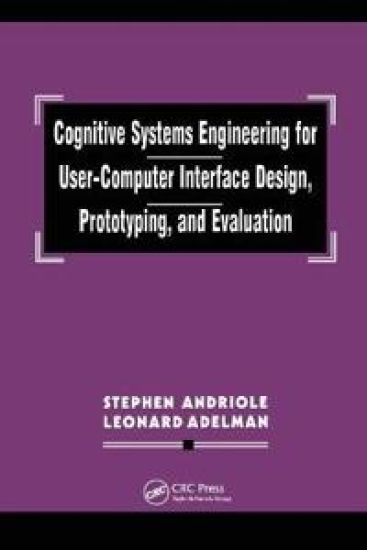
Cognitive Systems Engineering for User-computer Interface Design, Prototyping, and Evaluation
Stephen J. Andriole; Leonard Adelman
CRC Press
2019
nidottu
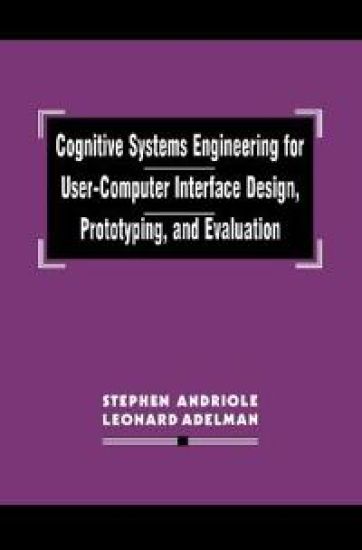
This volume seeks to answer the question: "Can findings from cognitive science enhance the user-computer interaction process?" In so doing, it recognizes that user-computer interfaces (UCIs) are often essential parts of an information or decision support system -- and often critical components of software-intensive systems of all kinds. From the outset, the authors note that the design, prototyping, and evaluation of user-computer interfaces are part of larger systems and are therefore ideally designed, developed, and evaluated as part of a larger design and developmental process or "life cycle." Thus, this book describes the process by which functional, nonfunctional, or display-oriented requirements are converted first into prototypes and then into working systems. While the process may at times seem almost mysterious, there is in fact a methodology that drives the process -- a methodology that is defined in terms of an adaptive life cycle. There are a number of steps or phases that comprise the standard life cycle, as well as methods, tools and techniques that permit each step to be taken. Describing the effort to implement this process to enhance user-computer interaction, this book presents a methodological approach that seeks to identify and apply findings from cognitive science to the design, prototyping, and evaluation of user-computer interfaces.
The pace of technological change is accelerating, hyper competition is growing, opportunities for business model disruption are exploding, and comprehensive cloud delivery is readily available. These factors challenge every aspect of business technology strategy. The Innovator’s Imperative: Rapid Technology Adoption for Digital Transformation prepares twenty-first century businesses leaders for competing and leading in this disruptive digital environment. Five years of research conducted by the authors suggests that leading companies have all but abandoned the requirements analysis and modeling best practices of the twentieth century. Accordingly, the authors put forth the innovator’s imperative that contends:All companies wanting to be competitive should adopt emerging and disruptive technologies as quickly as possible, and in many cases, immediately. Technology is driving business strategy, and companies are rethinking their technology strategy, especially the governance that determines how and why technology investments are made. Based on their research the authors have developed a five-step framework for digital transformation: Model and simulateIdentify high-leverage opportunitiesPrioritize transformational targetsIdentify digital opportunitiesFind courageous leaders The book explains each of these steps to guide business leaders in architecting digital transformation projects according to their organization’s market positions, budgets, objectives, and corporate culture.Hyper-competitive, disruptive companies are jumping across technology adoption phases without regard to any phasing whatsoever. Companies focused on digital transformation often adopt emerging technologies immediately. They have become early adopters of technologies that can impact existing—and create whole new—business models and processes. This book examines this jump into new technologies, processes, and business models to prepare twenty-first century business leaders to make that leap.
Companies understand that their ability to compete is tied directly to their ability to leverage the very latest technology advances. Fortunately, deploying new technology has never been easier, primarily due to early maturity and cloud delivery. One approach that is helping companies rapidly pilot and affordably deploy new technologies is ready technology, a new category of information technology (IT). This book explains the ready technology adoption process in detail, enabling companies to exploit new technology immediately and effectively. In this book, the author challenges the traditional "requirements-first/technology-second" approach to technology deployment. Espousing a "technology-first/requirements-second" approach, the author explains how business solutions are "discovered" by deploying not studying ready technology. The book covers the latest trends and processes in ready technology. It also describes the characteristics of ready companies and recommends ready technology pilots that should be launched by the following industries: higher education, retail, and healthcare.
Companies understand that their ability to compete is tied directly to their ability to leverage the very latest technology advances. Fortunately, deploying new technology has never been easier, primarily due to early maturity and cloud delivery. One approach that is helping companies rapidly pilot and affordably deploy new technologies is ready technology, a new category of information technology (IT). This book explains the ready technology adoption process in detail, enabling companies to exploit new technology immediately and effectively.In this book, the author challenges the traditional "requirements-first/technology-second" approach to technology deployment. Espousing a "technology-first/requirements-second" approach, the author explains how business solutions are "discovered" by deploying—not studying—ready technology.The book covers the latest trends and processes in ready technology. It also describes the characteristics of ready companies and recommends ready technology pilots that should be launched by the following industries: higher education, retail, and healthcare.
By and large, cost-effective information technology (IT) management is more about people, personal relationships, and corporate culture than it is about the technology itself. Simply put, IT doesn’t work if you are surrounded by bad people and stupid processes in a deranged corporate culture. IT's All about the People: Technology Management That Overcomes Disaffected People, Stupid Processes, and Deranged Corporate Cultures explains how to achieve dramatic improvements in service and agility by enhancing the people, processes, and culture within your organization. It details the various roles within the technology management process and supplies authoritative insight into the realities of human behavior—including the range of best and worst behaviors from managers, executives, and corporate culture.Industry veteran Stephen J. Andriole explains the reason behind why many business cases fail and includes helpful insights on new governance models, organic transformation, guerilla budgeting, and open source software. Providing a fresh perspective on the old basics of IT management through a twenty-first-century lens, this book arms you with the methods needed to master the soft art of IT management as well as purchasing, deployment, and technological support.
Best Practices in Business Technology Management
Stephen J. Andriole
Auerbach Publishers Inc.
2008
sidottu
Despite the exponential growth of computing and communications technology, the inertia of old business technology management practices still drives most investment decisions in this area. Companies spend too much money on new technology, while their business models and processes underutilize the resources they already have. Written in a compelling, conversational manner, Best Practices in Business Technology Management advises those who buy, install, and support all types of computing and communications technology, empowering them to optimize their systems in new and innovative ways.Divided into six chapters, the book provides insight into the field, discussing decision-making, trends, alignment, optimization, processes, timing, and other areas. It includes practical hands-on advice that explores organization, the challenges of working with people, acquisition and measurement of technology, operational effectiveness, and strategic effectiveness. The best practices presented are not theoretical or untested. Rather, they are the result of trench warfare and real applications. The insights contained in this volume represent what successful companies have done—and continue to do—to optimize the business technology relationship.A nationally-known business technology veteran, author Stephen J. Andriole has developed a perspective on the optimization of computing and communications technology based on years of experience from government, industry, academia, and the venture capital business. In this book, he demonstrates how those who buy and deploy technology can optimize their technology in a way that saves costs and provides maximum performance.
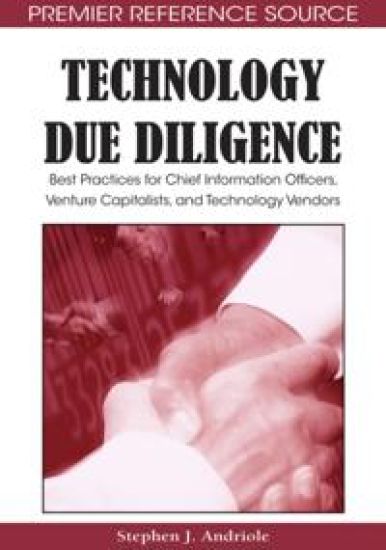
Due diligence conducted around technology decisions is complex. Done correctly, it has the power to enable outstanding positive outcomes; done poorly, it can wreak havoc on organizations, corporate cultures, and markets. ""Technology Due Diligence: Best Practices for Chief Information Officers, Venture Capitalists, and Technology Vendors"" develops a due diligence framework for anyone resolving technology decisions intended to help their business achieve positive results. This essential book contains actual case studies that incorporate the due diligence methodology to assist chief information officers, venture capitalists, and technology vendors who wrestle with technology acquisitions challenges on a daily basis.
Cognitive Systems Engineering for User-computer Interface Design, Prototyping, and Evaluation
Stephen J. Andriole; Leonard Adelman
CRC Press Inc
1995
sidottu
This volume seeks to answer the question: "Can findings from cognitive science enhance the user-computer interaction process?" In so doing, it recognizes that user-computer interfaces (UCIs) are often essential parts of an information or decision support system -- and often critical components of software-intensive systems of all kinds. From the outset, the authors note that the design, prototyping, and evaluation of user-computer interfaces are part of larger systems and are therefore ideally designed, developed, and evaluated as part of a larger design and developmental process or "life cycle." Thus, this book describes the process by which functional, nonfunctional, or display-oriented requirements are converted first into prototypes and then into working systems. While the process may at times seem almost mysterious, there is in fact a methodology that drives the process -- a methodology that is defined in terms of an adaptive life cycle. There are a number of steps or phases that comprise the standard life cycle, as well as methods, tools and techniques that permit each step to be taken. Describing the effort to implement this process to enhance user-computer interaction, this book presents a methodological approach that seeks to identify and apply findings from cognitive science to the design, prototyping, and evaluation of user-computer interfaces.