Kirjojen hintavertailu. Mukana 12 506 876 kirjaa ja 12 kauppaa.
Kirjailija
Stephen J. Ball
Kirjat ja teokset yhdessä paikassa: 33 kirjaa, julkaisuja vuosilta 1981-2025, suosituimpien joukossa Foucault as Educator. Vertaile teosten hintoja ja tarkista saatavuus suomalaisista kirjakaupoista.
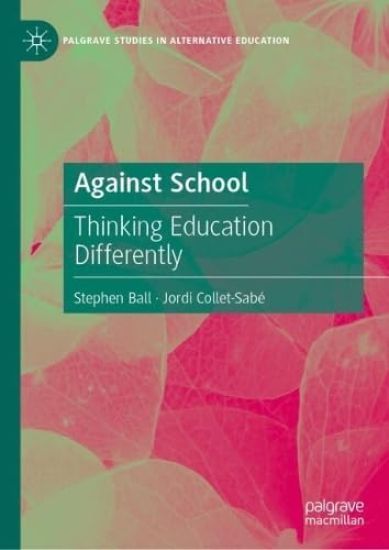
This book invites the reader to think education against, beyond and without the school and its paraphernalia. To think about ‘education’, rather than schooling, and what kind of education is relevant to and needed now in the complex, difficult and dangerous world we live in. That invitation means testing our limits, questioning and changing ourselves and thinking the practice of education differently. The book is not about tinkering, improving, reforming – it about clearing away the detritus of the school and using the space created to explore education as self-formation and commoning. It will be of interest to scholars and graduate students of alternative education, schooling, educational policy and philosophy, and the sociology of education.
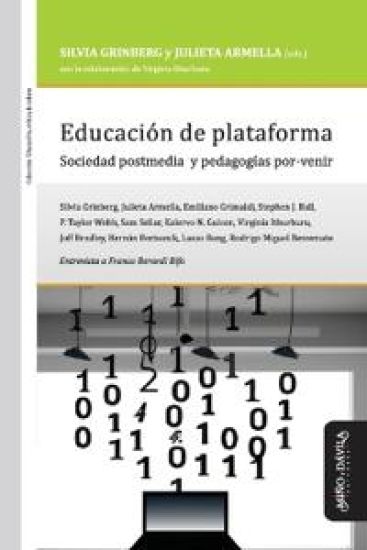
Qu sujetos nos estamos volviendo cuando nuestra vida parece (re)componerse entre bytes de informaci n? Qu escuela se configura entre algoritmos? Toda educaci n posible ocurrir de aqu en m s entre pantallas? Puede la educaci n, y m s espec ficamente la profesi n de ense ar, ser transferida a las m quinas? Qu hay de educativo en la escuela en la sociedad postmedia? En estos interrogantes se inscribe la educaci n de plataforma, entre formas de la vida atravesadas por la digitalizaci n de la experiencia que transforman nuestras maneras de encontrarnos y vincularnos con otro/as, de sentir el amor y el dolor, tanto como vincularnos con el saber. Se asume aqu que las pedagog as por-venir involucran ya a las m quinas: la digitalizaci n est en las escuelas m s all del uso efectivo de las pantallas. No hay un afuera sino m s bien un entre que enlaza de maneras in ditas nuestra vida con las tecnolog as. Estas p ginas re nen autores, territorios y miradas procurando abrir un di logo sobre las formas que est asumiendo la educaci n y, particularmente, la escuela en la sociedad postmedia. Una sociedad en la que los algoritmos, la Inteligencia Artificial y la conectividad forman nuestro lenguaje diario mientras que modulan nuestra vida en com n. Escapar a las im genes apocal pticas de un futuro que ya lleg , procurando ensanchar el pensamiento del mundo y de la educaci n es el desaf o al que invita este libro. Escriben: Silvia Grinberg, Julieta Armella, Emiliano Grimaldi, Stephen J. Ball, P. Taylor Webb, Sam Sellar, Kalervo N. Gulson, Virginia Ithurburu, Joff Bradley, Hern n Borisonik, Lucas Bang, Rodrigo Miguel BenvenutoEntrevista a Franco Berardi Bifo
Education policy in England is constantly evolving and becoming increasingly incoherent and it is therefore becoming harder to keep up with, and make sense of, all the changes. This bestselling book looks at the role of the UK as a social laboratory for global education policy. Covering key concepts, it then examines new areas, including: • Global education policy mobility • Edu-business and philanthropy as policy actors • Marketisation of education • Increase in performance gap • Poverty and austerity • Impact of COVID-19 on schools and in education policy • New forms of governance This extensively updated fourth edition by the key author in the field will maintain its place as the most important text on education policy and makes essential reading for all students and anyone interested in education policy more generally.
The Education Reform Act introduced in England and Wales in 1988 brought about enormous changes in schools, both as management units and as educational institutions. This book, first published in 1992, was the first to look at the effects of the Act in all its aspects on the basis of empirical evidence gathered from schools over the first three years of the Act's implementation. It looks at how change is being achieved in the Local Management of Schools, the influence of the market on schools, the introduction of the National Curriculum and the place of Special Needs provision in the new education scene. This book will be of interest to all who want to know about educational reform in Britain. It will also be of interest to those in the fields of education policy, educational management and sociology of education.
Education policy in England is constantly evolving and becoming increasingly incoherent and it is therefore becoming harder to keep up with, and make sense of, all the changes. This bestselling book looks at the role of the UK as a social laboratory for global education policy. Covering key concepts, it then examines new areas, including: • Global education policy mobility • Edu-business and philanthropy as policy actors • Marketisation of education • Increase in performance gap • Poverty and austerity • Impact of COVID-19 on schools and in education policy • New forms of governance This extensively updated fourth edition by the key author in the field will maintain its place as the most important text on education policy and makes essential reading for all students and anyone interested in education policy more generally.
The Education Reform Act introduced in England and Wales in 1988 brought about enormous changes in schools, both as management units and as educational institutions. This book, first published in 1992, was the first to look at the effects of the Act in all its aspects on the basis of empirical evidence gathered from schools over the first three years of the Act's implementation. It looks at how change is being achieved in the Local Management of Schools, the influence of the market on schools, the introduction of the National Curriculum and the place of Special Needs provision in the new education scene. This book will be of interest to all who want to know about educational reform in Britain. It will also be of interest to those in the fields of education policy, educational management and sociology of education.
Edu.net builds upon, and extends, a series of research studies of education policy networks and global policy mobilities. It draws on comprehensive data resulting from a Leverhulme Trust research study focused on Africa, and a study funded by the British Academy focused on India, which explored the way in which global actors and organisations bring policy ideas to bear and are joined up in a global education policy network.This timely and cutting-edge new work develops concepts, analyses and methods deployed in Education Plc (2008), Networks, New Governance and Education (2012) and Global Education Inc. (2012). The research is framed by an elaboration of Network Ethnography, an innovative method of policy research. Edu.net presents the substantive findings of the authors’ research by focusing on various kinds of policy movement – people, ideas, practices, methods, money. The book is about both global education policy and ways of researching policy in a global setting. It is an essential read for policy analysts, educational academic researchers and postgraduate education students alike.
Edu.net builds upon, and extends, a series of research studies of education policy networks and global policy mobilities. It draws on comprehensive data resulting from a Leverhulme Trust research study focused on Africa, and a study funded by the British Academy focused on India, which explored the way in which global actors and organisations bring policy ideas to bear and are joined up in a global education policy network.This timely and cutting-edge new work develops concepts, analyses and methods deployed in Education Plc (2008), Networks, New Governance and Education (2012) and Global Education Inc. (2012). The research is framed by an elaboration of Network Ethnography, an innovative method of policy research. Edu.net presents the substantive findings of the authors’ research by focusing on various kinds of policy movement – people, ideas, practices, methods, money. The book is about both global education policy and ways of researching policy in a global setting. It is an essential read for policy analysts, educational academic researchers and postgraduate education students alike.
This book considers Foucault as educator in three main ways. First, through some consideration of what his work says about education as a social and political practice. That is, education as a form of what Allen (2014) calls benign violence – which operates through mundane, quotidian disciplinary technologies and expert knowledges which together construct a ‘pedagogical machine’. Second, through an exploration of his ‘method’ as a form of critique. That is, as a way of showing that things are ‘not as necessary as all that’, a way of addressing what is intolerable. This suggests that critique is education of a kind. Third, through a discussion of some of Foucault's later work on subjectivity and in particular on ‘the care of the self’ or what we might call ‘a pedagogy of the self’. Each chapter introduces and discusses some relevant examples from educational settings to illustrate and enact Foucault’s analytics.
Stephen Ball’s micro-political theory of school organization is a radical departure from traditional theories. He rejects a prescriptive ‘top down’ approach and directly addresses the interest and concerns of teachers and current problems facing schools. In doing so he raises question about the adequacy and appropriateness of the existing forms of organizational control in schools. Through case studies and interviews with teachers, the book captures the flavour of real conflicts in schools – particularly in times of falling rolls, change of leadership or amalgamations – when teachers’ autonomy seems to be at stake.
How do race and class intersect to shape the identities and experiences of Black middle-class parents and their children? What are Black middle-class parents’ strategies for supporting their children through school? What role do the educational histories of Black middle-class parents play in their decision-making about their children’s education?There is now an extensive body of research on the educational strategies of the white middle classes but a silence exists around the emergence of the Black middle classes and their experiences, priorities, and actions in relation to education. This book focuses on middle-class families of Black Caribbean heritage. Drawing on rich qualitative data from nearly 80 in-depth interviews with Black Caribbean middle-class parents, the internationally renowned contributors reveal how these parents attempt to navigate their children successfully through the school system, and defend them against low expectations and other manifestations of discrimination. Chapters identify when, how and to what extent parents deploy the financial, cultural and social resources available to them as professional, middle class individuals in support of their children’s academic success and emotional well-being. The book sheds light on the complex, and relatively neglected relations, between race, social class and education, and in addition, poses wider questions about the experiences of social mobility, and the intersection of race and class in forming the identity of the parents and their children.The Colour of Class: The educational strategies of the Black middle classes will appeal to undergraduates and postgraduates on education, sociology and social policy courses, as well as academics with an interest in Critical Race Theory and Bourdieu.The Colour of Class was awarded 2nd prize by the Society for Educational Studies: Book Prize 2016.
How do race and class intersect to shape the identities and experiences of Black middle-class parents and their children? What are Black middle-class parents’ strategies for supporting their children through school? What role do the educational histories of Black middle-class parents play in their decision-making about their children’s education?There is now an extensive body of research on the educational strategies of the white middle classes but a silence exists around the emergence of the Black middle classes and their experiences, priorities, and actions in relation to education. This book focuses on middle-class families of Black Caribbean heritage. Drawing on rich qualitative data from nearly 80 in-depth interviews with Black Caribbean middle-class parents, the internationally renowned contributors reveal how these parents attempt to navigate their children successfully through the school system, and defend them against low expectations and other manifestations of discrimination. Chapters identify when, how and to what extent parents deploy the financial, cultural and social resources available to them as professional, middle class individuals in support of their children’s academic success and emotional well-being. The book sheds light on the complex, and relatively neglected relations, between race, social class and education, and in addition, poses wider questions about the experiences of social mobility, and the intersection of race and class in forming the identity of the parents and their children.The Colour of Class: The educational strategies of the Black middle classes will appeal to undergraduates and postgraduates on education, sociology and social policy courses, as well as academics with an interest in Critical Race Theory and Bourdieu.The Colour of Class was awarded 2nd prize by the Society for Educational Studies: Book Prize 2016.
Based on interviews with key actors in the policy-making process, this book maps the changes in education policy and policy making in the Thatcherite decade. The focus of the book is the 1988 Education Reform Act, its origins, purposes and effects, and it looks behind the scenes at the priorities of the politicians, civil servants and government advisers who were influential in making changes. Using direct quotations from senior civil servants and former secretaries of state it provides a fascinating insight into the way in which policy is made. The book focuses on real-life political conflicts, examining the way in which education policy was related to the ideal of society projected by Thatcherism. It looks in detail at the New Right government advisers and think tanks; the industrial lobby, addressing issues such as the National Curriculum, national testing and City Technical Colleges. The author sets these important issues within a clear theoretical framework which illuminates the whole process of policy making.
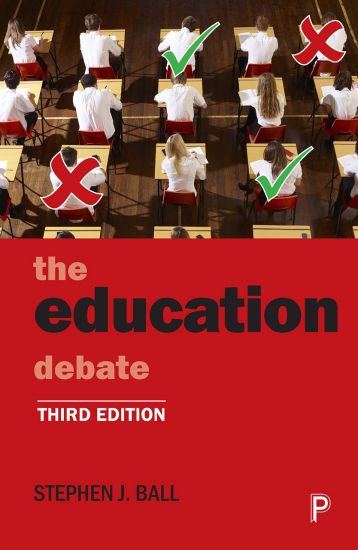
Education is a continuing key political issue for the UK government. It is seen as a crucial factor in ensuring economic productivity and competitiveness, in generating social mobility and tackling social inequality - but are these goals either feasible or compatible? In this fully updated edition of this bestselling book, Stephen J. Ball, a leading author in the field, guides us through the flood of government initiatives and policies of the past 20 years, including the Academies programme, parental choice, Free schools, National Curriculum and teaching standards. He looks at how these policy interventions have changed the landscape and meaning of education, turned children into 'learners' and parents into 'consumers', and played their part in the re-formation of contemporary governance. This authoritative and accessible book uses Ball's sociological approach to the analysis of current policies and ideas around education to address issues of class, choice, globalisation, race and citizenship, as well as the conflicting needs of children and families on the one hand and the economy and the state on the other.
Foucault, Power, and Education invites internationally renowned scholar Stephen J. Ball to reflect on the importance and influence of Foucault on his work in educational policy. By focusing on some of the ways Foucault has been placed in relation to educational questions or questions about education, Ball highlights the relationships between Foucault’s concepts and methods, and educational research and analysis. An introductory chapter offers a brief explanation of some of Foucault’s key concerns, while additional chapters explore ways in which Ball himself has sought to apply Foucault’s ideas in addressing contemporary educational issues. In this intensely personal and reflective text, Ball offers an interpretation of his Foucault—That is, his own particular reading of the Foucauldian toolbox. Ideal for courses in education policy and education studies, this valuable teaching resource is essential reading for any education scholar looking for a starting point into the literature and ideas of Foucault.
Foucault, Power, and Education invites internationally renowned scholar Stephen J. Ball to reflect on the importance and influence of Foucault on his work in educational policy. By focusing on some of the ways Foucault has been placed in relation to educational questions or questions about education, Ball highlights the relationships between Foucault’s concepts and methods, and educational research and analysis. An introductory chapter offers a brief explanation of some of Foucault’s key concerns, while additional chapters explore ways in which Ball himself has sought to apply Foucault’s ideas in addressing contemporary educational issues. In this intensely personal and reflective text, Ball offers an interpretation of his Foucault—That is, his own particular reading of the Foucauldian toolbox. Ideal for courses in education policy and education studies, this valuable teaching resource is essential reading for any education scholar looking for a starting point into the literature and ideas of Foucault.
The public sector is going through a period of fundamental change. Service delivery, policy making and policy processes are being carried out by new actors and organisations with new interests, methods and discourses, related to the emergence of new forms of governance. This timely book from bestselling author Stephen Ball and Carolina Junemann uses network analysis and interviews with key actors to address these changes, with a particular focus on education and the increasingly important role of new philanthropy. Critically engaging with the burgeoning literature on new governance, they present a new method for researching governance - network ethnography- which allows identification of the increasing influence of finance capital and education businesses in policy and public service delivery. In a highly original and very topical analysis of the practical workings of the Third Way and the Big Society, the book will be useful to practicing social and education policy analysts and theorists and ideal supplementary reading for students and researchers of social and education policy.
The public sector is going through a period of fundamental change. Service delivery, policy making and policy processes are being carried out by new actors and organisations with new interests, methods and discourses, related to the emergence of new forms of governance. This timely book from bestselling author Stephen Ball and Carolina Junemann uses network analysis and interviews with key actors to address these changes, with a particular focus on education and the increasingly important role of new philanthropy. Critically engaging with the burgeoning literature on new governance, they present a new method for researching governance - network ethnography- which allows identification of the increasing influence of finance capital and education businesses in policy and public service delivery. In a highly original and very topical analysis of the practical workings of the Third Way and the Big Society, the book will be useful to practicing social and education policy analysts and theorists and ideal supplementary reading for students and researchers of social and education policy.
Do private and philanthropic solutions to the problems of education signal the end of state education in its ‘welfare’ form?Education policy is being reformed and re-worked on a global scale. Policies are flowing and converging to produce a singular vision of ‘best practice’ based on the methods and tenets of the ‘neo-liberal imaginary’. Philanthropy, business and the governments are coming together in new networks and sites of policy outside of the framework of the nation state. This book is a first step in recording, mapping and making sense of the most important aspects of these new relations and dynamics of policy.Using the approach of ‘policy sociology’ and the methods of social network analysis, Global Education Inc. explores the policy activities of edu-businesses, neo-liberal advocacy networks and policy entrepreneurs, and of social enterprises and ‘new’ philanthropy. It also addresses the ways in which education and education policy itself are now being exported and bought and sold as profitable commodities and how entrenched problems of educational development and educational quality and access are now being addressed through ‘market solutions’. That is, by the involvement of private providers in the delivery of educational services, both independently and on behalf of the state. Universities, schools and education services are being acquired as assets by private equity companies. Private storefront schools are being set-up by local entrepreneurs and through franchising arrangements, funded through microloans. School chains funded by philanthropy and run by multi-national edu-businesses are being harnessed to the attempts of developing societies in an attempt to achieve their Millennium Development Goals and provide mass access to basic education. Curriculum materials and pedagogy software and policy ideas such as inspections, leadership, school choice and accountability are being retailed by western ‘knowledge companies’ and consultants across the globe. This book argues that these new forms of policy and policy-making require new concepts and methods of policy analysis, with chapters including: Networks, Neo-liberalism and Policy Mobilities New’ Philanthropy, Social Capitalism and Education Policy Policy as Profit: Selling and Exporting Policy Money, Meaning and Policy Connections Global Education Inc. is a crucial book that will be of great interest to students of social and education policy and social and education policy analysts and researchers.
Do private and philanthropic solutions to the problems of education signal the end of state education in its ‘welfare’ form?Education policy is being reformed and re-worked on a global scale. Policies are flowing and converging to produce a singular vision of ‘best practice’ based on the methods and tenets of the ‘neo-liberal imaginary’. Philanthropy, business and the governments are coming together in new networks and sites of policy outside of the framework of the nation state. This book is a first step in recording, mapping and making sense of the most important aspects of these new relations and dynamics of policy.Using the approach of ‘policy sociology’ and the methods of social network analysis, Global Education Inc. explores the policy activities of edu-businesses, neo-liberal advocacy networks and policy entrepreneurs, and of social enterprises and ‘new’ philanthropy. It also addresses the ways in which education and education policy itself are now being exported and bought and sold as profitable commodities and how entrenched problems of educational development and educational quality and access are now being addressed through ‘market solutions’. That is, by the involvement of private providers in the delivery of educational services, both independently and on behalf of the state. Universities, schools and education services are being acquired as assets by private equity companies. Private storefront schools are being set-up by local entrepreneurs and through franchising arrangements, funded through microloans. School chains funded by philanthropy and run by multi-national edu-businesses are being harnessed to the attempts of developing societies in an attempt to achieve their Millennium Development Goals and provide mass access to basic education. Curriculum materials and pedagogy software and policy ideas such as inspections, leadership, school choice and accountability are being retailed by western ‘knowledge companies’ and consultants across the globe. This book argues that these new forms of policy and policy-making require new concepts and methods of policy analysis, with chapters including: Networks, Neo-liberalism and Policy Mobilities New’ Philanthropy, Social Capitalism and Education Policy Policy as Profit: Selling and Exporting Policy Money, Meaning and Policy Connections Global Education Inc. is a crucial book that will be of great interest to students of social and education policy and social and education policy analysts and researchers.