Kirjojen hintavertailu. Mukana 12 390 323 kirjaa ja 12 kauppaa.

Kirjailija

Stephen J. Cimbala

Kirjat ja teokset yhdessä paikassa: 49 kirjaa, julkaisuja vuosilta 1986-2026, suosituimpien joukossa US National Security. Vertaile teosten hintoja ja tarkista saatavuus suomalaisista kirjakaupoista.

Mukana myös kirjoitusasut: Stephen J Cimbala

49 kirjaa

Kirjojen julkaisuhaarukka 1986-2026.

Multinational Military Intervention

Multinational Military Intervention

Stephen J. Cimbala; Peter Kent Forster; Peter K. Forster

Routledge
2026
sidottu
Much has changed since the publication of the first edition in 2010 with respect to the geopolitical and military context for NATO decision making. Vladimir Putin’s return to the Russian presidency in 2012, and Russia’s annexation of Crimea in 2014, ended a long post-Cold War period of quiescence in Europe with respect to security issues. NATO found itself in 2014 - 2015 not only heavily engaged in ’out of the area’ operations in Afghanistan, but also having to reinvigorate its original mission of deterrence and defense in Europe. The shifting constellations of diplomatic-strategic behavior, as between NATO and Russia under Putin II, could be understood from many perspectives. One perspective is that which was introduced in the earlier work and this perspective is still valid, as a frame of reference for interpreting some important aspects of the division of labor among NATO allies, and in understanding their perceptions of their responsibilities to one another while fulfilling their shared missions of deterrence and defense in the very different milieus of South Asia and Europe.
The Technology, Strategy, And Politics Of Sdi

The Technology, Strategy, And Politics Of Sdi

Stephen J Cimbala

TAYLOR FRANCIS LTD
2022
nidottu
The Strategic Defense Initiative (SDI) to develop a ballistic missile defense (BMD) system has both short-range and long-range risks as well as potential benefits. For the most part, however, strategic, technological, and political issues relevant to SDI have been analyzed in isolation from one another. This book provides a more inclusive framework for assessing the possible development and deployment of a BMD system by the United States or the Soviet Union. Contributors discuss the risks for arms race stability, probable reactions of the Soviet Union to any U.S. space-based defense system, and implications for the stability of extended deterrence commitments to NATO European allies. They also evaluate Soviet research and development programs in missile defense that must be considered in any extrapolation of the requirements for U.S. deterrence in the next several decades.
The United States, Russia and Nuclear Peace

The United States, Russia and Nuclear Peace

Stephen J. Cimbala

Springer Nature Switzerland AG
2021
nidottu
This book analyzes the United States and Russia’s nuclear arms control and deterrence relationships and how these countries must lead current and prospective efforts to support future nuclear arms control and nonproliferation. The second nuclear age, following the end of the Cold War and the demise of the Soviet Union, poses new challenges with respect to nuclear-strategic stability, deterrence and nonproliferation. The spread of nuclear weapons in Asia, and the potential for new nuclear weapons states in the Middle East, create new possible axes of conflict potentially stressful to the existing world order. Other uncertainties include the interest of major powers in developing a wider spectrum of nuclear weapons and delivery systems, possibly for use in limited nuclear wars, and the competitive technologies for antimissile defenses being developed and deployed by the United States and Russia. Other technology challenges, including the implications of cyberwar for nuclear deterrence and crisis management, are also considered. Political changes also matter. The early post-Cold War hopes for the emergence of a global pacific security community, excluding the possibility of major war, have been dashed by political conflict between Russia and NATO, by the roiled nature of American domestic politics with respect to international security, and by a more assertive and militarily competent China. Additionally, the study includes suggestions for both analysis and policy in order to prevent the renewed U.S.-Russian nuclear arms race and competition in new technologies. This volume would be ideal for graduate students, researchers, scholars and anyone who is interested in nuclear policy, international studies, and Russian politics.
The Technology, Strategy, And Politics Of Sdi
The Strategic Defense Initiative (SDI) to develop a ballistic missile defense (BMD) system has both short-range and long-range risks as well as potential benefits. For the most part, however, strategic, technological, and political issues relevant to SDI have been analyzed in isolation from one another. This book provides a more inclusive framework for assessing the possible development and deployment of a BMD system by the United States or the Soviet Union. Contributors discuss the risks for arms race stability, probable reactions of the Soviet Union to any U.S. space-based defense system, and implications for the stability of extended deterrence commitments to NATO European allies. They also evaluate Soviet research and development programs in missile defense that must be considered in any extrapolation of the requirements for U.S. deterrence in the next several decades.
The United States, Russia and Nuclear Peace

The United States, Russia and Nuclear Peace

Stephen J. Cimbala

Springer Nature Switzerland AG
2020
sidottu
This book analyzes the United States and Russia’s nuclear arms control and deterrence relationships and how these countries must lead current and prospective efforts to support future nuclear arms control and nonproliferation. The second nuclear age, following the end of the Cold War and the demise of the Soviet Union, poses new challenges with respect to nuclear-strategic stability, deterrence and nonproliferation. The spread of nuclear weapons in Asia, and the potential for new nuclear weapons states in the Middle East, create new possible axes of conflict potentially stressful to the existing world order. Other uncertainties include the interest of major powers in developing a wider spectrum of nuclear weapons and delivery systems, possibly for use in limited nuclear wars, and the competitive technologies for antimissile defenses being developed and deployed by the United States and Russia. Other technology challenges, including the implications of cyberwar for nuclear deterrence and crisis management, are also considered. Political changes also matter. The early post-Cold War hopes for the emergence of a global pacific security community, excluding the possibility of major war, have been dashed by political conflict between Russia and NATO, by the roiled nature of American domestic politics with respect to international security, and by a more assertive and militarily competent China. Additionally, the study includes suggestions for both analysis and policy in order to prevent the renewed U.S.-Russian nuclear arms race and competition in new technologies. This volume would be ideal for graduate students, researchers, scholars and anyone who is interested in nuclear policy, international studies, and Russian politics.
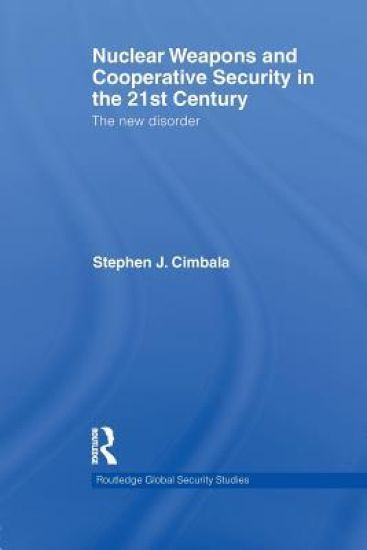
The New Nuclear Disorder

The New Nuclear Disorder

Stephen J. Cimbala

Routledge
2018
nidottu
In the twenty-first century, the United States confronts an international system of great complexity and shifting security challenges. Among these challenges are those posed by nuclear weapons. Instead of becoming obsolete or being marginalized by the end of the Cold War and the demise of the Soviet Union, nuclear weapons have become more important to present and future international stability and peace but the relationship is paradoxical. On one hand, the spread of nuclear weapons to additional states with unsettled grievances or hegemonic ambitions threatens to destabilize local balances of power and set off regional arms races. In addition, the possible acquisition by terrorists of nuclear weapons or fissile materials creates a threat that may be ’beyond deterrence’ according to hitherto accepted concepts. On the other hand, nuclear weapons in the hands of other states can contribute to stable deterrence and help to prevent nuclear proliferation to international miscreants. Certain cases loom large in the short run that highlight this book’s relevance, including the possible acquisition and deployment of nuclear weapons by Iran and the continuing tensions created by North Korea’s nuclear arsenal. The Obama ’pivot’ of national security and defense emphasis to Asia reflects not only the growing economic importance of that region, but also the growing number of security dilemmas in a region that is already awash in nuclear forces. The management of nuclear crises and even the possible need to terminate nuclear wars before they expand beyond a single region are among the possible challenges facing future U.S. and allied policy makers and military leaders.
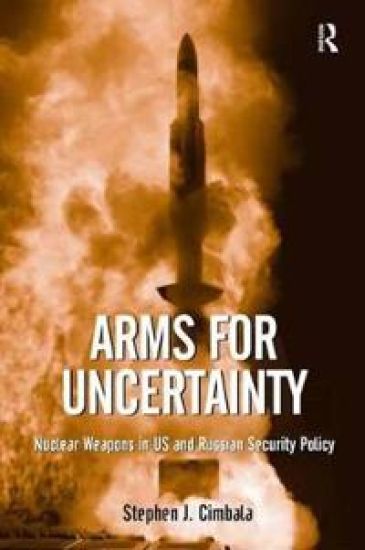
Arms for Uncertainty

Arms for Uncertainty

Stephen J. Cimbala

Routledge
2016
nidottu
Nuclear weapons are here to stay. They have survived into the twenty-first century as instruments of influence for the US, Russia, and other major military powers. But, unlike the Cold War era, future nuclear forces will be developed and deployed within a digital-driven world of enhanced conventional weapons. As such, established nuclear powers will have smaller numbers of nuclear weapons for the purpose of deterrence working in parallel with smarter conventional weapons and elite military personnel. The challenge is to agree proportional reductions in nuclear inventories or abstinence requiring an effective nonproliferation regime to contain aspiring or threshold nuclear weapons states. This is the most comprehensive view of nuclear weapons policy and strategy currently available. The author’s division of the nuclear issue into the three ages is a never seen before analytical construct. With President Obama reelected, the reduction and even elimination of nuclear weapons will now rise to the top of the agenda once more. Moreover, given the likelihood of reductions in US defense spending, the subject of the triad, which is covered in Chapter One, will no doubt be an important subject of debate, as will the issue of missile defense, covered in Chapter 10. This book provides an excellent analysis of the spread of nuclear weapons in Asia and the Middle East and the potential dangers of a North Korean or Iranian breakout, subjects that dominate current policy debates.
The US, NATO and Military Burden-Sharing

The US, NATO and Military Burden-Sharing

Stephen J. Cimbala; Peter Forster

Routledge
2015
nidottu
This study establishes that the political, economic and military-technological changes that transform the international system also alter the way in which a state views its and others' responsibilities and burdens for responding to international crises. It assesses the distribution of the costs of raising and supporting arms of service, the risks of deploying them overseas and using them in combat or peace operations, and the extent to which members have a responsibility for maintaining international order in the context of three instances of multinational military intervention: the Multinational Force deployment in Lebanon in 1982-83; the first Persian Gulf War in 1990-91; and the UN and NATO intervention in Bosnia-Herzegovina.
The New Nuclear Disorder

The New Nuclear Disorder

Stephen J. Cimbala

Routledge
2015
sidottu
In the twenty-first century, the United States confronts an international system of great complexity and shifting security challenges. Among these challenges are those posed by nuclear weapons. Instead of becoming obsolete or being marginalized by the end of the Cold War and the demise of the Soviet Union, nuclear weapons have become more important to present and future international stability and peace but the relationship is paradoxical. On one hand, the spread of nuclear weapons to additional states with unsettled grievances or hegemonic ambitions threatens to destabilize local balances of power and set off regional arms races. In addition, the possible acquisition by terrorists of nuclear weapons or fissile materials creates a threat that may be ’beyond deterrence’ according to hitherto accepted concepts. On the other hand, nuclear weapons in the hands of other states can contribute to stable deterrence and help to prevent nuclear proliferation to international miscreants. Certain cases loom large in the short run that highlight this book’s relevance, including the possible acquisition and deployment of nuclear weapons by Iran and the continuing tensions created by North Korea’s nuclear arsenal. The Obama ’pivot’ of national security and defense emphasis to Asia reflects not only the growing economic importance of that region, but also the growing number of security dilemmas in a region that is already awash in nuclear forces. The management of nuclear crises and even the possible need to terminate nuclear wars before they expand beyond a single region are among the possible challenges facing future U.S. and allied policy makers and military leaders.
Arms for Uncertainty

Arms for Uncertainty

Stephen J. Cimbala

Routledge
2013
sidottu
Nuclear weapons are here to stay. They have survived into the twenty-first century as instruments of influence for the US, Russia, and other major military powers. But, unlike the Cold War era, future nuclear forces will be developed and deployed within a digital-driven world of enhanced conventional weapons. As such, established nuclear powers will have smaller numbers of nuclear weapons for the purpose of deterrence working in parallel with smarter conventional weapons and elite military personnel. The challenge is to agree proportional reductions in nuclear inventories or abstinence requiring an effective nonproliferation regime to contain aspiring or threshold nuclear weapons states. This is the most comprehensive view of nuclear weapons policy and strategy currently available. The author’s division of the nuclear issue into the three ages is a never seen before analytical construct. With President Obama reelected, the reduction and even elimination of nuclear weapons will now rise to the top of the agenda once more. Moreover, given the likelihood of reductions in US defense spending, the subject of the triad, which is covered in Chapter One, will no doubt be an important subject of debate, as will the issue of missile defense, covered in Chapter 10. This book provides an excellent analysis of the spread of nuclear weapons in Asia and the Middle East and the potential dangers of a North Korean or Iranian breakout, subjects that dominate current policy debates.
Nuclear Weapons and Cooperative Security in the 21st Century
This book looks at the prospects for international cooperation over nuclear weapons proliferation in the 21st century.Nuclear weapons served as stabilizing forces during the Cold War, or the First Nuclear Age, on account of their capability for destruction, the fear that this created among politicians and publics, and the domination of the nuclear world order by two superpowers: the United States and the Soviet Union. The end of the Cold War, the dissolution of the Soviet Union, and the potential for nuclear weapons acquisition among revisionist states, or even non-state actors including terrorists, creates the possibility of a 'wolves eat dogs' phenomenon in the present century. In the 21st century, three forces threaten to undo or weaken the long nuclear peace and fast-forward states into a new and more dangerous situation: the existence of large US and Russian nuclear weapons arsenals; the potential for new technologies, including missile defenses and long-range, precision conventional weapons, and a collapse or atrophy of the nuclear nonproliferation regime, and the opening of the door for nuclear weapons to spread among more than the currently acknowledged nuclear states.This book explains how these three 'weakening' forces interact with one another and with US and Russian policy-making in order to create an environment of large possibilities for cooperative security - but also of considerable danger. Instead, the choices made by military planners and policy-makers will create an early twenty-first century story privileging nuclear stability or chaos. The US and Russia can, and should, make incremental progress in arms control and nonproliferation. This book will be of much interest to students of nuclear proliferation and arms control, strategic studies, international security and IR in general.Stephen J. Cimbala is Distinguished Professor of Political Science at Pennsylvania State University. He is the author of numerous works in the fields of international security, defense studies, nuclear arms control and other topics. He has consulted for various US government agencies and defense contractors.
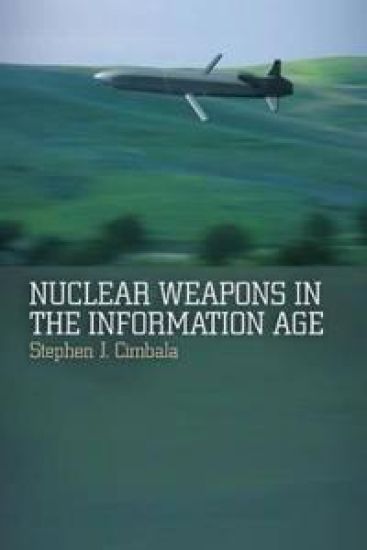
Nuclear Weapons in the Information Age

Nuclear Weapons in the Information Age

Stephen J. Cimbala

Continuum Publishing Corporation
2012
nidottu
This is a study of how the information age in modern warfare coexists with the persistent appeal of nuclear weapons and its impact on crisis management. In today's information age, the coexistence of nuclear weapons with advanced conventional weapons and information-based concepts of warfare is a military contradiction. Nuclear deterrence was initially predicated on geopolitical, military, and technical assumptions. These were based on Cold War politics, rational deterrence theory, the concept of mutual vulnerability, and the fact that information and technology diffusion were limited. Today, however, far from being obsolete, nuclear and other weapons of mass destruction have not only survived, but have become weapons for states that face security threats, including perceived threats of nuclear blackmail, or expectation of conflicts. This study focuses on this unplanned coexistence of two distinct arts of war, including the possibility that states like the U.S. may be held hostage to nuclear blackmail by "outlier" regimes or terrorists, such as North Korea. It shows that restricting nuclear proliferation should still be on the agenda of policymakers, and calls for a revitalized global non-proliferation regime. This unique survey by a leading expert will appeal to anyone interested in arms control, nuclear proliferation, and defense policy.
Nuclear Weapons in the Information Age

Nuclear Weapons in the Information Age

Stephen J. Cimbala

Continuum Publishing Corporation
2012
sidottu
This is a study of how the information age in modern warfare coexists with the persistent appeal of nuclear weapons and its impact on crisis management. In today's information age, the coexistence of nuclear weapons with advanced conventional weapons and information-based concepts of warfare is a military contradiction. Nuclear deterrence was initially predicated on geopolitical, military, and technical assumptions. These were based on Cold War politics, rational deterrence theory, the concept of mutual vulnerability, and the fact that information and technology diffusion were limited. Today, however, far from being obsolete, nuclear and other weapons of mass destruction have not only survived, but have become weapons for states that face security threats, including perceived threats of nuclear blackmail, or expectation of conflicts. This study focuses on this unplanned coexistence of two distinct arts of war, including the possibility that states like the U.S. may be held hostage to nuclear blackmail by "outlier" regimes or terrorists, such as North Korea. It shows that restricting nuclear proliferation should still be on the agenda of policymakers, and calls for a revitalized global non-proliferation regime. This unique survey by a leading expert will appeal to anyone interested in arms control, nuclear proliferation, and defense policy.
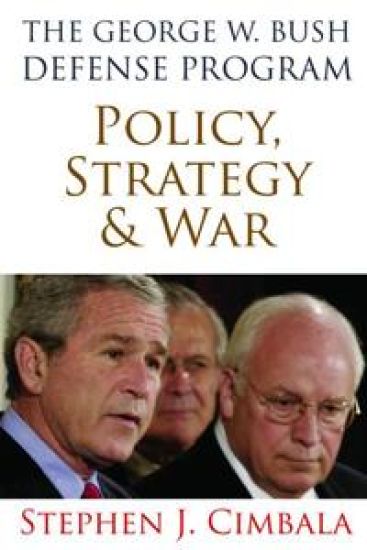
The George W. Bush Defense Program

The George W. Bush Defense Program

Stephen J. Cimbala

Potomac Books Inc
2010
nidottu
The events of 9/11 and the wars in Iraq and Afghanistan make an obvious case for expert study of the George W. Bush defense program. During the Bush administration, the rise and fall of governments, the fates of peoples, and the very definitions of “war” and “victory” were up for discussion. The United States, with its unprecedented global military power at the dawn of the twenty-first century, created new opportunities for using foreign policy and military strategy on behalf of national and allied interests. But this power was limited, and its use against unconventional or otherwise unorthodox enemies required careful calibration of its various instruments.In this insightful series of essays edited by Stephen Cimbala, eleven academic experts prominent in the defense and security think-tank communities assess Bush’s defense program. Many also have past or current experience in the U.S. government or the American armed forces. They examine Bush’s defense policy and strategy across several critical issues, including Iraq, Afghanistan, terrorism, nuclear arms control, and foreign military sales. In addition, special chapters are devoted to the leadership style of former defense secretary Donald Rumsfeld, to the idea of “victory” as it might apply to Bush’s defense decisions, and to the best exit strategy from Iraq for the United States. The lessons learned from the successes and failures in Bush’s defense policy, clearly presented in The George W. Bush Defense Program, can also be applied to the appraisal of all presidents.
The George W. Bush Defense Program

The George W. Bush Defense Program

Stephen J. Cimbala

Potomac Books Inc
2010
sidottu
The events of 9/11 and the wars in Iraq and Afghanistan make an obvious case for expert study of the George W. Bush defense program. During the Bush administration, the rise and fall of governments, the fates of peoples, and the very definitions of “war” and “victory” were up for discussion. The United States, with its unprecedented global military power at the dawn of the twenty-first century, created new opportunities for using foreign policy and military strategy on behalf of national and allied interests. But this power was limited, and its use against unconventional or otherwise unorthodox enemies required careful calibration of its various instruments.In this insightful series of essays edited by Stephen Cimbala, eleven academic experts prominent in the defense and security think-tank communities assess Bush’s defense program. Many also have past or current experience in the U.S. government or the American armed forces. They examine Bush’s defense policy and strategy across several critical issues, including Iraq, Afghanistan, terrorism, nuclear arms control, and foreign military sales. In addition, special chapters are devoted to the leadership style of former defense secretary Donald Rumsfeld, to the idea of “victory” as it might apply to Bush’s defense decisions, and to the best exit strategy from Iraq for the United States. The lessons learned from the successes and failures in Bush’s defense policy, clearly presented in The George W. Bush Defense Program, can also be applied to the appraisal of all presidents.
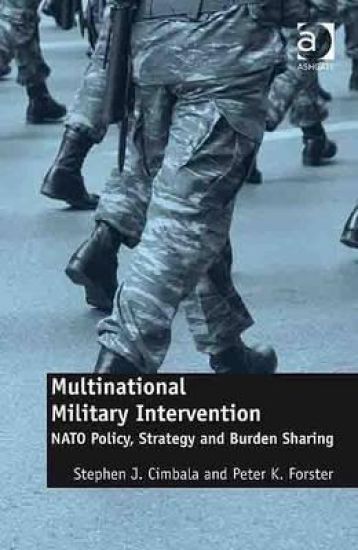
Multinational Military Intervention

Multinational Military Intervention

Stephen J. Cimbala; Peter K. Forster

Ashgate Publishing Limited
2010
sidottu
War, as Clausewitz reminds, is the most uncertain of human political and social activities. It also imposes burdens. In an alliance among states for the promotion of collective defense or security, such as the North Atlantic Treaty Organization (NATO), burdens have to be shared. This study looks at the experience of the United States and other member states of NATO in four situations of multinational military intervention - Lebanon, the Persian Gulf, the Balkans, and South Asia - and considers the implications of nuclear arms reductions and nonproliferation for the US and NATO. Each case study represents an important period in the distribution of power, interest, and values, amounting to more than a sequential consideration of incidents of military intervention and/or conflict prevention. These politico-military challenges include a major coalition war, a traditional peacekeeping operation, an exercise in peace enforcement, and a conflict that combines counter-insurgency and counter-terrorism with stability and security operations.