Kirjojen hintavertailu. Mukana 12 390 323 kirjaa ja 12 kauppaa.
Kirjailija
Stephen J. Leonard
Kirjat ja teokset yhdessä paikassa: 7 kirjaa, julkaisuja vuosilta 1991-2026, suosituimpien joukossa Poetry 101. Vertaile teosten hintoja ja tarkista saatavuus suomalaisista kirjakaupoista.
This is a collection of my poetry. I was born in England but migrated to Australia as a child with my family. For most of my life I have lived in Wollongong NSW. I have had the pleasure of teaching in Catholic primary and secondary schools. I retired at the end of 2019 but still work as a casual teacher. Most of my poems were written in the past 6 years. I would like to thank the many students who have encouraged me to write and publish, and 6 months ago I made a promise that I would publish before the end of 2026. This is the result. I would like to dedicate this book to the many family members and friends who have encouraged me to pursue this area of interest. Special mention to my loving and supportive wife, Ernestina.
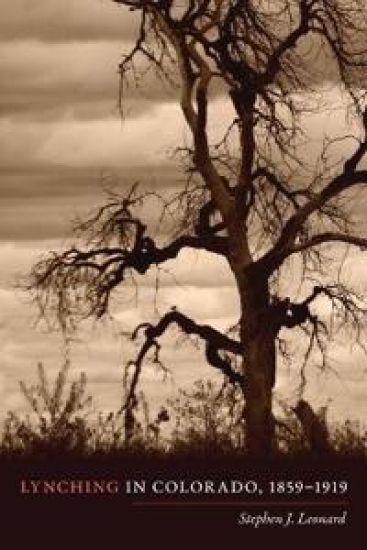
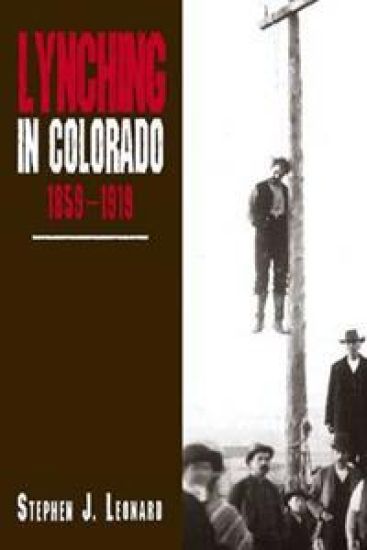
In this examination of more than 175 lynchings, Stephen J. Leonard illustrates the role economics, migration, race, and gender played in shaping justice and injustice in Colorado. One of the first comprehensive studies of the phenomenon in a Western state, the book has been an essential complement to studies of Southern lynchings, demonstrating that at times the land of purple mountain’s majesty was just as lynching-prone as the land of Dixie. Lynching in Colorado, 1859-1919 shows Westerners at their worst and their best as they struggled to define law and order.
A Short History of Denver covers more than 150 years of Denver’s rich history. The book recounts the takeover of Native American lands, the founding of small towns on the South Platte River at the base of the Rocky Mountains, and the creation of a city, which by 1890 was among the nation’s major western urban centers. Leonard and Noel tell the stories of powerful economic and political leaders such as John Evans, Horace Tabor, and David Moffat, and delve into the contributions of women, including Elizabeth Byers and Margaret (Molly) Brown. The book also recognizes the importance of the city’s ethnic communities, including African Americans, Asians, Latinos, and many others. A Short History of Denver portrays the city’s twentieth-century ups and downs, including the City Beautiful movement, political corruption, the rise of the Ku Klux Klan in the 1920s, and the Great Depression of the 1930s. Here readers will find the meat and potatoes of economic and political history and much more, including sports history, social history, and the history of metropolitan-wide efforts to preserve the past.
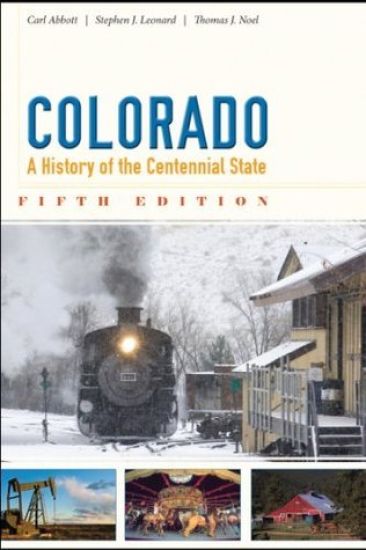
Since 1976, newcomers and natives alike have learned about the rich history of the magnificent place they call home from Colorado: A History of the Centennial State. In the fifth edition, coauthors Carl Abbott, Stephen J. Leonard, and Thomas J. Noel incorporate recent events, scholarship, and insights about the state in an accessible volume that general readers and students will enjoy. The new edition tells of conflicts, shifting alliances, and changing ways of life as Hispanic, European, and African American settlers flooded into a region that was already home to Native Americans. Providing a balanced treatment of the entire state’s history—from Grand Junction to Lamar and from Trinidad to Craig—the authors also reveal how Denver and its surrounding communities developed and gained influence. While continuing to elucidate the significant impact of mining, agriculture, manufacturing, and tourism on Colorado, the fifth edition broadens and focuses its coverage by consolidating material on Native Americans into one chapter and adding a new chapter on sports history. The authors also expand their discussion of the twentieth century with updated sections on the environment, economy, politics, and recent cultural conflicts. New illustrations, updated statistics, and an extensive bibliography including Internet resources enhance this edition.
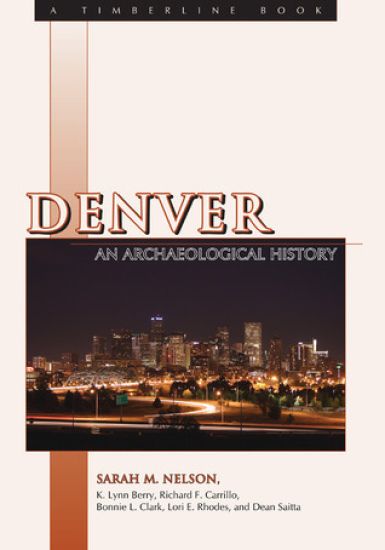
A vivid account of the prehistory and history of Denver as revealed in its archaeological record, Denver: An Archaeological History invites us to imagine Denver as it once was.Around 12,000 B.C., groups of leather-clad Paleoindians passed through the juncture of the South Platte River and Cherry Creek, following the herds of mammoth or buffalo they hunted. In the Archaic period, people rested under the shade of trees along the riverbanks, with baskets full of plums as they waited for rabbits to be caught in their nearby snares. In the early Ceramic period, a group of mourners adorned with yellow pigment on their faces and beads of eagle bone followed Cherry Creek to the South Platte to attend a funeral at a neighboring village. And in 1858, the area was populated by the crude cottonwood log shacks with dirt floors and glassless windows, the homes of Denver's first inhabitants. For at least 10,000 years, Greater Denver has been a collection of diverse lifeways and survival strategies, a crossroads of interaction, and a locus of cultural coexistence. Setting the scene with detailed descriptions of the natural environment, summaries of prehistoric sites, and archaeologists' knowledge of Denver's early inhabitants, Nelson and her colleagues bring the region's history to life. From prehistory to the present, this is a compelling narrative of Denver's cultural heritage that will fascinate lay readers, amateur archaeologists, professional archaeologists, and academic historians alike.
In this examination of more than 175 lynchings, Stephen J Leonard illustrates the role economics, migration, race, and gender played in the shaping of justice and injustice in Colorado. One of the first comprehensive studies of the phenomenon in a Western state, LYNCHING IN COLORADO provides an essential complement to recent studies of Southern lynchings, demonstrating that at times the land of purple mountain's majesty was just as lynching-prone as was the land of Dixie. Written for general fans of Western history as well as scholars of American culture, LYNCHING IN COLORADO shows Westerners at their worst and their best as they struggled to define law and order.
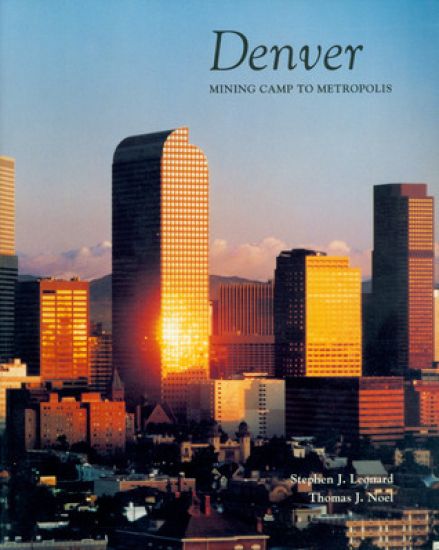
This lively best seller by leading Colorado historians Steve Leonard and Tom Noel is the most comprehensive survey ever written of the Mile High metropolis. Informative and richly illustrated, DENVER covers the developing region from the mountain towns of Boulder and Jefferson counties to the High Plains settlements of Adams and Arapahoe counties, with more than two-thirds of the book devoted to the burgeoning five-county region since 1900. In retelling the tale of conquest and city building, the authors explore the role of previously neglected peoples -- notably women, ethnic minorities, and the working class -- while weaving several key themes throughout the book: Denver's persistent reliance on natural resources, the important role of transportation to overcome the city's isolation, and the city's emphasis on privatisation rather than on the public, common good. DENVER: MINING CAMP TO METROPOLIS will fascinate and educated students and scholars, as well as all readers curious about the boom-and-bust metropolis of the Rockies.