Kirjojen hintavertailu. Mukana 12 595 353 kirjaa ja 12 kauppaa.
Kirjailija
Stephen J. Pearton
Kirjat ja teokset yhdessä paikassa: 6 kirjaa, julkaisuja vuosilta 1992-2020, suosituimpien joukossa Topics In Growth And Device Processing Of Iii-v Semiconductors. Vertaile teosten hintoja ja tarkista saatavuus suomalaisista kirjakaupoista.
Semiconductor spintronics is expected to lead to a new generation of transistors, lasers and integrated magnetic sensors that can be used to create ultra-low power, high speed memory, logic and photonic devices. Useful spintronic devices will need materials with practical magnetic ordering temperatures and current research points to gallium and aluminium nitride magnetic superconductors as having great potential. This book details current research into the properties of III-nitride semiconductors and their usefulness in novel devices such as spin-polarized light emitters, spin field effect transistors, integrated sensors and high temperature electronics. Written by three leading researchers in nitride semiconductors, the book provides an excellent introduction to gallium nitride technology and will be of interest to all reseachers and industrial practitioners wishing to keep up to date with developments that may lead to the next generation of transistors, lasers and integrated magnetic sensors.
Semiconductor spintronics is expected to lead to a new generation of transistors, lasers and integrated magnetic sensors that can be used to create ultra-low power, high speed memory, logic and photonic devices. Useful spintronic devices will need materials with practical magnetic ordering temperatures and current research points to gallium and aluminium nitride magnetic superconductors as having great potential. This book details current research into the properties of III-nitride semiconductors and their usefulness in novel devices such as spin-polarized light emitters, spin field effect transistors, integrated sensors and high temperature electronics. Written by three leading researchers in nitride semiconductors, the book provides an excellent introduction to gallium nitride technology and will be of interest to all reseachers and industrial practitioners wishing to keep up to date with developments that may lead to the next generation of transistors, lasers and integrated magnetic sensors.
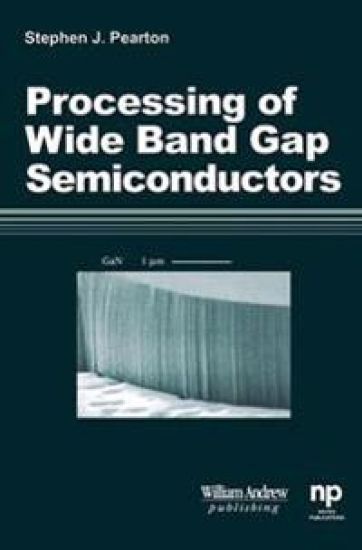
Wide bandgap semiconductors, made from such materials as GaN, SiC, diamond, and ZnSe, are undergoing a strong resurgence in recent years, principally because of their direct bandgaps, which give them a huge advantage over the indirect gap Sic As an example, more than 10 million blue LEDs using this technology are sold each month, and new, high brightness (15 lumens per watt), long-life white LEDs are under development with the potential to replace incandescent bulbs in many situations. This book provides readers with a broad overview of this rapidly expanding technology, bringing them up to speed on new discoveries and commercial applications. It provides specific technical applications of key processes such as laser diodes, LEDs, and very high temperature electronic controls on engines, focusing on doping, etching, oxidation passivation, growth techniques and more.
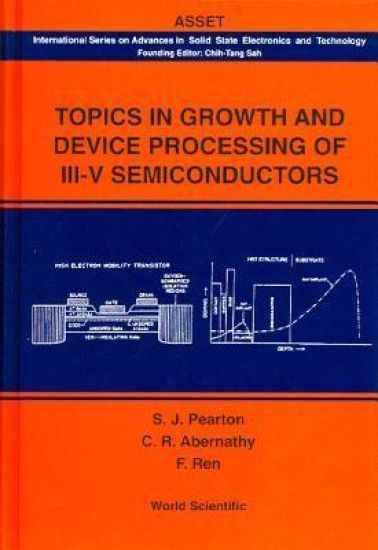
This book describes advanced epitaxial growth and self-aligned processing techniques for the fabrication of III-V semiconductor devices such as heterojunction bipolar transistors and high electron mobility transistors. It is the first book to describe the use of carbon-doping and low damage dry etching techniques that have proved indispensable in making reliable, high performance devices. These devices are used in many applications such as cordless telephones and high speed lightwave communication systems.
This monograph arose out of the recognition of the importance of hydrogen in modern semiconductor technology. Hydrogen is a component of most chemicals used in the fabrication of electronic and photonic devices, is easily incorporated into semiconductors and it is a model impurity for studying defect reactions in solids. While writing this volume we have received a good deal of encourage- ment from our colleagues at AT&T Bell Laboratories, State University of New York at Albany and Lehigh University, and from collaborators at other institutions: to them we extend our sincere appreciation. In particular we would like to thank W. e. Dautremont-Smith, J. Lopata, V. Swamina- than, K. Bergman, L. e. Synder, P. Deak, J. T. Borenstein, T. S. Shi, D. Tul- chinsky, G. G. DeLeo, W. B. Fowler, G. D. Watkins and D. Kozuch for their crucial contributions to this work. We would also like to thank Mrs. Danuta Sowinska-Kahn for her unfailing expertise in preparing much of the art- work. Finally we owe a great debt to Helmut Lotsch of Springer-Verlag for his initial suggestion to write this book and then his patient and professional guidance in seeing the project to fruition. Murray Hill, NJ S. J. Pearton Albany, NY J. w. Corbett Bethlehem, P A M. Stavola October 1991 v Contents 1. Introduction ...2. Hydrogen Incorporation in Crystalline Semiconductors 4 2. l Techniques for Hydrogen Incorporation in Semiconductors ...5 2. 1. 1 Hydrogen Plasma Exposure...5 2. l. 2 Hydrogen Implantation ...