Kirjojen hintavertailu. Mukana 12 292 073 kirjaa ja 12 kauppaa.
Kirjailija
Stephen J. Pyne
Kirjat ja teokset yhdessä paikassa: 44 kirjaa, julkaisuja vuosilta 1995-2026, suosituimpien joukossa Fire on Earth. Vertaile teosten hintoja ja tarkista saatavuus suomalaisista kirjakaupoista.
Earth is the only planet known to have fire. The reason is both simple and profound: fire exists because Earth is the only planet to possess life as we know it. Fire is an expression of life on Earth and an index of life’s history. Few processes are as integral, unique, or ancient. Fire on Earth puts fire in its rightful place as an integral part of the study of geology, biology, human history, physics, and global chemistry. Fire is ubiquitous in various forms throughout Earth, and belongs as part of formal inquiries about our world. In recent years fire literature has multiplied exponentially; dedicated journals exist and half a dozen international conferences are held annually. A host of formal sciences, or programs announcing interdisciplinary intentions, are willing to consider fire. Wildfire also appears routinely in media reporting. This full-colour text, containing over 250 illustrations of fire in all contexts, is designed to provide a synthesis of contemporary thinking; bringing together the most powerful concepts and disciplinary voices to examine, in an international setting, why planetary fire exists, how it works, and why it looks the way it does today. Students, lecturers, researchers and professionals interested in the physical, ecological and historical characteristics of fire will find this book, and accompanying web-based material, essential reading for undergraduate and postgraduate courses in all related disciplines, for general interest and for providing an interdisciplinary foundation for further study. A comprehensive approach to the history, behaviour and ecological effects of fire on earthTimely introduction to this important subject, with relevance for global climate change, biodiversity loss and the evolution of human culture.Provides a foundation for the interdisciplinary field of Fire ResearchAuthored by an international team of leading experts in the fieldAssociated website provides additional resources

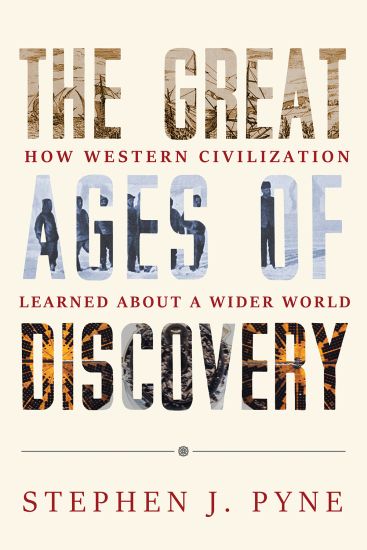
For more than 600 years, Western civilization has relied on exploration to learn about a wider world and universe. The Great Ages of Discovery details the different eras of Western exploration in terms of its locations, its intellectual contexts, the characteristic moral conflicts that underwrote encounters, and the grand gestures that distill an age into its essence. Historian and MacArthur Fellow Stephen J. Pyne identifies three great ages of discovery in his fascinating new book. The first age of discovery ranged from the early 15th to the early 18th century, sketched out the contours of the globe, aligned with the Renaissance, and had for its grandest expression the circumnavigation of the world ocean. The second age launched in the latter half of the 18th century, spanning into the early 20th century, carrying the Enlightenment along with it, pairing especially with settler societies, and had as its prize achievement the crossing of a continent. The third age began after World War II, and, pivoting from Antarctica, pushed into the deep oceans and interplanetary space. Its grand gesture is Voyager's passage across the solar system. Each age had in common a galvanic rivalry: Spain and Portugal in the first age, Britain and France - followed by others - in the second, and the USSR and USA in the third. With a deep and passionate knowledge of the history of Western exploration, Pyne takes us on a journey across hundreds of years of geographic trekking. The Great Ages of Discovery is an interpretive companion to what became Western civilization's quest narrative, with the triumphs and tragedies that grand journey brought, the legacies of which are still very much with us.
A climate defined by wet and dry seasons, a mostly mountainous terrain, a biota prone to disturbances, a human geography characterized by a diversity of peoples all of whom rely on burning in one form or another: Mexico has ideal circumstances for fire, and those fires provide a unique perspective on its complex history. Narrating Mexico’s evolution of fire through five eras, historian Stephen J. Pyne describes the pre-human, pre-Hispanic, colonial, industrializing (1880–1980), and contemporary (1980–2015) fire biography of this diverse and dynamic country. Creatively deploying the Aztec New Fire Ceremony and the “five suns” that it birthed, Pyne addresses the question, “Why does fire appear in Mexico the way it does?” Five Suns tells the saga through a pyric prism. Mexico has become one of the top ten “firepowers” in the world today through its fire suppression capabilities, fire research, and industrial combustion, but also by those continuing customary practices that have become increasingly significant to a world that suffers too much combustion and too little fire.Five Suns completes a North American fire-history trilogy written by Pyne over the past 40 years, complementing his histories of Canada and the United States.
Lige så længe, der har været liv på jorden har der været ild. Igennem to millioner år har mennesket forfinet sin evne til at manipulere ild og derved fuldkommen forandret verden – og mennesket selv. Mad tilberedt over ild gav os store hjerner og små maver og placerede os i toppen af fødekæden. Mennesket brugte ilden til at præparere jorden, som en del af en økologisk cyklus. Men da vi begyndte at afbrænde fossile brændsler ødelagde mennesket sit forhold til ilden. Klimaforandringerne og de mange skovbrande viser med al tydelighed, hvordan ilden nu kontrollerer os. Ildens tidsalder er historien om, hvordan vi med ilden som energikilde forandrede planeten, og hvordan vi på bæredygtig vis kan genindtage rollen som planetens fakkelbærere.Stephen J. Pyne er professor emeritus ved Arizona State University med speciale i miljøhistorie og navnlig ildens historie. Pyne er forfatter til mere end 40 bøger og med Ildens tidsalder udkommer han for første gang på dansk. Anmeldelser"En balanceret historisk og økologisk fortælling om ild. En kort, men stærkt virkningsfuld bog." Science "Verden brænder og ingen forstår og skriver bedre om det end Stephen J. Pyne." David Wallace-Wells, forfatter til Den ubeboelige klode "En overbevisende udlægning af, hvordan menneskeheden er trådt ind i en ny tidsalder, ildens." Nature
Its monumental rocks, etched by glaciers during the last Ice Age, have made Yosemite National Park a crown jewel of the national park system and a world-celebrated destination. Yet, more and more, fire rather than ice is shaping this storied landscape. In the last decade, fire has blasted into public attention. California’s blazes have captured national and global media interest with their drama and urgency. Expand the realm of fire to include the burning of fossil fuels, and the fire story also subsumes climate change. Renowned fire historian Stephen J. Pyne argues that the relationship between fire and humans has become a defining feature of our epoch, and he reveals how Yosemite offers a cameo of how we have replaced an ice age with a fire age: the Pyrocene. Organized around a backcountry trek to a 50-year experiment in restoring fire, Pyrocene Park describes the 150-year history of fire suppression and management that has led us, in part, to where the park is today. But there is more. Yosemite’s fire story is America’s, and the Earth’s, as it shifts from an ice-informed world to a fire-informed one. Pyrocene Park distills that epic story into a sharp miniature. Flush with people, ideas, fires, and controversy, Pyrocene Park is a compelling and accessible window into the American fire scene and the future it promises.
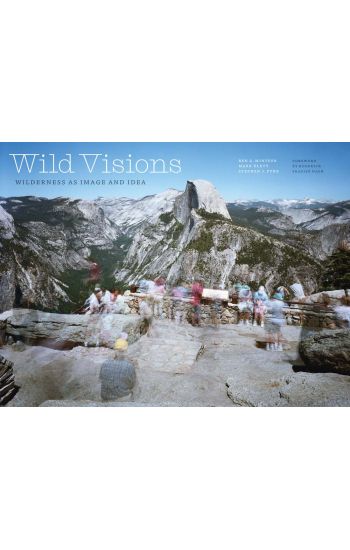
A stunning combination of landscape photography and thematic essays exploring how the concept of wilderness has evolved over time Our ideas of wilderness have evolved dramatically over the past one hundred and fifty years, from a view of wild country as an inviolable “place apart” to one that exists only within the matrix of human activity. This shift in understanding has provoked complicated questions about the importance of the wild in American environmentalism, as well as new aesthetic expectations as we reframe the wilderness as (to some degree) a human creation. Wild Visions is distinctive in its union of landscape photography and environmental thought, a merging of short, thematic essays with a striking visual narrative. Often, the wild is viewed in binary terms: either revered as sacred and ecologically pure or dismissed as spoiled by human activities. This book portrays wilderness instead as an evolving gamut of understandings, a collage of views and ideas that is still in process.
Pyroseeni kertoo, mitä tapahtui, kun tulta käyttävä ihminen kohtasi tulelle erittäin alttiin maapallon.Oletko ajatellut, että maapallo on ainoa tunnettu planeetta, jolla esiintyy tulta? Tuli on nimittäin elävän maailman tuote. Liekit alkoivat roihuta, kun elämä nousi merestä maalle. Parinmiljoonan viime vuoden mittaan ihminen oppi käyttämään tulta ja muutti sekä itsensä että muun elämän maapallolla. Tulella kypsentäminen antoi ihmiselle lyhyemmän ruoansulatuksen ja suuremmat aivot.Niiden avulla ihminen käytti tulta muovatakseen maiseman ja luonnon itselleen suotuisaksi, Ihminen käytti niiden avulla tulta suoraan maanviljelyssä, ja myöhemmin epäsuoraan erilaisissa polttamisen teknologioissa, jotka laajensivat tulen käytön esimerkiksi liikenteeseen. Tulokset tekivät ihmisestä maapallon domoinoivan lajin ja johtivat muun muassa ilmastonmuutokseen.Syntyi pyroseeni, vaikuttavuudessaan ja kattavuudessaan jääkauteen rinnastuva tulikausi.Pyroseeni on radikaali uusi näkemys ihmisen ja tulen yhteisestä evoluutiosta. Se kertoo myös, mihin meidän on ryhdyttävä ennen kuin on liian myöhäistä.Stephen J. Pyne on Arizona State Universityn emeritusprofessori ja maineikas tulen ja luonnon vuorovaikutuksen tutkija.
A provocative rethinking of how humans and fire have evolved together over time—and our responsibility to reorient this relationship before it's too late.?The Pyrocene tells the story of what happened when a fire-wielding species, humanity, met an especially fire-receptive time in Earth's history. Since terrestrial life first appeared, flames have flourished. Over the past two million years, however, one genus gained the ability to manipulate fire, swiftly remaking both itself and eventually the world. We developed small guts and big heads by cooking food; we climbed the food chain by cooking landscapes; and now we have become a geologic force by cooking the planet. Some fire uses have been direct: fire applied to convert living landscapes into hunting grounds, forage fields, farms, and pastures. Others have been indirect, through pyrotechnologies that expanded humanity's reach beyond flame's grasp. Still, preindustrial and Indigenous societies largely operated within broad ecological constraints that determined how, and when, living landscapes could be burned. These ancient relationships between humans and fire broke down when people began to burn fossil biomass—lithic landscapes—and humanity's firepower became unbounded. Fire-catalyzed climate change globalized the impacts into a new geologic epoch. The Pleistocene yielded to the Pyrocene. Around fires, across millennia, we have told stories that explained the world and negotiated our place within it. The Pyrocene continues that tradition, describing how we have remade the Earth and how we might recover our responsibilities as keepers of the planetary flame.
For more than 600 years, Western civilization has relied on exploration to learn about a wider world and universe. The Great Ages of Discovery details the different eras of Western exploration in terms of its locations, its intellectual contexts, the characteristic moral conflicts that underwrote encounters, and the grand gestures that distill an age into its essence. Historian and MacArthur Fellow Stephen J. Pyne identifies three great ages of discovery in his fascinating new book. The first age of discovery ranged from the early 15th to the early 18th century, sketched out the contours of the globe, aligned with the Renaissance, and had for its grandest expression the circumnavigation of the world ocean. The second age launched in the latter half of the 18th century, spanning into the early 20th century, carrying the Enlightenment along with it, pairing especially with settler societies, and had as its prize achievement the crossing of a continent. The third age began after World War II, and, pivoting from Antarctica, pushed into the deep oceans and interplanetary space. Its grand gesture is Voyager's passage across the solar system. Each age had in common a galvanic rivalry: Spain and Portugal in the first age, Britain and France-followed by others-in the second, and the USSR and USA in the third. With a deep and passionate knowledge of the history of Western exploration, Pyne takes us on a journey across hundreds of years of geographic trekking. The Great Ages of Discovery is an interpretive companion to what became Western civilization's quest narrative, with the triumphs and tragedies that grand journey brought, the legacies of which are still very much with us.
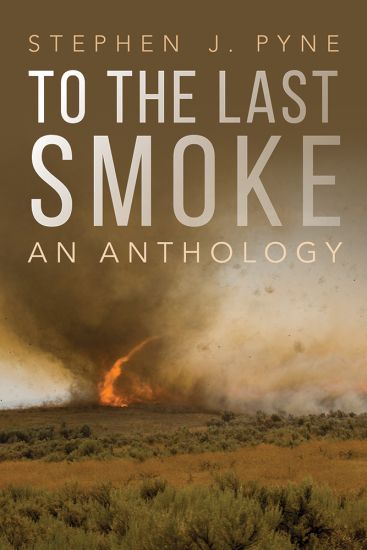
From boreal Alaska to subtropical Florida, from the chaparral of California to the pitch pine of New Jersey, America boasts nearly a billion burnable acres. In nine previous volumes, Stephen J. Pyne has explored the fascinating variety of flame region by region. In To the Last Smoke: An Anthology he selects a sampling of the best from each.To the Last Smoke offers a unique and sweeping view of the nation's fire scene by distilling observations on Florida, California, the Northern Rockies, the Great Plains, the Southwest, the Interior West, the Northeast, Alaska, the oak woodlands, and the Pacific Northwest into a single, readable volume. The anthology functions as a color-commentary companion to the play-by-play narrative offered in Pyne's Between Two Fires: A Fire History of Contemporary America. The series is Pyne's way of 'keeping with it to the end,' encompassing the directive from his rookie season to stay with every fire 'to the last smoke.'
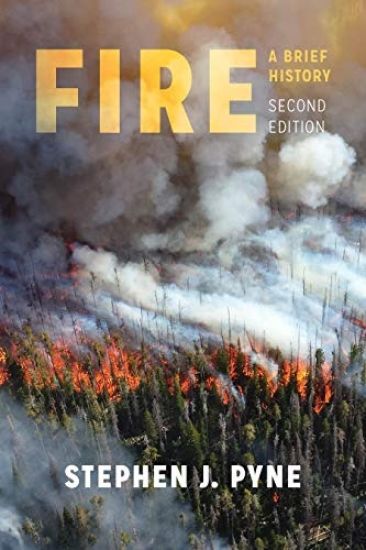
Over vast expanses of time, fire and humanity have interacted to expand the domain of each, transforming the earth and what it means to be human. In this concise yet wide-ranging book, Stephen J. Pyne—named by Science magazine as "the world's leading authority on the history of fire"—explores the surprising dynamics of fire before humans, fire and human origins, aboriginal economies of hunting and foraging, agricultural and pastoral uses of fire, fire ceremonies, fire as an idea and a technology, and industrial fire.In this revised and expanded edition, Pyne looks to the future of fire as a constant, defining presence on Earth. A new chapter explores the importance of fire in the twenty-first century, with special attention to its role in the Anthropocene, or what he posits might equally be called the Pyrocene.
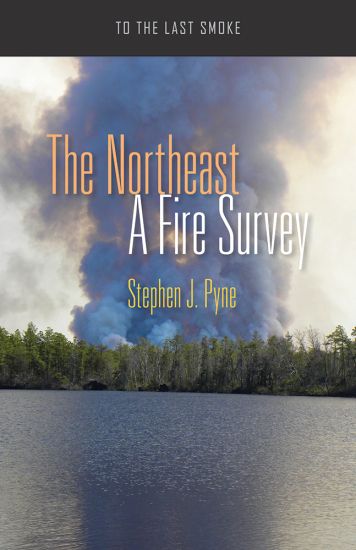
Repeatedly, if paradoxically, the Northeast has led national developments in fire. Its intellectuals argued for model preserves in the Adirondacks and at Yellowstone, oversaw the first mapping of the American fire scene for the 1880 census, staffed the 1896 National Academy of Sciences forest commission that laid down guidelines for the national forests, and spearheaded legislation that allowed those reserves to expand by purchase. It trained the leaders who staffed those protected areas and produced most of America's first environmentalists.The Northeast has its roster of great fires, beginning with dark days in the late 18th century, followed by a chronicle of conflagrations continuing as late as 1903 and 1908, with a shocking after-tremor in 1947. It hosted the nation's first forestry schools. It organized the first interstate (and international) fire compact. And it was the Northeast that pioneered the transition to the true Big Burn—industrial combustion—as America went from burning living landscapes to burning lithic ones.In this new book in the To the Last Smoke series, renowned fire expert Stephen J. Pyne narrates this history and explains how fire is returning to a place not usually thought of in America's fire scene. He examines what changes in climate and land use mean for wildfire, what fire ecology means for cultural landscapes, and what experiments are underway to reintroduce fire to habitats that need it. The region's great fires have gone; its influence on the national scene has not.The Northeast: A Fire Survey samples the historic and contemporary significance of the region and explains how it fits into a national cartography and narrative of fire.Included in this volume:How the region shaped America's understanding and policy toward fireHow fire fits into the region today and what that means for the country overallWhat changes in climate, land use, and institutions may mean for northeastern fire, both wild and tame
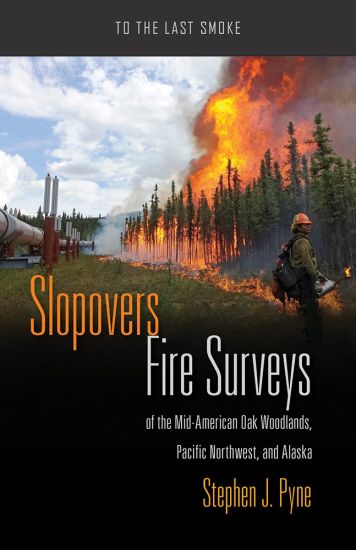
America is not simply a federation of states but a confederation of regions. Some have always held national attention, some just for a time. Slopovers examines three regions that once dominated the national narrative and may now be returning to prominence.The Mid-American oak woodlands were the scene of vigorous settlement in the late eighteenth and early nineteenth centuries and thus the scene of changing fire practices. The debate over the origin of the prairies—by climate or fire—foreshadowed the more recent debate about fire in oak and hickory hardwoods. In both cases, today's thinking points to the critical role of fire.The Pacific Northwest was the great pivot between laissez-faire logging and state-sponsored conservation and the fires that would accompany each. Then fire faded as an environmental issue. But it has returned over the past decade like an avenging angel, forcing the region to again consider the defining dialectic between axe and flame.And Alaska—Alaska is different, as everyone says. It came late to wildland fire protection, then managed an extraordinary transfiguration into the most successful American region to restore something like the historic fire regime. But Alaska is also a petrostate, and climate change may be making it the vanguard of what the Anthropocene will mean for American fire overall.Slopovers collates surveys of these three regions into the national narrative. With a unique mixture of journalism, history, and literary imagination, renowned fire expert Stephen J. Pyne shows how culture and nature, fire from nature and fire from people, interact to shape our world with three case studies in public policy and the challenging questions they pose about the future we will share with fire.
There are two basic rules for writing nonfiction, says historian and award-winning author Stephen J. Pyne. Rule 1: You can't make stuff up. Rule 2: You can't leave out known stuff that affects our understanding. Follow these rules, and you are writing nonfiction. Writing for different audiences and genres will require further guidelines. But all readers expect that style and story (or more broadly, theme) will complement one another. Style and Story is for those who wish to craft nonfiction texts that do more than simply relay facts and arguments. Pyne explains how writers can employ literary tools and strategies to have art and craft add value to their theme. With advice gleaned from nearly a dozen years of teaching writing to graduate students, Pyne offers pragmatic guidance on how to create powerful nonfiction, whether for an academic or popular audience. Each chapter offers samples that span genres, showcasing the best kinds of nonfiction writing. Pyne analyzes these examples that will help writers understand how they can improve their nonfiction through their choice of voice, words, structure, metaphors, and narrative. Pyne builds on his previous guide, Voice and Vision, expanding the range of topics to include openings and closings, humor and satire, historical writing, setting scenes, writing about technical matters and deep details, long and short narration, reading for craft, and thoughts on writing generally. He also includes in this volume a set of exercises to practice writing techniques. Style and Story will be treasured by anyone, whether novice or expert, who seeks guidance to improve the power of their nonfiction writing.