
Kirjailija
Stephen J Vicchio
Kirjat ja teokset yhdessä paikassa: 38 kirjaa, julkaisuja vuosilta 2001-2025, suosituimpien joukossa James Madison's Religion. Vertaile teosten hintoja ja tarkista saatavuus suomalaisista kirjakaupoista.
Mukana myös kirjoitusasut: Stephen J. Vicchio
38 kirjaa
Kirjojen julkaisuhaarukka 2001-2025.
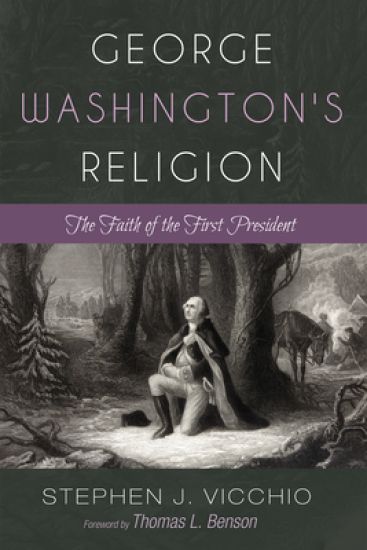
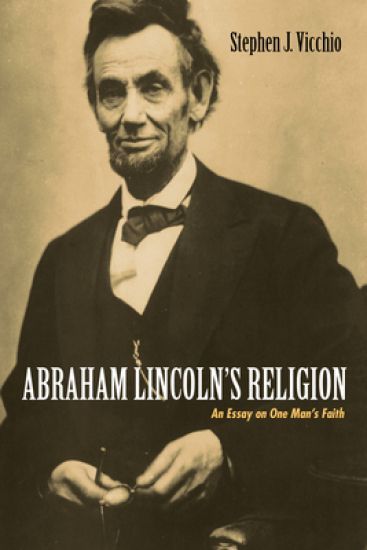
This work is a summary and analysis of Abraham Lincoln's religion. This study begins with a description of the earliest relations Mr. Lincoln had with religion, his parents' dedication to a sect known as the ""Separate Baptists."" By late adolescence, Lincoln began to reject his parents' faith, and he appears to have been a religious skeptic until his marriage to Mary Todd. After his marriage, he attended Protestant services with his wife and family, but there was little evidence that he was deeply religious in that time. Lincoln knew the Scriptures quite well, but it was not until the death of his two sons, Eddie in 1850 and Willie in 1862, that as the sixteenth president put it, ""He became more intensely concerned with God's Plan for human kind."" ""Steve Vicchio has given us a new and unique analysis of Abraham Lincoln's religious beliefs and practices, how they affected his life and presidency, and through him the entire nation. Especially in our contemporary world, these are important and too-often neglected questions that Steve brings forcefully to life."" --John Bolton, Former U.S. Ambassador to the United Nations (2005-2006) ""One of the paradoxes of Lincoln's career is that while his rhetoric is widely acknowledged as saturated in the Bible, he rejected all specific denominations and had strong skeptical tendencies. Stephen Vicchio takes a fresh approach to this paradox by undertaking a painstaking analysis of Lincoln's speeches, reading them with the eyes of a trained theologian. As a result he provides us with a fine account of Lincoln's religion."" --Christopher Kelly, Department of Political Science, Boston College Stephen J. Vicchio was Professor of Philosophy at the College of Notre Dame in Baltimore before retirement. He is the author or editor of two dozen books, including The Image of the Biblical Job, Biblical Figures in the Islamic Faith, and Jefferson's Religion, all published by Wipf & Stock.
This work is a summary and analysis of Abraham Lincoln's religion. This study begins with a description of the earliest relations Mr. Lincoln had with religion, his parents' dedication to a sect known as the ""Separate Baptists."" By late adolescence, Lincoln began to reject his parents' faith, and he appears to have been a religious skeptic until his marriage to Mary Todd. After his marriage, he attended Protestant services with his wife and family, but there was little evidence that he was deeply religious in that time. Lincoln knew the Scriptures quite well, but it was not until the death of his two sons, Eddie in 1850 and Willie in 1862, that as the sixteenth president put it, ""He became more intensely concerned with God's Plan for human kind."" ""Steve Vicchio has given us a new and unique analysis of Abraham Lincoln's religious beliefs and practices, how they affected his life and presidency, and through him the entire nation. Especially in our contemporary world, these are important and too-often neglected questions that Steve brings forcefully to life."" --John Bolton, Former U.S. Ambassador to the United Nations (2005-2006) ""One of the paradoxes of Lincoln's career is that while his rhetoric is widely acknowledged as saturated in the Bible, he rejected all specific denominations and had strong skeptical tendencies. Stephen Vicchio takes a fresh approach to this paradox by undertaking a painstaking analysis of Lincoln's speeches, reading them with the eyes of a trained theologian. As a result he provides us with a fine account of Lincoln's religion."" --Christopher Kelly, Department of Political Science, Boston College Stephen J. Vicchio was Professor of Philosophy at the College of Notre Dame in Baltimore before retirement. He is the author or editor of two dozen books, including The Image of the Biblical Job, Biblical Figures in the Islamic Faith, and Jefferson's Religion, all published by Wipf & Stock.
In The Legend of the Anti-Christ, Stephen Vicchio offers a concise and historical approach to the history of the idea of the Anti-Christ, including precursors to the idea, the development of the idea in the New Testament, as well as the understandings of the legend of the Anti-Christ in the history of Christianity. Vicchio also raises the question of why there is so much emphasis in the modern world about the idea.
Biblical Figures in the Islamic Faith
Stephen J Vicchio; Bruce C Birch
Wipf Stock Publishers
2008
sidottu
""Vicchio believes that by understanding how much Muslim tradition overlaps with the biblical traditions of Judaism and Christianity, we might begin to expose a wedge of common ground on which understanding and respect might begin to be built. ""Vicchio begins with a brief introduction sketching some fundamentals of Muslim history and culture, and clearing away some common misconceptions. His main goal, however, is to give us a detailed look at the treatment of biblical figures in the literature of Islam. The broad range of his research and presentation is startling. He begins with the Qur'an but continues on to the collected writing of the roughly two hundred years after Mohammed (Hadith, Sunnah, Akhbar) that came to be regarded as authoritative in the various traditions that developed in early Islam. He then traces the interest in these biblical figures on into modern treatments of the role of these figures in Muslim scholarship and how these figures are understood and used in the traditions of Islam yet today. ""The result of Vicchio's scholarship and presentation will be a revelation to most Christian and Jewish readers. It has become somewhat commonplace to refer to Judaism, Christianity, and Islam as the three Abrahamic faiths. This shows a beginning awareness of the beginnings of each of these three great religions, birthed in the Middle East, in a common ancestor, Abraham (Ibrahim). Abraham's faithfulness and his closeness to God make his a revered figure in each of these three great faiths, and for each Abraham is a beginning of the story of the particular relationship between God and the people of each of these religions."" --from the Foreword Stephen J. Vicchio is Professor of Philosophy at College of Notre Dame of Maryland. He is also the author of The Voice from the Whirlwind and the Image of the Biblical Job (3 vols.).
Biblical Figures in the Islamic Faith
Stephen J Vicchio; Bruce C Birch
Wipf Stock Publishers
2008
pokkari
Thomas Jefferson's views have led many to conclude that he was an atheist, as recently as in the work of Christopher Hitchens. But the third President has also been labeled a deist, a Unitarian, and a Christian. Philosopher and theologian Stephen Vicchio takes on the challenge of analyzing Jefferson's writings in detail to see if any of these appellations is fitting. The author finds that Jefferson's two volumes on the New Testament Gospels (A Syllabus of an Estimate of the Merit of the Doctrines of Jesus and The Life and Morals of Jesus of Nazareth) reveal a great deal concerning the theological perspective of this famous American statesman. ""Stephen J. Vicchio, a much honored teacher, prolific essayist, and most recently the author of a monumental study of the reception of the biblical Job in the West, turns in Jefferson's Religion to another iconic figure whose presence has haunted the Republic since its inception. With admirable economy and clarity, Vicchio addresses the often debated issue of the precise nature of our third President's thoughts on religion and their role in his political philosophy. The book considers five basic questions emerging from this issue, drawing judiciously from Jefferson's vast correspondence, his reading, and the body of his public utterances. Professor Vicchio then presents a summary balance between what Jefferson did and did not believe, giving the reader a timely guide to how his moral and religious convictions inform his enduring legacy."" --Richard Macksey, Humanities Center, Johns Hopkins University Stephen J. Vicchio is Professor of Philosophy at College of Notre Dame of Maryland. He is also the author of The Voice from the Whirlwind and The Image of the Biblical Job: A History (3 vols.).
Thomas Jefferson's views have led many to conclude that he was an atheist, as recently as in the work of Christopher Hitchens. But the third President has also been labeled a deist, a Unitarian, and a Christian. Philosopher and theologian Stephen Vicchio takes on the challenge of analyzing Jefferson's writings in detail to see if any of these appellations is fitting. The author finds that Jefferson's two volumes on the New Testament Gospels (A Syllabus of an Estimate of the Merit of the Doctrines of Jesus and The Life and Morals of Jesus of Nazareth) reveal a great deal concerning the theological perspective of this famous American statesman. ""Stephen J. Vicchio, a much honored teacher, prolific essayist, and most recently the author of a monumental study of the reception of the biblical Job in the West, turns in Jefferson's Religion to another iconic figure whose presence has haunted the Republic since its inception. With admirable economy and clarity, Vicchio addresses the often debated issue of the precise nature of our third President's thoughts on religion and their role in his political philosophy. The book considers five basic questions emerging from this issue, drawing judiciously from Jefferson's vast correspondence, his reading, and the body of his public utterances. Professor Vicchio then presents a summary balance between what Jefferson did and did not believe, giving the reader a timely guide to how his moral and religious convictions inform his enduring legacy."" --Richard Macksey, Humanities Center, Johns Hopkins University Stephen J. Vicchio is Professor of Philosophy at College of Notre Dame of Maryland. He is also the author of The Voice from the Whirlwind and The Image of the Biblical Job: A History (3 vols.).
In this second of a three-volume work, Vicchio addresses the Job traditions as interpreted in the period of the Middle Ages--in Jewish, Christian and Islamic sources. From the Vulgate to the Qur'an, from Maimonides to Calvin, Vicchio addresses the complexities of the ""reception history"" of intriguing work. Two appendices address how Job has been treated throughout history in literature, in drama, and in medicine. Volume 1: Job in the Ancient World Volume 2: Job in the Medieval World Volume 3: Job in the Modern World Stephen J. Vicchio is Professor of Philosophy at College of Notre Dame of Maryland. He is also the author of The Voice from the Whirlwind.
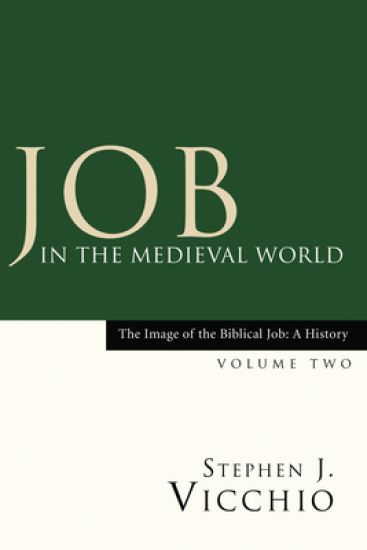
In this second of a three-volume work, Vicchio addresses the Job traditions as interpreted in the period of the Middle Ages--in Jewish, Christian and Islamic sources. From the Vulgate to the Qur'an, from Maimonides to Calvin, Vicchio addresses the complexities of the ""reception history"" of intriguing work. Two appendices address how Job has been treated throughout history in literature, in drama, and in medicine. Volume 1: Job in the Ancient World Volume 2: Job in the Medieval World Volume 3: Job in the Modern World Stephen J. Vicchio is Professor of Philosophy at College of Notre Dame of Maryland. He is also the author of The Voice from the Whirlwind.
In this third of a three-volume work, the author traces the interpretation of the book of Job from the Authorized Version of the Bible (King James Version) through philosophers of the seventeenth, eighteenth, and nineteenth centuries. He also covers Job in the literature of the Romantics, Blake, Melville, and Dostoyevsky. As appendices, he treats Job in Geography (Uz), Job and Zoology (Behemoth and Leviathan), and Job in Film. Volume 1: Job in the Ancient World Volume 2: Job in the Medieval World Volume 3: Job in the Modern World Stephen J. Vicchio is Professor of Philosophy at College of Notre Dame of Maryland. He is also the author of The Voice from the Whirlwind.
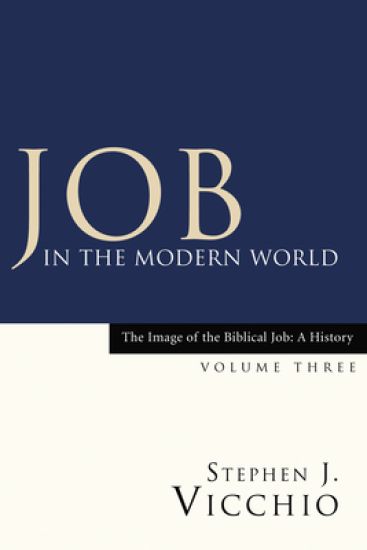
In this third of a three-volume work, the author traces the interpretation of the book of Job from the Authorized Version of the Bible (King James Version) through philosophers of the seventeenth, eighteenth, and nineteenth centuries. He also covers Job in the literature of the Romantics, Blake, Melville, and Dostoyevsky. As appendices, he treats Job in Geography (Uz), Job and Zoology (Behemoth and Leviathan), and Job in Film. Volume 1: Job in the Ancient World Volume 2: Job in the Medieval World Volume 3: Job in the Modern World Stephen J. Vicchio is Professor of Philosophy at College of Notre Dame of Maryland. He is also the author of The Voice from the Whirlwind.
In this first of a three-volume work, Vicchio addresses the most ancient Hebrew text of Job in all its complexity, with particular emphasis on the problems of evil and suffering. But he follows this with the ""reception history"" of the text--how it was translated, read, and interpreted in other ancient works: the Septuagint, apocryphal books, early Christian writings, Talmud, Midrash, Dead Sea Scrolls, and Peshitta. Two appendices detail how Job has been treated in art and architecture and in Western music. Volume 1: Job in the Ancient World Volume 2: Job in the Medieval World Volume 3: Job in the Modern World Stephen J. Vicchio is Professor of Philosophy at College of Notre Dame of Maryland. He is also the author of The Voice from the Whirlwind.
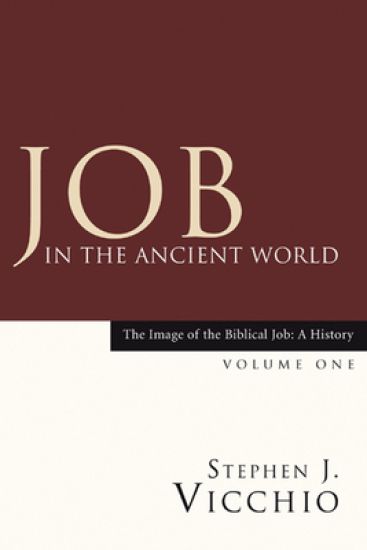
In this first of a three-volume work, Vicchio addresses the most ancient Hebrew text of Job in all its complexity, with particular emphasis on the problems of evil and suffering. But he follows this with the ""reception history"" of the text--how it was translated, read, and interpreted in other ancient works: the Septuagint, apocryphal books, early Christian writings, Talmud, Midrash, Dead Sea Scrolls, and Peshitta. Two appendices detail how Job has been treated in art and architecture and in Western music. Volume 1: Job in the Ancient World Volume 2: Job in the Medieval World Volume 3: Job in the Modern World Stephen J. Vicchio is Professor of Philosophy at College of Notre Dame of Maryland. He is also the author of The Voice from the Whirlwind.
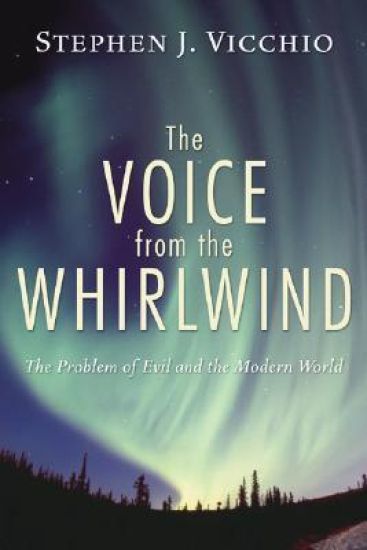
""This book is concerned with why the world is not such an easy place in which to live. Human beings, as its apparently most sentient creatures, live daily in a morally ambiguous environment. Most of us experience contentment, happiness, and even profound joy. But these experiences are all too often interspersed or punctuated with unwarranted suffering, excruciating pain, and sometimes irrational violence. Although human life may at times seem like heaven on earth, it can also be more like scenes from a Kafka novel or a scarred canvas of Edvard Munch. This book is primarily concerned with the problem of reconciling these two kinds of experiences with belief in a God who is said to be all good, all knowing, and all powerful. ""Throughout the book, I continually refer back to three criteria for what I think would count as a good answer to the problem. . . . First, any serious philosophical or theological response to the problem of evil must be true to the tradition from which the problem originates. The problem of evil is a peculiarly Judeo-Christian problem because of the attributes of God in that tradition. . . . Second, any answer to the problem of evil should be one that is logically consistent. . . . Third, a good answer to the problem of evil must take the individual sufferer seriously. --from the Introduction