Kirjojen hintavertailu. Mukana 12 595 353 kirjaa ja 12 kauppaa.
Kirjailija
Stephen J. Wayne
Kirjat ja teokset yhdessä paikassa: 17 kirjaa, julkaisuja vuosilta 1992-2026, suosituimpien joukossa Presidential Leadership. Vertaile teosten hintoja ja tarkista saatavuus suomalaisista kirjakaupoista.
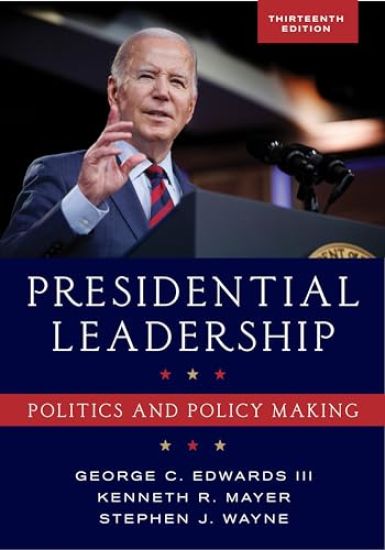
Long established as a leading introduction to the American presidency, Presidential Leadership, Thirteenth Edition, provides students with a comprehensive survey that addresses the capacity of chief executives to fulfill their tasks, exercise their powers, and utilize their organizational structures to affect the output of government. The authors examine all aspects of the presidency in rich detail, including the president’s powers, presidential history, and the institution of the presidency.
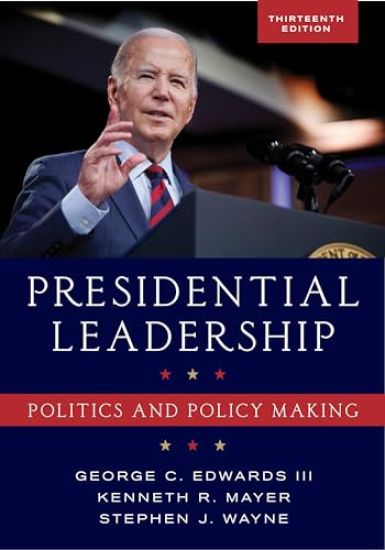
Long established as a leading introduction to the American presidency, Presidential Leadership, Thirteenth Edition, provides students with a comprehensive survey that addresses the capacity of chief executives to fulfill their tasks, exercise their powers, and utilize their organizational structures to affect the output of government. The authors examine all aspects of the presidency in rich detail, including the president’s powers, presidential history, and the institution of the presidency.
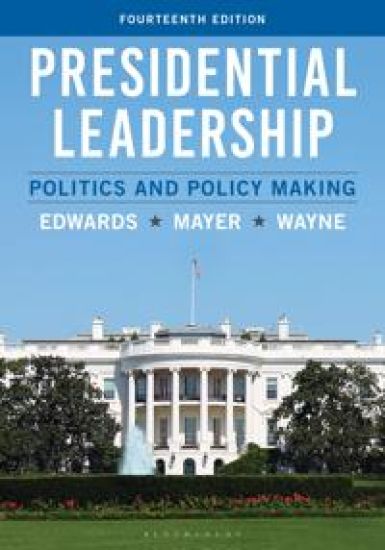
Long established as a leading introduction to the American presidency, Presidential Leadership, Fourteenth Edition, provides students with a comprehensive survey that addresses the capacity of chief executives to fulfill their tasks, exercise their powers, and utilize their organizational structures to affect the output of government. The authors examine all aspects of the presidency in rich detail, including presidential powers, presidential history, and the institution of the presidency. Edwards, Mayer, and Wayne analyze the institution and the presidents who hold the office through the key lens of leadership. The authors explain the leadership dilemma presidents face and their institutional, political, and personal capacities to meet it. Two models of presidential leadership help students understand the institution: one in which a strong president dominates the political environment as a director of change, and another in which the president performs a more limited role as facilitator of change. Each model provides an insightful perspectives to better understand leadership in the modern presidency and to evaluate the performance of individual presidents. With no simple formula for presidential success, and no partisan perspective driving the analysis, the authors help us understand that presidents and citizens alike must understand the nature of presidential leadership in a pluralistic system in which separate institutions share powers. The fourteenth edition is fully updated through the start of Trump’s second administration, with recent policy developments, the 2024 elections, changes to the media environment, and the latest data. In addition, material from the prior edition’s chapter on domestic and economic policy has been incorporated into other chapters for an overall briefer text.
Long established as a leading introduction to the American presidency, Presidential Leadership, Fourteenth Edition, provides students with a comprehensive survey that addresses the capacity of chief executives to fulfill their tasks, exercise their powers, and utilize their organizational structures to affect the output of government. The authors examine all aspects of the presidency in rich detail, including presidential powers, presidential history, and the institution of the presidency. Edwards, Mayer, and Wayne analyze the institution and the presidents who hold the office through the key lens of leadership. The authors explain the leadership dilemma presidents face and their institutional, political, and personal capacities to meet it. Two models of presidential leadership help students understand the institution: one in which a strong president dominates the political environment as a director of change, and another in which the president performs a more limited role as facilitator of change. Each model provides an insightful perspectives to better understand leadership in the modern presidency and to evaluate the performance of individual presidents. With no simple formula for presidential success, and no partisan perspective driving the analysis, the authors help us understand that presidents and citizens alike must understand the nature of presidential leadership in a pluralistic system in which separate institutions share powers. The fourteenth edition is fully updated through the start of Trump’s second administration, with recent policy developments, the 2024 elections, changes to the media environment, and the latest data. In addition, material from the prior edition’s chapter on domestic and economic policy has been incorporated into other chapters for an overall briefer text.
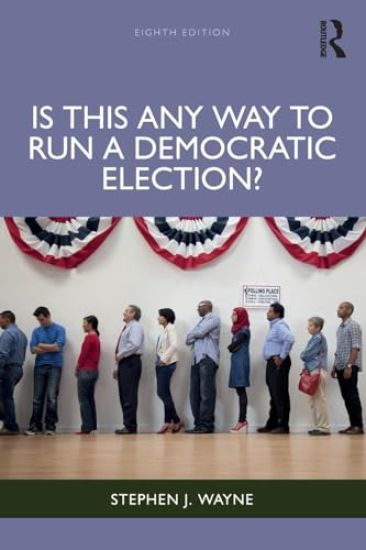
This new edition examines the theory, structure, and the contemporary electoral process, analyzing how the system has evolved, how it is working today, and its challenges for the future. Stephen J. Wayne illuminates the democratic strength and weaknesses of the American electoral system and asks, "Is this any way to run a democratic election?"Updated to included insight into the contentious 2020 and 2022 elections, the chapters look ahead to the 2024 election with detailed analysis of the impact of money, media, partisanship, misinformation, changes in electoral laws, public trust and election denial on the electorate, political parties, and the candidates for office. Each chapter opens with “Did You Know” teasers and concludes with a critical thinking section that includes Discussion Questions, Topics for Debate, Research Oriented Exercises, and Internet Resources and Selected Readings--providing a wide array of tools with which to explore alternatives to the status quo. Comparative examples from other countries are included to provide readers with a broader perspective on the issues democracies face around the world.Tackling the big questions about American politics, this is an accessible read for undergraduate students in courses on Electoral Politics, Political Parties, Campaigns and Voting and American Democracy.
This new edition examines the theory, structure, and the contemporary electoral process, analyzing how the system has evolved, how it is working today, and its challenges for the future. Stephen J. Wayne illuminates the democratic strength and weaknesses of the American electoral system and asks, "Is this any way to run a democratic election?"Updated to included insight into the contentious 2020 and 2022 elections, the chapters look ahead to the 2024 election with detailed analysis of the impact of money, media, partisanship, misinformation, changes in electoral laws, public trust and election denial on the electorate, political parties, and the candidates for office. Each chapter opens with “Did You Know” teasers and concludes with a critical thinking section that includes Discussion Questions, Topics for Debate, Research Oriented Exercises, and Internet Resources and Selected Readings--providing a wide array of tools with which to explore alternatives to the status quo. Comparative examples from other countries are included to provide readers with a broader perspective on the issues democracies face around the world.Tackling the big questions about American politics, this is an accessible read for undergraduate students in courses on Electoral Politics, Political Parties, Campaigns and Voting and American Democracy.
Voters need information about the qualities of candidates, the policies they propose and the partisan labels they wear. Does our Electoral College encourage the most qualified candidates to run? Does it force them to talk candidly with the American people? Will election results accurately reflect the needs of the population as a whole? Wayne's The Road to the White House 2024 answers these questions in a straightforward, jargon-free manner. Equipping you with a background on presidential elections and a guide to the 2024 election, it illustrates the strengths and weaknesses of our electoral democracy. It also offers insights on changes that have revolutionized contemporary electoral politics: the flood of money, the ideological polarization of American parties, the digital revolution, foreign interference, voter eligibility, the integrity of the voting process itself and much more.
Voters need information about the qualities of candidates, the policies they propose and the partisan labels they wear. Does our Electoral College encourage the most qualified candidates to run? Does it force them to talk candidly with the American people? Will election results accurately reflect the needs of the population as a whole? Wayne's The Road to the White House 2024 answers these questions in a straightforward, jargon-free manner. Equipping you with a background on presidential elections and a guide to the 2024 election, it illustrates the strengths and weaknesses of our electoral democracy. It also offers insights on changes that have revolutionized contemporary electoral politics: the flood of money, the ideological polarization of American parties, the digital revolution, foreign interference, voter eligibility, the integrity of the voting process itself and much more.
This book is among the first serious looks at the first 18 months of the Biden administration and its many challenges. From a tortured transition to a raging pandemic, a fragile economy, and the threat of international insecurity, Joe Biden entered office at a time even more fraught than that he faced as a new vice president. Confronting a nation divided sharply along political, cultural, and sociodemographic lines, Biden and Kamala Harris promised to unify the country, change the tone in Washington, mend fences with allies, and “build back better” a world assailed from stem to stern. This book assesses the successes and shortfalls of the Biden administration’s first 18 months in office, putting all in perspective of the current state of democracy in America. Intended to introduce students of American government to the person (Biden) and the institution (presidency) within a particular system (separation of powers), this book will appeal broadly to citizens, media, and general interest readers in the United States and abroad.
This book is among the first serious looks at the first 18 months of the Biden administration and its many challenges. From a tortured transition to a raging pandemic, a fragile economy, and the threat of international insecurity, Joe Biden entered office at a time even more fraught than that he faced as a new vice president. Confronting a nation divided sharply along political, cultural, and sociodemographic lines, Biden and Kamala Harris promised to unify the country, change the tone in Washington, mend fences with allies, and “build back better” a world assailed from stem to stern. This book assesses the successes and shortfalls of the Biden administration’s first 18 months in office, putting all in perspective of the current state of democracy in America. Intended to introduce students of American government to the person (Biden) and the institution (presidency) within a particular system (separation of powers), this book will appeal broadly to citizens, media, and general interest readers in the United States and abroad.
The 2016 and 2018 elections are over, but looking ahead to the 2019–2020 election cycle, the debate over the fairness and accuracy of our electoral process has never been more contentious. Hacking, fake news, a "rigged system," voter ID challenges, Super PACs, and an Electoral College defying the popular vote count all lead to a common question and concern: Is this any way to run a democratic election? New to the Seventh Edition: New data and timely illustrations from the 2016 and 2018 elections, looking ahead to 2020 election. The growing importance of social media (Facebook, YouTube, Twitter) and its impact, good and bad, on recent campaigns. Foreign interference in the 2016 and 2018 national elections. The integrity of campaign communications—hacking, rumoring, instantaneous news, and the effect of fact-checking. Money: the role of Super PACs and billionaire donors; the impact of campaign spending on the candidates and on election outcomes. New connections between the "Did you know that" chapter introductions to the exercises at the end. More online references in the suggested readings.
The 2012 election is over, but the debate over the fairness and accuracy of our electoral system continues. The courts are dealing with the alleged discriminatory impact of voter ID requirements on minority voters; privacy and vote manipulation are concerns as political campaigns utilize new technology to target voters; the news media are contending with harsh public criticism of their elections coverage; the campaign finance floodgates were opened with vast resources spent on negative advertising; and the Electoral College continues to undermine a national, democratic electoral system—Is this any way to run a democratic election? This fully updated fifth edition answers that important question by looking at both recent events and recent scholarship focused on the democratic electoral process, including new data and timely illustrations from the 2012 elections.
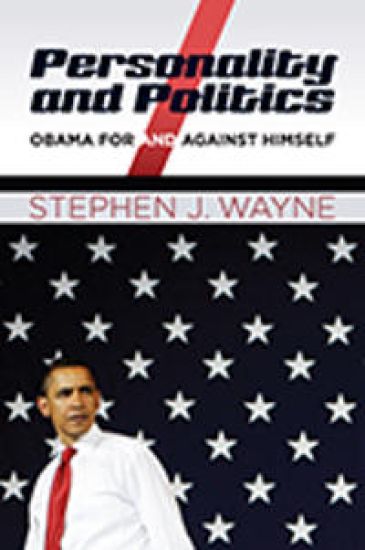
Renowned presidential scholar Stephen Wayne takes a close look at the interplay of personal character, partisan politics, and public opinion on presidential decision-making. In this systematic character study, Wayne considers how President Obama’s policy beliefs and operating style fueled his meteoric success as a candidate, but have had a decidedly mixed impact on his governance as president. Arguing that character matters, Wayne shows that Obama’s personal dimensions both contribute and detract from his policy achievements and political goals.Taking into account the environment in which he took office up through the "shellacking" of the Democrats in November 2010, the book looks at how Obama has dealt with the troubled economy and a polarized political climate. Wayne sets his study within the larger literature on presidential character and explores the broader questions surrounding presidential leadership in a democratic society: Do presidents lead or follow public opinion? To what extent do leadership skills make a difference? What kind of policy and political impact can presidents have in the twenty-first century?
This book places the 2000 presidential and congressional elections into the larger and future context of American politics. The essays in Part I focus on the role of "wedge" issues in 2000, including the economy, foreign policy, and race. Part II examines the electorate in terms of gender, religion, and age. Part III analyzes Republican and Democratic strategies in 2000. Part IV focuses in on specific factors affecting the 2000 races including the Clinton factor.
This book places the 2000 presidential and congressional elections into the larger and future context of American politics. The essays in Part I focus on the role of "wedge" issues in 2000, including the economy, foreign policy, and race. Part II examines the electorate in terms of gender, religion, and age. Part III analyzes Republican and Democratic strategies in 2000. Part IV focuses in on specific factors affecting the 2000 races including the Clinton factor.
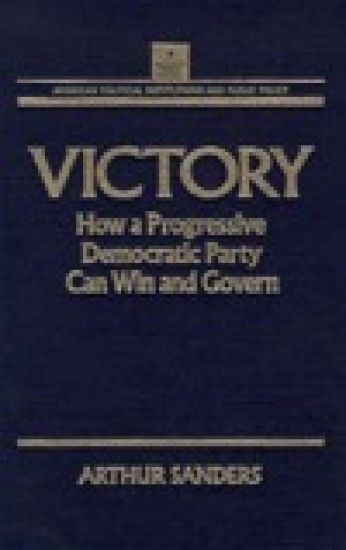
The author of this book is an unabashed liberal democrat. He argues that there are a number of myths and half-truths about American politics that need to be properly understood if progressives and the Democratic party are to win the presidency and govern effectively. The book has three parts: myths and realities of public opinion; current party coalitions - their strengths and weaknesses; a programme for progressive Democrats.
The author of this book is an unabashed liberal democrat. He argues that there are a number of myths and half-truths about American politics that need to be properly understood if progressives and the Democratic party are to win the presidency and govern effectively. The book has three parts: myths and realities of public opinion; current party coalitions - their strengths and weaknesses; a programme for progressive Democrats.