Kirjojen hintavertailu. Mukana 12 471 165 kirjaa ja 12 kauppaa.

Kirjailija

Stephen J. Whitfield

Kirjat ja teokset yhdessä paikassa: 7 kirjaa, julkaisuja vuosilta 1991-2027, suosituimpien joukossa A Death in the Delta. Vertaile teosten hintoja ja tarkista saatavuus suomalaisista kirjakaupoista.

7 kirjaa

Kirjojen julkaisuhaarukka 1991-2027.

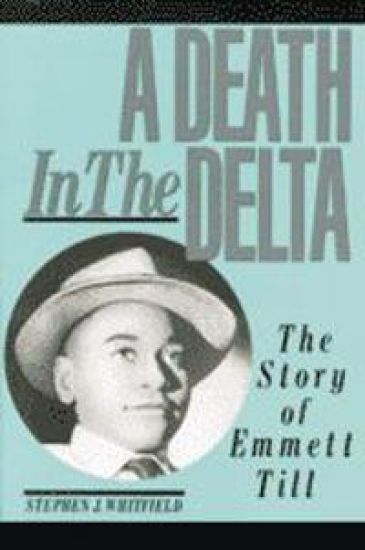
A Death in the Delta

A Death in the Delta

Stephen J. Whitfield

Johns Hopkins University Press
1991
pokkari
In August 1955, the mutilated body of Emmett Till-a fourteen-year-old black Chicago youth-was pulled from Mississippi's Tallahatchie River. Abducted, severely beaten, and finally thrown into the river with a weight fastened around his neck with barbed wire, Till, an eighth-grader, was killed for allegedly whistling at a white woman. The nation was horrified by Till's death. When the all-white, all-male jury hastily acquitted the two white defendants, the outcry reached a frenzied pitch-spurring a fury that would prove critical in the mobilization of black resistance to white racism in the Deep South. In this sensitive inquiry, historian Stephen J. Whitfield probes Till's death; its ideological roots; the potent myths concerning race, sexuality, and violence; and the incident's enduring effects on American national life. As he recreates the trial, its participants, and the social structure of the Delta, Whitfield examines how white rural Mississippians actually tried "two of their own." Though they were acquitted, these same defendants were soon being ostracized by their own neighbors, and within four months of Till's death, Southern blacks were staging the historic Montgomery bus boycott-the first major battle in the coming war against racial injustice that would lead to the passage of civil rights legislation a decade later.

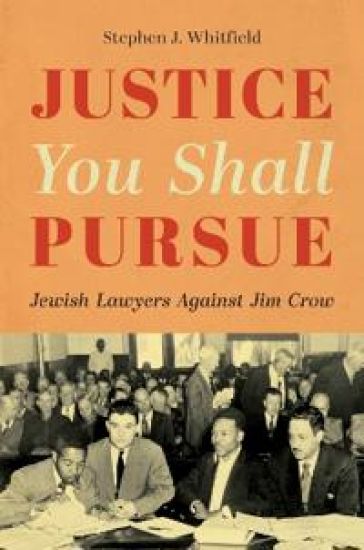
Justice You Shall Pursue

Justice You Shall Pursue

Stephen J. Whitfield

UNIVERSITY PRESS OF MISSISSIPPI
2027
pokkari
The civil rights movement transformed the American South in the 1960s, reshaping the region—and with it, the nation—into a more visibly democratic society. Yet the odds of dismantling legally enforced racial segregation were extraordinarily long. Among those who helped to shorten them were outside attorneys who came to the aid of activists on the ground. Northern lawyers freed protesters from jail, preserving their ability to continue the struggle, and carried civil rights cases to the highest levels of the federal judiciary. In so doing, these attorneys helped expand the constitutional meanings of "free expression," "freedom of assembly," "due process," and "equal protection of the laws." At the height of the freedom struggle, most of these northern lawyers were Jewish. Their prominence reflected the near absence of Black attorneys—who made up barely one percent of the American bar in the early 1960s—and the reluctance of white Southern lawyers to challenge segregation through constitutional appeals. Until a generation of Black lawyers could fully join the battle, Jewish attorneys, who saw an opportunity to turn their professional skills toward the pursuit of justice, formed the legal backbone of the movement. The activism of these lawyers has been understudied. Justice You Shall Pursue: Jewish Lawyers Against Jim Crow serves as a collective biography of the litigators who participated in the civil rights movement. The volume centers on the decade when landmark civil rights legislation was enacted, but its story stretches from the founding of the NAACP before the First World War to the political backlash that followed the Vietnam era. By that time, the regional fortresses of legalized segregation had collapsed, but the struggle for equality—and the lawyers who waged it—had already remade the nation.
Justice You Shall Pursue

Justice You Shall Pursue

Stephen J. Whitfield

UNIVERSITY PRESS OF MISSISSIPPI
2027
sidottu
The civil rights movement transformed the American South in the 1960s, reshaping the region—and with it, the nation—into a more visibly democratic society. Yet the odds of dismantling legally enforced racial segregation were extraordinarily long. Among those who helped to shorten them were outside attorneys who came to the aid of activists on the ground. Northern lawyers freed protesters from jail, preserving their ability to continue the struggle, and carried civil rights cases to the highest levels of the federal judiciary. In so doing, these attorneys helped expand the constitutional meanings of "free expression," "freedom of assembly," "due process," and "equal protection of the laws." At the height of the freedom struggle, most of these northern lawyers were Jewish. Their prominence reflected the near absence of Black attorneys—who made up barely one percent of the American bar in the early 1960s—and the reluctance of white Southern lawyers to challenge segregation through constitutional appeals. Until a generation of Black lawyers could fully join the battle, Jewish attorneys, who saw an opportunity to turn their professional skills toward the pursuit of justice, formed the legal backbone of the movement. The activism of these lawyers has been understudied. Justice You Shall Pursue: Jewish Lawyers Against Jim Crow serves as a collective biography of the litigators who participated in the civil rights movement. The volume centers on the decade when landmark civil rights legislation was enacted, but its story stretches from the founding of the NAACP before the First World War to the political backlash that followed the Vietnam era. By that time, the regional fortresses of legalized segregation had collapsed, but the struggle for equality—and the lawyers who waged it—had already remade the nation.
Learning on the Left – Political Profiles of Brandeis University

Learning on the Left – Political Profiles of Brandeis University

Stephen J. Whitfield

Brandeis University Press
2020
sidottu
Brandeis University is the United States’ only Jewish-sponsored nonsectarian university, and while only being established after World War II, it has risen to become one of the most respected universities in the nation. The faculty and alumni of the university have made exceptional contributions to myriad disciplines, but they have played a surprising formidable role in American politics. Stephen J. Whitfield makes the case for the pertinence of Brandeis University in understanding the vicissitudes of American liberalism since the mid-twentieth century. Founded to serve as a refuge for qualified professors and students haunted by academic antisemitism, Brandeis University attracted those who generally envisioned the republic as worthy of betterment. Whether as liberals or as radicals, figures associated with the university typically adopted a critical stance toward American society and sometimes acted upon their reformist or militant beliefs. This volume is not an institutional history, but instead shows how one university, over the course of seven decades, employed and taught remarkable men and women who belong in our accounts of the evolution of American politics, especially on the left. In vivid prose, Whitfield invites readers to appreciate a singular case of the linkage of political influence with the fate of a particular university in modern America.
In Search of American Jewish Culture

In Search of American Jewish Culture

Stephen J. Whitfield

Brandeis University Press
2001
nidottu
In drama and in musical comedy, in popular song and in symphonic music, in movies and in literature, Jews have contributed to American culture in the 20th century to a degree out of all proportion to their numbers. But does this vast creative output coalesce into something identifiable as an American Jewish culture? Stephen J. Whitfield answers this question with a resounding "yes!" Whitfield focuses on areas where the specifically Jewish contribution has been little explored. He surveys such fields as popular music, musical theater, and drama, focusing on key figures from Jerome Kern and the Gershwins to Stephen Sondheim and Jerome Robbins; Leonard Bernstein and Aaron Copland to Irving Berlin and Bob Dylan; Arthur Miller and Lillian Hellman to David Mamet and Wendy Wasserstein. At the same time, Whitfield tackles the complex issue of race and American Jewish culture, tracing the extensive interpenetrations of Jewish and African American music. He also offers a stunning examination of Jewish American representations of the Holocaust, focusing on stage and film adaptations of Anne Frank's Diary and on Steven Spielberg's Schindler's List. In a poignant, final chapter, Whitfield ponders the future of American Jewish culture after a century of assimilationist pressure and mainstream success. The distinctive culture that he has traced through the 20th century, Whitfield concludes, may finally become submerged and lost. Only a renewed emphasis on Judaism itself, he believes, offers the hope for American Jews to maintain the dual cultural identities that they have so long succeeded in nurturing.
American Space, Jewish Time

American Space, Jewish Time

Stephen J. Whitfield

M.E. Sharpe
1996
nidottu
"This is a delightful book, a small gem replete with insightful, provocative pieces about both American culture and Jewish life. I think that Stephen Whitfield is one of the most original essayists on these two topics. Few other scholars combine the density of his knowledge with the verve of his prose". -- Hasia R. Diner, New York University
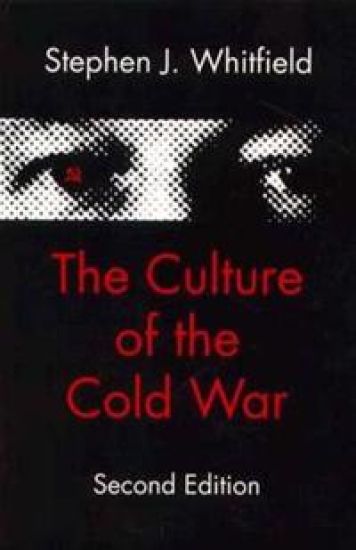
The Culture of the Cold War

The Culture of the Cold War

Stephen J. Whitfield

Johns Hopkins University Press
1996
pokkari
"Without the Cold War, what's the point of being an American?" As if in answer to this poignant question from John Updike's Rabbit at Rest, Stephen Whitfield examines the impact of the Cold War-and its dramatic ending-on American culture in an updated version of his highly acclaimed study. In a new epilogue to this second edition, he extends his analysis from the McCarthyism of the 1950s, including its effects on the American and European intelligensia, to the civil rights movement of the 1960s and beyond. Whitfield treats his subject matter with the eye of a historian, reminding the reader that the Cold War is now a thing of the past. His treatment underscores the importance of the Cold War to our national identity and forces the reader to ask, Where do we go from here? The question is especially crucial for the Cold War historian, Whitfield argues. His new epilogue is partly a guide for new historians to tackle the complexities of Cold War studies.