Kirjojen hintavertailu. Mukana 12 595 353 kirjaa ja 12 kauppaa.

Kirjailija

Stephen Joseph

Kirjat ja teokset yhdessä paikassa: 16 kirjaa, julkaisuja vuosilta 1997-2026, suosituimpien joukossa Controlling My Life?. Vertaile teosten hintoja ja tarkista saatavuus suomalaisista kirjakaupoista.

16 kirjaa

Kirjojen julkaisuhaarukka 1997-2026.

Post-Traumatic Stress and Trauma-Informed Practice

Post-Traumatic Stress and Trauma-Informed Practice

Stephen Regel; Stephen Joseph; Stephen Regel; Stephen Joseph

Oxford University Press
2026
nidottu
Post-Traumatic Stress and Trauma-Informed Practice: A Practical Guide, Third Edition offers a comprehensive and accessible overview of post-traumatic stress and other reactions that may develop following exposure to traumatic events such as life-threatening situations, violent crime, sexual assault, or witnessing death. Post-traumatic stress is characterized by persistent emotional distress and disruption to psychological well-being. This fully updated edition presents the latest research and practical insights in a clear user-friendly format. It is designed to inform and support a wide range of professions, from general practitioners, counsellors, psychologists, and other professionals-including paramedics, military personnel, police officers, social workers, and humanitarian aid workers-who encounter trauma in their work. It will also be of help to trauma survivors and their families wishing to understand more about the impact of psychological trauma and what may help. The guide begins with an overview of post-traumatic stress and related conditions, foundational knowledge on trauma responses, theoretical frameworks, assessment, treatment, and research, along with a brief history of the field. New chapters explore emerging concepts such as post-traumatic growth, highlighting how individuals can derive meaning from adversity and move beyond recovery. Updated discussions on traumatic loss and workplace trauma, reflecting the latest theoretical developments. Drawing on decades of clinical and research experience, authors Regel and Joseph provide practical tools for identifying signs of post-traumatic stress in contexts including bereavement, physical injury, and occupational trauma. Their evidence-based strategies informed by current research and best practice guidelines make this an essential resource for professionals.

?????????????

?????????????

?????? ??????; Stephen Joseph

Lider Publishing Ltd
2025
pokkari
О чем Общественное мнение и собственные комплексы зачастую мешают нам быть собой. Многие из нас настолько привыкают носить маски, что перестают понимать, где настоящая жизнь, а где навязанная обстоятельствами роль. Постепенно мы утрачиваем аутентичность - умение слышать себя и делать то, что приносит радость. Отдавая годы нелюбимой работе и общению не с теми людьми, мы сетуем, что наша жизнь не удалась. Желание быть собой обычно возвращается после жесткой встряски - например, смерти близкого человека или потери бизнеса. Но его можно вернуть и менее травмирующим путем. Каким именно, рассказывает мировой эксперт в области позитивной психологии Стивен Джозеф в книге Аутентичность Как быть собой. Он подкрепляет теорию примерами из своей обширной практики и предлагает простые упражнения, помогающие вернуть себе аутентичность и стать счастливым человеком. Об авторе Стивен Джозеф - в сферу научных интересов профессора Стивена Джозефа входят исследования в области человеческого счастья и благополучия. Он приобрел международную известность как ведущий эксперт в позитивной психологии, выступил редактором революционной книги Позитивная психология на практике Как помочь человеку стать здоровее и преуспеть в работе, учебе и повседневной жизни (Positive Psychology in Practice: Promoting human fl ourishing in work, health, education and everyday life). Стивен Джозеф учился в Лондонской школе экономики и политических наук, а затем в Королевском колледже Лондона, где получил докторскую степень за исследование в сфере психологических травм. Его предыдущая книга - Что нас не убивает. Новая психология посттравматического роста - переведена на многие языки мира. Джозеф - профессиональный коуч и психолог, применяющий в своей р&#107
?????????????

?????????????

?????? ??????; Stephen Joseph

Lider Publishing Ltd
2025
sidottu
О чем Общественное мнение и собственные комплексы зачастую мешают нам быть собой. Многие из нас настолько привыкают носить маски, что перестают понимать, где настоящая жизнь, а где навязанная обстоятельствами роль. Постепенно мы утрачиваем аутентичность - умение слышать себя и делать то, что приносит радость. Отдавая годы нелюбимой работе и общению не с теми людьми, мы сетуем, что наша жизнь не удалась. Желание быть собой обычно возвращается после жесткой встряски - например, смерти близкого человека или потери бизнеса. Но его можно вернуть и менее травмирующим путем. Каким именно, рассказывает мировой эксперт в области позитивной психологии Стивен Джозеф в книге Аутентичность Как быть собой. Он подкрепляет теорию примерами из своей обширной практики и предлагает простые упражнения, помогающие вернуть себе аутентичность и стать счастливым человеком. Об авторе Стивен Джозеф - в сферу научных интересов профессора Стивена Джозефа входят исследования в области человеческого счастья и благополучия. Он приобрел международную известность как ведущий эксперт в позитивной психологии, выступил редактором революционной книги Позитивная психология на практике Как помочь человеку стать здоровее и преуспеть в работе, учебе и повседневной жизни (Positive Psychology in Practice: Promoting human fl ourishing in work, health, education and everyday life). Стивен Джозеф учился в Лондонской школе экономики и политических наук, а затем в Королевском колледже Лондона, где получил докторскую степень за исследование в сфере психологических травм. Его предыдущая книга - Что нас не убивает. Новая психология посттравматического роста - переведена на многие языки мира. Джозеф - профессиональный коуч и психолог, применяющий в своей р&#107
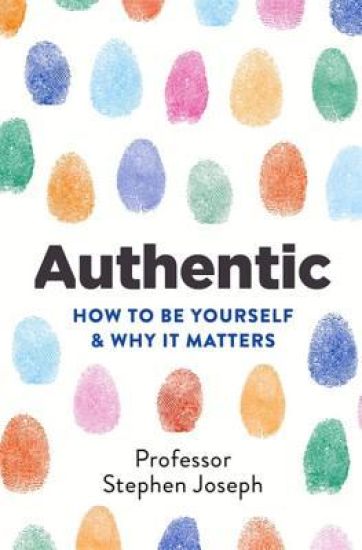
Authentic

Authentic

Stephen Joseph

Piatkus Books
2019
pokkari
The hunger for authenticity guides us throughout our lives. People strive for joined-up living, where on the one hand what they say and do reflects what they think and feel, and on the other what they think and feel reflects who they are.Stephen Joseph has pioneered developments in research into authenticity, drawing on the solid science of positive psychology to develop what has become one of the gold-standard tests for assessing authenticity. His and others' findings reveal that when people are in relationships in which they feel accepted, understood and valued, they drop their defences. They naturally begin to examine themselves psychologically, accommodate new information and live more authentically. What's more, the latest studies reveal that it is authenticity that leads to true happiness.In Authentic, Stephen Joseph presents his fresh and inspiring perspective on the psychology of authenticity alongside practical advice and exercises for the reader. Drawing on the wisdom of existential philosophers, the insights and research of psychologists, and case studies from his own and others' clinical experiences, he shows how authenticity is the foundation of human flourishing - as well as how the ideas relate to debates about the importance of happiness.
Kovaxe 1

Kovaxe 1

Stephen Joseph

Independently Published
2019
nidottu
The year is 2051. Traditional governments, which once presided over vast tracts of land, have given way to shining, technologically-advanced corporate city-states. Jared, orphaned since his early years, must navigate the nuances of his adult life: office work, friends, his strange family, and the constant magnetic pull of his devices, which offer him an escape from the lurking questions he buries in the back of his mind about where he came from and how, despite his oddly gifted life, he has always felt untethered and afraid. Can he shake the feelings of anxiety and inadequacy that seem to plague him as he enters the workforce? Or will he let the bright city, and its shining song of convenience and comfort, lull him into numbness?
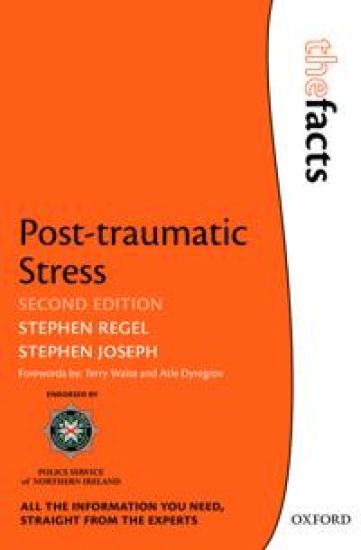
Post-traumatic Stress

Post-traumatic Stress

Stephen Regel; Stephen Joseph

Oxford University Press
2017
nidottu
Post-traumatic stress disorder (PTSD) is an anxiety disorder that can develop after exposure to one or more traumatic events. It is a severe and ongoing emotional reaction to extreme psychological trauma, such as threat to life, being a victim of crime or sexual assault, witnessing someone's death, or a threat to one's physical and/or psychological integrity. The new edition updated throughout, presents information in a helpful, practical, and accessible way that will be helpful to survivors, and their family and friends. The book begins with a description of PTSD and other related problems, often experienced by survivors, a short history of the developments in the field, information on common responses to trauma, theory, assessment, treatment and research findings. Further chapters reflect new theoretical thinking and directions in the field of trauma including post-traumatic growth following adversity. New chapters to this edition address the impact of traumatic bereavement, the needs of ex-hostages and their families, and suggestions for self-help after trauma. Post-traumatic stress: The Facts is essential reading for sufferers of post-traumatic stress, their families and friends, and will also be of interest to the general reader and a valuable resource for helping professionals, such as general practitioners, psychologists, social workers, mental health nurses, counsellors and those supporting victims of trauma in the voluntary sector. The book will also be helpful for those in the voluntary and statutory sector responsible for providing crisis support to those affected by major traumatic events in the community.
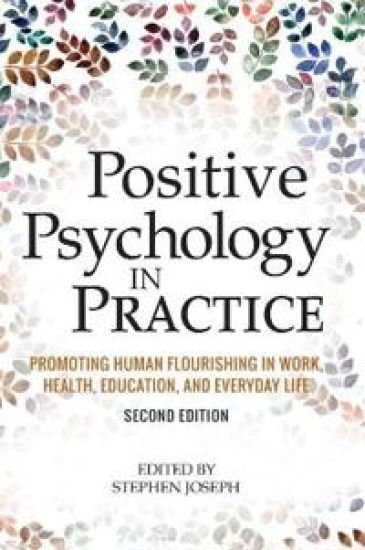
Positive Psychology in Practice

Positive Psychology in Practice

Stephen Joseph

John Wiley Sons Inc
2015
sidottu
The best minds in positive psychology survey the state of the field Positive Psychology in Practice, Second Edition moves beyond the theoretical to show how positive psychology is being used in real-world settings, and the new directions emerging in the field. An international team of contributors representing the best and brightest in the discipline review the latest research, discuss how the findings are being used in practice, explore new ideas for application, and discuss focus points for future research. This updated edition contains new chapters that explore the intersection between positive psychology and humanistic psychology, salugenesis, hedonism, and eudaimonism, and more, with deep discussion of how the field is integrating with the new areas of self-help, life coaching, social work, rehabilitation psychology, and recovery-oriented service systems. This book explores the challenges and opportunities in the field, providing readers with the latest research and consensus on practical application. Get up to date on the latest research and practice findingsIntegrate positive psychology into assessments, life coaching, and other therapiesLearn how positive psychology is being used in schools Explore possible directions for new research to push the field forward Positive psychology is being used in areas as diverse as clinical, counseling, forensic, health, educational, and industrial/organizational settings, in a wide variety of interventions and applications. Psychologists and other mental health professionals who want to promote human flourishing and well-being will find the second edition of Positive Psychology in Practice to be an informative, comprehensive guide.
Positive Therapy

Positive Therapy

Stephen Joseph

Routledge
2015
nidottu
The applications of positive psychology are different from traditional interventions in therapy in that they are focused on building strength, resilience and well-being rather than being restricted to simply treating disorder. Since the publication of the first edition of Positive Therapy, there is now a comprehensive body of applied positive psychology research to which practitioners may turn in order to inform their own practice, and that sees its purpose as the facilitation of human flourishing and optimal functioning. However, much of this research and its implications are only now becoming more widely understood in counselling and psychotherapy. This new and expanded edition of Positive Therapy shows how the latest thinking in positive psychology can be applied to psychotherapeutic practice, and specifically to person-centred therapy. Making the links between positive psychology and psychotherapy explicit, Stephen Joseph describes the new tools that practitioners can draw upon to help and facilitate positive functioning in their clients. New material includes:An update of the latest positive psychology researchA new preface, explaining how positive psychology principles can now be applied to therapeutic practiceFocus on positive psychology measurement toolsPositive Therapy will be essential reading for all psychotherapists, counsellors, social workers, coaches, psychologists and trainees interested in exploring how they engage with clients, and the implications of this engagement in practice.
Positive Therapy

Positive Therapy

Stephen Joseph

Routledge
2015
sidottu
The applications of positive psychology are different from traditional interventions in therapy in that they are focused on building strength, resilience and well-being rather than being restricted to simply treating disorder. Since the publication of the first edition of Positive Therapy, there is now a comprehensive body of applied positive psychology research to which practitioners may turn in order to inform their own practice, and that sees its purpose as the facilitation of human flourishing and optimal functioning. However, much of this research and its implications are only now becoming more widely understood in counselling and psychotherapy. This new and expanded edition of Positive Therapy shows how the latest thinking in positive psychology can be applied to psychotherapeutic practice, and specifically to person-centred therapy. Making the links between positive psychology and psychotherapy explicit, Stephen Joseph describes the new tools that practitioners can draw upon to help and facilitate positive functioning in their clients. New material includes:An update of the latest positive psychology researchA new preface, explaining how positive psychology principles can now be applied to therapeutic practiceFocus on positive psychology measurement toolsPositive Therapy will be essential reading for all psychotherapists, counsellors, social workers, coaches, psychologists and trainees interested in exploring how they engage with clients, and the implications of this engagement in practice.
Was uns nicht umbringt

Was uns nicht umbringt

Stephen Joseph

Springer Fachmedien Wiesbaden
2014
sidottu
Ein Buch, das Mut macht: Die neue Psychologie des posttraumatischen Wachstums Schicksalsschläge müssen uns nicht aus der Bahn werfen. Sie können vielmehr neue Stärken und Lebensperspektiven eröffnen und einen Reifungsprozess anstoßen. Dieses hoffnungsvolle Fazit zieht Stephen Joseph, einer der Wegbereiter der Psychotraumatologie, aus seiner jahrzehntelangen Arbeit mit traumatisierten Menschen. Sein Buch schlägt einen weiten Bogen: Es schildert Fallgeschichten, macht psychologische Studien nachvollziehbar, zeigt, welche Spuren erschütternde Erlebnisse im Gehirn hinterlassen, und beleuchtet, wie es Menschen gelingt – und wie man sie therapeutisch dabei unterstützen kann –, gestärkt aus emotionalen Katastrophen hervorzugehen. Tsunamis, Gewaltverbrechen, tragische Verkehrsunfälle – solche Erfahrungen, so heißt es, zeichnen die Betroffenen fürs Leben und bürden ihnen posttraumatische Belastungsstörungen auf. Doch der Psychologe Stephen Joseph kommt nach 20 Jahren Forschung zu einem anderen Schluss: Derartige Traumata können zu „Motoren der inneren Veränderung“ werden. Auf Fallstudien gestützt schildert er den emotionalen Tribut traumatischer Erlebnisse, die zugrunde liegende Biologie, die Erscheinungsformen der Resilienz und die große Bandbreite der verfügbaren Therapien … Dies ist ein weitgefasster und plausibler Blick auf die Psychologie des Überlebens. Nature _____Warum im Leid auch eine Chance liegen kann Was geschieht, wenn wir mit dem Schlimmsten konfrontiert sind? Gemeinhin herrscht die Vorstellung, ein Trauma zeichne uns für das restliche Leben – mit oft verheerenden Folgen für fast alle Aspekte unseres Alltags, von unserem Schlafzyklus über unsere sozialen Beziehungen bis hin zu unserem Lebenswillen. Doch wie der international renommierte Psychologe und Psychotherapeut Stephen Joseph in diesem Buch zeigt, setzen traumatische Erfahrungen oft auch positive Entwicklungen in Gang und liefern Anstöße zu einerVerbesserung des Lebens: Die Betroffenen erleben gefestigte persönliche Beziehungen, lernen das Leben stärker wertzuschätzen und gelangen zu neuer innerer Stärke. Sie machen eine Erfahrung, die die Psychologen als posttraumatisches Wachstum bezeichnen. Josephs breit angelegtes Buch führt die Weisheit antiker Philosophen, die Einsichten von Evolutionsbiologen, den Optimismus der positiven Psychologen und seine eigenen bahnbrechenden Studien zusammen, um Wege aufzuzeigen, wie Menschen angesichts dramatischer Veränderungen und Widrigkeiten neuen Lebenssinn und neue Lebensziele finden können. Durch das Buch ziehen sich bewegende Geschichten von Menschen, die trotz großen Leids und schmerzlicher Verluste nicht aufgaben … Joseph verleiht den Berühmten und den Unbekannten gleichermaßen eine Stimme, wenn er Geschichten vom Überleben und Aufblühen in persönlichen wie globalen Krisen erzählt. Dabei vermittelt das Buch tiefe Kenntnisse über die Dynamik des posttraumatischen Wachstums und verwandter Theorien. Es stellt eine seltene Meisterleistung dar, ein Buch zu schreiben, das sowohl für die allgemeine Leserschaft als auch für Fachleute und Praktiker reizvoll und nützlich ist. Joseph ist es gelungen. John Harvey, Professor emeritus für Psychologie, University of Iowa
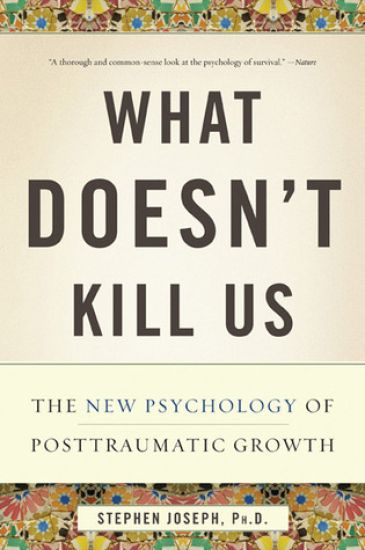
What Doesn't Kill Us: The New Psychology of Posttraumatic Growth
Surviving a traumatic experience is difficult and takes time to move on from, but this book makes the argument that with proper care and understanding, survivors can grow and reshape their lives in a positive way. For the past twenty years, pioneering psychologist Stephen Joseph has worked with survivors of trauma. His studies have yielded a startling discovery: that a wide range of traumatic events-from illness, divorce, separation, assault, and bereavement to accidents, natural disasters, and terrorism-can act as catalysts for positive change. Boldly challenging the conventional wisdom about trauma and its aftermath, Joseph demonstrates that rather than ruining one's life, a traumatic event can actually improve it. Drawing on the wisdom of ancient philosophers, the insights of evolutionary biologists, and the optimism of positive psychologists, What Doesn't Kill Us reveals how all of us can navigate change and adversity- traumatic or otherwise-to find new meaning, purpose, and direction in life.
Theories of Counselling and Psychotherapy

Theories of Counselling and Psychotherapy

Stephen Joseph

Red Globe Press
2010
nidottu
This authoritative overview of the main approaches to counselling and psychotherapy offers a uniquely concise and systematic framework for understanding and comparing different models of working. Bringing together the philosophical and practical elements of a wide range of psychological therapies, Stephen Joseph examines the assumptions and values that unerpin different understandings of mental distress and the various approaches to psychological assessment and treatment. He sets his discussion in the context of the contemporary drive towards evidence-based practice. This book will be essential reading for students of psychology and all newcomers to counselling and psychotherapy.
Understanding Post-Traumatic Stress

Understanding Post-Traumatic Stress

Stephen Joseph; Ruth Williams; William Yule

John Wiley Sons Inc
1997
nidottu
This book examines the latest developments in theory and research in post-traumatic stress disorder. Drawing on the literature exploring personality and social psychology, it presents an integrative model of psychosocial factors affecting adjustment following traumatic stressors. It serves as an innovative contribution to the area as well as an introductory text. A main feature of the book is a series of