Kirjojen hintavertailu. Mukana 12 540 310 kirjaa ja 12 kauppaa.

Kirjailija

Stephen L. Harris

Kirjat ja teokset yhdessä paikassa: 4 kirjaa, julkaisuja vuosilta 2005-2024, suosituimpien joukossa Duffy'S War. Vertaile teosten hintoja ja tarkista saatavuus suomalaisista kirjakaupoista.

Mukana myös kirjoitusasut: Stephen L Harris

4 kirjaa

Kirjojen julkaisuhaarukka 2005-2024.

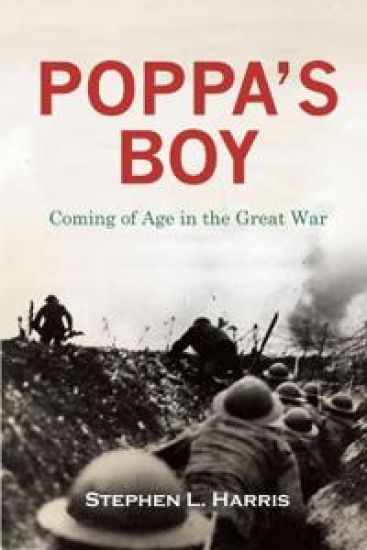
Pappa's Boy

Pappa's Boy

Stephen L Harris

Oaklea Press Inc.
2024
pokkari
The year is 1917 and the United States has just declared war on Germany. What is called "The Great War" has been raging for quite a while, but seems to have ground to a stalemate between France, Great Britain and Germany. But now, with the USA joining the fight, the Allies are confident that what they call 'The Hun" will be defeated once the American "doughboys" arrive in France. Bucky Riley, a Burlington, Vermont, native, is eager to be part of the action-a big reason being that his father, a Rough Rider hero of the Spanish-American War back in 1898, believes Bucky is a "Momma's Boy," rather than the rough and tumble "Poppa's Boy" he'd like his son to be. Bucky wants to show his stuff and prove himself to his father, but there's a problem. He's only 15-legally far too young to join the Army. Nevertheless, Bucky thinks he knows a way he can get around the age stipulation. With his father, a famous war correspondent, not at home and his mother never going to let him go to war, Bucky runs away in the dark of night to fight the Hun. That's when the fun, the adventures and even romance begin. But it isn't all fun, not by a long shot. By a stroke of luck, Bucky joins the legendary Fighting 69th Regiment and makes it to war-torn France. That's where he finds, as the saying goes: "War Is Hell.""No one writes about World War I with more empathy and understanding than Stephen Harris."Tom Fleming, the late historian and best-selling author
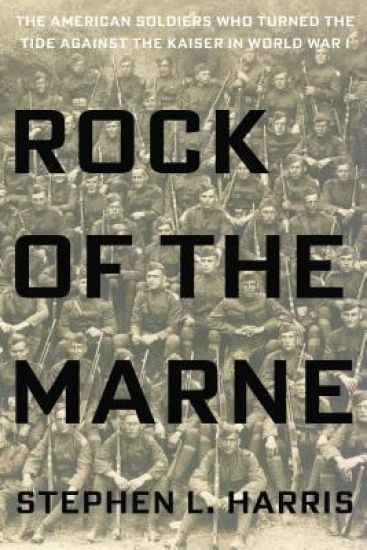
Rock Of The Marne

Rock Of The Marne

Stephen L. Harris

Berkley Publishing Corporation,U.S.
2015
sidottu
The stirring account of the Third U.S. Infantry Division in the Second Battle of the Marne where the tide of World War I was finally turned The soldiers of the Third U.S. Infantry Division in World War I were outnumbered and inexperienced young men facing hardened veterans, but their actions proved to be a turning point during the last German offensive of World War I. In stopping three German divisions from crossing the Marne River, these heroic American soldiers blocked the road to Paris east of Chateau-Thierry, helped save the French capital and, in doing so, played a key role in turning the tide of the war. The Allies then began a counteroffensive that drove the enemy back to the Hindenburg Line, and four months later the war was over. "Rock of the Marne" follows the Third Division s Sixth Brigade, which took the brunt of the German attack. The officers, many of them West Pointers and elite Ivy Leaguers, fighting side-by-side with enlisted men city dwellers and country boys, cowboys and coal miners who came from every corner of America along with newly planted immigrants from Europe answered their country s call to duty. This is the gripping true account of one of the most important yet least explored battles of World War I. INCLUDES PHOTOS"
Duffy'S War

Duffy'S War

Stephen L. Harris

Potomac Books Inc
2007
nidottu
The legendary “Fighting 69th” took part in five major engagements during World War I. It served in the front lines for almost 170 days, suffering hundreds killed and thousands wounded. This highly decorated unit was inspired by its chaplain, the famous Father Francis Duffy (whose statue stands in Times Square), and commanded by the future leader of the OSS (predecessor of the CIA), “Wild Bill” Donovan. One of its casualties was the poet Joyce Kilmer. Due in large part to the classic 1940 movie The Fighting 69th, starring James Cagney and Pat O’Brien (as Duffy), the unit still has strong name recognition. But until now, no one has recounted in detail the full story of this famous Irish outfit in World War I. The exciting Duffy’s War brings to life the men’s blue-collar neighborhoods—Irish mostly and Italian and overwhelmingly Catholic. These boys came from the East Side, the West Side, Hell’s Kitchen, the Gashouse, and Five Points; from Brooklyn, Queens, Long Island City, and Staten Island; and from Father Duffy’s own parish in the Bronx. They streamed out of the tenements and apartment houses, enlisting en masse. Brothers joined up, oftentimes three and four from one family. Published during a resurgent interest in the doughboy experience of World War I, Duffy’s War also tells the fascinating history of New York City and the Irish experience in America. With this book, Stephen L. Harris completes his outstanding trilogy on New York National Guard regiments in World War I.
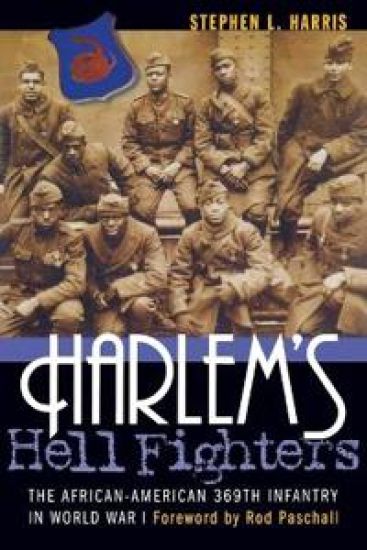
Harlem's Hell Fighters

Harlem's Hell Fighters

Stephen L. Harris; Rod Paschall

Potomac Books Inc
2005
pokkari
When the United States entered World War I in 1917, thousands of African-American men volunteered to fight for a country that granted them only limited civil rights. Many from New York City joined the 15th N.Y. Infantry, a National Guard regiment later designated the 369th U.S. Infantry. Led by mostly inexperienced white and black officers, these men not only received little instruction at their training camp in South Carolina but were frequent victims of racial harassment from both civilians and their white comrades. Once in France, they initially served as laborers, all while chafing to prove their worth as American soldiers.Then they got their chance. The 369th became one of the few U.S. units that American commanding general John J. Pershing agreed to let serve under French command. Donning French uniforms and taking up French rifles, the men of the 369th fought valiantly alongside French Moroccans and held one of the widest sectors on the Western Front. The entire regiment was awarded the Croix de Guerre, the French government's highest military honor. Stephen L. Harris's accounts of the valor of a number of individual soldiers make for exciting reading, especially that of Henry Johnson, who defended himself against an entire German squad with a large knife. After reading this book, you will know why the Germans feared the black men of the 369th and why the French called them "hell fighters."