Kirjojen hintavertailu. Mukana 12 595 353 kirjaa ja 12 kauppaa.

Kirjailija

Stephen M. Engel

Kirjat ja teokset yhdessä paikassa: 7 kirjaa, julkaisuja vuosilta 2001-2021, suosituimpien joukossa Fragmented Citizens. Vertaile teosten hintoja ja tarkista saatavuus suomalaisista kirjakaupoista.

7 kirjaa

Kirjojen julkaisuhaarukka 2001-2021.

Disrupting Dignity

Disrupting Dignity

Stephen M. Engel; Timothy S. Lyle

New York University Press
2021
sidottu
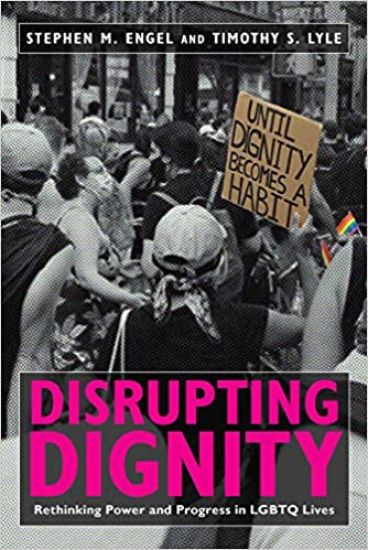
Why LGBTQ+ people must resist the seduction of dignity In 2015, when the Supreme Court declared that gay and lesbian couples were entitled to the "equal dignity" of marriage recognition, the concept of dignity became a cornerstone for gay rights victories. In Disrupting Dignity, Stephen M. Engel and Timothy S. Lyle explore the darker side of dignity, tracing its invocation across public health politics, popular culture, and law from the early years of the HIV/AIDS crisis to our current moment. With a compassionate eye, Engel and Lyle detail how politicians, policymakers, media leaders, and even some within LGBTQ+ communities have used the concept of dignity to shame and disempower members of those communities. They convincingly show how dignity—and the subsequent chase to be defined by its terms—became a tool of the state and the marketplace thereby limiting its more radical potential. Ultimately, Engel and Lyle challenge our understanding of dignity as an unquestioned good. They expose the constraining work it accomplishes and the exclusionary ideas about respectability that it promotes. To restore a lost past and point to a more inclusive future, they assert the worthiness of queer lives beyond dignity's limits.
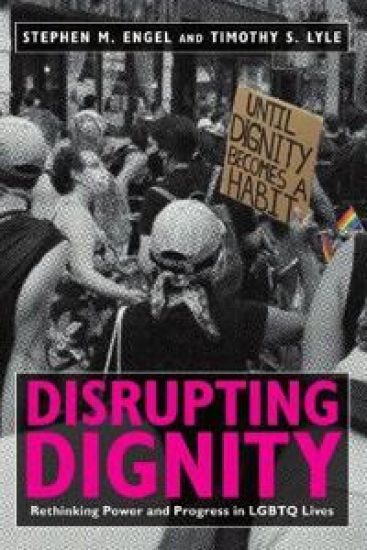
Disrupting Dignity

Disrupting Dignity

Stephen M. Engel; Timothy S. Lyle

New York University Press
2021
pokkari
Why LGBTQ+ people must resist the seduction of dignity In 2015, when the Supreme Court declared that gay and lesbian couples were entitled to the “equal dignity” of marriage recognition, the concept of dignity became a cornerstone for gay rights victories. In Disrupting Dignity, Stephen M. Engel and Timothy S. Lyle explore the darker side of dignity, tracing its invocation across public health politics, popular culture, and law from the early years of the HIV/AIDS crisis to our current moment. With a compassionate eye, Engel and Lyle detail how politicians, policymakers, media leaders, and even some within LGBTQ+ communities have used the concept of dignity to shame and disempower members of those communities. They convincingly show how dignity—and the subsequent chase to be defined by its terms—became a tool of the state and the marketplace thereby limiting its more radical potential. Ultimately, Engel and Lyle challenge our understanding of dignity as an unquestioned good. They expose the constraining work it accomplishes and the exclusionary ideas about respectability that it promotes. To restore a lost past and point to a more inclusive future, they assert the worthiness of queer lives beyond dignity’s limits.
Fragmented Citizens

Fragmented Citizens

Stephen M. Engel

New York University Press
2019
pokkari
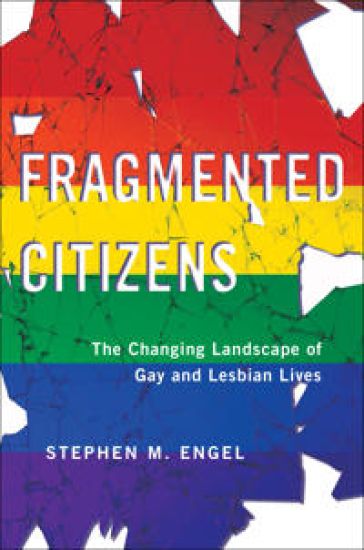
A sweeping historical and political account of how our present-day policy debates around citizenship and equality came to be The landmark Supreme Court decision in June 2015 legalizing the right to same-sex marriage marked a major victory in gay and lesbian rights in the United States. Once subject to a patchwork of laws granting legal status to same-sex couples in some states and not others, gay and lesbian Americans now enjoy full legal status for their marriages wherever they travel or reside in the country. For many, the Supreme Court's ruling means that gay and lesbian citizens are one step closer to full equality with the rest of America. In Fragmented Citizens, Stephen M. Engel contends that the present moment in gay and lesbian rights in America is indeed one of considerable advancement and change—but that there is still much to be done in shaping American institutions to recognize gays and lesbians as full citizens. With impressive scope and fascinating examples, Engel traces the relationship between gay and lesbian individuals and the government from the late nineteenth century through the present. Engel shows that gays and lesbians are more accurately described as fragmented citizens. Despite the marriage ruling, Engel argues that LGBT Americans still do not have full legal protections against workplace, housing, family, and other kinds of discrimination. There remains a continuing struggle of the state to control the sexuality of gay and lesbian citizens—they continue to be fragmented citizens. Engel argues that understanding the development of the idea of gay and lesbian individuals as 'less-than-whole' citizens can help us make sense of the government's continued resistance to full equality despite massive changes in public opinion. Furthermore, he argues that it was the state's ability to identify and control gay and lesbian citizens that allowed it to develop strong administrative capacities to manage all of its citizens in matters of immigration, labor relations, and even national security. The struggle for gay and lesbian rights, then, affected not only the lives of those seeking equality but also the very nature of American governance itself. Fragmented Citizens is a sweeping historical and political account of how our present-day policy debates around citizenship and equality came to be.
Fragmented Citizens

Fragmented Citizens

Stephen M. Engel

New York University Press
2016
sidottu
A sweeping historical and political account of how our present-day policy debates around citizenship and equality came to be The landmark Supreme Court decision in June 2015 legalizing the right to same-sex marriage marked a major victory in gay and lesbian rights in the United States. Once subject to a patchwork of laws granting legal status to same-sex couples in some states and not others, gay and lesbian Americans now enjoy full legal status for their marriages wherever they travel or reside in the country. For many, the Supreme Court's ruling means that gay and lesbian citizens are one step closer to full equality with the rest of America. In Fragmented Citizens, Stephen M. Engel contends that the present moment in gay and lesbian rights in America is indeed one of considerable advancement and change—but that there is still much to be done in shaping American institutions to recognize gays and lesbians as full citizens. With impressive scope and fascinating examples, Engel traces the relationship between gay and lesbian individuals and the government from the late nineteenth century through the present. Engel shows that gays and lesbians are more accurately described as fragmented citizens. Despite the marriage ruling, Engel argues that LGBT Americans still do not have full legal protections against workplace, housing, family, and other kinds of discrimination. There remains a continuing struggle of the state to control the sexuality of gay and lesbian citizens—they continue to be fragmented citizens. Engel argues that understanding the development of the idea of gay and lesbian individuals as 'less-than-whole' citizens can help us make sense of the government's continued resistance to full equality despite massive changes in public opinion. Furthermore, he argues that it was the state's ability to identify and control gay and lesbian citizens that allowed it to develop strong administrative capacities to manage all of its citizens in matters of immigration, labor relations, and even national security. The struggle for gay and lesbian rights, then, affected not only the lives of those seeking equality but also the very nature of American governance itself. Fragmented Citizens is a sweeping historical and political account of how our present-day policy debates around citizenship and equality came to be.
American Politicians Confront the Court

American Politicians Confront the Court

Stephen M. Engel

Cambridge University Press
2011
sidottu
Politicians have long questioned, or even been openly hostile to, the legitimacy of judicial authority, but that authority seems to have become more secure over time. What explains the recurrence of hostilities and yet the security of judicial power? Addressing this question anew, Stephen Engel points to the gradual acceptance of dissenting views of the Constitution, that is, the legitimacy and loyalty of stable opposition. Politicians' changing perception of the threat posed by opposition influenced how manipulations of judicial authority took shape. Engel's book brings our understanding of these manipulations into line with other developments, such as the establishment of political parties, the acceptance of loyal opposition, the development of different modes of constitutional interpretation and the emergence of rights-based pluralism.
The Unfinished Revolution

The Unfinished Revolution

Stephen M. Engel

Cambridge University Press
2001
pokkari
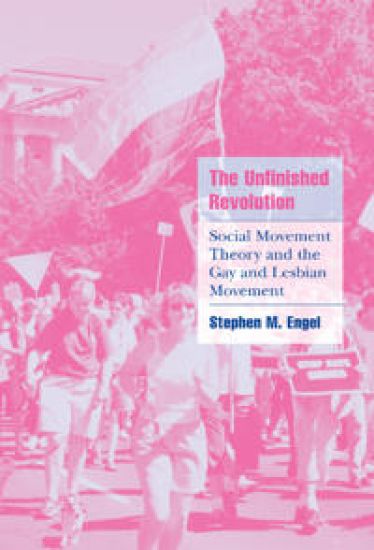
The Unfinished Revolution compares the post-Second World War histories of the American and British gay and lesbian movements with an eye toward understanding how distinct political institutional environments affect the development, strategies, goals, and outcomes of a social movement. Stephen M. Engel utilizes an electic mix of source materials ranging from the theories of Mancur Olson and Michel Foucault to Supreme Court rulings and film and television dialogue. The two case study chapters function as brief historical sketches to elucidate further the conclusions on theory and whilst being politically-oriented, they also examine gay influence and expansion into mainstream popular culture. The book also includes an appendix that surveys and assesses the analytical potential of five critical understandings of social movements: the classical approach, rational choice, resource mobilization, new social movement theories, and political opportunity structures. It will be of value to academics and students of sociology, political science, and history.
The Unfinished Revolution

The Unfinished Revolution

Stephen M. Engel

Cambridge University Press
2001
sidottu
The Unfinished Revolution compares the post-Second World War histories of the American and British gay and lesbian movements with an eye toward understanding how distinct political institutional environments affect the development, strategies, goals, and outcomes of a social movement. Stephen M. Engel utilizes an electic mix of source materials ranging from the theories of Mancur Olson and Michel Foucault to Supreme Court rulings and film and television dialogue. The two case study chapters function as brief historical sketches to elucidate further the conclusions on theory and whilst being politically-oriented, they also examine gay influence and expansion into mainstream popular culture. The book also includes an appendix that surveys and assesses the analytical potential of five critical understandings of social movements: the classical approach, rational choice, resource mobilization, new social movement theories, and political opportunity structures. It will be of value to academics and students of sociology, political science, and history.