Kirjailija
Stephen Miller
Kirjat ja teokset yhdessä paikassa: 56 kirjaa, julkaisuja vuosilta 1994-2026, suosituimpien joukossa Barndominium Floor Plans and Designs. Vertaile teosten hintoja ja tarkista saatavuus suomalaisista kirjakaupoista.
56 kirjaa
Kirjojen julkaisuhaarukka 1994-2026.
Stephen Miller’s definitive biography of Dolly Parton returns in this Remastered edition, more than a decade after its original publication – as dazzling as the woman it celebrates. Smart Blonde tells the remarkable story of Dolly Parton’s rise from a poor East Tennessee childhood to superstardom in the male dominated world of 1960s Nashville. With charm, determination, and unparalleled talent, Parton built not only a musical legacy but a multifaceted business empire. Miller crafts a deeply researched and entertaining portrait, full of sparkle and quick humour, of a strong woman who has always steered her own course. Through rare interviews with those closest to Parton – including family members, musicians, and longtime collaborators – he offers intimate glimpses into her famously private world, including her enduring marriage to Carl Dean until his death in 2025 and lifelong friendship with Judy Ogle.
The Transition to Capitalism in Modern France
Xavier Lafrance; Stephen Miller
TAYLOR FRANCIS LTD
2025
nidottu
Historians, since the 1960s, argue that the French economy performed as well as did any economy in Europe during the eighteenth and nineteenth centuries thanks to the opportunities for profit available on the market, especially the large consumer market in Paris. Whatever economic weaknesses existed did not stem from the social structure but from exogenous forces such as wars, the lack of natural resources or slow demographic growth. This book challenges the foregoing consensus by showing that the French economy performed poorly relative to its rivals because of noncapitalist social relations. Specifically, peasants and artisans controlled lands and workshops in autonomous communities and did not have to improve labor productivity to survive. Merchants and manufacturers cornered markets instead of being subject to the market’s competitive imperatives. Thus, distinctive features of capitalism—primitive accumulation (the dispossession of peasants and artisans) and the competitive obligation faced by merchants and manufacturers to reinvest profits in order to keep the profits—did not prevail until the state imposed them in a process lasting for a century after the 1850s. For this reason, it was not until the 1960s that France caught up to (and in some cases surpassed) its economic rivals.
Tales of the Sea, and of Our Jack Tars
William Henry Giles Kingston; T Robertson; Stephen Miller
Anson Street Press
2025
pokkari
Tales of the Sea, and of Our Jack Tars
William Henry Giles Kingston; T Robertson; Stephen Miller
Anson Street Press
2025
sidottu
Budapest and the Bronx: Portrait of an Intermarriage is a memoir that begins in wartime Budapest and touches on dark topics-Fascism, Stalinism, antisemitism-but it is mainly about two people from radically different backgrounds who enjoyed each other's company for almost six decades. Theirs was a marriage of "true minds" because they had so many interests in common, but they did have one serious disagreement.
El Arte de Equivocarse: Encuentra Lo Bueno En Las Desventuras de la Vida
Stephen Miller
Editorial Unilit
2023
nidottu
Todos necesitamos un amigo que pueda recordarnos que todo estar bien, incluso cuando las decepciones, los fracasos o las heridas profundas de la vida amenacen con derribarnos. Con su pasi n, humor y optimismo caracter sticos, Stephen Miller te trae ese mensaje importante y oportuno en su libro El arte de equivocarse c mo dejar que tus percances te refinen en lugar de definirte, pues Dios sabe todo lo que has hecho y todo lo que har s y te ama de todos modos, con errores y todo. En el El arte de equivocarse , Stephen hace un recorrido por su vida y nos muestra que no somos la suma de nuestros errores; somos lo que aprendemos de ellos. Este es exactamente el tipo de mensaje que nuestro mundo necesita hoy en d a: un mensaje de que no importa lo mal que nos sintamos por el fracaso, simplemente estaremos bien. Cada uno de sus relatos y ense anzas te animar n a: Ver lo bueno que hay en tu vida, incluso cuando cometes un error. Buscar la risa en cada situaci n. Aceptar la verdad, ya sea un afectuoso abrazo o una fuerte patada. Creer en la persona para la que te crearon y en que nada deber a cambiar eso. Descubrir el poder de la gracia, para los dem s y para ti mismo. Dice Stephen a sus lectores: Es el coraz n del padre en m que quiere tan desesperadamente que sepas que eres visto. Tu perteneces. Eres amado. No importa lo que te ponga ansioso por el ma ana o cu ntas veces hayas fallado, incluso hoy, todo estar bien . Stephen y su esposa Amanda tienen m s de medio mill n de suscriptores en su canal The Miller Fam en Youtube, un espacio en el que narran su viaje como una familia gigantesca y diversa de nueve, y en donde muestran la belleza y el quebrantamiento del matrimonio, la adopci n y la paternidad con necesidades especiales. https: //www.youtube.com/@themillerfam Lo que me encanta de Stephen en su libro El arte de equivocarse es su transparencia sobre sus fracasos. C mo aprende de ellos y luego los comparte con nosotros para que podamos aprender tambi n l no evita mostrarnos las partes vergonzosas que nos har n encogernos y gemir y mirar hacia adentro y decir: Oh, ese tambi n soy yo. Es como ese padre que de alguna manera conoce la manera perfecta de transmitir el punto de vista para que todos lo entiendan, y no es sermoneador ni juzgador o m s santo que t . Es real y gracios simo . -- La familia LaBrant. https: //www.youtube.com/@ColeAndSav We all need a friend who can remind us that everything will be fine, even when disappointments, failures, or life's deep wounds threaten to bring us down. With his characteristic passion, humor, and optimism, Stephen Miller brings you that important and timely message in his book "The Art of Messing Up" how to let your mishaps refine you instead of defining you, because God knows everything you've done and everything you will do, and loves you anyway, flaws and all. In "The Art of Messing Up," Stephen takes us on a journey through his life and shows us that we are not the sum of our mistakes; we are what we learn from them. This is exactly the kind of message our world needs today: a message that no matter how bad we feel about failure, we'll simply be okay. Each of his stories and teachings will encourage you to: See the good in your life, even when you make a mistake. Find laughter in every situation. Embrace the truth, whether it's a warm hug or a tough kick. Believe in the person you were created to be and that nothing should change that. Discover the power of grace, for others and for yourself. Stephen says to his readers: "It's the father's heart in me that so desperately wants you to know you're seen. You belong. You are loved. No matter what makes you anxious about tomorrow or how many times you've failed, even today, everything will be okay." Stephen and his wife Amanda have over half a million subscribers on their YouTube channel "The Miller Fam," where they share their journey as a large and diverse family of nine, showcasing the beauty and brokenness of marriage, adoption, and special needs parenthood. "What I love about Stephen in his book 'The Art of Messing Up' is his transparency about his failures. How he learns from them and then shares them with us so we can learn too He doesn't shy away from showing us the embarrassing parts that will make us cringe and groan and look inward and say, 'Oh, that's me too.' He's like that dad who somehow knows the perfect way to convey the point so everyone gets it, and he's not preachy or judgmental or holier than thou. He's real and hilarious." -- The Labrant Fam.
In contrast to the traditional Marxist interpretation of emerging capitalism and its revolutionary bourgeoisie, State and Society in Eighteenth-Century France shows that commodified labor, fundamental to the existence of a capitalist bourgeoisie, did not take shape in eighteenth-century France. Through the revolutionary period, the mass of the population consisted of peasants and artisans in possession of land and workshops, all embedded in autonomous communities. The old regime bourgeoisie and nobility thus developed within the absolutist state in order to have the political means to impose feudal forms of exploitation on the people. These class relations, and not those offered in the traditional interpretation, gave rise to the crisis of 1789 and the revolutionary conflicts of the 1790s
A brilliant and ambitious college professor, Dr. Reginald Thorne finds himself faced with a decision that has shaken his career, his family, and his religious beliefs. As his personal life unravels, he realizes that he must be true to what his heart has revealed to him.
The Transition to Capitalism in Modern France
Xavier Lafrance; Stephen Miller
TAYLOR FRANCIS LTD
2023
sidottu
Historians, since the 1960s, argue that the French economy performed as well as did any economy in Europe during the eighteenth and nineteenth centuries thanks to the opportunities for profit available on the market, especially the large consumer market in Paris. Whatever economic weaknesses existed did not stem from the social structure but from exogenous forces such as wars, the lack of natural resources or slow demographic growth. This book challenges the foregoing consensus by showing that the French economy performed poorly relative to its rivals because of noncapitalist social relations. Specifically, peasants and artisans controlled lands and workshops in autonomous communities and did not have to improve labor productivity to survive. Merchants and manufacturers cornered markets instead of being subject to the market’s competitive imperatives. Thus, distinctive features of capitalism—primitive accumulation (the dispossession of peasants and artisans) and the competitive obligation faced by merchants and manufacturers to reinvest profits in order to keep the profits—did not prevail until the state imposed them in a process lasting for a century after the 1850s. For this reason, it was not until the 1960s that France caught up to (and in some cases surpassed) its economic rivals.
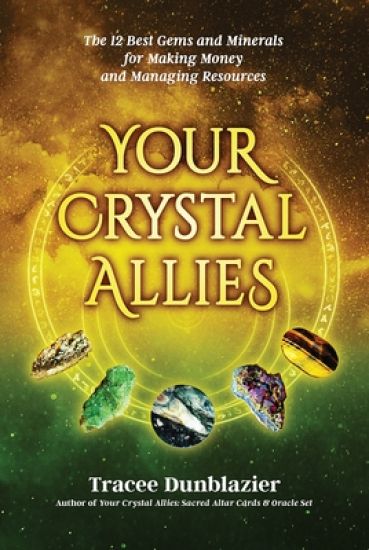
Your Crystal Allies
Tracee Dunblazier; Najah Lightfoot; Stephen Miller
GoTracee Publishing, LLC
2023
pokkari
The key to having more? Knowing how to manage what you have well. Partner with the best gems and minerals to learn how to manifest all the money and resources you want, effortlessly. The more money, power, or attention you have, the more you are responsible for, and it can be overwhelming--requiring new skillsets. Let the 12 best Quartz-based stones show you on every level, what you need and how to get it. Through your crystal ally frequencies, connect to the matrix of success, in all you do. Let them support you in becoming clear and pivoting when necessary. This book contains the information you need to enlist the support of the stone kingdom to bring your wishes into fruition. Crystals help you: Attract what you needCultivate your ability to manage all you haveSupport your integrity during the processDevelop a can-do attitude of gratitudeLearn to see kindness as powerSet firm boundaries with yourself and othersUse Crystal Grids to empower every aspect of your life
This beautifully illustrated monograph, including more than 50 colour plates of the artist's work—most of which appear here for the first time—is the first critical study of the work of the artist Stephen Cook (born 1952), and will serve as both an introduction to, and analysis of, his output in the context of a tradition of figurative art in post-war Britain.The scrutiny of the subjects of these paintings point to a representation of a reality outside of the flux of things and of our everyday experience, albeit one that is derived from the immediately recognisable natural world. This is achieved not only through a method of close observation, but through the rigour of the application of that observation.
Have you ever wondered what it would be like to have more, be more, and achieve more? Do you imagine how good life could be if you could get all the values or dimensions of your life to be a strong as your most developed one?In Circle Builders, Stephen Miller explains how conventional thought has been that the human experience is lived from within a circle, what we call our own personal space. That circular space is sliced into seven pieces, each representing a different value. These seven pieces are spiritual, intellectual, emotional, family, social, fitness, and financial.Often when people attempt to grow and develop their life, or circle, they do it from a linear perspective-one issue at a time. The inevitable result will always be a lopsided circle, leaving them as a one, or at best, two-dimensional person.In this book, Stephen approaches life development holistically so that these pieces work cohesively. You will learn to: prioritize all seven values equallydevelop systems of patterns, actions, time management, and consistencygrow the circle of your life without compromising itGet ready to achieve more than you thought possible by building your circle
A hope, or a wish, deferred can make a heart ache, but the wish fulfilled brings lasting joy (Proverbs 13:12, paraphrased).Sara, while shopping with her mom just before Christmas, finds an adorable stuffed raccoon, misplaced on a shelf in the shoe aisle. Sara picks him up and begins carrying him throughout the store, showing him all the wonderful things on the shelves. They are having the best of times together when Sara's mom tells her it's time to go, and that she has to put the raccoon back because they can't afford any toys this year. Sara is heartbroken, but after all, it is Christmas time-and isn't Christmas a time of miracles?
In contrast to the traditional Marxist interpretation of emerging capitalism and a revolutionary bourgeoisie, this book shows that commodified labor, fundamental to the existence of a capitalist bourgeoisie, did not take shape in eighteenth-century France. The mass of the population consisted of peasants and artisans in possession of land and workshops, and embedded in autonomous communities. The old regime bourgeoisie and nobility thus developed within the absolutist state in order to have the political means to impose feudal forms of exploitation on the people. These class relations explain the crisis of 1789 and the revolutionary conflicts of the 1790s.
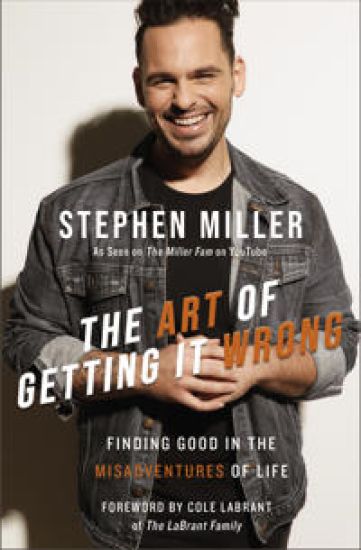
Failures don't need to be final, and disappointment doesn't need to be defining. Come along on a wild, hilarious, faith-building ride, and let The Art of Getting It Wrong guide you toward hope for the future and the freedom to love your life exactly where you are.Long before his YouTube channel, The Miller Fam, became a viral sensation, Stephen Miller got a ton of things wrong. He knows what it's like to endure countless failed endeavors, make too many rash decisions, and feel deep discouragement when life doesn't go as planned--sometimes all before breakfast. But those experiences taught him a powerful lesson: it's going to be okay.With the characteristic authenticity, love, and humor Stephen shows in his YouTube videos, The Art of Getting It Wrong offers timeless truths and never-before-told stories of misadventures and out-of-control disappointments that will encourage you to:See the good at work in your life, even when you make mistakesLook for the laugh in every situationEmbrace the truth--whether it's a warm hug or a kick in the teethBelieve in yourself and grow in your sense of self-worthDiscover the power of grace, both for others and for yourselfJoin Stephen as he shares what it means to turn failures, mishaps, and disappointments into a life of fun and fulfillment--even when it's not what you expected.Praise for The Art of Getting It Wrong:"With his trademark passion, humor, and optimism, Stephen Miller brings an important and timely message for us in The Art of Getting It Wrong. We all need a friend who can remind us that it's going to be okay, even when life's disappointments, failures, or deep hurts threaten to pull us down."--Lysa TerKeurst, #1 New York Times bestselling author and president of Proverbs 31 Ministries"If you find yourself trying to get back up after falling down, you'll find this book brimming with encouragement and buoyant with hope."--Dr. Darren Whitehead, lead pastor, Church of the City, Nashville, Tennessee
This beautifully illustrated landmark book (with more than five dozen specially commissioned original colour photographs) compellingly connects the Green Man phenomenon in medieval England to a specific Christian meaning and understanding rather than a mysterious and undefined pagan one. The meaning and significance attached to such Green Man depictions would have been apparent to almost all churchgoing medieval folk, from the patrons who commissioned them and the stonemasons and woodcarvers who created them, to the monks, clergy and worshipping community well-versed in biblical stories and associated Christian lore and legend that helped to flesh out and illuminate Scripture—stories and legends long-since forgotten by the majority today. The visual narrative contained in the art and craft of medieval churches brought such stories to life in a meaningful way for everyone, the literate and illiterate alike.Drawing on a wealth of extant examples, the book connects Green Man iconography with the Christian legends and hagiographies of Adam, the Garden of Eden, the Quest of Seth, and the various legends of the cross, contained in such medieval writings as Jacobus Voragine's, The Golden Legend and Honorius of Autun's Imago mundi. The author has visited a large sample of medieval cathedrals and parish churches throughout the length and breadth of England in his search of such illustrative evidence and offers a selection of those findings and conclusions here.