Kirjojen hintavertailu. Mukana 12 595 353 kirjaa ja 12 kauppaa.

Kirjailija

Stephen Prickett

Kirjat ja teokset yhdessä paikassa: 14 kirjaa, julkaisuja vuosilta 1976-2021, suosituimpien joukossa Victorian Fantasy. Vertaile teosten hintoja ja tarkista saatavuus suomalaisista kirjakaupoista.

14 kirjaa

Kirjojen julkaisuhaarukka 1976-2021.

Secret Selves

Secret Selves

Stephen Prickett

Bloomsbury Academic USA
2021
sidottu
Who are we and how do we define our inner selves? In his last work, Professor Stephen Prickett presents a literary and cultural exploration of our inner selves – and how we have created and written about them – from the Old Testament to social media. What he finds is that although our secret, inner, sense of self – what we feel makes us distinctively ‘us’ – seems a natural and permanent part of being human, it is in fact surprisingly new. Whilst confessional religious writings, from Augustine to Jane Austen, or even diaries of 20th-century Holocaust victims, have explored inwards as part of a path to self-discovery, our inner space has expanded beyond any possible personal experience. This development has enhanced our capacity not merely to write about what we have never seen, but even to create fantasies and impossible fictions around them.Yet our secret selves can also be a source of terror. The fringes of our inner worlds are often porous, ill-defined and susceptible to frightening forms of external control. Mystics and poets, from Dante to John Henry Newman or Gerard Manley Hopkins, sought God in their secret spaces not least because they feared the ‘abyss beneath.’ From the origin of human consciousness through modern history and into the future, Secret Selves uses literature to consider the profound possibilities and ramifications of our evolving ideas of self.
Victorian Fantasy

Victorian Fantasy

Stephen Prickett

Edward Everett Root
2017
nidottu
Victorian fantasy is an art form that flourished in opposition to the repressive social and intellectual conditions of 'Victorianism'. The author explores the ways in which Victorian writers used non-realistic techniques - nonsense, dreams, visions, and the creation of other worlds - to extend our understanding of this world, and the creation of this world. This work focuses on six key writers: Lear, Carroll, Kingsley, MacDonald, Kipling, and Nesbit. Stephen Prickett traces the development of their art form, their influence on each other, and how these writers used fantasy to question the ideology of Victorian culture and society.
Victorian Fantasy

Victorian Fantasy

Stephen Prickett

Edward Everett Root
2017
sidottu
Victorian fantasy is an art form that flourished in opposition to the repressive social and intellectual conditions of 'Victorianism'. The author explores the ways in which Victorian writers used non-realistic techniques - nonsense, dreams, visions, and the creation of other worlds - to extend our understanding of this world, and the creation of this world. This work focuses on six key writers: Lear, Carroll, Kingsley, MacDonald, Kipling, and Nesbit. Stephen Prickett traces the development of their art form, their influence on each other, and how these writers used fantasy to question the ideology of Victorian culture and society.
Modernity and the Reinvention of Tradition

Modernity and the Reinvention of Tradition

Stephen Prickett

Cambridge University Press
2013
pokkari
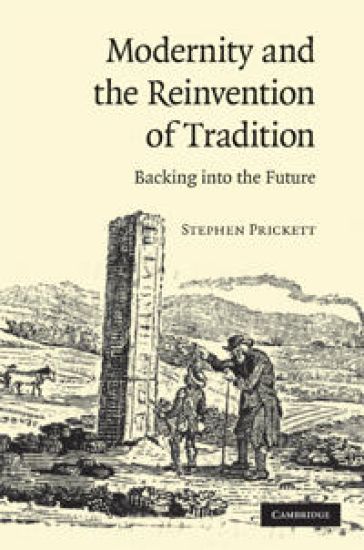
The idea of tradition seems a timeless one, but our modern understanding of the term was actually shaped by the Victorian revival of tradition as a cornerstone of religion, art and culture. Stephen Prickett traces how the word 'tradition' fell out of use in English by the middle of the eighteenth century and how it returned in the nineteenth having radically changed and gained in meaning. Prickett analyses the work of authors who, like Burke, perhaps unexpectedly, avoid use of the concept, as well as those who, like Coleridge, Keble and Newman, who, variously influenced by German Romantics, explored it in detail, and disagreed profoundly with each other as to its implications. An important contribution to literature, history and theology, this sweeping work shows how people manufacture their own idea of truth, customs, or ancient wisdom to make sense of the past in terms of a problematic present.
Modernity and the Reinvention of Tradition

Modernity and the Reinvention of Tradition

Stephen Prickett

Cambridge University Press
2009
sidottu
The idea of tradition seems a timeless one, but our modern understanding of the term was actually shaped by the Victorian revival of tradition as a cornerstone of religion, art and culture. Stephen Prickett traces how the word 'tradition' fell out of use in English by the middle of the eighteenth century and how it returned in the nineteenth having radically changed and gained in meaning. Prickett analyses the work of authors who, like Burke, perhaps unexpectedly, avoid use of the concept, as well as those who, like Coleridge, Keble and Newman, who, variously influenced by German Romantics, explored it in detail, and disagreed profoundly with each other as to its implications. An important contribution to literature, history and theology, this sweeping work shows how people manufacture their own idea of truth, customs, or ancient wisdom to make sense of the past in terms of a problematic present.
Origins of Narrative

Origins of Narrative

Stephen Prickett

Cambridge University Press
2005
pokkari
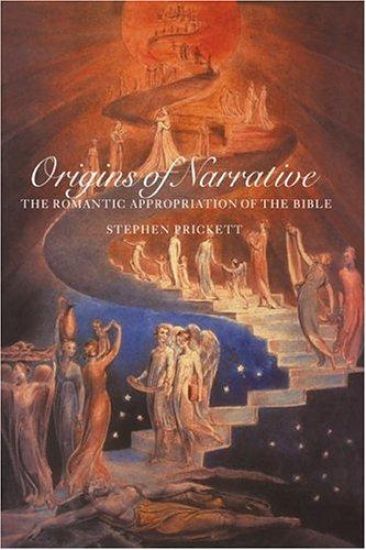
During the late eighteenth century the Bible underwent a shift in interpretation so radical as to make it virtually a different book from what it had been a hundred years earlier. Even as its text was being revealed as neither stable nor original, the new notion of the Bible as a cultural artefact became a paradigm for all literature. In Origins of Narrative one of the world's leading scholars in biblical interpretation, criticism and theory describes how, while formal religion declined, the prestige of the Bible as a literary and aesthetic model rose to new heights: not merely was English, German and French Romanticism steeped in biblical references of a new kind, but hermeneutics and, increasingly, theories of literature and criticism were biblically derived. Professor Prickett reveals how the Romantic Bible became simultaneously a novel-like narrative work, an on-going site of re-interpretation, and an all-embracing literary form giving meaning to all other writing.
Narrative, Religion and Science

Narrative, Religion and Science

Stephen Prickett

Cambridge University Press
2002
sidottu
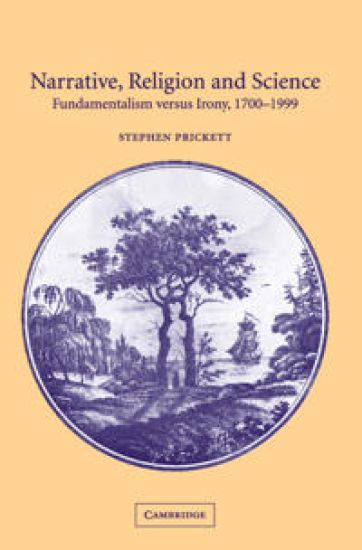
An increasing number of contemporary scientists, philosophers and theologians downplay their professional authority and describe their work as simply 'telling stories about the world'. If this is so, Stephen Prickett argues, literary criticism can (and should) be applied to all these fields. Such new-found modesty is not necessarily postmodernist scepticism towards all grand narratives, but it often conceals a widespread confusion and naïvety about what 'telling stories', 'description' or 'narrative', actually involves. While postmodernists define 'narrative' in opposition to the experimental 'knowledge' of science (Lyotard), some scientists insist that science is itself story-telling (Gould); certain philosophers and theologians even see all knowledge simply as stories created by language (Rorty; Cupitt). Yet story telling is neither innocent nor empty-handed. Prickett argues that since the eighteenth century there have been only two possible ways of understanding the world: the fundamentalist, and the ironic.
Narrative, Religion and Science

Narrative, Religion and Science

Stephen Prickett

Cambridge University Press
2002
pokkari
An increasing number of contemporary scientists, philosophers and theologians downplay their professional authority and describe their work as simply 'telling stories about the world'. If this is so, Stephen Prickett argues, literary criticism can (and should) be applied to all these fields. Such new-found modesty is not necessarily postmodernist scepticism towards all grand narratives, but it often conceals a widespread confusion and naïvety about what 'telling stories', 'description' or 'narrative', actually involves. While postmodernists define 'narrative' in opposition to the experimental 'knowledge' of science (Lyotard), some scientists insist that science is itself story-telling (Gould); certain philosophers and theologians even see all knowledge simply as stories created by language (Rorty; Cupitt). Yet story telling is neither innocent nor empty-handed. Prickett argues that since the eighteenth century there have been only two possible ways of understanding the world: the fundamentalist, and the ironic.
Origins of Narrative

Origins of Narrative

Stephen Prickett

Cambridge University Press
1996
sidottu
During the later eighteenth century the Bible underwent a shift in interpretation so radical as to make it virtually a different book from what it had been a hundred years earlier. Even as its text was being revealed as neither stable nor original, the new notion of the Bible as a cultural artefact became a paradigm for all literature. In Origins of Narrative one of the world's leading scholars in biblical interpretation, criticism and theory describes how, while formal religion declined, the prestige of the Bible as a literary and aesthetic model rose to new heights: not merely was English, German and French Romanticism steeped in Biblical references of a new kind, but hermeneutics and, increasingly, theories of literature and criticism were biblically derived. Professor Prickett reveals how the romantic Bible became simultaneously a novel-like narrative work, an on-going site of re-interpretation, and an all-embracing literary form giving meaning to all other writing.
The Bible

The Bible

Stephen Prickett; Robert Barnes

Cambridge University Press
1991
pokkari
This study focuses on the Bible as a landmark of literature, showing both how it has influenced writers through the ages and how it in turn has been influenced by contemporary literature. It describes what is known about the historical context of the documents, the changes of interpretation they have undergone over the centuries, and the problems and influence of various translations, ranging from Tyndale to the Good News Bible.
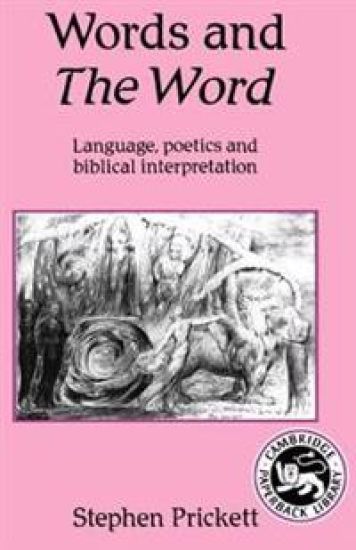
Words and The Word

Words and The Word

Stephen Prickett

Cambridge University Press
1988
pokkari
First published in 1986, Stephen Prickett’s Words and the ‘Word’ has had a major impact among scholars of literature and literary theory as well as among theologians and biblical critics. In this highly-acclaimed book Prickett pursues the question of the relationship between religion and poetics, and in particular the nature of religious language, investigating the hermeneutic, epistemological and linguistic reverberations of eighteenth, nineteenth, and twentieth-century theories of biblical interpretation.
Coleridge and Wordsworth

Coleridge and Wordsworth

Stephen Prickett

Cambridge University Press
1980
pokkari
Originally published in 1980, this is a study of the 'romanticism' of Coleridge and Wordsworth. Their concern with creativity, and the conditions that helped or hindered their own artistic development, produced a new concept of mental growth - a 'modern' view of the mind as organic, active, and unifying. In particular, we see how their aesthetics evolved from a personal and intuitional need to reaffirm 'value' in their own lives. Their discovery of the fundamental ambiguity of such intuition is discussed in relation to some ideas of Empson, Gombrich, and Ehrenzweig. As well as an essay in criticism, this is a contribution to the history of ideas, drawing together points in the background of philosophical and psychological theory from Hartley and Wesley to John Stuart Mill. Since many of our ideas about imagination, symbolism, and creativity are ultimately derived from Coleridge and Wordsworth, this is a book for students of romantic and modern literature.