Kirjojen hintavertailu. Mukana 12 152 606 kirjaa ja 12 kauppaa.

Kirjailija

Stephen R L Clark

Kirjat ja teokset yhdessä paikassa: 27 kirjaa, julkaisuja vuosilta 1975-2023, suosituimpien joukossa Plotinus Ennead VI.9: On the Good or the One. Vertaile teosten hintoja ja tarkista saatavuus suomalaisista kirjakaupoista.

Mukana myös kirjoitusasut: Stephen R. L. Clark, Stephen R.L. Clark, Stephen R.L Clark

27 kirjaa

Kirjojen julkaisuhaarukka 1975-2023.

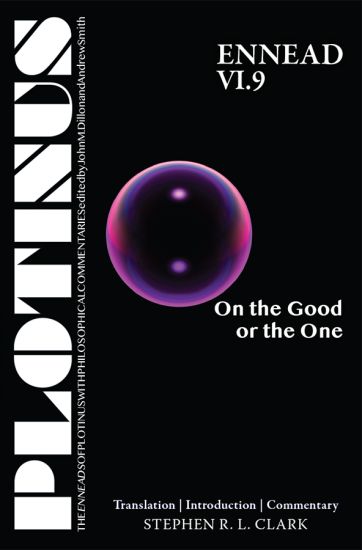
Plotinus Ennead VI.9: On the Good or the One

Plotinus Ennead VI.9: On the Good or the One

Stephen R. L. Clark

Parmenides Publishing
2020
nidottu
This early treatise is placed by Plotinus' editor at the very end of the Enneads, as the culmination of his thought, matching Plotinus' own last recorded instruction, 'to bring the god in you back to the god in the all.' It is a cosmological sketch, arguing that the being of anything depends on its being unified by its orientation to its own good, and so also the being of Everything, the All. The One, or the Good, is at once the goal of all things both individually and collectively, and also the transcendent source of all that we experience, mediated through an intelligible order. But it is also, and perhaps more importantly, intended as a guide to the proper education and discipline of our own motives and experience. We are encouraged to put aside immediate sensory data, egoistic prejudice and sensual impulse, first to grasp at least a little of the intelligible order within which we all live, and at last to purge even those last intellectual attachments and experience what cannot be adequately described: the unity of being.
Plotinus

Plotinus

Stephen R. L. Clark

University of Chicago Press
2018
pokkari
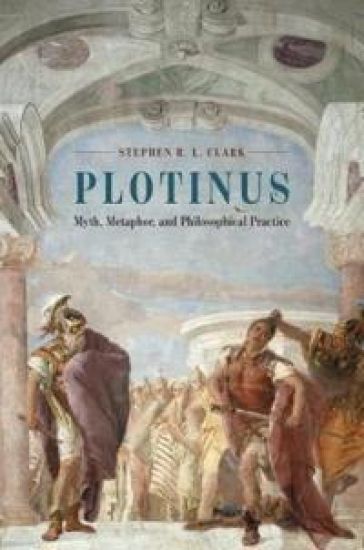
Plotinus, the Roman philosopher (c. 204-270 CE) who is widely regarded as the founder of Neoplatonism, was also the creator of numerous myths, images, and metaphors. They have influenced both secular philosophers and Christian and Muslim theologians, but have frequently been dismissed by modern scholars as merely ornamental. In this book, distinguished philosopher Stephen R. L. Clark shows that they form a vital set of spiritual exercises by which individuals can achieve one of Plotinus's most important goals: self-transformation through contemplation. Clark examines a variety of Plotinus's myths and metaphors within the cultural and philosophical context of his time, asking probing questions about their contemplative effects. What is it, for example, to "think away the spatiality" of material things? What state of mind is Plotinus recommending when he speaks of love, or drunkenness, or nakedness? What starlike consciousness is intended when he declares that we were once stars or are stars eternally? What does it mean to say that the soul goes around God? And how are we supposed to "bring the god in us back to the god in all"? Through these rich images and structures, Clark casts Plotinus as a philosopher deeply concerned with philosophy as a way of life.
Aristotle's Man

Aristotle's Man

Stephen R.L. Clark

Oxford University Press
1975
sidottu
Words have determinable sense only within a complex of unstated assumptions, and all interpretation must therefore go beyond the given material. This book addresses what is man's place in the Aristotelian world. It also describes man's abilities and prospects in managing his life, and considers how far Aristotle's treatment of time and history licenses the sort of dynamic interpretation of his doctrines that have been given. The ontological model that explains much of Aristotle's conclusions and methods is one of life-worlds, in which the material universe of scientific myth is no more than an abstraction from lived reality, not its transcendent ground.
How the Worlds Became

How the Worlds Became

Stephen R L Clark

Angelico Press
2023
sidottu
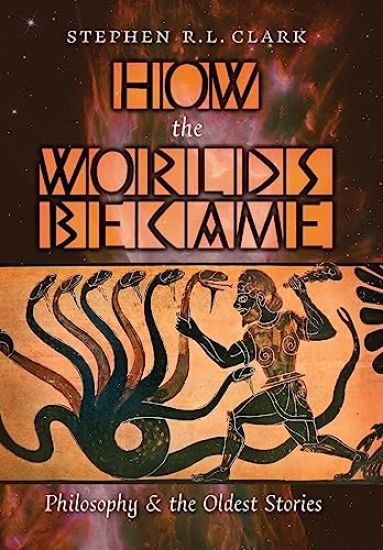
Our ancestors told many a story about the world, addressing in imaginative terms questions we now consider philosophical or scientific. Among the oldest stories are those telling how the First Thing emerged from Nothing and gradually became "the ten thousand things," including powers of a larger and longer-lasting sort than those of mortals, sometimes represented in the motion of heavenly bodies. Such imaginative tellings or myths in some ways resemble modern cosmological theories, but in their original sense were transformative resources for humane living, providing ways of enlivening our spirits. "The lover of myth," as Aristotle said, "is in a way a lover of wisdom, for the myth is composed of wonders." Let us then approach the stories included here as just such lovers of wisdom, keeping a keen but sympathetic eye out for their wonders, intent on unveiling new insights into our beginnings, and that of all the creatures with whom we share the world.
How the Worlds Became

How the Worlds Became

Stephen R L Clark

Angelico Press
2023
pokkari
Our ancestors told many a story about the world, addressing in imaginative terms questions we now consider philosophical or scientific. Among the oldest stories are those telling how the First Thing emerged from Nothing and gradually became "the ten thousand things," including powers of a larger and longer-lasting sort than those of mortals, sometimes represented in the motion of heavenly bodies. Such imaginative tellings or myths in some ways resemble modern cosmological theories, but in their original sense were transformative resources for humane living, providing ways of enlivening our spirits. "The lover of myth," as Aristotle said, "is in a way a lover of wisdom, for the myth is composed of wonders." Let us then approach the stories included here as just such lovers of wisdom, keeping a keen but sympathetic eye out for their wonders, intent on unveiling new insights into our beginnings, and that of all the creatures with whom we share the world.
From Athens to Jerusalem

From Athens to Jerusalem

Stephen R L Clark

Angelico Press
2019
pokkari
These expanded Gifford lectures attempt to answer Tertullian's jibe, "What business has Jerusalem with Athens?" Addressing this question within the horizons of multiple, sometimes apparently opposing, worldviews, Clark ends by stoutly defending reason, the achievability of truth, and the reality of consciousness against contemporary attack.
From Athens to Jerusalem

From Athens to Jerusalem

Stephen R L Clark

Angelico Press
2019
sidottu
These expanded Gifford lectures attempt to answer Tertullian's jibe, "What business has Jerusalem with Athens?" Addressing this question within the horizons of multiple, sometimes apparently opposing, worldviews, Clark ends by stoutly defending reason, the achievability of truth, and the reality of consciousness against contemporary attack.
The Mysteries of Religion

The Mysteries of Religion

Stephen R L Clark

Wipf Stock Publishers
2017
sidottu
Philosophy of religion too often confines itself to a few well-worn philosophical puzzles, such as the proof of God's existence, and overworked examples which are usually drawn from Western Christianity. This book considers religion practice and expression in a number of cultural contexts, both familiar and exotic, from sacred texts to rites of passage, from the British Israel movement to spiritism and Aztec devil-worship. The author argues that, although there are many points on which religious persons disagree and no definite way of settling these disagreements, Neoplatonic theory about the world and our place in it does at least provide the context for debate. Is religion an irrational human attempt to disguise an essentially meaningless universe? Or is irrelgion itself unreasonable and a spiritual universe the best explanation? Using a wide range of examples, The Mysteries of Religion provides an invaluable philosophical background for a discussion of such fundamental questions. ""In The Mysteries of Religion Stephen R. L. Clark explores what many thinkers in philosophy, theology, and religious studies will find to be an exciting thesis: that an introduction to philosophy can be written through the lens of religion. Clark explores not only religious belief, in general, but also all of the major particular religions in the world. Both students and advanced scholars will benefit from his nuanced and insightful reasoning and his lively writing style."" --Daniel A. Dombrowski, Professor of Philosophy, Seattle University ""With characteristic acumen and literary grace, Stephen Clark demonstrates how a concern with religion as actually lived can inspire philosophical exploration. In The Mysteries of Religion, Clark shows himself simultaneously sensitive to the significance of the issues raised for ordinary people by their religious experiences and thoroughly adept at analyzing these issues with philosophical precision. Deeply humane and reflecting his exceptional breadth of learning, Clark's insights will prove illuminating to philosophers and theologians, students, and general readers in search of greater understanding."" --Gary Chartier Distinguished Professor of Law and Business Ethics, Tom and Vi Zapara School of Business, La Sierra University ""If you want to understand questions--not just answers--do read this book. The questions haven't changed at all in the long years since it was first published. They still call for our attention."" --Mary Midgley, English Moral Philosopher Stephen R. L. Clark is Emeritus Professor of Philosophy at the University of Liverpool, and Honorary Research Fellow in Theology at the University of Bristol. His books include The Moral Status of Animals, Ancient Mediterranean Philosophy, and Plotinus: Myth, Metaphor, and Philosophical Practice.
The Mysteries of Religion

The Mysteries of Religion

Stephen R L Clark

Wipf Stock Publishers
2017
pokkari
Philosophy of religion too often confines itself to a few well-worn philosophical puzzles, such as the proof of God's existence, and overworked examples which are usually drawn from Western Christianity. This book considers religion practice and expression in a number of cultural contexts, both familiar and exotic, from sacred texts to rites of passage, from the British Israel movement to spiritism and Aztec devil-worship. The author argues that, although there are many points on which religious persons disagree and no definite way of settling these disagreements, Neoplatonic theory about the world and our place in it does at least provide the context for debate. Is religion an irrational human attempt to disguise an essentially meaningless universe? Or is irrelgion itself unreasonable and a spiritual universe the best explanation? Using a wide range of examples, The Mysteries of Religion provides an invaluable philosophical background for a discussion of such fundamental questions. ""In The Mysteries of Religion Stephen R. L. Clark explores what many thinkers in philosophy, theology, and religious studies will find to be an exciting thesis: that an introduction to philosophy can be written through the lens of religion. Clark explores not only religious belief, in general, but also all of the major particular religions in the world. Both students and advanced scholars will benefit from his nuanced and insightful reasoning and his lively writing style."" --Daniel A. Dombrowski, Professor of Philosophy, Seattle University ""With characteristic acumen and literary grace, Stephen Clark demonstrates how a concern with religion as actually lived can inspire philosophical exploration. In The Mysteries of Religion, Clark shows himself simultaneously sensitive to the significance of the issues raised for ordinary people by their religious experiences and thoroughly adept at analyzing these issues with philosophical precision. Deeply humane and reflecting his exceptional breadth of learning, Clark's insights will prove illuminating to philosophers and theologians, students, and general readers in search of greater understanding."" --Gary Chartier Distinguished Professor of Law and Business Ethics, Tom and Vi Zapara School of Business, La Sierra University ""If you want to understand questions--not just answers--do read this book. The questions haven't changed at all in the long years since it was first published. They still call for our attention."" --Mary Midgley, English Moral Philosopher Stephen R. L. Clark is Emeritus Professor of Philosophy at the University of Liverpool, and Honorary Research Fellow in Theology at the University of Bristol. His books include The Moral Status of Animals, Ancient Mediterranean Philosophy, and Plotinus: Myth, Metaphor, and Philosophical Practice.
How to Live Forever

How to Live Forever

Stephen R L Clark

Routledge
2015
nidottu
Immortality is a subject which has long been explored and imagined by science fiction writers. In his intriguing new study, Stephen R.L.Clark argues that the genre of science fiction writing allows investigation of philosophical questions about immortality without the constraints of academic philosophy. He reveals how fantasy accounts of issues such as resurrection, disembodied survival, reincarnation and devices or drugs for preserving life can be used as an important resource for philosophical inquiry and examines how a society of immortals might function through a reading of the vampire myth.How to Live Forever is a compelling study which introduces students and professional philosophers to the possibilities of using science fiction in their work. It includes extensive suggestions for further reading, both fictional and philosophical, and examines the work of such major science fiction authors as Arthur C. Clarke, Frank Herbert, Larry Niven, William Gibson, and Colin Wilson.
Understanding Faith

Understanding Faith

Stephen R.L. Clark

Imprint Academic
2009
sidottu
A philosophical discussion of religion and its place in society. The book will examine the nature of faith and of the attacks upon it; considering both external and internal criticism - from non-believers and between believers. Having clarified the character of faith and considered its intellectual status, and its relation to scientific, moral, artistic and philosophical modes of thought; the book will then address a number of issues of contemporary public interest where religious faith is at issue, e.g. religious education and schooling.
Understanding Faith

Understanding Faith

Stephen R.L. Clark

Imprint Academic
2009
pokkari
A philosophical discussion of religion and its place in society. The book will examine the nature of faith and of the attacks upon it; considering both external and internal criticism - from non-believers and between believers. Having clarified the character of faith and considered its intellectual status, and its relation to scientific, moral, artistic and philosophical modes of thought; the book will then address a number of issues of contemporary public interest where religious faith is at issue, e.g. religious education and schooling.
G. K. Chesterton

G. K. Chesterton

Stephen R. L. Clark

Templeton Foundation Press,U.S.
2006
sidottu
In this book, Stephen R. L. Clark, a philosopher with a lifelong "addiction" to science fiction, explores G. K. Chesterton's ideas and arguments in their historical context and evaluates them philosophically. He addresses Chesterton's sense that the way things are is not how they must have been or need be in the future and his willingness to face up to the apparent effects of the nihilism he detected in the science and politics of his day. Clark offers a detailed study of some of Chesterton's works that have been identified by science fiction writers and critics as seminal influences. He attempts to deal with some of Chesterton's theories that have been found offensive or "positively wicked" by later writers and critics, including his arguments against female suffrage and in praise of war, his medievalist leanings, and his contemptuous rejection of the Darwinian evolutionary theory.
Biology and Christian Ethics

Biology and Christian Ethics

Stephen R. L. Clark

Cambridge University Press
2000
pokkari
This stimulating and wide-ranging book mounts a profound enquiry into some of the most pressing questions of our age, by examining the relationship between biological science and Christianity. The history of biological discovery is explored from the point of view of a leading philosopher and ethicist. What effect should modern biological theory and practice have on Christian understanding of ethics? How much of that theory and practice should Christians endorse? Can Christians, for example, agree that biological changes are not governed by transcendent values, or that there are no clear or essential boundaries between species? To what extent can 'Nature' set our standards? Professor Clark takes a reasoned look at biological theory since Darwin and argues that an orthodox Christian philosophy is better able to accommodate the truth of such theory than is the sort of progressive, meliorist interpretation of Christian doctrine which is usually offered as the properly 'modern' option.