Kirjojen hintavertailu. Mukana 12 595 353 kirjaa ja 12 kauppaa.

Kirjailija

Stephen Royle

Kirjat ja teokset yhdessä paikassa: 4 kirjaa, julkaisuja vuosilta 2011-2019, suosituimpien joukossa Geography for CCEA A2 Level. Vertaile teosten hintoja ja tarkista saatavuus suomalaisista kirjakaupoista.

4 kirjaa

Kirjojen julkaisuhaarukka 2011-2019.

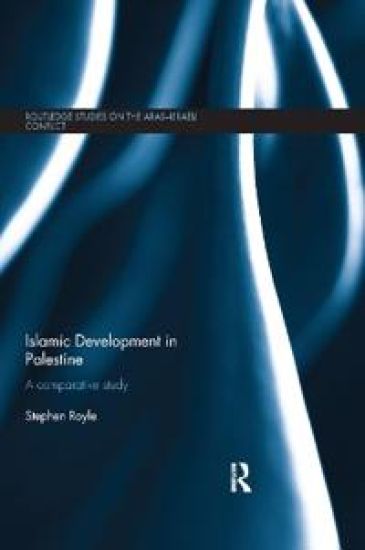
Islamic Development in Palestine

Islamic Development in Palestine

Stephen Royle

Routledge
2019
nidottu
This book assesses the capabilities of an Islamic approach in aiding self-organisation by examining the case of the occupied Palestinian territories in conjunction with a comparative analysis of four other nations. Three main mechanisms of Islamic development are explored; finance, microfinance and charity. Identifying the need to recognise the non-linear nature of societal interaction at the individual, community and state levels, the book uses complexity theory to better understand development. It assesses the role of Islamic development at macro and micro levels and identifies issues with rigid and hierarchical policy making.
Geography for CCEA A2 Level

Geography for CCEA A2 Level

Martin Thom; Eileen Armstrong; Stephen Royle

Colourpoint Books
2017
pokkari
This book has been completely revised for the new CCEA Geography A2 specification (for first teaching Sepember 2017). It follows the same topics as the specification, features questions of examination standard and includes a glossary of key terms. Illustrated in full colour it uses local examples wherever appropriate.
Islamic Development in Palestine

Islamic Development in Palestine

Stephen Royle

Routledge
2016
sidottu
This book assesses the capabilities of an Islamic approach in aiding self-organisation by examining the case of the occupied Palestinian territories in conjunction with a comparative analysis of four other nations. Three main mechanisms of Islamic development are explored; finance, microfinance and charity. Identifying the need to recognise the non-linear nature of societal interaction at the individual, community and state levels, the book uses complexity theory to better understand development. It assesses the role of Islamic development at macro and micro levels and identifies issues with rigid and hierarchical policy making.