Kirjojen hintavertailu. Mukana 12 595 353 kirjaa ja 12 kauppaa.

Kirjailija

Stephen Schloesser

Kirjat ja teokset yhdessä paikassa: 5 kirjaa, julkaisuja vuosilta 2005-2015, suosituimpien joukossa Vatican II. Vertaile teosten hintoja ja tarkista saatavuus suomalaisista kirjakaupoista.

5 kirjaa

Kirjojen julkaisuhaarukka 2005-2015.

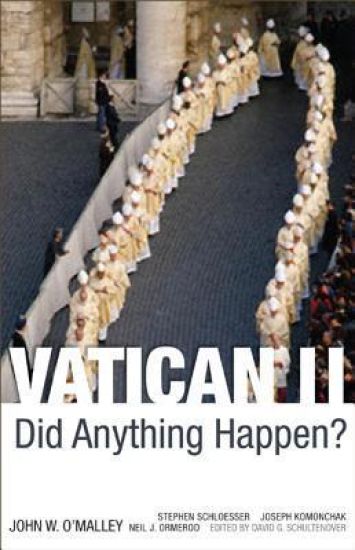
Vatican II

Vatican II

John W. O'Malley; Joseph Komonchak; Neil J. Ormerod; Stephen Schloesser

Continuum International Publishing Group Ltd.
2008
nidottu
For 40 years a battle has been waged over Vatican II between conservatives and liberals, between those who want to go "back to the sources" and those who champion "the spirit of the council." Benedict XVI is clearly one of those who started out as a liberal only to end up in the conservative camp. "Vatican II: Did Anything Happen?" is clearly on the side of those who think something unprecedented happened, that a genie was let out of the bottle that will never be stuffed back.Comprised mainly of a collection of articles, mostly but not all from Theological Studies, that are without qualification some of the best analysis of the council ever written, this book is a long overdue look at one of the most controversial and revolutionary chapters in the history of the Catholic Church.
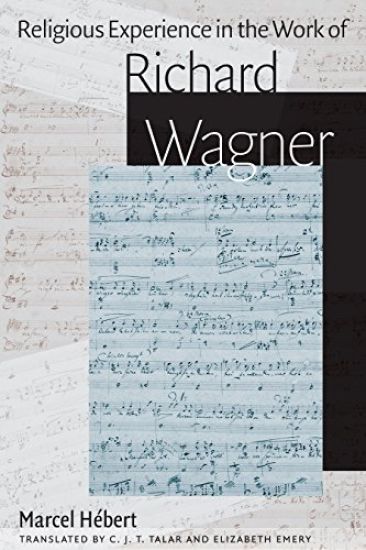
Religious Experience in the Work of Richard Wagner

Religious Experience in the Work of Richard Wagner

Marcel Hébert; Stephen Schloesser

The Catholic University of America Press
2015
sidottu
Enthusiasm for the operas of composer Richard Wagner (1813-1883) flourished in fin-de-siècle France, fed by fascination for the medieval history and literature that inspired his work. By the 1890s, ""pilgrimages"" to Wagner's burial city of Bayreuth, Germany, home of a regular festival of his work, were a rite of passage for musicians and the upper crust. French admirers promoted Wagner's ideas in journals such as La Revue wagnérienne, launched in 1885. These writings fueled a mystique about Wagner, his music, and his beliefs.Philosopher Marcel Hébert developed his Religious Experience in the Work of Richard Wagner (1895) from this background of sustained popular interest in Wagner, an interest that had intensified with the return of his operas to the Paris stage. Newspaper debates about the impact of Wagner's ideas on French society often stressed the links between Wagner and religion. These debates inspired works like Hébert's, intended to explain the complex myth and allegory in Wagner's work and to elucidate it for a new generation of French spectators.Hébert's discussion of Wagner, written for a popular audience, might seem an anomaly in light of his better-known academic philosophical writings. Yet Wagner's use of myth and symbol, as well as his ability to write musical dramas that evoked emotional as well as cognitive response, resonated with Hébert's symbolist approach to dogma, and the appeal to religious experience characteristic of Modernist thinkers in general. By writing about Wagner to discuss these themes, Hébert caught the interest of the educated readership who shared his concern about the clash of ancient faith and modern thinking, and who were receptive to his argument that both could be reconciled through his revisionist approach. Thus, Hébert turned Wagner and his work into a vehicle for popularizing the Modernist vision of framing religion through experience as well as knowledge.
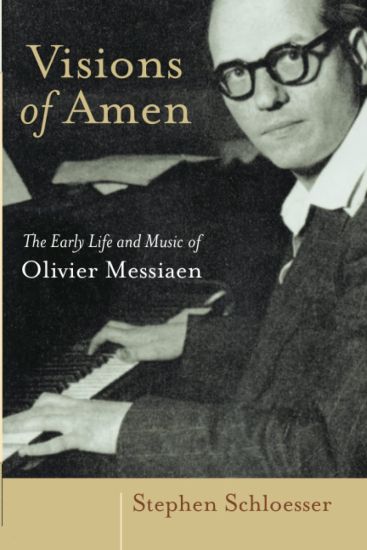
Visions of Amen

Visions of Amen

Stephen Schloesser

William B. Eerdmans Publishing Company
2014
pokkari
Informed study of composer Olivier Messiaen in light of recent research French composer Olivier Messiaen (1908-1992) is probably best known for his Quartet for the End of Time, premiered in a German prisoner-of-war camp in 1941. However, Messiaen was a remarkably complex, intelligent person with a sometimes tragic domestic life who composed a wide range of music. This book explores the enormous web of influences in the early part of Messiaen's long life. The first section of the book provides an intellectual biography of Messiaen's early life in order to make his (difficult) music more accessible to the general listener. The second section offers an analysis of and thematic commentaries on Messiaen's pivotal work for two pianos, Visions of Amen, composed in 1943. Schloesser's analysis includes timing indications corresponding to a downloadable performance of the work by accomplished pianists St phane Lemelin and Hyesook Kim.
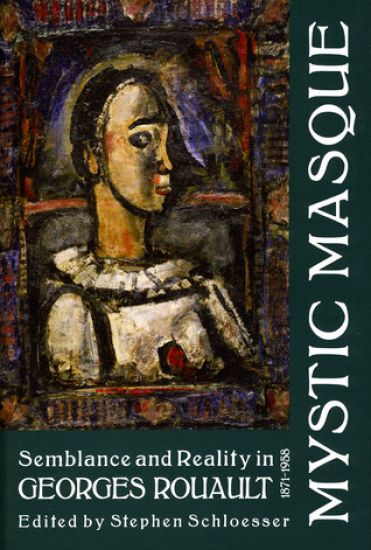
Mystic Masque

Mystic Masque

Stephen Schloesser

McMullen Museum of Art
2008
nidottu
In the fifty years since Georges Rouault's death, his paintings have fallen from their height of popularity in the 1940s and '50s to the depths of neglect. The publication of "Mystic Masque", which accompanies an exhibition of the same name at Boston College's McMullen Museum of Art, will introduce a new generation to the work of a modern master. This catalogue features lavish illustrations of the outward 'masks' that Rouault employed - those of circus players, prostitutes, judicial figures, and even the face of Christ.Rouault's work, as presented here, depicts the human condition as a kind of pageant or guise where outward appearances - from those of the wealthiest public officials to the lowliest slumdwellers - misrepresent and betray deeper realities. Essays by scholars of art history, history, theology, and other fields lend an interdisciplinary context to the striking images, recovering Rouault's rightful place in modern painting.
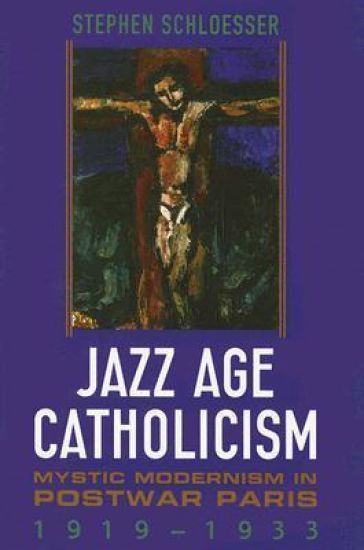
Jazz Age Catholicism

Jazz Age Catholicism

Stephen Schloesser

University of Toronto Press
2005
sidottu
Following the Great War’s devastation, innovative movements in France offered competing visions of a revitalized national body and a new world order. One of these was the postwar Catholic revival or renouveau catholique. Since the church had historically been the dominant religious force in France, its turn of the century separation from the state was especially bitter. For many Catholics, the 1914–18 sacrifices made on the Republic’s behalf necessitated its postwar ‘re-Christianization.’ However, in their attempt to reconcile Catholicism with culture, revivalists needed to abandon old oppositions and adapt religion’s rigging to the prevailing winds of modernity.Stephen Schloesser’s Jazz Age Catholicism shows how a postwar generation of Catholics refashioned traditional notions of sacramentalism in modern language and imagery. Jacques Maritain’s philosophy, Georges Rouault’s visual art, Georges Bernanos’s fiction, and Charles Tournemire’s music all reclothed ancient tropes in new fashions. By the late 1920s, the renouveau catholique had successfully positioned Catholic intellectual and cultural discourse at the very centre of elite French life. Its synthesis of Catholicism and culture would define the religiosity of many throughout Western Europe and the Americas into the 1960s.