Kirjojen hintavertailu. Mukana 12 390 323 kirjaa ja 12 kauppaa.

Kirjailija

Stephen Shapiro

Kirjat ja teokset yhdessä paikassa: 13 kirjaa, julkaisuja vuosilta 2008-2024, suosituimpien joukossa Combined and Uneven Development. Vertaile teosten hintoja ja tarkista saatavuus suomalaisista kirjakaupoista.

13 kirjaa

Kirjojen julkaisuhaarukka 2008-2024.

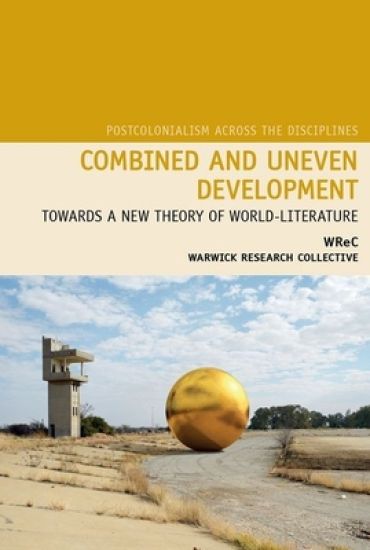
Combined and Uneven Development

Combined and Uneven Development

Sharae Deckard; Nicholas Lawrence; Neil Lazarus; Graeme Macdonald; Upamanyu Pablo Mukherjee; Benita Parry; Stephen Shapiro

Liverpool University Press
2015
sidottu
The ambition of this book is to resituate the problem of ‘world literature’, considered as a revived category of theoretical enquiry, by pursuing the literary-cultural implications of the theory of combined and uneven development. This theory has a long pedigree in the social sciences, where it continues to stimulate debate. But its implications for cultural analysis have received less attention, even though the theory might be said to draw attention to a central – perhaps the central – arc or trajectory of modern(ist) production in literature and the other arts worldwide. It is in the conjuncture of combined and uneven development, on the one hand, and the recently interrogated and expanded categories of ‘world literature’ and ‘modernism’, on the other, that this book looks for its specific contours. In the two theoretical chapters that frame the book, the authors argue for a single, but radically uneven world-system; a singular modernity, combined and uneven; and a literature that variously registers this combined unevenness in both its form and content to reveal itself as, properly speaking, world-literature. In the four substantive chapters that then follow, the authors explore a selection of modern-era fictions in which the potential of their method of comparativism seems to be most dramatically highlighted. They treat the novel paradigmatically, not exemplarily, as a literary form in which combined and uneven development is manifested with particular salience, due in no small part to its fundamental association with the rise of capitalism and its status in peripheral and semi-peripheral societies as a ‘modernising’ import. The peculiar plasticity and hybridity of the novel form enables it to incorporate not only multiple literary levels, genres and modes, but also other non-literary and archaic cultural forms – so that, for example, realist elements might be mixed with more experimental modes of narration, or older literary devices might be reactivated in juxtaposition with more contemporary frames.

Tracking Capital

Tracking Capital

Sharae Deckard; Michael Niblett; Stephen Shapiro

STATE UNIVERSITY OF NEW YORK PRESS
2024
pokkari
Offers new ways to read the relationship between culture, ecology, and capitalism.Tracking Capital introduces new ways to understand the entanglement of cultural forms and practices in economic, social, and ecological crises and struggles. Building on the fundamental insights of world-systems analysis, the book offers readers a series of rubrics, keywords, and concepts-such as zemiperiphery, registration, and commodity chains-to enable more integrated, transdisciplinary methods of literary and cultural study. Throughout, Sharae Deckard, Michael Niblett, and Stephen Shapiro foreground the role of culture in both consolidating and contesting the classism, racism, sexism, and ecocide constitutive of the modern world-system. In the context of capitalism's ongoing bloody war against the poor, the powerless, and the planet, Tracking Capital provides tools with which to diagnose the morbid symptoms of the present, as well as to plot possible steps on the road to a better future.
Tracking Capital

Tracking Capital

Sharae Deckard; Michael Niblett; Stephen Shapiro

STATE UNIVERSITY OF NEW YORK PRESS
2024
sidottu
Offers new ways to read the relationship between culture, ecology, and capitalism.Tracking Capital introduces new ways to understand the entanglement of cultural forms and practices in economic, social, and ecological crises and struggles. Building on the fundamental insights of world-systems analysis, the book offers readers a series of rubrics, keywords, and concepts-such as zemiperiphery, registration, and commodity chains-to enable more integrated, transdisciplinary methods of literary and cultural study. Throughout, Sharae Deckard, Michael Niblett, and Stephen Shapiro foreground the role of culture in both consolidating and contesting the classism, racism, sexism, and ecocide constitutive of the modern world-system. In the context of capitalism's ongoing bloody war against the poor, the powerless, and the planet, Tracking Capital provides tools with which to diagnose the morbid symptoms of the present, as well as to plot possible steps on the road to a better future.
Invisible Solutions

Invisible Solutions

Stephen Shapiro

Mascot Books
2020
sidottu
"Solve Any Problem Faster, with Less Risk and Lower Cost Unprecedented access to infinite solutions has led us to realize that having all of the answers is not the answer. From innovation teams to creativity experts to crowdsourcing, we've turned from one source to another, spending endless cycles pursuing piecemeal solutions to each challenge we face. What if your organization had an effective and systematic approach to deal with any problem? To find better solutions, you need to first ask better questions. The questions you ask determine which solutions you'll see and which will remain hidden. This compact yet powerful book contains the formulas to reframe any problem multiple ways, using 25 lenses to help you gain different perspectives. With visual examples and guidance, it contains everything you need to master any challenge. This book will help you: € Discover why we are hardwired to ask ineffective questions and learn to work through those barriers. € Understand the power an
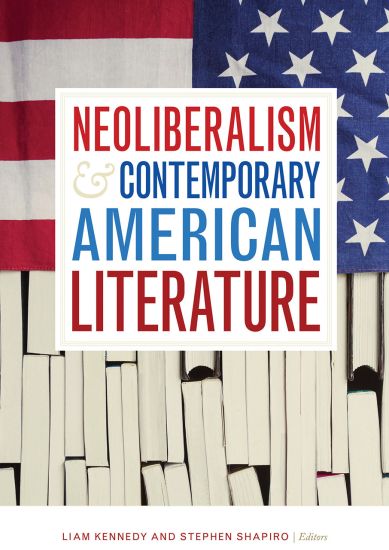
Neoliberalism and Contemporary American Literature

Neoliberalism and Contemporary American Literature

Liam Kennedy; Stephen Shapiro

Dartmouth College Press
2019
nidottu
Neoliberalism is the rare buzzword that has fully crossed over from academic theorizing into mainstream discussion. Neoliberalism and Contemporary American Literature is the first book to examine the ways that US literature has responded to the dominance of our neoliberal regime. The essays collected here reveal how contemporary American writers have both propped up and interrogated the foundations of neoliberalism. The contributors look at a host of literary genres and styles, from the utopian sci-fi of Kim Stanley Robinson and the dark fantasy of Karen Russell to the poetic memoir-fiction hybrids of Ben Lerner, exploring how the relationships between politics, economics, and literary form have become both distorted and revitalized in the age of neoliberalism. Most pressingly, they ask if contemporary literature can still imagine either the end of capitalism or any realistic alternative to it.
Neoliberalism and Contemporary American Literature

Neoliberalism and Contemporary American Literature

Liam Kennedy; Stephen Shapiro

Dartmouth College Press
2019
sidottu
Neoliberalism is the rare buzzword that has fully crossed over from academic theorizing into mainstream discussion. Neoliberalism and Contemporary American Literature is the first book to examine the ways that US literature has responded to the dominance of our neoliberal regime. The essays collected here reveal how contemporary American writers have both propped up and interrogated the foundations of neoliberalism. The contributors look at a host of literary genres and styles, from the utopian sci-fi of Kim Stanley Robinson and the dark fantasy of Karen Russell to the poetic memoir-fiction hybrids of Ben Lerner, exploring how the relationships between politics, economics, and literary form have become both distorted and revitalized in the age of neoliberalism. Most pressingly, they ask if contemporary literature can still imagine either the end of capitalism or any realistic alternative to it.
Pentecostal Modernism: Lovecraft, Los Angeles, and World-Systems Culture

Pentecostal Modernism: Lovecraft, Los Angeles, and World-Systems Culture

Stephen Shapiro; Philip Barnard

Bloomsbury Academic
2018
nidottu
Bringing together new accounts of the pulp horror writings of H.P. Lovecraft and the rise of the popular early 20th-century religious movements of American Pentecostalism and Social Gospel, Pentecostal Modernism challenges traditional histories of modernism as a secular avant-garde movement based in capital cities such as London or Paris. Disrupting accounts that separate religion from progressive social movements and mass culture, Stephen Shapiro and Philip Barnard construct a new Modernism belonging to a history of regional cities, new urban areas powered by the hopes and frustrations of recently urbanized populations seeking a better life. In this way, Pentecostal Modernism shows how this process of urbanization generates new cultural practices including the invention of religious traditions and mass-cultural forms.
Pentecostal Modernism: Lovecraft, Los Angeles, and World-Systems Culture

Pentecostal Modernism: Lovecraft, Los Angeles, and World-Systems Culture

Stephen Shapiro; Philip Barnard

Bloomsbury Academic
2017
sidottu
Bringing together new accounts of the pulp horror writings of H.P. Lovecraft and the rise of the popular early 20th-century religious movements of American Pentecostalism and Social Gospel, Pentecostal Modernism challenges traditional histories of modernism as a secular avant-garde movement based in capital cities such as London or Paris. Disrupting accounts that separate religion from progressive social movements and mass culture, Stephen Shapiro and Philip Barnard construct a new Modernism belonging to a history of regional cities, new urban areas powered by the hopes and frustrations of recently urbanized populations seeking a better life. In this way, Pentecostal Modernism shows how this process of urbanization generates new cultural practices including the invention of religious traditions and mass-cultural forms.
Combined and Uneven Development

Combined and Uneven Development

Sharae Deckard; Nicholas Lawrence; Neil Lazarus; Graeme Macdonald; Upamanyu Pablo Mukherjee; Benita Parry; Stephen Shapiro

Liverpool University Press
2015
nidottu
The ambition of this book is to resituate the problem of ‘world literature’, considered as a revived category of theoretical enquiry, by pursuing the literary-cultural implications of the theory of combined and uneven development. This theory has a long pedigree in the social sciences, where it continues to stimulate debate. But its implications for cultural analysis have received less attention, even though the theory might be said to draw attention to a central – perhaps the central – arc or trajectory of modern(ist) production in literature and the other arts worldwide. It is in the conjuncture of combined and uneven development, on the one hand, and the recently interrogated and expanded categories of ‘world literature’ and ‘modernism’, on the other, that this book looks for its specific contours. In the two theoretical chapters that frame the book, the authors argue for a single, but radically uneven world-system; a singular modernity, combined and uneven; and a literature that variously registers this combined unevenness in both its form and content to reveal itself as, properly speaking, world-literature. In the four substantive chapters that then follow, the authors explore a selection of modern-era fictions in which the potential of their method of comparativism seems to be most dramatically highlighted. They treat the novel paradigmatically, not exemplarily, as a literary form in which combined and uneven development is manifested with particular salience, due in no small part to its fundamental association with the rise of capitalism and its status in peripheral and semi-peripheral societies as a ‘modernising’ import. The peculiar plasticity and hybridity of the novel form enables it to incorporate not only multiple literary levels, genres and modes, but also other non-literary and archaic cultural forms – so that, for example, realist elements might be mixed with more experimental modes of narration, or older literary devices might be reactivated in juxtaposition with more contemporary frames.

Productive Body, The

Productive Body, The

Stephen Shapiro; Philip Barnard

John Hunt Publishing
2014
nidottu
The Productive Body asks how the human body and its labor have been expropriated and re-engineered through successive stages of capitalism; and how capitalism's transformation of the body is related to the rise of scientific psychology and social science disciplines complicit with modern regimes of control. In Discipline and Punish, Foucault cited Guery and Deleule in order to link Marx's diagnosis of capitalism with his own critique of power/knowledge. The Productive Body brings together Marxism and theories of the body-machine for the goal of political revolution.
How to Read Foucault's Discipline and Punish

How to Read Foucault's Discipline and Punish

Anne Schwan; Stephen Shapiro

Pluto Press
2011
pokkari
Michel Foucault’s Discipline and Punish is one of the best-selling works of critical theory and a key text on many undergraduate courses. However, it is a long, difficult text which makes Anne Schwan and Stephen Shapiro's excellent step-by-step reading guide a welcome addition to the How to Read Theory series. Undergraduates across a wide range of disciplines are expected to have a solid understanding of Foucault's key terms, which have become commonplace in critical thinking today. While there are many texts that survey Foucault's thought, these are often more general overviews or biographical précis that give little in the way of robust explanation and discussion. In contrast, Schwan and Shapiro take a plain-speaking, yet detailed, approach, specifically designed to give students a thorough understanding of one of the most influential texts in contemporary cultural theory.
The Culture and Commerce of the Early American Novel

The Culture and Commerce of the Early American Novel

Stephen Shapiro

Pennsylvania State University Press
2009
pokkari
Taking his cue from Philadelphia-born novelist Charles Brockden Brown’s Annals of Europe and America, which contends that America is shaped most noticeably by the international struggle between Great Britain and France for control of the world trade market, Stephen Shapiro charts the advent, decline, and reinvigoration of the early American novel. That the American novel “sprang so unexpectedly into published existence during the 1790s” may be a reflection of the beginning of the end of Franco-British supremacy and of the power of a middle class riding the crest of a new world economic system.Shapiro’s world-systems approach is a relatively new methodology for literary studies, but it brings two particularly useful features to the table. First, it refines the conceptual frameworks for analyzing cultural and social history, such as the rise in sentimentalism, in relation to a long-wave economic history of global commerce; second, it fosters a new model for a comparative American studies across time. Rather than relying on contiguous time, a world-systems approach might compare the cultural production of one region to another at the same location within the recurring cycle in an economic reconfiguration. Shapiro offers a way of thinking about the causes for the emergence of the American novel that suggests a fresh approach to the paradigms shaping American studies.
How to Read Marx's Capital

How to Read Marx's Capital

Stephen Shapiro

Pluto Press
2008
pokkari
Capital Volume I is essential reading on many undergraduate courses, but the structure and style of the book can be confusing for students, leading them to abandon the text. This book is a clear guide to reading Marx's classic text, which explains the reasoning behind the book's structure and provides help with the more technical aspects that non-economists may find taxing. Students are urged to think for themselves and engage with Marx's powerful methods of argument and explanation. Shapiro shows that Capital is key to understanding critical theory and cultural production. This highly focused book will prove invaluable to students of politics, cultural studies and literary theory.