

Kirjailija
Stephen Sloan
Kirjat ja teokset yhdessä paikassa: 9 kirjaa, julkaisuja vuosilta 2002-2024, suosituimpien joukossa Historical Dictionary of Terrorism. Vertaile teosten hintoja ja tarkista saatavuus suomalaisista kirjakaupoista.
9 kirjaa
Kirjojen julkaisuhaarukka 2002-2024.


Rev. Sloan realized that many people had a misunderstanding of what God's word says about divorce, suicide, and the unpardonable sin. He wrote his master's thesis on the unpardonable sin. It is his hope and prayer that this will be a blessing to all of God's people.

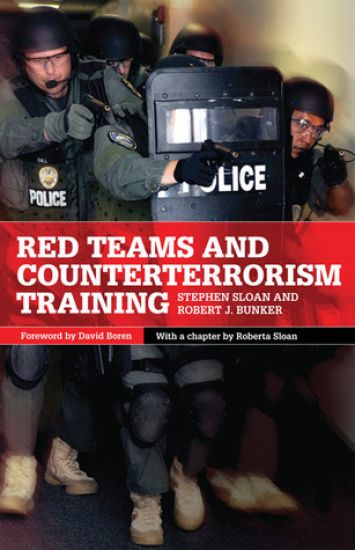
Red Teams and Counterterrorism Training
Stephen Sloan; Robert J. Bunker; David L. Boren
University of Oklahoma Press
2011
nidottu
Keeping ahead of terrorists requires innovative, up-to-date training. This follow-up to Stephen Sloan's pioneering 1981 book, Simulating Terrorism, takes stock of twenty-first-century terrorism - then equips readers to effectively counter it. Quickly canvassing the evolution of terrorism - and of counterterrorism efforts - over the past thirty years, co-authors Sloan and Robert J. Bunker draw on examples from the early 2000s, following the World Trade Center and Pentagon attacks, to emphasize the need to prevent or respond quickly to ""active aggressors"" - terrorists who announce their presence and seek credibility through killing. Training for such situations requires realistic simulations - whose effectiveness, the authors show, depends on incorporating red teams; that is, the groups that play the part of active aggressors.In Red Teams and Counterterrorism Training, Sloan and Bunker, developers of simulation-driven counterterrorist training, take readers through the prerequisites for and basic principles of conducting a successful simulation and preparing responders to face threats - whether from teenage shooters or from sophisticated terrorist organizations. The authors clearly explain how to create an effective red team whose members can operate from within the terrorists' mindset. An innovative chapter by theater professional Roberta Sloan demonstrates how to use dramatic techniques to teach red teams believable role-playing.Rounding out this book, a case study of the 2009 shooting at Fort Hood illustrates the cost of failures in intelligence and underscores the still-current need for serious attention to potential threats. First responders - whether civilian or military - will find Red Teams and Counterterrorism Training indispensible as they address and deter terrorism now and in the future.
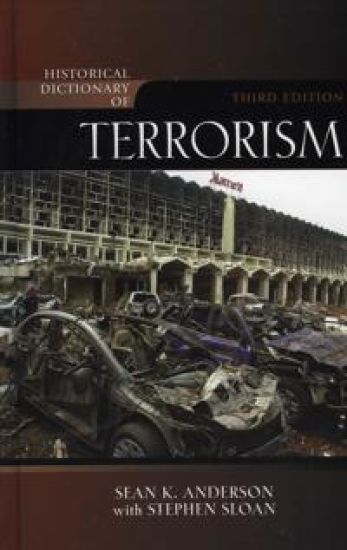
The United States Department of Defense defines terrorism as "the calculated use of unlawful violence or threat of unlawful violence to inculcate fear; intended to coerce or to intimidate governments or societies in the pursuit of goals that are generally political, religious, or ideological." While terrorism has been around for centuries, it was the al Qa'eda attacks of September 11, 2001, that brought home to the world, and most particularly the United States, just how dangerous terrorism can be. The third edition of the Historical Dictionary of Terrorism presents the full spectrum of forms of political violence through a chronology, an introductory essay, a bibliography, and hundreds of cross-referenced dictionary entries on major terrorist groups and their leaders, significant terrorist events, cyber-terrorism, counterterrorism, and social science concepts regarding the motivations and group dynamics of terrorist groups. Authors Sean K. Anderson and Stephen Sloan move beyond the gut reaction we have to this volatile and divisive topic by providing a reliable and objective reference on terrorism.
When we think "terrorism," our minds conjure up dramatic and horrifying images of hijackings, suicide bombings, assassinations and various other forms of brutal carnage. Placing terrorist acts within a historical context, this book helps us understand the causes, dynamics and outcomes of terrorism.Providing a concise history of terrorism since the French Revolution, the author considers the relationship between terrorism and warfare, crime, technology globalization and the state. He investigates the meaning of the word "terrorism" and shows how the definition and practice have both evolved over time. Throughout, he considers what motivates terrorists and what they hope to accomplish.Written by a pioneer in the field, Terrorism: The Present Threat in Context offers a practical assessment of domestic and international threats to security. This book will help anyone concerned about terrorism learn to evaluate the risks in a rational way, devoid of the hysteria that so often dominates the subject.

When we think "terrorism," our minds conjure up dramatic and horrifying images of hijackings, suicide bombings, assassinations and various other forms of brutal carnage. Placing terrorist acts within a historical context, this book helps us understand the causes, dynamics and outcomes of terrorism.Providing a concise history of terrorism since the French Revolution, the author considers the relationship between terrorism and warfare, crime, technology globalization and the state. He investigates the meaning of the word "terrorism" and shows how the definition and practice have both evolved over time. Throughout, he considers what motivates terrorists and what they hope to accomplish.Written by a pioneer in the field, Terrorism: The Present Threat in Context offers a practical assessment of domestic and international threats to security. This book will help anyone concerned about terrorism learn to evaluate the risks in a rational way, devoid of the hysteria that so often dominates the subject.

Newly revised post-September 11, this edition focuses on the history of terrorism from the first century to the present, and explains how and why terrorist groups have formed, as well as the means they use to terrorize the innocent.