Kirjojen hintavertailu. Mukana 12 595 353 kirjaa ja 12 kauppaa.
Kirjailija
Stephen Smith
Kirjat ja teokset yhdessä paikassa: 93 kirjaa, julkaisuja vuosilta 1984-2026, suosituimpien joukossa C++ Illustrated. Vertaile teosten hintoja ja tarkista saatavuus suomalaisista kirjakaupoista.
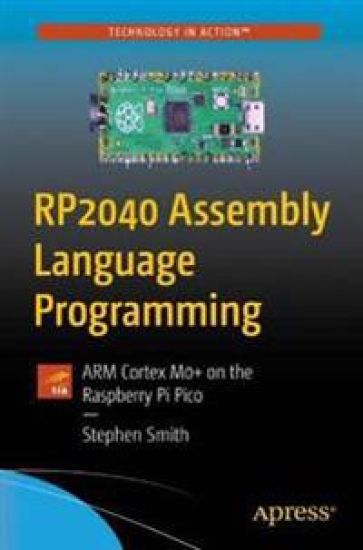
Learn to program the Raspberry Pi Pico’s dual ARM Cortex M0+ CPUs in Assembly Language. The Pico contains a customer System on a Chip (SoC) called the RP2040, making it the Foundation’s first entry into the low-cost microcontroller market. The RP2040 contains a wealth of coprocessors for performing arithmetic as well as performing specialized I/O functionality. This book will show you how these CPUs work from a low level, easy-to-learn perspective. There are eight new Programmable I/O (PIO) coprocessors that have their own specialized Assembly Language supporting a wide variety of interface protocols. You'll explore these protocols and write programs or functions in Assembly Language and interface to all the various bundled hardware interfaces. Then go beyond working on your own board and projects to contribute to the official RP2040 SDK. Finally, you'll take your DIY hardware projects to the next level of performance and functionality withmore advanced programming skills. What You'll LearnRead and understand the Assembly Language code that is part of the Pico’s SDKIntegrate Assembly Language and C code together into one programInterface to available options for DIY electronics and IoT projectsWho This Book Is ForMakers who have already worked with microcontrollers, such as the Arduino or Pico, programming in C or Python. Those interested in going deeper and learning how these devices work at a lower level, by learning Assembly Language.
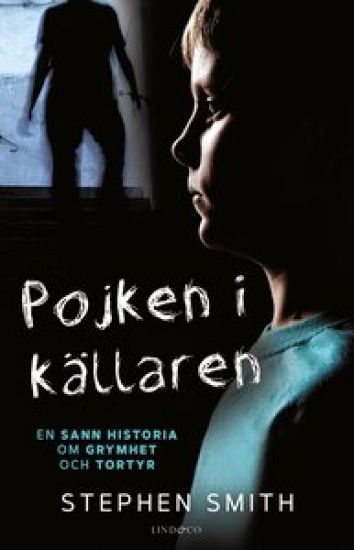
Stephen Smith är pojken som aldrig fanns. I tretton år gömde Stephens föräldrar honom i källaren. Han föddes utanför äktenskapet i början av 1960-talet och föräldrarna valde att dölja honom för världen genom att låsa in honom. Den lilla pojkens värld begränsades till ett mörklagt rum med en enkel säng, en naken glödlampa i taket och ett bord. Han svalt och blev slagen. Steve ägnade dagarna åt fantasier om monster i låtsasvärldar, vilket hjälpte honom att förtränga den fysiska smärta och psykologiska tortyr hans brutale far utsatte honom för. Med undantag för några turer till sjukhuset blev Steve kvar i sitt källarfängelse i familjens hus där han berövades dagsljus, hela barndomen, skolgången och all mänsklig närhet - ända tills han blev tonåring. Till slut lyckades han rymma men blev i stället offer för två platser som båda är exempel på de värsta fallen av institutionell misshandel som avslöjats i England: Aston Hall och St William s Catholic School. Pojken i källaren är inte bara en grym sann historia om tortyr och utsatthet, utan som också berättar om hur kampen för överlevnad och lycka övervinner allt.
Fully revised, Tourism, 2nd edition covers aspects of tourism from a modern perspective, providing students with a range of theoretical and research-based explanations, supported by examples, case studies and unique insights from industry representatives. The many facets of tourism management are presented in a style that is as relevant for 1st year students as it is for postgraduates. The text offers introductory definitions and detailed discussions of contemporary issues that recognize current teaching practice around the world. Covering topics such as policy and planning, heritage management, leisure management, event management and hospitality management, the book tackles the practical elements of academic tourism such as infrastructure management and economic development, together with other important contemporary issues such as sustainable development and post-tourists. This new edition also features: Updated and new contemporary case studies, including countries such as Egypt, Croatia and The Philippines New material on tourism and sustainability including the SDGs Unions in the travel and tourism sectors Gender issues in travel and tourism Augmented reality and robots Prosumption and co-creation Contributions from professionals working in the tourism industry for a real-world perspective A fresh new layout and full colour text and figures that make it easy to locate information and aid learning Links to new video material throughout, which provide easy access to additional content for further study This will be an essential text for all students of travel and tourism at all levels of study.
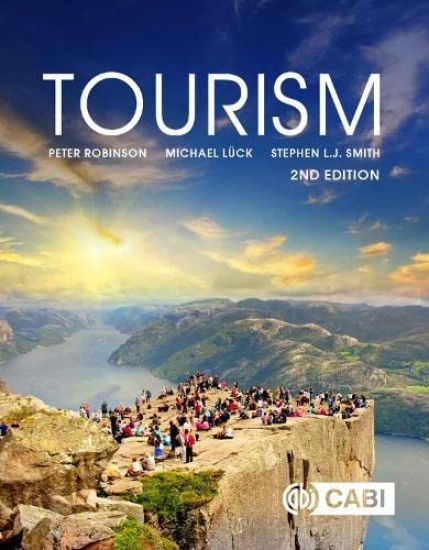
Fully revised, Tourism, 2nd edition covers aspects of tourism from a modern perspective, providing students with a range of theoretical and research-based explanations, supported by examples, case studies and unique insights from industry representatives. The many facets of tourism management are presented in a style that is as relevant for 1st year students as it is for postgraduates. The text offers introductory definitions and detailed discussions of contemporary issues that recognize current teaching practice around the world. Covering topics such as policy and planning, heritage management, leisure management, event management and hospitality management, the book tackles the practical elements of academic tourism such as infrastructure management and economic development, together with other important contemporary issues such as sustainable development and post-tourists. This new edition also features: · Updated and new contemporary case studies, including countries such as Egypt, Croatia and The Philippines · New material on · tourism and sustainability including the SDGs · Unions in the travel and tourism sectors · Gender issues in travel and tourism · Augmented reality and robots · Prosumption and co-creation · Contributions from professionals working in the tourism industry for a real-world perspective · A fresh new layout and full colour text and figures that make it easy to locate information and aid learning · Links to new video material throughout, which provide easy access to additional content for further study This will be an essential text for all students of travel and tourism at all levels of study.
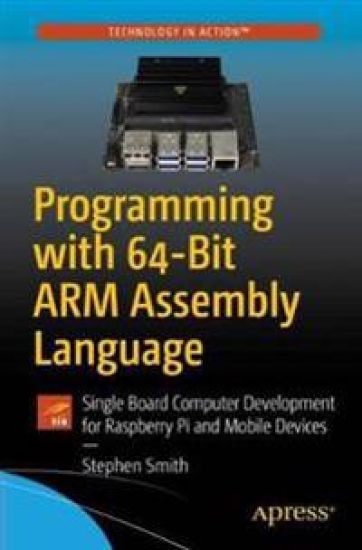
Mastering ARM hardware architecture opens a world of programming for nearly all phones and tablets including the iPhone/iPad and most Android phones. It’s also the heart of many single board computers like the Raspberry Pi. Gain the skills required to dive into the fundamentals of the ARM hardware architecture with this book and start your own projects while you develop a working knowledge of assembly language for the ARM 64-bit processor.You'll review assembly language programming for the ARM Processor in 64-bit mode and write programs for a number of single board computers, including the Nvidia Jetson Nano and the Raspberry Pi (running 64-bit Linux). The book also discusses how to target assembly language programs for Apple iPhones and iPads along with 64-Bit ARM based Android phones and tablets. It covers all the tools you require, the basics of the ARM hardware architecture, all the groups of ARM 64-Bit Assembly instructions, and how data is stored in the computer’s memory. In addition, interface apps to hardware such as the Raspberry Pi’s GPIO ports. The book covers code optimization, as well as how to inter-operate with C and Python code. Readers will develop enough background to use the official ARM reference documentation for their own projects.With Programming with 64-Bit ARM Assembly Language as your guide you’ll study how to read, reverse engineer and hack machine code, then be able to apply these new skills to study code examples and take control of both your ARM devices’ hardware and software. What You'll LearnMake operating system calls from assembly language and include other software libraries in your projectsInterface apps to hardware devices such as the Raspberry Pi GPIO portsReverse engineer and hack codeUse the official ARM reference documentation for your own projectsWho This Book Is ForSoftware developers who have already learned to program in a higher-level language like Python, Java, C#, or even C and now wish to learn Assembly programming.
Economic Development, the leading textbook in this field, provides you with a complete and balanced introduction to the requisite theory, driving policy issues, and latest research. Todaro and Smith take a policy-oriented approach, presenting economic theory in the context of critical policy debates and country-specific case studies, to show how theory relates to the problems and prospects of developing countries.
Stephen Smith is the boy who did not exist.Born out of wedlock in the early 1960s, Steve's parents hid him away from the world by locking him in the cellar...for thirteen years. Starved and beaten, the little boy's world was a darkened room that measured just eight feet by ten with a single makeshift bed, bare light bulb, and a solitary table. Steve would spend his days conjuring up an imaginary world full of monsters he would draw to try and block out the physical and mental torture inflicted on him by his brutal father. Apart from a few admissions to hospital as a result of his 'imprisonment', Steve remained in the coal cellar of the family home where he was deprived of daylight, his childhood, school, and human contact until he'd reached his teenage years. Eventually, he escaped only to fall prey to the instigators of two of the worst cases of institutional abuse in the UK at Aston Hall hospital and St. William's Catholic School. The Boy in the Cellar is a horrifying true story of torture and cruelty, that reveals a human's full capacity to fight for survival and search out happiness and hope.
Gain all the skills required to dive into the fundamentals of the Raspberry Pi hardware architecture and how data is stored in the Pi’s memory. This book provides you with working starting points for your own projects while you develop a working knowledge of Assembly language programming on the Raspberry Pi. You'll learn how to interface to the Pi’s hardware including accessing the GPIO ports. The book will cover the basics of code optimization as well as how to inter-operate with C and Python code, so you'll develop enough background to use the official ARM reference documentation for further projects. With Raspberry Pi Assembly Language Programming as your guide you'll study how to read and reverse engineer machine code and then then apply those new skills to study code examples and take control of your Pi’s hardware and software both.What You'll LearnProgram basic ARM 32-Bit Assembly LanguageInterface with the various hardware devices on the Raspberry PiComprehend code containing Assembly languageUse the official ARM reference documentationWho This Book Is ForCoders who have already learned to program in a higher-level language like Python, Java, C#, or C and now wish to learn Assembly programming.
From the harrowing situation of migrants trying to cross the Mediterranean in rubber dinghies to the crisis on the US-Mexico border, mass migration is one of the most urgent issues facing our societies today. At the same time, viable solutions seem ever more remote, with the increasing polarization of public attitudes and political positions. In this book, Stephen Smith focuses on ‘young Africa’ – 40 per cent of its population are under fifteen – anda dramatic demographic shift. Today, 510 million people live inside EU borders, and 1.25 billion people in Africa. In 2050, 450 million Europeans will face 2.5 billion Africans – five times their number. The demographics are implacable. The scramble for Europe will become as inexorable as the ‘scramble for Africa’ was at the end of the nineteenth century, when 275 million people lived north and only 100 million lived south of the Mediterranean. Then it was all about raw materials and national pride, now it is about young Africans seeking a better life on the Old Continent, the island of prosperity within their reach. If Africa’s migratory patterns follow the historic precedents set by other less developed parts of the world, in thirty years a quarter of Europe’s population will beAfro-Europeans. Addressingthe question of how Europe cancope with an influx of this magnitude, Smith argues for a path between the two extremes of today’s debate. He advocatesmigratory policies of ‘good neighbourhood’ equidistant from guilt-ridden self-denial and nativist egoism. This sobering analysis of the migration challenges we now face will be essential reading for anyone concerned with the great social and political questions of our time.