Kirjailija
Stephen Thomas
Kirjat ja teokset yhdessä paikassa: 18 kirjaa, julkaisuja vuosilta 1991-2026, suosituimpien joukossa Reputations of Value. Vertaile teosten hintoja ja tarkista saatavuus suomalaisista kirjakaupoista.
18 kirjaa
Kirjojen julkaisuhaarukka 1991-2026.
In a career lasting over 30 years, Stephen Thomas served in a number of the most sensitive areas of the fight against serious organised crime. his service in the variety of these positions is unrivalled. After joining the ID in 1990, in 1996 he became an investigation officer on a Drugs Team. And then in 1997, joined an elite Target Drugs Team, investigating the highest levels of organised crime. In 2001 the author moved to the Project Team, becoming an informant (CHIS) handler, running long term, deep penetration, informants into every area of the Department's responsibilities. He went to be promoted, in 2004, to a CHIS Controller, responsible for the management of all CHIS being handled by the Project Team. Then in 2006 he joined HMRC's International Source Management Unit. ISMU managed all overseas informants run by HMRC. It was also responsible for providing training in source recruitment and management, to overseas law enforcement agencies. In 2015 he moved to the PPU, better known as Witness Protection, providing protective measures to those for whom HMRC had such a responsibility. Finally in 2017, he joined HMRC's Undercover Unit (UCU), as a Cover Officer. Throughout all of this service, Thomas was engaged in a large number of highly sensitive operations.
Companies today operate in an era characterised by volatility, crisis, lack of trust and intense scrutiny. People have a growing expectation that the private sector not only markets a particular product or service but also takes an active role in making broader contributions to society. The spotlight has never shone more fiercely on what companies say— and do. Yet, a significant number of companies grapple with the challenge of proactively earning and safeguarding their multifaceted reputations. The stakes are higher than ever, as the trajectory of a company's growth is intricately linked to its ability to strategically enhance its standing in the eyes of stakeholders – including investors, customers, employees, regulators and activists. Reputations of Value examines the profound impact of corporate reputations on any company's ability to advance its business agenda over time. The book features insights from subject matter experts around the world. It serves as a guide for those wanting to better understand how companies can operate on a stronger, more resilient, and authentic basis in the face of a dynamic and unpredictable landscape.
RadCases Plus Q&a Gastrointestinal Imaging
Stephen Thomas; Jonathan M. Lorenz
Thieme Medical Publishers Inc
2020
pokkari
Essential gastroenterology cases and board-type Q&A review to help you pass your exam! RadCases Gastrointestinal Imaging Second Edition by Stephen Thomas and Jonathan Lorenz expands on the rich study experience that has been tried, tested, and popularized by radiology residents around the world. The new edition includes important variations on prior cases, updated diagnostic and management strategies, and new pathological entities. One hundred new, carefully selected GI cases are focused on helping radiology residents navigate and assimilate a daunting volume of digestive-related information. For maximum ease of self-assessment, each case begins with the clinical presentation on the right-hand page; study that and then turn the page for imaging findings, differential diagnoses with the definitive diagnosis, essential facts, pearls and pitfalls, and more. Key Highlights More than 550 high-resolution multimodality images, including computed tomography, MRI, fluoroscopic studies, positron emission tomography, and ultrasound, visually guide readers through the cases.New to this edition, a question-and-answer section for each case reinforces key concepts.Easy-to-read bulleted formatting and concise presentation of common and uncommon gastrointestinal tract diagnoses impacting the esophagus, stomach, liver, spleen, gallbladder, pancreas, intestines, appendix, and colon. Thieme's RadCases means cases selected to simulate what you will see on your exams, rounds, and rotations. RadCases helps you to identify the correct differential diagnosis for each case, including the most critical. The series comprehensively covers the following specialties: Breast Imaging · Cardiac Imaging · Emergency Imaging · Gastrointestinal Imaging · Genitourinary Imaging · Head and Neck Imaging · Interventional Radiology · Musculoskeletal Radiology · Neuro Imaging · Nuclear Medicine · Pediatric Imaging · Thoracic Imaging · Ultrasound Imaging This RadCases book comes with a code providing access to additional online cases: 100 from this book plus 250 more cases and interactive Q&A. Master your cases, pass your exams, and diagnose with confidence: RadCases! This print book includes complimentary access to a digital copy on https://medone.thieme.com. Publisher's Note: Products purchased from Third Party sellers are not guaranteed by the publisher for quality, authenticity, or access to any online entitlements included with the product.
Tintinalli's Emergency Medicine: A Comprehensive Study Guide
Judith Tintinalli; O. John Ma; Donald Yealy; Garth Meckler; J. Stapczynski; David Cline; Stephen Thomas
McGraw-Hill Education
2019
sidottu
The long-awaited new edition of the world's most widely used and highly regarded textbook and reference of emergency medicine A Doody's Core Title for 2024 & 2022!Tintinalli’s Emergency Medicine is THE essential resource for everyone working in, and teaching emergency medicine. The Ninth Edition provides the depth and breadth of coverage that reflects the complexity and expertise needed to practice emergency medicine in today’s fast-paced environments. This comprehensive text is an important clinical resource for physicians, residents and students, advance practice providers, emergency nurses, EMTs, and paramedics. It is a necessary resource for in-training and board examinations, and recertification. Tintinalli’s Emergency Medicine covers everything from prehospital care, disaster preparedness, and basic and advanced resuscitative techniques, to all the significant medical, traumatic, and environmental conditions requiring emergency treatment in adults, children and neonates. Highlights of the Ninth Edition: Full-color design with more tables than ever to succinctly present key informationExtensive updates to all sections, incorporating the latest clinical and evidence-based informationOnline access to over 100 videos, covering a wide range of diagnostic and therapeutic procedures, and POCUS for obstetric/gynecologic, pediatric, musculoskeletal, and vascular conditionsWorld-class pediatric section on the care of neonates, infants, and childrenExpanded chapters on the management of gynecologic and obstetric conditions and emergenciesUpdated information on toxicologic and environmental emergenciesContemporary, concise discussion of ED identification and treatment of opioid use disordersUpdated information on procedural sedationExpert advice on the management and care of transgender patientsLatest information available on neurologic and cardiac emergenciesFrom the reviews of the seventh edition:"Collectively, they have once again produced an excellent text that manages to cover the broad scope of emergency medicine while remaining an easily readable and practical resource....Last, for the inevitable comparison of this current edition of Tintinalli's Emergency Medicine with other available emergency medicine textbooks available: in my opinion, Tintinalli’s still comes out on top. It is more concise and easier to read than some, yet it covers the breadth of emergency medicine practice more comprehensively than others….Just as previous editions did, the seventh presents all of the most pertinent and up-to-date information in a well-organized format that is comprehensive yet easy to read. That and many of the attractive new features in this current edition will ensure its place on my bookshelf for years to come."-JAMA
Revision with unchanged content. Since 2002, over 10% of total cyber vulnerabilities were SQL injection vulnerabilities (SQLIVs). Since most developers are not experienced software security practitioners, a solution for correctly removing SQLIVs that does not require security expertise is desirable. In this paper, an automated fix generation algorithm for removing SQLIVs by replacing SQL statements with prepared SQL statements is described. Automated fix generation is a type of automated code generation that analyzes project artifacts containing faults and uses the analysis to generate fault free alternative or replacement code. Prepared SQL statements have a static structure and take type-specific input parameters, which prevents SQL injection attack input from changing the structure and logic of a statement. The automated fix algorithm is evolved over the course of preparing for and analyzing the results of four formative and evaluative case studies.
Asset Data Integrity Is Serious Business
Robert S. DiStefano; Stephen Thomas
Industrial Press Inc.,U.S.
2010
sidottu
If your asset data is not reliable, you need to convince the organization of the enormous potential that is locked away. To accomplish this, you need to understand the breadth of the problem and the value of solving it. A viable business case for action is needed-so let's get started! Physical asset data integrity is a critical aspect of every business, often the most valuable asset on the balance sheet, yet it is often overlooked. The data that we have about our assets collectively creates information, provides for accurate analysis and facilitates sound business decisions. Without accuracy of asset data there is a strong potential for poor decisions and their negative consequences. This book will not only provide an appreciation of this fact, it will also provide a road map to achieving value out of something most CEOs, managers, and workers often overlook. Acknowledgements About the Author Introduction 1-The Business Case for Data IntegrityIntroduction to the Business CaseInformation OverloadSearching for DataRetiring Baby BoomersThe Brain DrainA Business Case ExampleConsistency or Lack ThereofThe Data Integrity Corporate EntitlementImpact on Shareholder Value Part 1-Understanding the Importance of Asset Data Integrity2-Plant Asset Information-A Keystone for SuccessOverviewWho Are The Stakeholders?Why We Wrote This BookWho Will Benefit?What You Will LearnChapter SynopsisLet’s Get Started3-What is Data Integrity?Defining the TermsData ElementsTaxonomy and Why Is It Important?What We Are Looking for in Good DataThe Downside of Poor Data IntegrityA Word About Information TechnologyUnderstanding Data Is Just the Beginning4-The Asset/Data Integrity Life CycleAbout Life CyclesThe Asset Life CycleThe Asset Data Life CycleWhy the Data Life Cycle is ImportantRoles and Responsibilities Within the Asset Life CycleIt Is Never To Soon To StartLife Cycle LinksLife Cycles as a Foundation5-Data Integrity at the Task LevelTask vs. StrategicThe Data Integrity TransformData Integrity TasksReactive Data IntegrityProactive Data IntegrityFrom Reactive to Proactive6-Internal Outcomes and ImpactsIndirect ImpactsDecisions Are Just the BeginningIndirect InputsIndirect OutputsThe Legal UmbrellaIndirect Aspects of the Transform7-External Outcomes and ImpactsExternal IssuesOutcomes and Impacts – PartnersOutcomes and Impacts – SuppliersOutcomes and Impacts -CustomersOutcomes and Impacts -AgenciesOutcomes and Impacts – PublicOutcomes and Impacts – Insurance CarriersThe External Impacts Are Important8-Information Technology (IT) Problems and SolutionsThe Implication for ITImplications to IT of a Modern Asset Data Management PracticeThe Advent of ERP SystemsMaster Data ManagementThe Future Part 2-Building a Sound Data Integrity Process9-Building an Enterprise-Level Data Integrity ModelHistorical ViewWhat Is an Asset?Asset ClassificationStatic Data vs. Dynamic DataThe Differences Among Assets, FunctionalLocations and Functional Location HierarchiesOther Asset-Related Master DataAsset Master Data Structure and FormattingIdeal Asset Data RepositoriesEnterprise-Level vs. Plant-Level Asset Data Integrity10-Building an Enterprise-Level Inventory Catalog Data Integrity ModelThe Model For MaterialWhat Is a Spare Part?Items ClassificationStatic Data vs. Dynamic DataIdeal Item Data RepositoriesEnterprise-Level vs. Plant-Level Item Data Integrity11-Data Integrity AssessmentData Quality Dimensions – The BeginningThe Approach to the AssessmentThe Initial StepsThe Assessment-General CommentsThe Assessment ProcessMoving Forward12-Assessment Details-Assets and Material ItemsSimilar But DifferentAssessing Asset DataAssessing Material DataData Strategy SessionTo-Be TaxonomyPrimary Data FieldsClass and SubclassManufacturer or Supplier NameAsset-Model Number or Serial NumberMaterial Items-Manufacturer or Supplier Part NumberAttribute TemplatesOther Asset Data FieldsThe Goal-Quality Data for the Future13-Asset Clean-Up and RepairAfter the AssessmentData Repair is Far from SimpleRepair ProblemsData Repair StrategiesThe Big Bang ApproachFix It As You GoThe Line in the Sand-More on SustainabilityCommitment to Doing the Work Part 3-Sustaining What You Have Created14-Data GovernanceData Governance-Insight to the ProblemShifting the BurdenThe Long Term SolutionThe Benefits of Data GovernanceThe Jobs of Data GovernanceIt’s All About Policy and ControlsRoles and ResponsibilitiesWhen Should We Start?15-Sustaining What Has Been CreatedThe Need to SustainEstablishing OwnershipCommunicationProcess and ProceduresTrainingPrepare for Data GrowthWalking the WalkQuality Control and Quality AssuranceUsing Key Performance IndicatorsThe Continuous Improvement CycleSustainability Is Not Optional16-Data Integrity Is Serious Business BibliographyIndex
Using Automated Fix Generation to Mitigate SQL Injection Vulnerabilities
Stephen Thomas
VDM Verlag Dr. Mueller E.K.
2008
pokkari
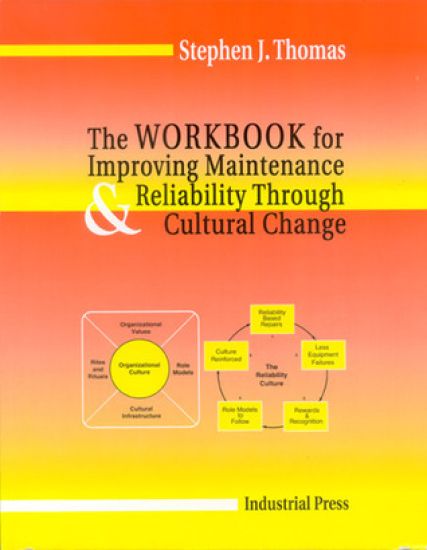
Workbook for Improving Maintenance and Reliability Through Cultural Change
Stephen Thomas
Industrial Press Inc.,U.S.
2006
pokkari
In Improving Maintenance and Reliability through Cultural Change Steve Thomas explains to middle managers in the manufacturing and process industries how to improve maintenance and reliability performance at the plant level by changing their organization’s culture. In so doing he demystifies the concept of organizational culture and links it with the eight elements of change: leadership, work process, structure, group learning, technology, communication, inter-relationships, and rewards. He goes on to effectively demonstrate how to break the cycle of failed improvement programs and instead use cultural change to help make significant and lasting improvements in plant performance. Contains exercises that will provide an in-depth understanding of the material as it relates to the specific circumstances of your organization.Logically organized, so that the workbook chapters complement the corresponding chapters in the book.Works as an effective group-learning tool to use with your peers and managers to help you collectively think about the book’s key concepts and relate them to your efforts.Provides chapter summaries through definitions, charts, and lists.Includes valuable forms that can be copied and used to work through the change process.Contains numerous writing exercises, checklists and work activities, helping to clarify the issues that exist within your organization.Includes an ongoing case study that simulates the change process.The BeginningCulture DefinedVision and the Goal Achievement ModelOrganizational ValuesRole ModelsRites and RitualsThe Culture InfrastructureThe Elements of Change LeadershipWork ProcessStructureGroup LearningTechnologyCommunicationInterrelationshipsRewardsThe Web of Cultural ChangeAssessment and Corrective ActionMoving ForwardAppendixBibliographyFigure IndexIndex
Turning off the Lights
Stephen Thomas; Iromi Ruana Rajepakse
Practical Action Publishing
2005
nidottu
The World Trade Organization's General Agreement on Trade in Services (GATS) could threaten services and projects specifically aimed at or managed by poor communities. This book explains the nature of that threat, taking community-run electricity schemes in Sri Lanka as an example. It will help to galvanize support for a pro-poor agenda in future negotiations by illustrating the dangers if the concerns of poor communities are not taken into account. Twenty years of privatization and liberalization have weakened poor communities throughout the developing world, while strengthening business and the private sector. Civil society groups and service user groups have struggled to ensure that their legitimate concerns are heard. Now international pressure through the GATS negotiations could threaten the survival of even those projects which have focused on poor communities, such as off-grid micro-hydro power schemes which are widespread in Sri Lanka. This book explains the background to the GATS negotiations and the international context across the globe, and looks in detail at the case of Sri Lanka, just embarking on the liberalization of its electricity sector.Turning Off the Lights will provide valuable ammunition to campaigners for a fairer approach to GATS, and to energy policy planners and researchers. About the Authors: Stephen Thomas is a senior research fellow at the University of Greenwich. He has researched widely in energy policy and planning. Iromi Ruana Rajepakse is a lawyer specializing in public, civil and labour law. She is the author of An Introduction to Law in Sri Lanka.
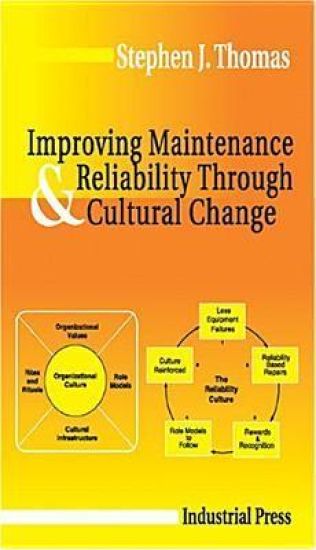
Improving Maintenance and Reliability Through Cultural Change
Stephen Thomas
Industrial Press Inc.,U.S.
2005
sidottu
This unique and innovative book explains how to improve your maintenance and reliability performance at the plant level by changing the organizations culture. It is specifically intended for middle managers in the manufacturing and process industries. This book demystifies the concept of organizational culture and links it with the eight elements of change: leadership, work process, structure, group learning, technology, communication, interrelationships, and rewards. If you want to break the cycle of failed improvement programs and instead use cultural change to help make significant and lasting improvements in plant performance, this book will show you how. Explains in-depth the eight elements of change and how they relate to cultural change.Discusses cultural change with a reliability focus.Includes a PowerPoint presentation with audio on the enclosed CD-ROM, together with a web survey model, the Web of Organizational Change.The BeginningCulture DefinedVision and the Goal Achievement ModelOrganizational ValuesRole ModelsRites and RitualsThe Culture InfrastructureThe Elements of ChangePart 1 Leadership The BasicsPart 2 Leadership and Change ManagementWork ProcessStructureGroup LearningTechnologyCommunicationInterrelationshipsRewardsThe Web of Cultural ChangeAssessment and Corrective ActionMoving ForwardAppendicesBibliographyFigure IndexIndex
This book describes the close relationship between the historical researches and the teeming world of early nineteenth-century controversy. The setting is Oxford between the 1820s and the 1840s, when Newman made his ambitious and doomed attempt to re-invent the ‘catholicity’ of the Church of England. The author shows that in Newman’s battle against the Protestant wing of the Church of England, and the (to him) even more sinister ‘liberals’, he saw parallels with the struggle of the early Church against heresy. Newman’s ‘rediscovery’ of ancient Patristic writers and heretics was thus part of a strategy to revive Catholicism within the Anglican Church. Dr Thomas shows how Newman's eventual conversion to Rome in 1845 may be understood as a change in his perception of heresy, and a realisation of the applicability of his own polemic to his Anglican self.
The Workbook for Successfully Managing Change in Organizations
Stephen Thomas
Industrial Press Inc.,U.S.
2002
pokkari
Successfully Managing Change in Organizations: A Users Guide is an innovative book that provides concepts, ideas, examples, insights, and new ways to think about and approach change. This accompanying workbook goes one very valuable step further by providing practical working exercises that help you focus your thinking and your future work. And it will help you successfully turn the concepts you presented in the book into reality within your organization. Contains exercises that will provide an in-depth understanding of the material as it relates to your specific circumstances.Logically organized so that the workbook chapters cover the same material as the corresponding chapters in the book.Works as an effective group learning tool to use with your peers and managers to help you collectively think about the concepts and relate them to your efforts.Provides chapter summaries through definitions, charts, and lists.Includes valuable forms that can be copied and used to work through the change process.Contains numerous writing exercises, checklists and work activities, helping to clarify the issues that exist within your organization.Includes an ongoing case study with exercises revolving around a fictitious company.Introduction Laying the Foundation Change: Not Linear, but Nonlinear Vision From Vision to Reality The Roadmap of Change A Case of Teams Working with Consultants Resistance to Change The Web of Change The Elements—Part 1 The Elements—Part 2 Fitting the Elements Together How to Handle the Process of Change Measurement Appendix 1 Appendix 2
Successfully Managing Change in Organizations
Stephen Thomas
Industrial Press Inc.,U.S.
2001
pokkari
Now in paperback, this book was written for all managers who have been given the difficult task of bringing change to their organizations. It addresses organizational change at the working level. It is a “user's guide” in change management, written by a user, for users. This is an invaluable resource for anyone who wants to know, step by step, how to implement change successfully. Draws on the author's wealth of practical experience and emphasizes that the elements of change are interrelated, that they constitute a “Web of Change”: change one element and you must see what the impact will be on the others. Identifies and explains eight key elements of change. A way to measure change in each element and its affect on the others is presented on paper and through a computer program on an enclosed disk. Part One: Getting StartedIntroduction to the Process of Change Laying the Foundation Change: Not Linear, But Nonlinear The Vision of the Future or How Do We Know Where We Are Going So We'll Know When We Have Arrived Part Two Concepts Which Will Contribute To Success From Vision To Reality The Roadmap Of Change A Case For Teams Working with Consultants Resistance To Change The Web Of ChangePart Three Execution: It's More Than Magic The Elements Fitting The Elements Together How to Handle the Process Of Change Measurement Part Four Completion And A New Beginning Techniques Of Continued Growth Conclusion
Financial Instability and the International Debt Problem
George McKenzie; Stephen Thomas
Palgrave Macmillan
1992
nidottu
The authors argue clearly and convincingly in this book that the debt crisis which has plagued the world economy for the past ten years is due to the inherent fragility of financial markets. Governments, financial institutions and borrowers, including developing countries, have simply expected too much from these markets. In a world of volatile interest rates, exchange rates and uncertain government policy, it is virtually impossible for financial institutions to effectively distinguish fundamental shifts in economic activity from random shocks.
This book describes the close relationship between the historical researches and the teeming world of early nineteenth-century controversy. The setting is Oxford between the 1820s and the 1840s, when Newman made his ambitious and doomed attempt to re-invent the ‘catholicity’ of the Church of England. The author shows that in Newman’s battle against the Protestant wing of the Church of England, and the (to him) even more sinister ‘liberals’, he saw parallels with the struggle of the early Church against heresy. Newman’s ‘rediscovery’ of ancient Patristic writers and heretics was thus part of a strategy to revive Catholicism within the Anglican Church. Dr Thomas shows how Newman's eventual conversion to Rome in 1845 may be understood as a change in his perception of heresy, and a realisation of the applicability of his own polemic to his Anglican self.
Financial Instability and the International Debt Problem
George McKenzie; Stephen Thomas
Palgrave Macmillan
1991
sidottu
The authors argue clearly and convincingly in this book that the debt crisis which has plagued the world economy for the past ten years is due to the inherent fragility of financial markets. Governments, financial institutions and borrowers, including developing countries, have simply expected too much from these markets. In a world of volatile interest rates, exchange rates and uncertain government policy, it is virtually impossible for financial institutions to effectively distinguish fundamental shifts in economic activity from random shocks.