Kirjojen hintavertailu. Mukana 12 390 323 kirjaa ja 12 kauppaa.

Kirjailija

Stephen Tuck

Kirjat ja teokset yhdessä paikassa: 6 kirjaa, julkaisuja vuosilta 2011-2025, suosituimpien joukossa Fog of War. Vertaile teosten hintoja ja tarkista saatavuus suomalaisista kirjakaupoista.

6 kirjaa

Kirjojen julkaisuhaarukka 2011-2025.

Fog of War

Fog of War

Kevin M. Kruse; Stephen Tuck

Oxford University Press Inc
2012
sidottu
This collection is a timely reconsideration of the intersection between two of the dominant events of twentieth-century American history, the upheaval wrought by the Second World War and the social revolution brought about by the African American struggle for equality. Scholars from a wide range of fields explore the impact of war on the longer history of African American protest from many angles: from black veterans to white segregationists, from the rural South to northern cities, from popular culture to federal politics, and from the American confrontations to international connections. It is well known that World War II gave rise to human rights rhetoric, discredited a racist regime abroad, and provided new opportunities for African Americans to fight, work, and demand equality at home. It would be all too easy to assume that the war was a key stepping stone to the modern civil rights movement. But the authors show that in reality the momentum for civil rights was not so clear cut, with activists facing setbacks as well as successes and their opponents finding ways to establish more rigid defenses for segregation. While the war set the scene for a mass movement, it also narrowed some of the options for black activists.
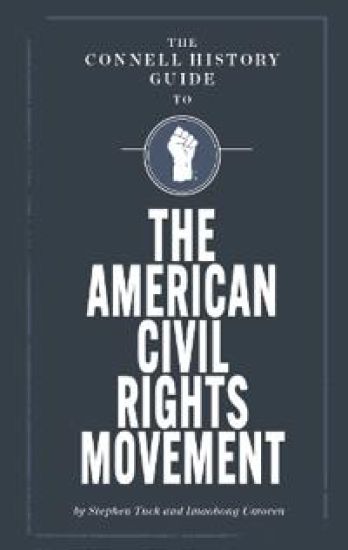
The American Civil Rights Movement

The American Civil Rights Movement

Stephen Tuck; Imaobong Umoren

CONNELL PUBLISHING LTD
2025
pokkari
Despite all the traumas, violence and setbacks which marked its progress, the story of the American civil rights movement is an uplifting one. It is the story of one of America's greatest revolutions. In the popular imagination, it is often seen as little more than a series of set-piece protests against Southern segregation, led by a charismatic minister, Martin Luther King - protests that eventually moved the conscience of a nation and inevitably climaxed in victory. But it was much more than that, and its roots stretch back to World War Two and beyond - back to the fight against slavery and the aftermath of emancipation. In the meantime, the movement has generated a vast and rich scholarship from historical researchers not just in America but all round the world. Stephen Tuck and Imaobong Umoren tell the story of US civil rights, from its origins to the present day, and explain what it was like to be black in the American South in the 1950s, when all areas of life were segregated, with black Americans having to attend vastly inferior schools, being restricted to the back of public transport, and not being allowed to eat at department store lunch counters at all. Birmingham, Alabama's notorious Commissioner of Public Safety, Eugene "Bull" Connor, once vowed: "I may not be able to preserve segregation, but I'll die trying.". But despite the progress since then the civil rights debate remains at the forefront of American life. As Barack Obama, America's first African American president, observed at the dedication of a memorial to Martin Luther King in 2011, "our work, Dr. King's work, is not yet complete".
The Night Malcolm X Spoke at the Oxford Union

The Night Malcolm X Spoke at the Oxford Union

Stephen Tuck; Henry Louis Gates Jr.

University of California Press
2014
sidottu
Less than three months before he was assassinated, Malcolm X spoke at the Oxford Union the most prestigious student debating organization in the United Kingdom. The Oxford Union regularly welcomed heads of state and stars of screen and served as the training ground for the politically ambitious offspring of Britain's better classes. Malcolm X, by contrast, was the global icon of race militancy. For many, he personified revolution and danger. Marking the fiftieth anniversary of the debate, this book brings to life the dramatic events surrounding the visit, showing why Oxford invited Malcolm X, why he accepted, and the effect of the visit on Malcolm X and British students. Stephen Tuck tells the human story behind the debate and also uses it as a starting point to discuss larger issues of Black Power, the end of empire, British race relations, immigration, and student rights. Coinciding with a student-led campaign against segregated housing, the visit enabled Malcolm X to make connections with radical students from the Caribbean, Africa, and South Asia, giving him a new perspective on the global struggle for racial equality, and in turn, radicalizing a new generation of British activists. Masterfully tracing the reverberations on both sides of the Atlantic, Tuck chronicles how the personal transformation of the dynamic American leader played out on the international stage.
Fog of War

Fog of War

Kevin M. Kruse; Stephen Tuck

Oxford University Press Inc
2012
nidottu
This collection is a timely reconsideration of the intersection between two of the dominant events of twentieth-century American history, the upheaval wrought by the Second World War and the social revolution brought about by the African American struggle for equality. Scholars from a wide range of fields explore the impact of war on the longer history of African American protest from many angles: from black veterans to white segregationists, from the rural South to northern cities, from popular culture to federal politics, and from the American confrontations to international connections. It is well known that World War II gave rise to human rights rhetoric, discredited a racist regime abroad, and provided new opportunities for African Americans to fight, work, and demand equality at home. It would be all too easy to assume that the war was a key stepping stone to the modern civil rights movement. But the authors show that in reality the momentum for civil rights was not so clear cut, with activists facing setbacks as well as successes and their opponents finding ways to establish more rigid defenses for segregation. While the war set the scene for a mass movement, it also narrowed some of the options for black activists.
We Ain’t What We Ought To Be

We Ain’t What We Ought To Be

Stephen Tuck

The Belknap Press
2011
nidottu
In this exciting revisionist history, Stephen Tuck traces the black freedom struggle in all its diversity, from the first years of freedom during the Civil War to President Obama’s inauguration. As it moves from popular culture to high politics, from the Deep South to New England, the West Coast, and abroad, Tuck weaves gripping stories of ordinary black people—as well as celebrated figures—into the sweep of racial protest and social change. The drama unfolds from an armed march of longshoremen in post–Civil War Baltimore to Booker T. Washington’s founding of Tuskegee Institute; from the race riots following Jack Johnson’s “fight of the century” to Rosa Parks’ refusal to move to the back of a Montgomery bus; and from the rise of hip hop to the journey of a black Louisiana grandmother to plead with the Tokyo directors of a multinational company to stop the dumping of toxic waste near her home.We Ain’t What We Ought To Be rejects the traditional narrative that identifies the Southern non-violent civil rights movement as the focal point of the black freedom struggle. Instead, it explores the dynamic relationships between those seeking new freedoms and those looking to preserve racial hierarchies, and between grassroots activists and national leaders. As Tuck shows, strategies were ultimately contingent on the power of activists to protest amidst shifting economic and political circumstances in the U.S. and abroad. This book captures an extraordinary journey that speaks to all Americans—both past and future.