Kirjojen hintavertailu. Mukana 12 595 353 kirjaa ja 12 kauppaa.

Kirjailija

Stephen von Tetzchner

Kirjat ja teokset yhdessä paikassa: 29 kirjaa, julkaisuja vuosilta 1996-2024, suosituimpien joukossa Pedagogisk-psykologisk arbeid. Vertaile teosten hintoja ja tarkista saatavuus suomalaisista kirjakaupoista.

29 kirjaa

Kirjojen julkaisuhaarukka 1996-2024.

Augmentative and Alternative Communication for Children, Adolescents and Adults with Developmental Disorders

Augmentative and Alternative Communication for Children, Adolescents and Adults with Developmental Disorders

Stephen von Tetzchner; Harald Martinsen; Kristine Stadskleiv

TAYLOR FRANCIS LTD
2024
nidottu
This book is about the possibilities and achievements of children, adolescents and adults who have developmental disorders that make their development of speech difficult or very delayed and who therefore need to develop communication and language with other means than speech. For some, the difficulties are temporary in childhood, others continue to communicate with alternative communication systems throughout adulthood.This comprehensive and accessible volume offers guidance based on current knowledge about typical and atypical language development for all those supporting families and professionals involved with children, adolescents and adults who may benefit from using augmentative and alternative communication (AAC) systems.The text covers all major issues and gives a thorough introduction to factors that are important when choosing communication systems, vocabularies of manual signs and graphic symbols. It guides the reader in assessment strategies, adaptation of the language environment, and the principles for teaching comprehension and use of AAC, sentence formation and conversational skills to individuals with different disabilities, including motor disabilities, intellectual disabilities, autism spectrum disorders and developmental language disorders. The volume also addresses the influence of AAC on speech development and the use of AAC to promote participation in various activities, including social media, and to reduce challenging behaviour.The book will be essential reading for students and practising psychologists, speech and language therapists, special educators, teachers, physiotherapists and occupational therapists. The accessible guidance will also be helpful for the families of children, adolescents and adults who use augmentative and alternative communication.
Augmentative and Alternative Communication for Children, Adolescents and Adults with Developmental Disorders

Augmentative and Alternative Communication for Children, Adolescents and Adults with Developmental Disorders

Stephen von Tetzchner; Harald Martinsen; Kristine Stadskleiv

TAYLOR FRANCIS LTD
2024
sidottu
This book is about the possibilities and achievements of children, adolescents and adults who have developmental disorders that make their development of speech difficult or very delayed and who therefore need to develop communication and language with other means than speech. For some, the difficulties are temporary in childhood, others continue to communicate with alternative communication systems throughout adulthood.This comprehensive and accessible volume offers guidance based on current knowledge about typical and atypical language development for all those supporting families and professionals involved with children, adolescents and adults who may benefit from using augmentative and alternative communication (AAC) systems.The text covers all major issues and gives a thorough introduction to factors that are important when choosing communication systems, vocabularies of manual signs and graphic symbols. It guides the reader in assessment strategies, adaptation of the language environment, and the principles for teaching comprehension and use of AAC, sentence formation and conversational skills to individuals with different disabilities, including motor disabilities, intellectual disabilities, autism spectrum disorders and developmental language disorders. The volume also addresses the influence of AAC on speech development and the use of AAC to promote participation in various activities, including social media, and to reduce challenging behaviour.The book will be essential reading for students and practising psychologists, speech and language therapists, special educators, teachers, physiotherapists and occupational therapists. The accessible guidance will also be helpful for the families of children, adolescents and adults who use augmentative and alternative communication.
Typical and Atypical Child and Adolescent Development 7 Social Relations, Self-awareness and Identity
This concise guide offers an accessible introduction to social development, social relations, identity development and self-awareness from childhood to adolescence. It integrates insights from both typical and atypical development to reveal the fundamental aspects of human growth and development, and common developmental disorders.The topic books in this series draw on international research in the field and are informed by biological, social and cultural perspectives, offering explanations of developmental phenomena with a focus on how children and adolescents at different ages actually think, feel and act. In this volume, Stephen von Tetzchner explains key topics including: attachment; sibling and peer relations; self and identity; gender development; play; media and understanding of society; and the transition toward adulthood. Together with a companion website that offers topic-based quizzes, lecturer PowerPoint slides and sample essay questions, Typical and Atypical Child and Adolescent Development 7: Social Relations, Self-awareness and Identity is an essential text for all students of developmental psychology, as well as those working in the fields of child development, developmental disabilities and special education. The content of this topic book is taken from Stephen von Tetzchner’s core textbook Child and Adolescent Psychology: Typical and Atypical Development. The comprehensive volume offers a complete overview of child and adolescent development – for more information visit www.routledge.com/9781138823396
Typical and Atypical Child and Adolescent Development 7 Social Relations, Self-awareness and Identity
This concise guide offers an accessible introduction to social development, social relations, identity development and self-awareness from childhood to adolescence. It integrates insights from both typical and atypical development to reveal the fundamental aspects of human growth and development, and common developmental disorders.The topic books in this series draw on international research in the field and are informed by biological, social and cultural perspectives, offering explanations of developmental phenomena with a focus on how children and adolescents at different ages actually think, feel and act. In this volume, Stephen von Tetzchner explains key topics including: attachment; sibling and peer relations; self and identity; gender development; play; media and understanding of society; and the transition toward adulthood. Together with a companion website that offers topic-based quizzes, lecturer PowerPoint slides and sample essay questions, Typical and Atypical Child and Adolescent Development 7: Social Relations, Self-awareness and Identity is an essential text for all students of developmental psychology, as well as those working in the fields of child development, developmental disabilities and special education. The content of this topic book is taken from Stephen von Tetzchner’s core textbook Child and Adolescent Psychology: Typical and Atypical Development. The comprehensive volume offers a complete overview of child and adolescent development – for more information visit www.routledge.com/9781138823396
Typical and Atypical Child and Adolescent Development 6 Emotions, Temperament, Personality, Moral, Prosocial and Antisocial Development
This concise guide offers an accessible introduction to emotions, temperament, personality, moral, prosocial and antisocial development in childhood and adolescence. It integrates insights from both typical and atypical development to reveal the fundamental aspects of human growth and development, and common developmental disorders. The topic books in this series draw on international research in the field and are informed by biological, social and cultural perspectives, offering explanations of developmental phenomena with a focus on how children and adolescents at different ages actually think, feel and act. In this volume, Stephen von Tetzchner explains key topics including: Emotions and emotion regulation; temperament and personality; moral development; prosocial and antisocial development Together with a companion website that offers topic-based quizzes, lecturer PowerPoint slides and sample essay questions, Typical and Atypical Child and Adolescent Development 6 Emotions, Temperament, Personality, Moral, Prosocial and Antisocial Development is an essential text for all students of developmental psychology, as well as those working in the fields of child development, developmental disabilities and special education. The content of this topic book is taken from Stephen von Tetzchner’s core textbook Child and Adolescent Psychology: Typical and Atypical Development. The comprehensive volume offers a complete overview of child and adolescent development – for more information visit www.routledge.com/9781138823396
Typical and Atypical Child and Adolescent Development 6 Emotions, Temperament, Personality, Moral, Prosocial and Antisocial Development
This concise guide offers an accessible introduction to emotions, temperament, personality, moral, prosocial and antisocial development in childhood and adolescence. It integrates insights from both typical and atypical development to reveal the fundamental aspects of human growth and development, and common developmental disorders. The topic books in this series draw on international research in the field and are informed by biological, social and cultural perspectives, offering explanations of developmental phenomena with a focus on how children and adolescents at different ages actually think, feel and act. In this volume, Stephen von Tetzchner explains key topics including: Emotions and emotion regulation; temperament and personality; moral development; prosocial and antisocial development Together with a companion website that offers topic-based quizzes, lecturer PowerPoint slides and sample essay questions, Typical and Atypical Child and Adolescent Development 6 Emotions, Temperament, Personality, Moral, Prosocial and Antisocial Development is an essential text for all students of developmental psychology, as well as those working in the fields of child development, developmental disabilities and special education. The content of this topic book is taken from Stephen von Tetzchner’s core textbook Child and Adolescent Psychology: Typical and Atypical Development. The comprehensive volume offers a complete overview of child and adolescent development – for more information visit www.routledge.com/9781138823396
Typical and Atypical Child and Adolescent Development 5 Communication and Language Development
This concise guide offers an accessible introduction to the development of communication and language in infancy and childhood. It integrates insights from both typical and atypical development to reveal the fundamental aspects of human growth and development, and common developmental disorders. The topic books in this series draw on international research in the field and are informed by biological, social and cultural perspectives, offering explanations of developmental phenomena with a focus on how children and adolescents at different ages actually think, feel and act. In this volume, Stephen von Tetzchner explains key topics including: Language and Communication; early development of communication; theories of communicative development; early dialogues; gestures; the development of language; language in use; child-directed language; gender differences, multilingualism and language in other modalities; and language disorders.Together with a companion website that offers topic-based quizzes, lecturer PowerPoint slides and sample essay questions, Typical and Atypical Child and Adolescent Development 5 Communication and Language Development is an essential text for all students of developmental psychology, as well as those working in the fields of child development, developmental disabilities and special education. The content of this topic book is taken from Stephen von Tetzchner’s core textbook Child and Adolescent Psychology: Typical and Atypical Development. The comprehensive volume offers a complete overview of child and adolescent development – for more information visit www.routledge.com/9781138823396
Typical and Atypical Child and Adolescent Development 5 Communication and Language Development
This concise guide offers an accessible introduction to the development of communication and language in infancy and childhood. It integrates insights from both typical and atypical development to reveal the fundamental aspects of human growth and development, and common developmental disorders. The topic books in this series draw on international research in the field and are informed by biological, social and cultural perspectives, offering explanations of developmental phenomena with a focus on how children and adolescents at different ages actually think, feel and act. In this volume, Stephen von Tetzchner explains key topics including: Language and Communication; early development of communication; theories of communicative development; early dialogues; gestures; the development of language; language in use; child-directed language; gender differences, multilingualism and language in other modalities; and language disorders.Together with a companion website that offers topic-based quizzes, lecturer PowerPoint slides and sample essay questions, Typical and Atypical Child and Adolescent Development 5 Communication and Language Development is an essential text for all students of developmental psychology, as well as those working in the fields of child development, developmental disabilities and special education. The content of this topic book is taken from Stephen von Tetzchner’s core textbook Child and Adolescent Psychology: Typical and Atypical Development. The comprehensive volume offers a complete overview of child and adolescent development – for more information visit www.routledge.com/9781138823396
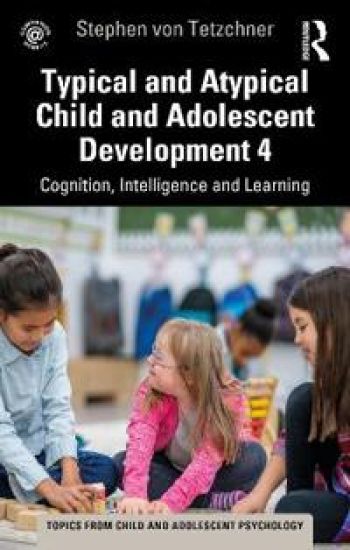
Typical and Atypical Child Development 4 Cognition, Intelligence and Learning
This concise guide offers an accessible introduction to cognitive development in childhood and adolescence. It integrates insights from typical and atypical development to reveal fundamental aspects of human growth and development, and common developmental disorders. The topic books in this series draw on international research in the field and are informed by biological, social and cultural perspectives, offering explanations of developmental phenomena with a focus on how children and adolescents at different ages actually think, feel and act. In this volume, Stephen von Tetzchner explains key topics including: theories of cognitive development; attention, memory and executive function; conceptual development and reasoning, theory of mind; intelligence; and learning and instruction.Together with a companion website that offers topic-based quizzes, lecturer PowerPoint slides and sample essay questions, Typical and Atypical Child and Adolescent Development 4: Cognition, Intelligence and Learning is an essential text for all students of developmental psychology, as well as those working in the fields of child development, developmental disabilities and special education. The content of this topic book is taken from Stephen von Tetzchner’s core textbook Child and Adolescent Psychology: Typical and Atypical Development. The comprehensive volume offers a complete overview of child and adolescent development – for more information visit www.routledge.com/9781138823396
Typical and Atypical Child Development 4 Cognition, Intelligence and Learning
This concise guide offers an accessible introduction to cognitive development in childhood and adolescence. It integrates insights from typical and atypical development to reveal fundamental aspects of human growth and development, and common developmental disorders. The topic books in this series draw on international research in the field and are informed by biological, social and cultural perspectives, offering explanations of developmental phenomena with a focus on how children and adolescents at different ages actually think, feel and act. In this volume, Stephen von Tetzchner explains key topics including: theories of cognitive development; attention, memory and executive function; conceptual development and reasoning, theory of mind; intelligence; and learning and instruction.Together with a companion website that offers topic-based quizzes, lecturer PowerPoint slides and sample essay questions, Typical and Atypical Child and Adolescent Development 4: Cognition, Intelligence and Learning is an essential text for all students of developmental psychology, as well as those working in the fields of child development, developmental disabilities and special education. The content of this topic book is taken from Stephen von Tetzchner’s core textbook Child and Adolescent Psychology: Typical and Atypical Development. The comprehensive volume offers a complete overview of child and adolescent development – for more information visit www.routledge.com/9781138823396
Typical and Atypical Child Development 3 Perceptual and Motor Development
This concise guide offers an accessible introduction to perceptual development and motor development from infancy to adolescence. It integrates insights from typical and atypical development to reveal fundamental aspects of human growth and development, and common developmental disorders. The topic books in this series draw on international research in the field and are informed by biological, social and cultural perspectives, offering explanations of developmental phenomena with a focus on how children and adolescents at different ages actually think, feel and act. In this succinct volume, Stephen von Tetzchner covers key topics in perceptual development including: the theory of perceptual development, early and later development of vision, visual impairment, early perception of sound, the development of hearing throughout childhood and adolescence, the development of musical skills, hearing impairment, deafblindness, smell and taste. The section on motor development explores: theories of motor development, gross motor development, fine motor skills and atypical motor development.Together with a companion website that offers topic-based quizzes, lecturer PowerPoint slides and sample essay questions, Typical and Atypical Child and Adolescent Development 3: Perceptual and Motor Development is an essential text for all students of developmental psychology, as well as those working in the fields of child development, developmental disabilities and special education.
Typical and Atypical Child Development 3 Perceptual and Motor Development
This concise guide offers an accessible introduction to perceptual development and motor development from infancy to adolescence. It integrates insights from typical and atypical development to reveal fundamental aspects of human growth and development, and common developmental disorders. The topic books in this series draw on international research in the field and are informed by biological, social and cultural perspectives, offering explanations of developmental phenomena with a focus on how children and adolescents at different ages actually think, feel and act. In this succinct volume, Stephen von Tetzchner covers key topics in perceptual development including: the theory of perceptual development, early and later development of vision, visual impairment, early perception of sound, the development of hearing throughout childhood and adolescence, the development of musical skills, hearing impairment, deafblindness, smell and taste. The section on motor development explores: theories of motor development, gross motor development, fine motor skills and atypical motor development.Together with a companion website that offers topic-based quizzes, lecturer PowerPoint slides and sample essay questions, Typical and Atypical Child and Adolescent Development 3: Perceptual and Motor Development is an essential text for all students of developmental psychology, as well as those working in the fields of child development, developmental disabilities and special education.
Typical and Atypical Child and Adolescent Development 2 Genes, Fetal Development and Early Neurological Development
This concise guide offers an accessible introduction to genes, fetal development and early brain development. It integrates insights from typical and atypical development to reveal fundamental aspects of human growth and development, and common developmental disorders. The topic books in this series draw on international research in the field and are informed by biological, social and cultural perspectives, offering explanations of developmental phenomena with a focus on how children and adolescents at different ages actually think, feel and act. In this succinct volume, Stephen von Tetzchner explains key topics including: Genetic inheritance, evolution, heredity and environment in individual differences, fetal development, prenatal stimulation, methods of studying the brain, brain development, early and later plasticity and brain organization and atypical development.Together with a companion website that offers topic-based quizzes, lecturer PowerPoint slides and sample essay questions, Typical and Atypical Child and Adolescent Development 2: Genes, Fetal Development and Early Neurological Development is an essential text for all students of developmental psychology, as well as those working in the fields of child development, developmental disabilities and special education.
Typical and Atypical Child and Adolescent Development 1 Theory and Methodology
This concise guide offers an accessible introduction to the key theoretical perspectives and methodologies in developmental psychology. It integrates insights from typical and atypical development to reveal fundamental aspects of human growth and development, and common developmental disorders. The topic books in this series draw on international research in the field and are informed by biological, social and cultural perspectives, offering explanations of developmental phenomena with a focus on how children and adolescents at different ages actually think, feel and act. In this succinct volume, Stephen von Tetzchner outlines the main theoretical perspectives including psychodynamic psychology, behaviorism, logical constructivism, social constructivism, evolutionary psychology, ethological psychology, ecological psychology, information processing and critical developmental psychology. He provides a guide to methods of gaining knowledge about children and introduces child and adolescent disorders. Together with a companion website that offers topic-based quizzes, lecturer PowerPoint slides and sample essay questions, Typical and Atypical Child and Adolescent Development 1: Theory and Methodology is an essential text for all students of developmental psychology, as well as those working in the fields of child development, developmental disabilities and special education. The content of this topic book is taken from Stephen von Tetzchner’s core textbook Child and Adolescent Psychology: Typical and Atypical Development. The comprehensive volume offers a complete overview of child and adolescent development. For more information visit www.routledge.com/9781138823396
Typical and Atypical Child and Adolescent Development 2 Genes, Fetal Development and Early Neurological Development
This concise guide offers an accessible introduction to genes, fetal development and early brain development. It integrates insights from typical and atypical development to reveal fundamental aspects of human growth and development, and common developmental disorders. The topic books in this series draw on international research in the field and are informed by biological, social and cultural perspectives, offering explanations of developmental phenomena with a focus on how children and adolescents at different ages actually think, feel and act. In this succinct volume, Stephen von Tetzchner explains key topics including: Genetic inheritance, evolution, heredity and environment in individual differences, fetal development, prenatal stimulation, methods of studying the brain, brain development, early and later plasticity and brain organization and atypical development.Together with a companion website that offers topic-based quizzes, lecturer PowerPoint slides and sample essay questions, Typical and Atypical Child and Adolescent Development 2: Genes, Fetal Development and Early Neurological Development is an essential text for all students of developmental psychology, as well as those working in the fields of child development, developmental disabilities and special education.
Typical and Atypical Child and Adolescent Development 1 Theory and Methodology
This concise guide offers an accessible introduction to the key theoretical perspectives and methodologies in developmental psychology. It integrates insights from typical and atypical development to reveal fundamental aspects of human growth and development, and common developmental disorders. The topic books in this series draw on international research in the field and are informed by biological, social and cultural perspectives, offering explanations of developmental phenomena with a focus on how children and adolescents at different ages actually think, feel and act. In this succinct volume, Stephen von Tetzchner outlines the main theoretical perspectives including psychodynamic psychology, behaviorism, logical constructivism, social constructivism, evolutionary psychology, ethological psychology, ecological psychology, information processing and critical developmental psychology. He provides a guide to methods of gaining knowledge about children and introduces child and adolescent disorders. Together with a companion website that offers topic-based quizzes, lecturer PowerPoint slides and sample essay questions, Typical and Atypical Child and Adolescent Development 1: Theory and Methodology is an essential text for all students of developmental psychology, as well as those working in the fields of child development, developmental disabilities and special education. The content of this topic book is taken from Stephen von Tetzchner’s core textbook Child and Adolescent Psychology: Typical and Atypical Development. The comprehensive volume offers a complete overview of child and adolescent development. For more information visit www.routledge.com/9781138823396
Barne- og ungdomspsykologi

Barne- og ungdomspsykologi

Stephen von Tetzchner

Gyldendal
2019
nidottu
Med Barne- og ungdomspsykologi. Typisk og atypisk utvikling, presenterer Stephen von Tetzchner nå et nytt standardverk i utviklingspsykologi. Boka har grunnlag i internasjonal forskning og inkluderer den betydelige nye kunnskapen som 2000-tallet har brakt med seg på dette området. Den inneholder alle utviklingspsykologiens hovedområder, og disse er aldersmessig ordnet innenfor hvert kapittel.Boka gir en bred og tilgjengelig innføring i menneskets utvikling fra unnfangelse til tidlig voksen alder, fra familiens nære relasjoner til å bli en selvstendig borger i samfunnet. Utviklingspsykologiske fenomener blir forklart gjennom biologiske, sosiale og kulturelle perspektiver. Leseren får et grundig bilde av hvordan barn og ungdommer på ulike aldersnivå tenker, føler og handler.Boka integrerer informasjon om sansemessige, fysiske og kognitive funksjonshemminger, og de viktigste følelsesmessige og atferdsmessige vanskene i barne- og ungdomsalderen. Den belyser konsekvensene disse funksjonshemningene og vanskene kan få på ulike utviklingsområder. Bruken av kunnskap om typisk og atypisk utvikling gjennom hele boka gir leseren innsikt i utviklingsfeltet som et hele.Verket er supplert med ordforklaringer og engelsk-norsk ordliste.Se innholdsfortegnelse:
Child and Adolescent Psychology

Child and Adolescent Psychology

Stephen von Tetzchner

Routledge
2018
nidottu
Child and Adolescent Psychology provides an accessible and thorough introduction to human development by integrating insights from typical and atypical development. This integration cements understanding since the same processes are involved. Knowledge about atypical development informs the understanding of typical development, and knowledge about typical development is a necessary basis for understanding atypical development and working with children with disorders.Based on international research, and informed by biological, social and cultural perspectives, the book provides explanations of developmental phenomena, with a focus on how children and adolescents at different age levels actually think, feel and act. Following a structure by topic, with chronological developments within each chapter, von Tetzchner presents and contrasts the major theoretical ideas in developmental psychology and discusses their implications for different aspects of development. He also integrates information about sensory, physical and cognitive disabilities and the main emotional and behavioral disorders of childhood and adolescence, and the developmental consequences of these disabilities and disorders.Child and Adolescent Psychology is accompanied by online resources for lecturers and students to enhance the book, including essay questions for each chapter, Powerpoint slides and multiple-choice questions. The book and companion website will prove invaluable to developmental psychology students.
Child and Adolescent Psychology

Child and Adolescent Psychology

Stephen von Tetzchner

Routledge
2018
sidottu
Child and Adolescent Psychology provides an accessible and thorough introduction to human development by integrating insights from typical and atypical development. This integration cements understanding since the same processes are involved. Knowledge about atypical development informs the understanding of typical development, and knowledge about typical development is a necessary basis for understanding atypical development and working with children with disorders.Based on international research, and informed by biological, social and cultural perspectives, the book provides explanations of developmental phenomena, with a focus on how children and adolescents at different age levels actually think, feel and act. Following a structure by topic, with chronological developments within each chapter, von Tetzchner presents and contrasts the major theoretical ideas in developmental psychology and discusses their implications for different aspects of development. He also integrates information about sensory, physical and cognitive disabilities and the main emotional and behavioral disorders of childhood and adolescence, and the developmental consequences of these disabilities and disorders.Child and Adolescent Psychology is accompanied by online resources for lecturers and students to enhance the book, including essay questions for each chapter, Powerpoint slides and multiple-choice questions. The book and companion website will prove invaluable to developmental psychology students.
Utvecklingspsykologi

Utvecklingspsykologi

Stephen von Tetzchner

Studentlitteratur AB
2016
kartonkisidos
Utvecklingspsykologi är den svenska versionen av den andra utgåvan av det norska standardverket om utvecklingspsykologi. Den här utgåvan inkluderar den omfattande nya kunskap som har tillkommit under 2000-talet inom området. En annan viktig skillnad är att utvecklingspsykologiska aspekter avseende vuxna behandlas. Boken visar den moderna utvecklingspsykologins bredd och introducerar läsaren till tänkandet kring ämnet. En grundläggande utgångspunkt är att barns och vuxnas förmågor och egenskaper inte är färdiga eller förutbestämda, utan ett resultat av komplex samverkan mellan biologiska och miljömässiga faktorer över tid. Under sin utveckling förändras individen och förblir samtidigt densamma.Boken beskriver förändringar av förmågor och egenskaper under barndomen och längre fram i livet och jämför hur olika teorier förklarar dessa. Läsaren får kunskap om både den typiska utvecklingsgången och individuella variationer inom alla delar av utvecklingen från spädbarnsåldern, genom ungdomsåldern och fram till den sena vuxenåldern.Utvecklingspsykologi är en grundbok för alla som studerar inom eller arbetar med områden som kräver kunskap om människors utveckling. Den är särskilt lämplig för personer som utbildar sig inom psykologi, pedagogik, specialpedagogik, vård och socialt arbete.